OEM vs ODM Cosmetics: Market, Cost & MOQ Compared
Understanding the Fundamental Difference
If you are trying to find a cosmetics factory and keep running into the terms OEM and ODM, you are not alone. The ODM side of the cosmetics market has grown faster than the OEM side over the past decade, which is why so many factories now describe themselves as ODM whether or not they have the formulation team to back it up. These two manufacturing models decide who develops your formula, who owns the intellectual property, what your MOQ and per-unit cost look like, and how fast you can get to market. Picking the wrong one can lock you into higher costs or a formula you do not control, so it pays to understand the difference before you request a quote.
In the cosmetics industry, OEM and ODM represent two distinct manufacturing partnership models that determine how products are developed, who owns the intellectual property, and how the economics of your product line work. Choosing the right model is not merely a procurement decision - it shapes your brand's competitive moat, speed to market, cost structure, and long-term scalability.
This guide breaks down each model with the depth that informed decision-making requires. Whether you are launching your first product line or optimizing an existing supply chain, understanding these distinctions will save you time, money, and strategic missteps.
What Is Cosmetics OEM?
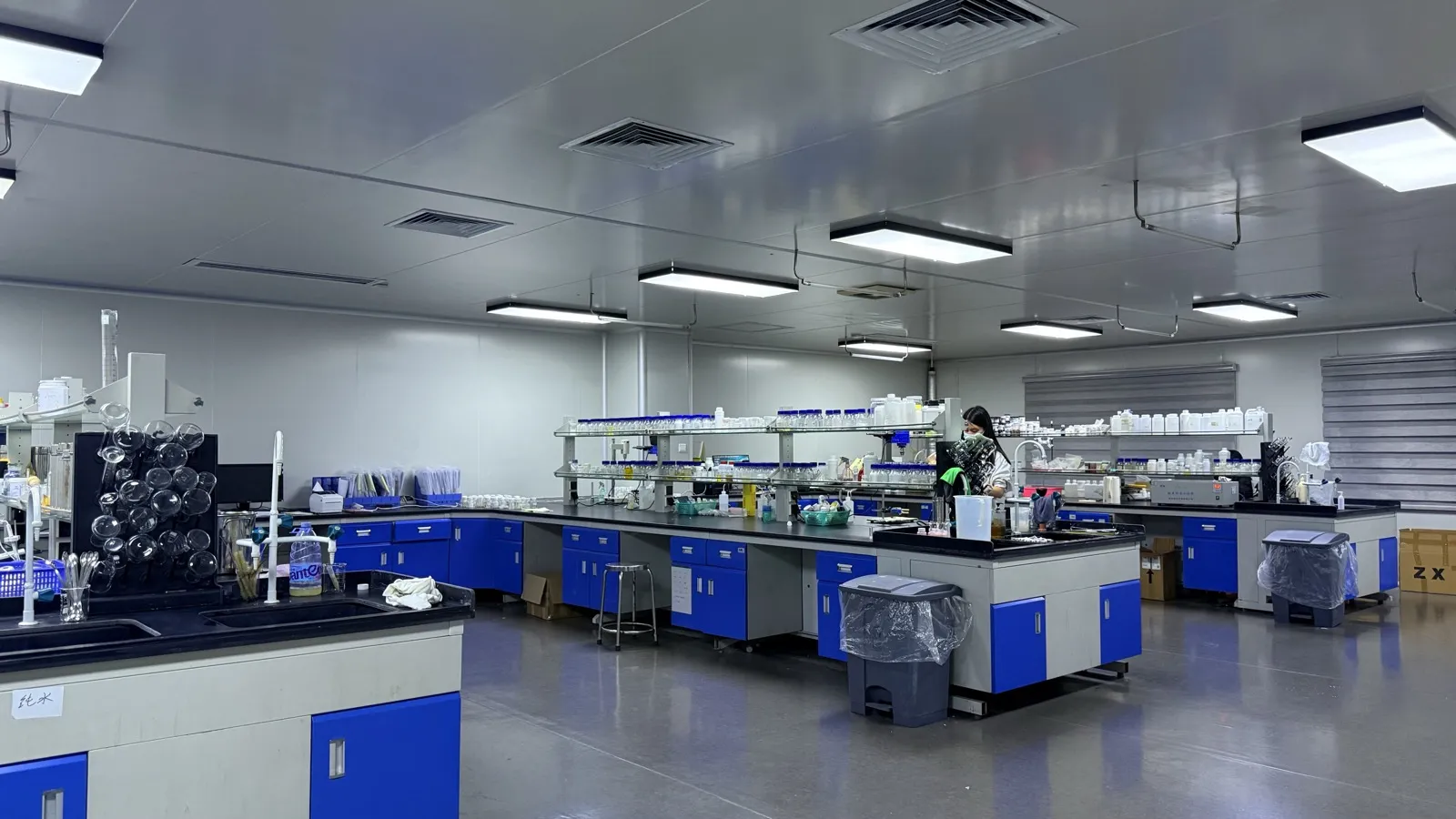
OEM (Original Equipment Manufacturer) means the brand owner provides the complete formula, and the manufacturer produces it according to those exact specifications. The factory is essentially a production facility executing your recipe - they do not contribute to formulation development. What we take on under that arrangement is set out on our cosmetics OEM manufacturing page.
In an OEM arrangement, you are buying manufacturing capacity: clean rooms, filling lines, quality control infrastructure, and packaging capability. The intellectual contribution - the formula itself - comes entirely from your side.
When OEM Makes Sense
- You have an in-house cosmetic chemist or R&D team with the capability to develop stable, efficacious, and compliant formulations from scratch
- You've developed and tested proprietary formulations through your own stability and safety testing programs
- You want complete control over ingredient selection - down to the specific grade, supplier, and concentration of every raw material
- You already hold formulation patents that give you competitive advantage and you need them manufactured without modification
- You're transferring production from one factory to another and need exact replication of existing formulas
- You're a large brand with established products that have undergone extensive consumer testing and regulatory filing - switching to a new formula would require re-registration
OEM Advantages
- Full IP ownership: Your formula, your asset. You can license it, sell it, or take it to any manufacturer globally.
- Complete control over ingredient sourcing specifications: You dictate not just what goes in, but the exact grade and supplier origin of every component.
- No risk of formula sharing: The manufacturer has no right to use your formula for other clients or develop variations of it.
- Flexibility to switch manufacturers: Since you own the formula and specifications, you can move production to any qualified facility.
- Regulatory continuity: If your formula is already registered in target markets, maintaining it unchanged avoids re-filing costs.
OEM Disadvantages
- Requires significant R&D investment: Developing a 5-SKU skincare line from scratch costs $50,000-$500,000+ depending on complexity and testing requirements
- Longer development timeline: 6-18 months for novel formulations including stability testing, preservative challenge testing, and safety assessment
- Stability and safety testing falls on you: The manufacturer will not guarantee a formula they didn't develop performs correctly under all conditions
- No access to manufacturer's proprietary technologies: Even if the factory holds patents on delivery systems or novel actives, you cannot access them in an OEM model
- Higher MOQs: Typically 5,000-10,000 units per SKU because the factory must procure your specific raw materials (which may not be standard stock items)
- Risk of formulation failure: Without deep cosmetic chemistry expertise, brands sometimes deliver formulas that are theoretically sound but practically unstable in large-batch production
What Is Cosmetics ODM?
ODM (Original Design Manufacturer) means the manufacturer develops the formula based on your product brief. You describe what you want - target efficacy, texture profile, price point, market positioning, benchmark products - and their R&D team creates it. The factory contributes both the formulation and the manufacturing. What the development side covers on our end is set out on our cosmetics ODM page.
In an ODM arrangement, you are buying innovation access: the manufacturer's R&D platform, their patent portfolio, their ingredient supplier relationships, and their formulation expertise - in addition to production capacity.
When ODM Makes Sense
- You're a brand-focused company whose competitive advantage lies in marketing, distribution, or brand building - not formulation chemistry
- You want access to patented or proprietary technologies like supramolecular delivery systems, plant exosome extraction, or novel active ingredients like PDRN, ectoin, or ergothioneine
- Speed to market is critical: ODM cuts development time from 12-18 months to 4-8 weeks for initial samples
- You want cutting-edge formulations without building an R&D department that costs $200,000-$500,000 annually to staff and equip
- You're launching your first skincare line and don't yet have the technical knowledge to evaluate formula quality independently
- You want to leverage the manufacturer's regulatory expertise for multi-market filing (US FDA, EU CPSR, ASEAN notification)
ODM Advantages
- Access to manufacturer's R&D platform and patented technologies: Technologies that would take years and millions to develop independently become available immediately
- Faster development: 4-8 weeks for initial samples vs. 6-18 months for OEM development from scratch
- Lower upfront investment: R&D costs are amortized across the manufacturer's client base, not borne solely by you
- Professional stability testing and efficacy validation included: The manufacturer stands behind formulations they developed
- Lower MOQs: Typically 3,000-5,000 units per SKU because ingredients are often stock items used across multiple clients
- Regulatory filing support: The manufacturer knows exactly what's in the formula and can prepare compliance documentation efficiently
- Reduced risk: Formulations have often been tested across multiple production batches; the manufacturer knows they work at scale
ODM Disadvantages
- Formula IP is shared or retained by manufacturer: Unless you negotiate (and pay for) exclusivity, the manufacturer owns or co-owns the formulation
- Less control over exact ingredient selection: You can specify targets and constraints, but the formulator makes final ingredient decisions
- Potential for similar formulations sold to other brands: Without exclusivity, the manufacturer may develop related (not identical) products for competitors
- Dependency on one manufacturer: If the relationship ends, you may not be able to replicate the formula elsewhere without their cooperation
Where Private Label Fits Against OEM and ODM
Private label sits below ODM on the customization scale: you brand a formula the factory already owns rather than commissioning or supplying one. It is the fastest and cheapest route and the right call for validating demand, commodity products, and line-extension SKUs, at the cost of formula differentiation, since the same base can appear under other brands. Our standard minimum is 3,000 units per SKU on stock packaging; sampling is a separate stage because the formula already exists, and bulk production normally runs 35-60 days after formula, packaging, and artwork approval.
The reason it sits in a decision about OEM and ODM is that these are not three walled-off choices; they are points on one axis of how much of the product is uniquely yours. Private label, white label, and full contract manufacturing differ mainly on formula ownership and exclusivity, and our comparison of contract manufacturing, private label, and white label works through that distinction in full. The rest of this guide stays on the OEM versus ODM decision, which is the one that turns on who develops the formula.
OEM vs ODM vs Private Label: Side-by-Side
The three models differ on one question — who owns the formula work — and everything else follows from that. The figures below are for the same 5-SKU skincare line costed in the sections that follow, so the totals are directly comparable.
| Factor | OEM | ODM | Private Label |
|---|---|---|---|
| Who develops the formula | You (in-house team or contracted lab) | The manufacturer, to your brief | Nobody — you select from an existing catalogue |
| Formula ownership | Yours outright | Manufacturer’s, unless you buy exclusivity | Manufacturer’s, shared with other buyers |
| Total cost, 5-SKU line | $175,000 – $465,000 | $60,000 – $190,000 | $10,500 – $28,000 |
| Time to first delivery | 12–18 months | 3–5 months | 2–6 weeks |
| Units assumed above | 5,000 per SKU at $3–6 | 3,000 per SKU at $3–7 | 1,000 per SKU at $2–5 |
| Exclusivity | Inherent | $10,000 – $50,000 per formula | Not available |
| Testing burden | Yours: stability, efficacy, challenge, tox review | Usually included, or $5,000–$15,000 | Already completed on the stock formula |
| Differentiation | Highest — nothing else like it on shelf | Moderate — depends on brief and exclusivity | Lowest — competitors may sell the same formula |
| Best suited to | Funded brands with a proprietary technology to protect | Brands needing a credible, differentiated line without a lab | Market testing, and range extensions on a budget |
Cost Comparison: Real Numbers
Here's what each model typically costs for a 5-SKU skincare line (serum, moisturizer, cleanser, toner, eye cream) when working with a qualified manufacturer in China. The serum is usually where the models diverge most, since a custom active system is exactly the kind of work that separates a face serum manufacturer quoting ODM from one quoting OEM:
OEM Route
- R&D and formulation development: $50,000 - $200,000 (in-house team or contracted lab)
- Stability testing (6-month accelerated + 12-month real-time): $15,000 - $30,000
- Efficacy testing (clinical or in-vitro): $20,000 - $50,000
- Preservative challenge testing: $5,000 - $10,000
- Safety assessment / toxicology review: $10,000 - $25,000
- Production (5,000 units × 5 SKUs at $3-6/unit): $75,000 - $150,000
- Total: $175,000 - $465,000
- Timeline: 12-18 months to first delivery
ODM Route
- Formulation development fee: $5,000 - $20,000 (often waived with MOQ commitment)
- Stability and efficacy testing: Included or $5,000 - $15,000
- Exclusivity fee (if desired): $10,000 - $50,000 per formula
- Production (3,000 units × 5 SKUs at $3-7/unit): $45,000 - $105,000
- Total: $60,000 - $190,000
- Timeline: 3-5 months to first delivery
Private Label Route
- Formula selection: Free (choose from catalog)
- Label/packaging design: $500 - $3,000
- Production (1,000 units × 5 SKUs at $2-5/unit): $10,000 - $25,000
- Total: $10,500 - $28,000
- Timeline: 2-6 weeks to first delivery
For a complete cost breakdown including packaging, shipping, and hidden costs, see our detailed MOQ & Cost Guide. If the terminology itself is the sticking point, our comparison of private label, white label and contract manufacturing separates the three models, and our guide to what cosmetic contract manufacturers actually cover goes through scope and vetting in detail.
Where Packaging Sits in an OEM or ODM Quote
Packaging is the most common source of confusion in a first quote, because the two models handle it differently and neither handles it the way brands expect.
Under a straight OEM arrangement you are usually expected to specify the component. You nominate the bottle, the pump, the cap and the decoration method, and the factory fills what you supply or what you have chosen from a nominated supplier. That gives you full control over how the product looks and puts the component sourcing risk on your side, including the minimums each component carries.
Under ODM the factory normally proposes a container platform it already runs, because tooling and qualification are already paid for. This is where much of the cost advantage of ODM actually comes from, and it is also the constraint brands notice last. A platform bottle keeps your unit cost down and your minimums achievable; a bespoke bottle does neither, and custom tooling changes both the budget and the timeline.
The practical middle ground is a platform container with custom decoration. Same bottle, your own screen printing or label and your own cap colour, which reads as distinctive on shelf without carrying tooling cost. For a first launch this is usually the right trade, and it is what we would propose before anyone raises a mould.
Two things are worth settling early. Whether the component minimums are counted inside your unit MOQ or alongside it, because they are separate floors and a brand that plans for one gets surprised by the other. And whether compatibility testing between your formula and your chosen component is in scope, because a formula that is stable in a lab jar can still interact with a particular pump liner or label adhesive.
IP and Exclusivity Considerations
Intellectual property is the most misunderstood aspect of OEM/ODM relationships. Getting this wrong can undermine your brand's long-term competitive position.
OEM IP Structure
You own the formula IP completely. The manufacturer signs an NDA and cannot use, modify, or share your formula. You receive full documentation including:
- Complete INCI list with exact percentages
- Manufacturing procedure (process parameters, equipment specifications)
- Raw material specifications and approved suppliers
- Quality control specifications for finished product
ODM IP Structure (Without Exclusivity)
The manufacturer retains formula ownership. They may offer similar (not identical) formulations to other brands. In practice, reputable manufacturers differentiate significantly between clients - they're not selling the same product to everyone. But you don't have legal protection against it.
ODM with Exclusivity
You pay a premium (typically 15-30% higher unit cost or a one-time exclusivity fee of $10,000-$50,000 per formula) for exclusive rights. Exclusivity can be scoped by:
- Geographic exclusivity: You're the only brand using this formula in North America, but the manufacturer can sell it in other regions
- Category exclusivity: Exclusive within "premium anti-aging" but not across all skincare
- Global exclusivity: No other brand worldwide can use this formula - the most expensive option
- Time-limited exclusivity: 2-3 year exclusive period, after which the formula may be offered to others
Private Label IP
No exclusivity whatsoever. Other brands sell identical products under different labels. This is acceptable for commodity products but fatal for premium positioning.
What Separates a Great ODM Partner from a Basic OEM Factory
The gap between these two types of manufacturer is enormous - and it's not just about price.
A Basic OEM Factory Offers:
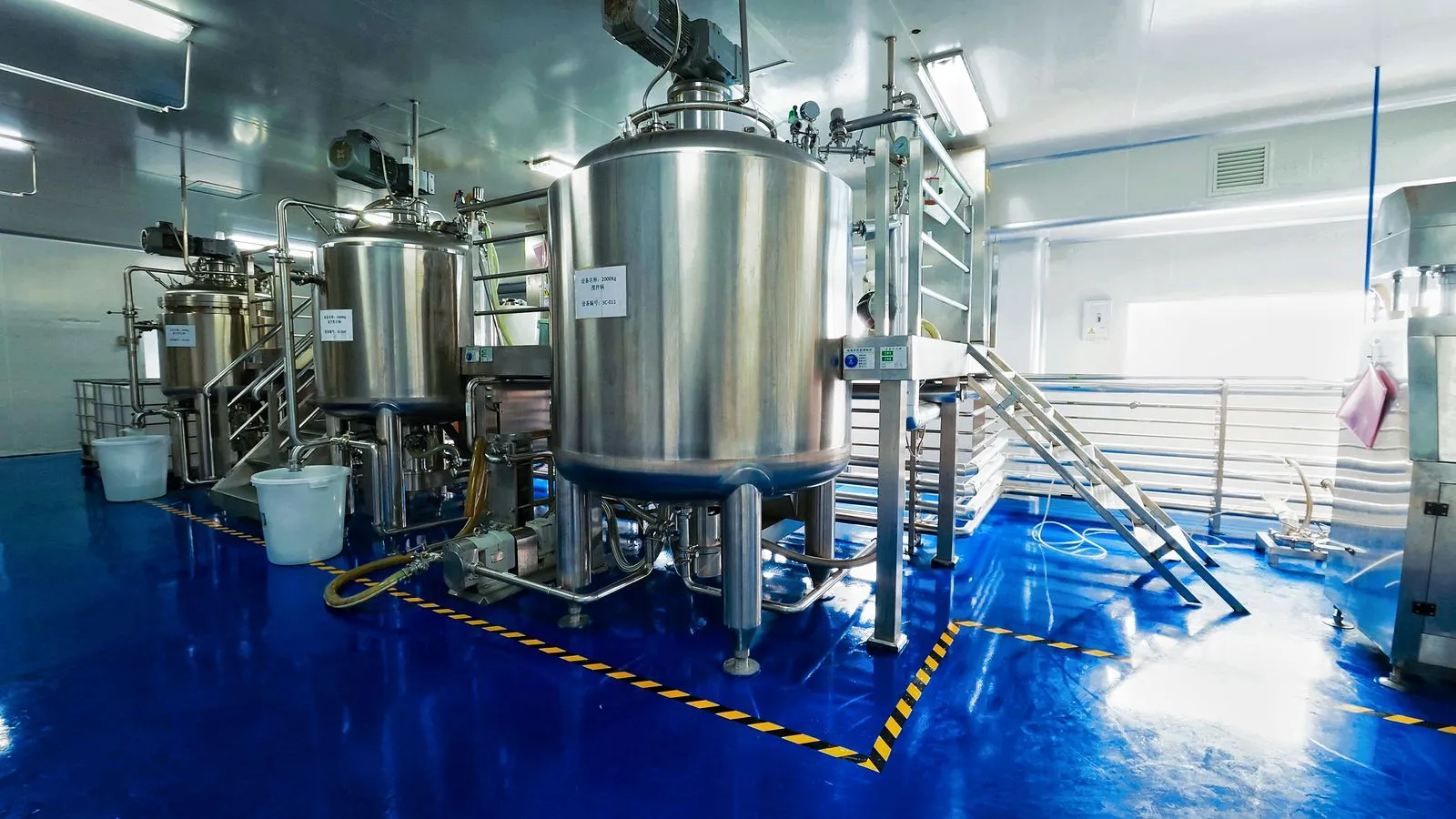
- Production lines and filling equipment
- Basic quality control (pH, viscosity, micro testing)
- Standard packaging options
- Formula execution without modification or improvement suggestions
A Technology-Driven ODM Partner Offers:
- Proprietary technology platforms: Patented delivery systems (supramolecular technology, liposomal encapsulation, solid membrane extraction for plant exosomes) that you cannot access elsewhere
- Raw material relationships: Direct partnerships with global ingredient houses (BASF, Symrise, CRODA, Shin-Etsu, DSM, SEPPIC) ensuring access to the newest and highest-grade actives at preferential pricing
- Regulatory expertise: The ability to file for FDA, EU, ASEAN, Middle Eastern, and other markets with in-house regulatory affairs staff
- Brand incubation services: Packaging design, market positioning guidance, compliance support, and launch strategy beyond just filling bottles
- Quality infrastructure: ISO 22716 certified clean rooms audited by Intertek, pharmaceutical-grade manufacturing environments with full traceability
- Innovation pipeline: Ongoing development of new formulations, new actives, new delivery technologies that you get early access to as a partner
- Clinical testing coordination: Relationships with dermatological testing labs for efficacy validation and claims substantiation
How to Decide: A Decision Framework
Ask yourself these questions in sequence: Related reading: if you are choosing a manufacturing base, see our China vs Korea cosmetics manufacturer comparison, and for launching in the region, how to start a skincare brand in Southeast Asia.
- Do I have proprietary formulations that are already developed, stability-tested, and market-proven? Yes → OEM. No → Continue to question 2.
- Do I have $200K+ and 12-18 months to invest in formula development before seeing revenue? Yes → Consider OEM if formula IP is your core differentiator. No → ODM or Private Label.
- Is speed to market critical for my business model? Yes → ODM (3-5 months) or Private Label (2-6 weeks). No → OEM remains an option if budget allows.
- Do I need unique technology differentiation that competitors cannot easily copy? Yes → ODM with a tech-driven manufacturer who holds relevant patents. No → Private Label may suffice initially.
- Am I targeting premium ($40+) or mass market ($5-15)? Premium → ODM with patented ingredients and clinical validation. Mass → Private Label or basic OEM for cost optimization.
- What's my 3-year plan? If you plan to sell the brand, OEM-owned formulas increase valuation. If you plan to scale rapidly, ODM's speed and flexibility serve better.
The Hybrid Approach: What Smart Brands Actually Do
The most successful brands rarely commit 100% to one model. Here's the sophisticated strategy used by fast-growing cosmetics companies:
Phase 1: Launch (Months 0-6)
- Launch with ODM formulations to validate market demand quickly and cheaply
- Test 3-5 SKUs with minimal investment
- Use market data (sell-through rates, reviews, repurchase) to identify hero products
Phase 2: Differentiate (Months 6-18)
- Negotiate exclusivity on the 1-2 hero products that drive brand identity and highest margin
- Begin developing proprietary formulations (OEM) for next-generation hero products based on customer feedback
- Use private label for commodity SKUs (makeup remover, basic body lotion) that round out the product line without requiring differentiation
Phase 3: Own (Months 18+)
- Transition hero products to fully-owned OEM formulations as volumes justify R&D investment
- Maintain ODM relationship for innovation pipeline and new product exploration
- Build internal formulation capability selectively (hire 1-2 cosmetic chemists, not a full lab)
Contract Essentials: What Your Manufacturing Agreement Must Cover
Regardless of whether you choose OEM, ODM, or private label, your manufacturing contract is the legal foundation of the partnership. A poorly drafted contract - or worse, no written contract at all - exposes your brand to significant risk. Many manufacturers in China operate on purchase orders and informal agreements, but international brands should insist on comprehensive legal documentation.
Critical Contract Clauses for OEM Agreements
- Formula ownership clause: Explicitly state that the brand owns all rights to the formula, including the right to manufacture it elsewhere. Published contracts show why the exact wording matters — one grants the client ownership while the manufacturer keeps an exclusive licence with a priced buy-out, covered in what formulation quotes actually include. The manufacturer should acknowledge they have no ownership interest and cannot use, modify, reverse-engineer, or license the formula to third parties.
- Non-disclosure and non-compete: Beyond standard NDA language, specify that the manufacturer cannot develop "substantially similar" formulations for other clients targeting your geographic market or product category for a defined period (typically 2-5 years).
- Quality specifications: Define acceptable ranges for every measurable parameter - pH, viscosity, color (via spectrophotometer readings), microbial limits, active ingredient concentration, and packaging integrity. Reference relevant standards (USP, EP, ISO) where applicable.
- Batch rejection criteria: Clearly state what constitutes a failed batch, who bears the cost of failed batches, and the process for disposition (rework, destruction, or return of materials).
- Audit rights: Reserve the right to conduct unannounced facility audits, review batch records, and inspect quality control documentation at any time during the contract period.
Critical Contract Clauses for ODM Agreements
- IP ownership or licensing terms: Define precisely who owns the developed formula. If the manufacturer retains ownership, specify the scope and duration of your license to use it.
- Exclusivity scope and duration: Geographic, category, time period, and what constitutes a breach of exclusivity. Define remedies if the manufacturer violates exclusivity terms (liquidated damages, contract termination, IP transfer).
- Technology access rights: If the formula incorporates patented delivery systems or proprietary technologies, clarify whether your license to use these technologies survives contract termination.
- Formula disclosure: Specify what documentation you receive - full INCI list with percentages, manufacturing procedure, or only partial disclosure. Full disclosure gives you more flexibility; partial disclosure protects the manufacturer's IP but creates dependency.
- Modification rights: Can you request formula changes after development? Who owns the modified version? What additional fees apply?
- Exit provisions: What happens if you want to leave the relationship? Can you take the formula to another manufacturer? Under what conditions and at what cost?
Universal Contract Provisions
- Payment terms and milestones: Standard is 30% deposit, 70% before shipment. Define payment triggers clearly (production completion, QC pass, pre-shipment inspection approval).
- Lead time commitments: Specify maximum production lead times with consequences for delays (price reductions, air freight at manufacturer's expense for critical delays).
- Force majeure: Define what constitutes force majeure (natural disasters, pandemics, government actions) and the obligations of each party when force majeure occurs.
- Product liability and insurance: Clarify liability allocation. The manufacturer should carry product liability insurance and indemnify you against claims arising from manufacturing defects (not design defects in OEM arrangements).
- Governing law and dispute resolution: Specify governing law (often Hong Kong, Singapore, or the brand's home jurisdiction) and dispute resolution mechanism (arbitration through ICC, HKIAC, or SIAC is preferred over litigation in Chinese courts for international parties).
- Minimum purchase commitments: If the manufacturer requires volume commitments, ensure they are realistic based on your current sales projections, with flexibility clauses for market downturns.
Common Contract Pitfalls
Avoid these frequent mistakes in manufacturing agreements:
- Signing a Chinese-only contract you cannot read - always require a bilingual version with both languages having equal legal force
- Accepting vague quality specifications ("high quality" or "meeting industry standards") instead of measurable parameters
- Failing to specify what happens to your proprietary materials (molds, artwork, tooling) if the relationship ends
- Not including change control procedures - any modification to formula, process, or materials should require written approval
- Omitting batch traceability requirements that are necessary for regulatory compliance in your target markets
Illustrative Planning Scenarios: How the Models Can Evolve
The following examples are illustrative planning scenarios, not customer case studies or reported commercial outcomes. They show how a brand might sequence private label, ODM, and OEM decisions as its capabilities and priorities change.
Illustrative Scenario 1: A DTC Brand Starts With ODM
A digital-first skincare team has strong brand and distribution skills but no in-house cosmetic chemistry. It chooses an ODM partner so formulation, testing, and manufacturing can be scoped together rather than coordinating several technical vendors.
- Planning choice: Concentrate the launch around a small number of SKUs at the standard 3,000-unit-per-SKU minimum.
- Contract priority: Define whether the delivery technology and resulting formula are licensed, shared, or exclusive in the target market.
- Decision gate: Approve the next production run only after the brand has reviewed product performance, sell-through, and customer feedback against its own targets.
Planning lesson: ODM can give a brand access to formulation capability it does not hold internally, but the defensible asset depends on the exclusivity and technology-access terms written into the agreement.
Illustrative Scenario 2: An Established Brand Evaluates an OEM Transition
An established brand has a proven hero serum made under ODM and is considering whether to fund an independently owned formula. The decision is framed around control, supply resilience, and the cost of recreating and validating the product rather than around a claimed revenue threshold.
- Work required: Formulation development, pilot scale-up, stability and compatibility testing, documentation, and any market-specific re-registration.
- Benefit to test: Full formula ownership and the option to qualify more than one manufacturing site.
- Trade-off: The brand funds the development programme and may lose access to technology that belonged to the original ODM partner.
Planning lesson: an OEM transition is justified when the value of ownership and supply-chain control outweighs the fixed development and validation work. That calculation has to be made from the brand's own volumes, margins, and contract terms.
Illustrative Scenario 3: Private Label Before Custom ODM
A marketplace seller uses a private label product to test positioning and channel demand before commissioning a custom formula. The first phase is designed to answer whether the proposition sells; the second is considered only after the brand has enough evidence to write a sharper formulation brief.
- Phase 1: Launch a focused private label offer on a tested base, using the standard 3,000-unit-per-SKU minimum and stock packaging.
- Phase 2: If the demand signal is strong enough, brief an ODM formula around the specific performance or sensory gap identified in customer feedback.
- Decision gate: Compare the cost of customization and exclusivity with the margin and differentiation the revised product would need to deliver.
Planning lesson: private label can be a lower-complexity validation step, while ODM becomes useful when the brand has evidence for what must change and can justify the development work.
Industry-Specific Considerations
The OEM/ODM decision varies by product category. Different skincare and beauty segments have distinct dynamics:
Anti-Aging and Treatment Products
This category demands the highest formulation sophistication. Consumers expect measurable results, and regulators scrutinize efficacy claims. ODM is strongly preferred because:
- Active delivery technology (liposomes, encapsulation, supramolecular systems) dramatically affects efficacy - and this technology is typically proprietary to advanced ODM manufacturers
- Stability of sensitive actives (retinol, vitamin C, peptides) requires deep formulation expertise to maintain potency throughout shelf life - our glutathione brightening serum is one example where the active system is built around this constraint
- Clinical testing coordination for claims substantiation is more efficiently handled by manufacturers with existing lab relationships
Sunscreen and SPF Products
Sunscreens sit at the intersection of cosmetics and drug regulation in many markets (classified as OTC drugs in the US, regulated cosmetics in the EU). This creates unique considerations, and our guide to sunscreen OEM for Southeast Asia works through them market by market:
- OEM may be preferred if you have a proven formula already registered with FDA as an OTC drug - reformulation would require re-registration
- ODM is preferred for new sunscreen development because filter combinations, photostability testing, and SPF determination require specialized expertise and equipment - see our daily aqua sunscreen SPF30 for a production example
- Filter availability varies by market (some UV filters approved in EU/Asia are not approved in the US) - your manufacturer needs to navigate these differences
- Format choice affects both registration and cost - a stick format such as our UV protection sun stick SPF50 PA uses a different filler system from a lotion, so the two are quoted and tested separately
Clean Beauty and Natural Skincare
The clean beauty segment introduces additional formulation constraints that affect the OEM/ODM decision:
- Natural preservation is technically challenging - ODM manufacturers with proven natural preservative systems reduce stability risk
- Organic certifications (COSMOS, ECOCERT) require certified ingredient sourcing - ODM partners with existing organic supply chains simplify compliance
- "Free from" formulations (silicone-free, sulfate-free, fragrance-free) require alternative technologies that experienced formulators handle more efficiently
Men's Grooming
A rapidly growing segment with distinct formulation requirements:
- Texture preferences differ significantly (lighter, faster-absorbing, less residue) - ODM expertise in this demographic avoids expensive reformulation cycles
- Fragrance expectations and ingredient marketing language target differently - manufacturer market knowledge adds value
- Lower brand loyalty means product performance must be immediately noticeable - advanced active delivery technology becomes a competitive advantage
- Overnight formats travel well in this segment because they need no daytime routine change - see our overnight sleeping mask cream and triple acid exfoliating toner for two production examples at opposite ends of the texture range
Common Mistakes to Avoid
- Choosing OEM when you lack formulation expertise: Delivering an untested formula to a manufacturer and expecting them to "make it work" is a recipe for costly failures. If you don't have a cosmetic chemist on staff, ODM is almost always the better choice.
- Choosing the cheapest private label option for a premium brand: You cannot credibly charge $60 for a serum that five other brands sell for $20 under different labels. Premium positioning requires formula differentiation.
- Ignoring exclusivity until it's too late: Negotiate exclusivity terms BEFORE the manufacturer develops your formula, not after. Once developed, you have less leverage.
- Confusing factory size with capability: A large factory with 20 production lines may be purely an OEM producer with zero innovation capability. A smaller facility with a serious R&D lab and patent portfolio may be a far superior ODM partner.
- Not reading contracts carefully: Ensure the contract explicitly states who owns the formula, what exclusivity applies, what happens if you stop ordering, and whether the manufacturer can develop "similar" products for others.
- Underestimating the value of regulatory expertise: A manufacturer who can handle US FDA, EU CPSR, and ASEAN notifications in-house saves $20,000-$50,000 in external consultant fees and months of delays. This capability is more common among ODM partners than basic OEM factories.
- Failing to plan for growth: Choosing a manufacturer based solely on your first order (3,000 units) without considering whether they can handle 50,000+ unit reorders creates a painful and expensive manufacturer transition later.
- Overlooking communication quality: Technical communication during formulation development is complex. A manufacturer whose English-speaking staff is limited to sales (with technical teams communicating only in Chinese) creates translation errors that affect product quality.
Frequently Asked Questions
Can I switch from ODM to OEM later?
Yes, but with important caveats. If your ODM partner developed the formula, they own it - you cannot simply take it to another factory. You have two options: negotiate to purchase full IP rights (expensive, typically $20,000-$100,000 per formula), or develop a new formula independently that achieves similar performance. Many brands choose the latter, using their ODM product as a benchmark while their own chemist develops an improved version. Where you do own both the formula and the process documentation, moving it is a technology transfer rather than a redevelopment.
What if my ODM manufacturer goes out of business?
This is a real risk, particularly with smaller manufacturers. Protect yourself by: negotiating formula escrow provisions (complete documentation held by a third party), maintaining detailed product specifications independently, and building relationships with backup manufacturers who could develop equivalent formulations if needed. Larger, well-established ODM partners with strong financial positions obviously reduce this risk.
Is ODM just private label with a different name?
No. The distinction is significant. Private label means choosing from existing, pre-made formulas that multiple brands may use identically. ODM means developing a new, custom formula specifically for your brief - it is a creative R&D process, not a catalog selection. The formula may incorporate proprietary technologies, novel actives, and custom sensory profiles that no other brand has access to.
How do I protect my brand if the ODM partner sells similar products to competitors?
Without exclusivity, you rely on the manufacturer's professional ethics and commercial sense (they benefit from differentiated clients). With exclusivity, you have legal protection. The best approach: negotiate exclusivity on your 1-2 hero products that define your brand identity, and accept that supporting products (basic cleanser, body lotion) may have formulation overlap with other brands.
What percentage of successful indie beauty brands use ODM vs OEM?
Industry estimates suggest 70-80% of indie beauty brands generating under $5M annually use ODM or private label models. OEM becomes more common above $10M revenue where R&D investment is financially justified. Among brands that have successfully exited (acquisition by major beauty corporations), the split is roughly 50/50 - demonstrating that neither model inherently limits brand value.
Disclaimer: Pricing ranges are estimates based on 2026 market conditions and may vary depending on order volume, formula complexity, packaging specifications, and manufacturer capabilities. Contact us for a custom quote tailored to your specific requirements.
Conclusion
There is no universally "better" model - only the model that fits your brand's current stage, resources, and competitive strategy. For most emerging brands in 2026, ODM with a technology-driven manufacturer offers the optimal balance: access to innovation, manageable investment, speed to market, and reduced risk. The key is finding a partner whose R&D capabilities, certifications, and production scale align with your brand's ambition.
As your brand matures and volumes grow, you can strategically shift toward OEM ownership of your most valuable formulations - while maintaining ODM partnerships for innovation and speed. The contract structure you establish today determines your flexibility tomorrow - invest the time to get IP provisions, exclusivity terms, and exit clauses right from the beginning.
Read our complete guide to starting a private label skincare brand for the full step-by-step process from concept to shelf, or explore our MOQ and cost guide for detailed pricing by product category and manufacturing model.
Not Sure Which Model Fits Your Brand?
We support all three models - OEM, ODM, and private label - with a standard MOQ of 3,000 units per SKU; specialist formats and custom components can require more. Tell us your product vision and budget, and we will recommend the most efficient path to market.
Related Products
Explore ready-to-customize formulations you can private label under your own brand.
Ready to Start Your Project?
Tell us your product requirements. Within 24 hours, our technical team will reply with a quotation or the questions needed to prepare one.