
Private Label Skincare & Cosmetics MOQ and Cost Guide
Understanding MOQ in Private Label Cosmetics Manufacturing
MOQ - Minimum Order Quantity - is the single most common question skincare and cosmetics brands ask when first approaching a private label manufacturer. It seems like a simple question, but the answer depends on a matrix of factors: your chosen manufacturing model (private label, ODM, or OEM), the complexity of your formulations, your packaging specifications, the manufacturer's production line configuration, and even the time of year you place your order. Minimums vary by model, so it helps to understand where private label sits first; our private label cosmetics guide lays out the full picture. The three models are described on our private label, ODM and OEM service pages.
For brands entering the beauty market for the first time, cosmetics MOQ represents a critical balance between investment risk and unit economics. Order too few units and your per-unit cost becomes uncompetitive. Order too many and you tie up capital in inventory that may take months to sell - with the added risk of products approaching expiry before they reach consumers.
This comprehensive guide provides realistic MOQ ranges based on current market conditions, breaks down every cost component you will encounter, and offers proven strategies to optimize your first order - whether you are launching with a lean $20,000 budget or building a premium brand with $200,000+ in startup capital.
Keep the market ranges separate from our commercial terms. Some tables below describe what other suppliers advertise across the wider market. GZ Cosmetics Lab's standard minimum is 3,000 units per SKU for routine bottled, jarred, and tubed products; sheet masks, patches, freeze-dried sets, and packaging components can carry higher format-specific minimums. A published market example is not a quotation from our production lines.
MOQ by Manufacturing Model
Private Label (Existing Formulas)
- Typical MOQ: 1,000 - 3,000 units per SKU
- Why it's lower: Formula already developed and stability-tested; no R&D cost to amortize
- Best for: Market testing, small brands, cash-constrained startups
- Limitation: Limited differentiation; other brands may sell the same formula
ODM (Custom Formula Development)
- Typical MOQ: 3,000 - 5,000 units per SKU
- Why it's higher: Custom formulation requires R&D investment; stability testing per batch
- Best for: Brands wanting unique formulations without in-house R&D
- Value: Access to manufacturer's technology platform and patented ingredients
OEM (Your Formula)
- Typical MOQ: 5,000 - 10,000 units per SKU
- Why it's highest: Factory setup costs for unique formula; procurement of specific raw materials
- Best for: Brands with proprietary formulations and established sales channels
MOQ at a Glance
| Model | Typical MOQ per SKU | Why it sits there | Best for |
|---|---|---|---|
| Private Label existing formulas | 1,000 – 3,000 | Formula already developed and stability-tested; no R&D to amortise | Market testing, cash-constrained launches |
| ODM custom development | 3,000 – 5,000 | Custom formulation carries R&D investment and per-batch stability testing | Brands wanting a unique formula without an in-house lab |
| OEM your formula | 5,000 – 10,000 | Line setup for a unique formula plus procurement of specific raw materials | Proprietary formulas with established sales channels |
Cost Breakdown by Product Category
Costs shown are FOB (Free On Board) China, including production, primary packaging, and basic secondary packaging (carton). Excludes international shipping.
Skincare Products
- Facial Cleanser (150ml tube): $1.50 - $3.50 per unit
- Toner/Micellar Water (200ml bottle): $1.20 - $3.00 per unit
- Serum (30ml dropper bottle): $2.50 - $8.00 per unit
- Moisturizer (50ml jar): $2.00 - $5.00 per unit
- Eye Cream (15ml tube): $2.00 - $5.00 per unit
- Sunscreen (50ml tube): $2.50 - $5.50 per unit
- Face Mask (single sheet): $0.30 - $1.50 per unit
Serums carry the widest range on this list because the cost sits in the active system rather than the fill volume. What you settle before briefing a face serum manufacturer — stock formula or custom, single active or a combination, the pH window your actives can share — moves the unit cost more than the packaging does.
Body Care Products
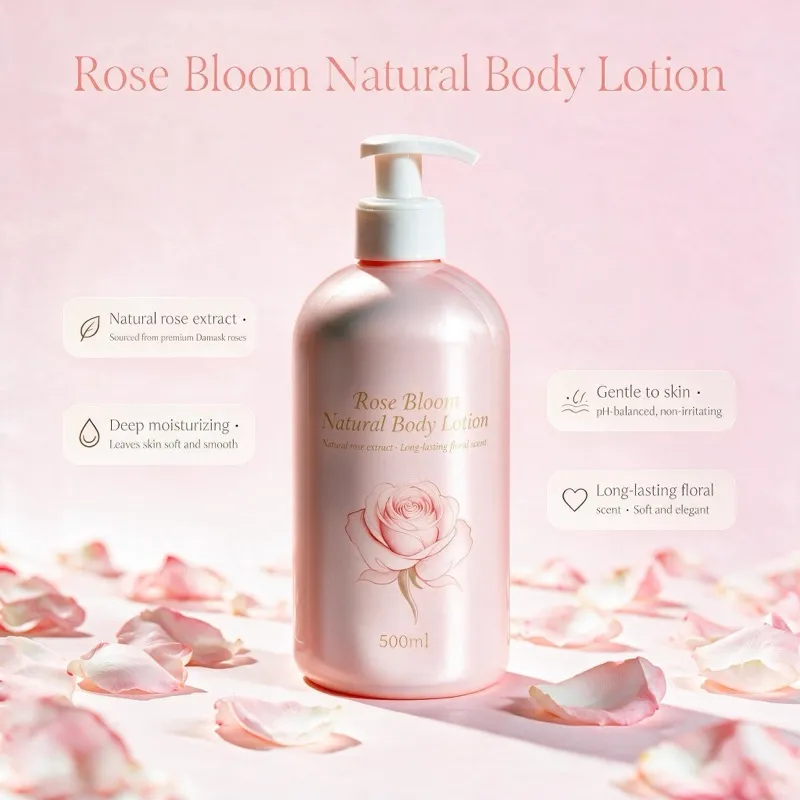
- Body Lotion (250ml): $1.80 - $4.00 per unit
- Body Scrub (200ml jar): $2.00 - $4.50 per unit
- Massage Oil (100ml): $2.50 - $5.00 per unit
- Body Wash (300ml): $1.50 - $3.50 per unit
Body care unit costs look low relative to facial products for a structural reason: at these fill volumes the base dominates material cost, not the actives. We break down why fill volume drives body care cost and where our standard 3,000-piece-per-SKU minimum comes from.
Massage oil is the one line item here that often gets quoted against a different brief. Retail bottles and professional supply for spas, hotels and therapist chains use different fill sizes, carrier oil grades and label requirements, which is why the same product can land at either end of that range. We cover those decisions in our guide to private label massage oil manufacturing.
Hair Care Products
- Shampoo (300ml): $1.50 - $3.50 per unit
- Conditioner (300ml): $1.50 - $3.50 per unit
- Hair Mask (200ml): $2.00 - $4.50 per unit
- Hair Serum/Oil (50ml): $2.00 - $5.00 per unit
Hair is rarely launched as a single SKU, which changes how these numbers apply. Shampoo usually goes on the line first and the second SKU is a cost decision more than a product decision, since a shared fragrance and surfactant base spreads development across the range. Our guide to building a private label hair range walks through that sequence.
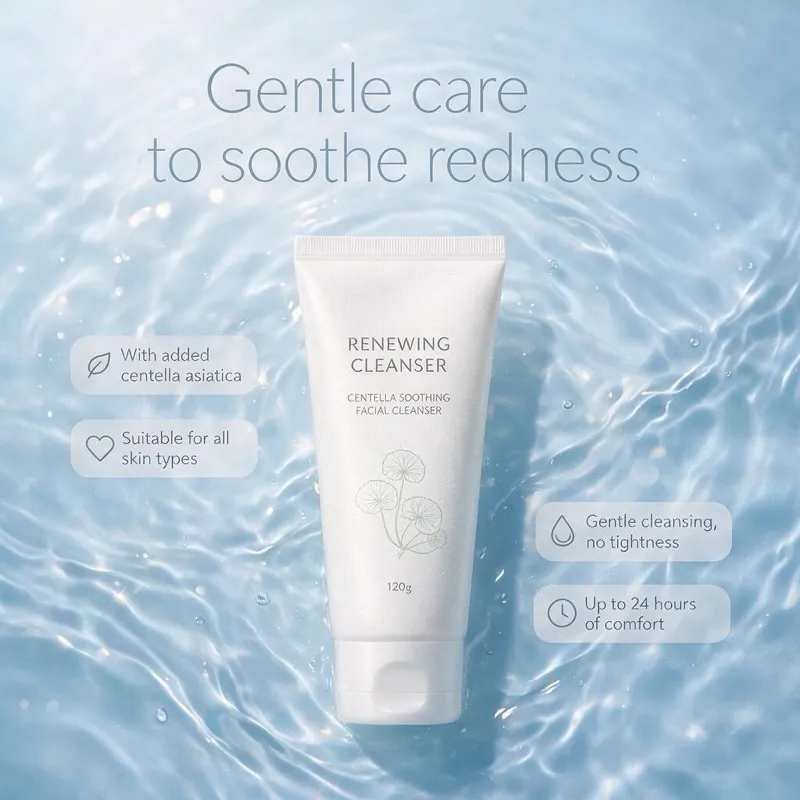
To see how these categories translate into real ready-to-brand products, browse examples across our range: in skincare, the glutathione brightening cream, centella repair serum, and snail mucin repair cream; in body care, the niacinamide brightening body lotion and centella soothing body lotion; and in hair care, the silk repair hair mask and strengthening coconut keratin shampoo. Each can be customized on formulation, packaging, and MOQ.
Unit Cost Summary: All Categories
Every figure below is FOB China, including production, primary packaging and a basic carton. International shipping is excluded. The same numbers appear in the category sections above; this table is for comparing across categories in one pass.
| Category | Product & fill | FOB unit cost |
|---|---|---|
| Skincare | Facial cleanser, 150ml tube | $1.50 – $3.50 |
| Toner / micellar water, 200ml | $1.20 – $3.00 | |
| Serum, 30ml dropper | $2.50 – $8.00 | |
| Moisturizer, 50ml jar | $2.00 – $5.00 | |
| Eye cream, 15ml tube | $2.00 – $5.00 | |
| Sunscreen, 50ml tube | $2.50 – $5.50 | |
| Face mask, single sheet | $0.30 – $1.50 | |
| Body care | Body lotion, 250ml | $1.80 – $4.00 |
| Body scrub, 200ml jar | $2.00 – $4.50 | |
| Massage oil, 100ml | $2.50 – $5.00 | |
| Body wash, 300ml | $1.50 – $3.50 | |
| Hair care | Shampoo, 300ml | $1.50 – $3.50 |
| Conditioner, 300ml | $1.50 – $3.50 | |
| Hair mask, 200ml | $2.00 – $4.50 | |
| Hair serum / oil, 50ml | $2.00 – $5.00 |
What Drives Cost Variation
The wide price ranges above reflect multiple cost drivers:
1. Raw Material Quality
- Budget tier: Generic Chinese-manufactured actives. Functional but unremarkable.
- Mid tier: Established Asian ingredient suppliers. Good quality, competitive pricing.
- Premium tier: Global houses (BASF, Symrise, CRODA, DSM). Highest purity, novel molecules, comprehensive technical documentation.
Choosing premium raw materials typically adds 25-50% to material costs - but creates genuinely better products that justify premium retail pricing.
2. Formula Complexity
- Simple (5-15 ingredients): Basic moisturizers, cleansers
- Medium (15-25 ingredients): Anti-aging serums, treatment products
- Complex (25+ ingredients, multi-phase): Advanced delivery systems, encapsulated actives, specialized emulsion technology
3. Packaging Choices
- Stock packaging: Standard bottles/jars from manufacturer's catalog. Cheapest option.
- Semi-custom: Stock shape with custom decoration (screen printing, hot stamping, labeling)
- Fully custom: Custom molds for unique bottle/jar shapes. Mold cost: $3,000-$15,000
4. Manufacturing Environment
- Standard production environment: baseline cost
- 100,000-class clean room: +10-15% cost
- 10,000-class clean room (pharmaceutical-grade): +20-30% cost
5. Testing Requirements
- Basic microbiological + physicochemical: included in standard pricing
- Stability testing (6-month accelerated): $500-$2,000 per formula
- Preservative challenge test: $500-$1,500 per formula
- Clinical efficacy testing (human subjects): $5,000-$30,000 per claim
- Safety assessment (EU CPSR): $2,500-$5,000 per product
Total Investment for a First Product Line
Scenario A: Marketwide Lean-Launch Illustration (3 SKUs, Private Label)
- Products: Cleanser + Serum + Moisturizer
- MOQ used in this marketwide illustration: 1,000 units each (not GZ Cosmetics Lab's 3,000-unit standard)
- Production cost: ~$6,000 - $12,000
- Packaging design: $500 - $2,000
- Shipping (sea freight): $800 - $1,500
- Total: $7,300 - $15,500
Scenario B: Standard Launch (5 SKUs, ODM)
- Products: Full routine (cleanser, toner, serum, moisturizer, sunscreen)
- MOQ: 3,000 units each
- R&D fee: $0-$10,000 (often waived with MOQ commitment)
- Production cost: ~$30,000 - $60,000
- Packaging design: $2,000 - $5,000
- Stability testing: $2,500 - $5,000
- Shipping: $2,000 - $4,000
- Total: $36,500 - $84,000
Scenario C: Premium Launch (5 SKUs, ODM with Proprietary Technology)
- Products: Premium anti-aging line with advanced delivery technology
- MOQ: 5,000 units each
- R&D + exclusivity: $10,000 - $30,000
- Production cost: ~$75,000 - $150,000
- Custom packaging (with molds): $15,000 - $30,000
- Full testing suite: $15,000 - $30,000
- Regulatory filing (US + EU): $10,000 - $20,000
- Shipping: $3,000 - $6,000
- Total: $128,000 - $266,000
Strategies to Optimize Your First Order
1. Start with ODM, Not OEM
ODM leverages the manufacturer's existing R&D investment, reducing your upfront cost while still delivering custom formulations.
2. Use Stock Packaging Initially
Custom molds require large minimum quantities to amortize. Start with stock packaging, differentiated through premium decoration, and move to custom shapes once volumes justify the investment.
3. Negotiate R&D Fee Structures
Many manufacturers waive R&D fees if you commit to minimum production volumes. Ask about fee structures tied to order quantities.
4. Consolidate SKUs at One Manufacturer
Placing your entire product line with one manufacturer (rather than splitting across multiple) gives you negotiating leverage and simplifies logistics.
5. Plan for Reorders
First orders are always the most expensive (setup costs, small volumes). Second and subsequent orders are typically 15-25% cheaper per unit. Plan your initial order to last 3-4 months, then reorder at scale.
6. Consider Phased Launches
Launch with 2-3 hero products rather than a full 10-SKU line. Validate market demand, then expand based on data rather than assumptions. See our step-by-step brand launch guide for the full process.
Payment Terms
Standard payment structures in China cosmetics manufacturing:
- Typical: 30% deposit + 70% before shipment (T/T wire transfer)
- First order: Some manufacturers require 50% deposit for new clients
- Established relationships: Net 30 or Net 60 terms become possible after 3-5 successful orders
- Large orders ($100K+): Letter of Credit may be accepted
Hidden Costs to Budget For
- Sample shipping: Multiple sample rounds × express courier fees add up ($200-$500 per round)
- Regulatory filing: Product registration for your target market ($2,000-$10,000 per market)
- Third-party testing: If you want independent lab verification ($1,000-$5,000)
- Import duties and customs: Varies by country (typically 0-6.5% for cosmetics). For the US specifically, a low or zero duty rate does not make the shipment free of customs cost — see our US landed cost breakdown
- Warehousing: Storage between production and distribution
- Insurance: Product liability insurance for your market
Shipping and Logistics Costs
Manufacturing cost is only part of the equation. Getting products from factory to warehouse involves significant logistics expenses that many first-time brands underestimate.
Sea Freight (Most Common for Cosmetics)
- FCL (Full Container Load - 20ft): $1,500 - $3,500 depending on destination port and season
- FCL (40ft): $2,500 - $5,500 - better value per unit for larger orders
- LCL (Less than Container Load): $80 - $150 per cubic meter - suitable for smaller first orders
- Transit time: China to US West Coast 14-18 days; to Europe 25-35 days; to Middle East 15-22 days
For reference, a 20ft container holds approximately 25,000-30,000 units of standard skincare products (30-200ml bottles in master cartons). If your first order is under 5,000 units total, LCL makes more economic sense than booking a full container.
Air Freight (For Urgent or Small Shipments)
- Rate: $4 - $8 per kilogram (volumetric or actual weight, whichever is greater)
- Transit time: 3-7 days door-to-door
- Best for: Sample shipments, urgent restocks, high-value products where speed justifies cost
- Practical limit: Air freight typically makes sense only for orders under 500kg or when stock-out cost exceeds shipping premium
Express Courier (DHL/FedEx/UPS)
- Rate: $6 - $12 per kilogram
- Transit time: 3-5 business days
- Best for: Pre-production samples, urgent small quantities (under 100kg)
- Advantage: Door-to-door with customs clearance included; no need for a freight forwarder
Additional Logistics Costs
- Customs clearance fees: $150 - $500 per shipment (varies by country and broker)
- Import duties: 0-6.5% for cosmetics depending on HS code and destination country
- Warehouse receiving: $25 - $50 per pallet if using 3PL fulfillment
- FDA prior notice (US imports): Required for all cosmetics entering the US - your freight forwarder handles this but charge $50-100
- Fumigation certificate: Sometimes required for wooden pallets - $50-100 per shipment
Timeline: From First Inquiry to Products in Hand
Understanding the complete timeline helps you plan inventory and cash flow. Many brands underestimate how long the process takes, leading to stock-outs or rushed decisions.
Private Label Timeline
- Select and brief: Choose the formula route and confirm packaging options.
- Sample and approve: Preparation, dispatch, evaluation, and revision timing is confirmed for the project.
- Lock components: Approve the final sample, artwork, and packaging design.
- Produce: Routine bulk production runs 35–60 days after formula, packaging, artwork, and order details are approved.
- Ship: Freight and customs are planned separately for the destination and shipping method.
ODM Timeline
- Scope: Brief the manufacturer, agree requirements, and review the proposed formula route.
- Develop: Sampling and revisions follow a project-specific schedule.
- Test: Stability, compatibility, preservative, safety, or claims studies are separately scoped where required.
- Approve components: Packaging procurement and artwork approval can run in parallel where the risk allows.
- Produce: Routine bulk production runs 35–60 days after approvals.
- Ship: Freight, customs, and market registration remain separate schedule lines.
Full Custom Development Timeline
- Develop and optimise: The schedule depends on the novelty of the formula and the agreed acceptance criteria.
- Substantiate: Stability, safety, preservative, and claims work follows the applicable protocol and cannot be compressed into a generic promise.
- Scale up: Laboratory-to-production validation is scheduled before routine bulk manufacturing.
- Procure: Packaging and specialist raw-material lead times are confirmed by component.
- Produce: Once approvals are complete, routine bulk production runs 35–60 days; specialist formats may require longer.
- Ship: Freight and logistics are added separately.
Negotiation Strategies That Actually Work
After working with dozens of cosmetics manufacturers, certain negotiation approaches consistently yield better pricing and terms. These are not adversarial tactics - they are professional practices that signal you are a serious, long-term partner worth investing in.
1. Present a Growth Roadmap
Manufacturers give better pricing to brands they believe will grow. Before your first meeting, prepare a 12-month volume projection showing how you plan to scale from initial order to steady-state reorders. Even if projections are uncertain, showing thoughtful planning differentiates you from one-time buyers.
2. Offer Longer Payment Terms in Exchange for Lower Pricing
If your cash position allows, offering full prepayment (instead of standard 30/70 split) can negotiate 3-8% off unit pricing. Manufacturers value cash flow certainty and reduced collection risk.
3. Consolidate Orders Across SKUs
A 5-SKU order of 2,000 units each (10,000 total) gets better pricing than a single-SKU order of 2,000 units. Total volume across all SKUs matters for negotiation leverage because it amortizes the manufacturer's setup and coordination costs.
4. Time Your Orders Strategically
Chinese cosmetics manufacturers experience seasonal demand peaks:
- Peak season (Sept-Nov): Pre-holiday production rush - longest lead times, least flexibility on pricing
- Slow season (Feb-April): Post-Chinese New Year - manufacturers actively seek orders, most flexibility on pricing and MOQ
- Standard (May-Aug): Normal operations - standard terms apply
Placing your first order during slow season can yield 5-10% better pricing and faster turnaround.
5. Request Value-Add Instead of Price Reduction
If the manufacturer won't budge on unit pricing, negotiate value-add services that reduce your total cost:
- Free or discounted stability testing
- Complimentary packaging design assistance
- Extended payment terms on reorders
- Free samples for your marketing (200-500 units of mini sizes)
- Included regulatory documentation for your target market
6. Build the Relationship Before Negotiating Hard
In Chinese business culture, relationship (guanxi) matters significantly. Visit the factory if possible. Share your brand story and vision. Demonstrate that you are a long-term partner, not a price-shopping buyer. Manufacturers consistently offer their best terms to partners they trust and believe in - not to whoever pushes hardest on price.
Common Cost Mistakes First-Time Brands Make
After observing hundreds of brand launches, certain costly mistakes recur with alarming frequency:
Mistake 1: Underestimating Total Landed Cost
Brands focus on manufacturing cost per unit but forget to add shipping, duties, customs fees, warehousing, and fulfillment costs. A product manufactured for $3.00/unit may have a true landed cost of $4.50-5.50/unit after all logistics costs are included. Always calculate total landed cost before setting retail prices.
Mistake 2: Over-Ordering First Batch
Enthusiasm leads to ordering 10,000 units of an unproven product. If sell-through is slow, you're sitting on depreciating inventory with shelf-life concerns. Better approach: order the minimum that achieves acceptable unit economics (typically MOQ or slightly above), validate market demand over 60-90 days, then reorder at scale with confidence.
Mistake 3: Choosing Custom Packaging Too Early
Custom bottle molds cost $3,000-15,000 and require minimum orders of 10,000-50,000 units to amortize. Many brands invest in custom packaging before validating product-market fit, then discover they need to reformulate or reposition - making the custom packaging obsolete. Start with stock packaging decorated through screen printing or labeling; graduate to custom after proving demand.
Mistake 4: Ignoring Shelf Life in Order Planning
Most skincare products have a 2-3 year shelf life from manufacture. If you order 12 months of inventory but only sell 6 months worth in that period, you're approaching expiry concerns that may force discounting or destruction. Plan initial orders to cover 3-4 months of projected sales, with reorder points that maintain freshness.
Mistake 5: Not Budgeting for Iteration
First samples rarely perfect. Budget for 2-4 rounds of sample revision ($200-500 in courier fees per round) and potentially reformulation adjustments. Brands that budget $0 for iteration end up either accepting suboptimal products or delaying launch while scrambling for additional sample funding.
Mistake 6: Comparing Prices Without Context
A manufacturer quoting $2.50/unit and another quoting $3.80/unit are not necessarily offering the same product at different margins. Price differences typically reflect genuine differences in raw material quality, manufacturing environment (standard vs. clean room), testing included, packaging material grade, and quality control rigor. The cheapest quote often produces the cheapest product - which damages brand reputation far more than the $1.30/unit savings is worth.
Regulatory Costs by Market
Beyond manufacturing, brands must budget for regulatory compliance in their target markets. These costs are often overlooked until they become urgent blocking issues.
United States
- FDA registration: No FDA fee for facility registration or product listing. Foreign facilities do pay for a required US Agent, typically $5,000-$10,000 annually including listing upkeep and compliance support
- Product safety substantiation: $2,000 - $10,000 (preservative efficacy, stability, heavy metals, microbial testing)
- Claims substantiation: $5,000 - $30,000 if making efficacy claims (clinical or in-vitro studies)
- State-specific requirements: California Prop 65 testing $500-2,000 per product; MoCRA compliance documentation ongoing
- Total per product: $2,500 - $15,000
European Union
The EU is the most document-heavy market in this list; our EU compliance guide breaks down what each line item below actually buys you.
- CPSR (Cosmetic Product Safety Report): $2,500 - $5,000 per product - mandatory before any EU sale
- CPNP notification: Free (online portal) but requires EU Responsible Person
- EU Responsible Person service: $1,000 - $3,000 annually
- PIF (Product Information File): Included with CPSR or $500-1,500 separately
- Total per product: $4,000 - $9,500 (first year)
United Kingdom (Post-Brexit)
- SCPN notification: Similar to EU CPNP - requires UK Responsible Person
- UK Responsible Person service: $800 - $2,500 annually
- Separate CPSR may be required: $1,500 - $4,000 if EU CPSR not accepted
- Total per product: $2,300 - $6,500
Middle East (GCC Countries)
- GSO conformity assessment: $1,000 - $3,000 per product
- Halal certification (if applicable): $2,000 - $5,000 per product line
- Country-specific registration: $500 - $2,000 per product per country
- Local distributor requirements: Varies - some markets require local partner for registration
ASEAN Countries
- ASEAN Cosmetic Notification: $300 - $1,500 per product per country
- Local Responsible Person/Distributor: Required in most ASEAN markets
- Testing at local laboratories: Some countries require in-country testing - $500-2,000 per product
Pro tip: A manufacturer with in-house regulatory expertise can prepare most documentation as part of their service, saving $5,000-20,000+ in external consultant fees. This is a key advantage of working with established ODM manufacturers in China who serve international brands regularly.
ROI Calculator: When Does Your Investment Pay Back?
Understanding payback period helps you make informed decisions about investment level. Here is a simplified ROI framework for a typical first product line:
Example: 3-SKU Skincare Line (ODM, Mid-Market Positioning)
- Total investment: $45,000 (production $30K + packaging $5K + shipping $3K + regulatory $4K + marketing $3K)
- Units produced: 3,000 per SKU × 3 SKUs = 9,000 units
- Average retail price: $35
- Average landed cost per unit: $5.00
- Gross margin per unit: $30.00 (85.7% - typical for DTC skincare)
- After marketing spend (30% of revenue): Net margin ~$19.50/unit
- Units needed to break even: $45,000 ÷ $19.50 = ~2,308 units
- Break-even as % of inventory: 2,308 ÷ 9,000 = 25.6%
This means you break even after selling roughly one-quarter of your first production run - achievable within 2-4 months for a well-marketed DTC brand. The remaining 75% of inventory represents profit, assuming you can sell through within the product's shelf life.
Key variables that shift this calculation dramatically:
- Retail price: Moving from $35 to $50 per unit cuts break-even to 1,800 units
- Marketing efficiency: Reducing customer acquisition cost from 30% to 20% of revenue cuts break-even to 1,800 units
- Manufacturing cost: Premium actives push cost to $7-8/unit; break-even rises to 2,700-3,000 units
- Channel: Wholesale to retailers (50% of retail) dramatically extends break-even vs. DTC
Working with Your Manufacturer: Communication Best Practices
Effective communication with your manufacturer directly impacts product quality, timeline, and cost. Cultural and language differences between international brands and Chinese manufacturers create common communication pitfalls that experienced brands learn to navigate.
Specification Documentation
Never rely on verbal agreements or casual messages for product specifications. Create a formal Product Development Brief that includes:
- Product concept: Target consumer, market positioning, benchmark products, price point
- Formula requirements: Key ingredients (must-have and nice-to-have), texture preferences, fragrance direction, color expectations, allergen restrictions
- Packaging specifications: Material, size, closure type, decoration method, color references (Pantone numbers), sustainability requirements
- Regulatory requirements: Target markets, required certifications, restricted ingredient lists to comply with
- Timeline: Critical milestones with dates - sample approval deadline, production start, ship-by date
- Quality standards: Acceptable ranges for pH, viscosity, color, fragrance intensity, microbial limits
A comprehensive brief reduces sample iterations from 4-5 rounds to 1-2 rounds - saving 4-8 weeks and significant courier costs.
Sample Evaluation Protocol
When evaluating manufacturer samples, provide structured feedback rather than vague impressions:
- Texture: Too thick/thin? Spreads easily? Absorption speed? Residue? Compare to a reference product if possible.
- Fragrance: Too strong/weak? Direction adjustment needed? Provide scent references or approved fragrance oils.
- Color: Match against Pantone reference or approved color swatch.
- Performance: Moisturizing feel after 2 hours? 8 hours? Any irritation during 7-day use test?
- Packaging fit: Does the formula work correctly with the chosen packaging (pump dispenses properly, dropper picks up product, tube squeezes cleanly)?
Quality Control During Production
For orders above 5,000 units total, consider hiring a third-party inspection service (SGS, Bureau Veritas, Intertek, or specialized cosmetics QC firms) to conduct:
- During-production inspection (DPI): Checks raw materials, production environment, and in-process quality at 30-40% completion
- Pre-shipment inspection (PSI): Final check of finished goods, packaging, labeling accuracy, and packing before container loading
- Cost: Approximately -500 per inspection day - negligible compared to receiving a container of defective product
Even for smaller orders, request photos and videos at key production stages: bulk formula approval (color and viscosity check), first-off-line samples (packaging and labeling verification), and packed master cartons ready for shipment.
Disclaimer: Pricing ranges are estimates based on 2026 market conditions and may vary depending on order volume, formula complexity, packaging specifications, and manufacturer capabilities. Contact us for a custom quote tailored to your specific requirements.
Conclusion
The investment required to launch a private label cosmetics brand ranges from $10,000 (minimal viable product) to $250,000+ (premium brand with full technology and regulatory package). The key is matching your manufacturing model, MOQ, and investment level to your brand's stage and market opportunity. Start lean, validate demand, and scale with confidence - choosing the right manufacturing partner with the flexibility to grow from your first 3,000-unit order to 100,000-unit reorders. Explore our flexible OEM/ODM service tiers to find the right fit for your budget. For market entry, also see our guide to launching in Southeast Asia and choosing an OEM skincare manufacturer in China.
Frequently Asked Questions
What is a typical MOQ for private label cosmetics?
Across the wider market, private label on an existing, already stability-tested formula is often advertised at 1,000 to 3,000 units per SKU. ODM custom development commonly runs 3,000 to 5,000, while some OEM suppliers quote 5,000 to 10,000 for a new-to-line formula. These are industry ranges, not our offer: GZ Cosmetics Lab's standard minimum is 3,000 units per SKU for routine formats, with higher format-specific minimums where components or processes require them.
Why is the MOQ higher for a custom formula than an existing one?
Because you are paying for different work. An existing formula has already been developed and stability-tested, so there is no development cost to spread across your order. A custom formula carries bench work, iteration rounds and a fresh stability and preservative programme, and those are fixed costs. The larger the order, the smaller their share of each unit, which is why the factory sets the floor where it does rather than as a negotiating position.
Can I negotiate a lower MOQ on my first order?
Sometimes, but the useful lever is usually not the MOQ number itself. Consolidating volume across fewer SKUs, accepting stock packaging instead of custom tooling, or ordering a single shade or scent variant all reduce the real constraint, which is often packaging rather than bulk. Ask which component is setting the floor before asking for it to be lowered; if the answer is a tooling minimum or a printed-carton minimum, negotiating on the formula side will not move it.
What payment terms should I expect from a Chinese cosmetics manufacturer?
The standard structure is a 30% deposit with the remaining 70% before shipment, by T/T wire transfer. Some manufacturers ask new clients for a 50% deposit on a first order. Net 30 or Net 60 terms generally become available only after three to five successful orders, and a Letter of Credit may be accepted on large orders above roughly $100,000.
What costs do first-time brands most often leave out of the budget?
Regulatory filing and testing, almost always. Product registration runs $2,000 to $10,000 per market and independent third-party testing $1,000 to $5,000. Beyond that, multiple sample rounds cost $200 to $500 each in courier fees, import duties on cosmetics typically run 0 to 6.5% depending on the country, and warehousing plus product liability insurance are ongoing rather than one-off. These are the line items that tend to surface as urgent blocking issues rather than planned spend.
How much should I budget for regulatory compliance per market?
For the United States, $2,500 to $15,000 per product, which covers safety substantiation, plus $5,000 to $30,000 more if you are making efficacy claims that need clinical or in-vitro studies. For the European Union, $4,000 to $9,500 per product in the first year, driven by the mandatory CPSR at $2,500 to $5,000 and an EU Responsible Person at $1,000 to $3,000 annually. The UK requires its own Responsible Person at $800 to $2,500 annually and may require a separate CPSR. Note that FDA facility registration and EU CPNP notification are themselves free: the cost sits in the documentation and the local representative, not the filing.
Get an Instant Cost Estimate
Tell us your product category, target MOQ, and packaging preferences. Within 24 hours, we will reply with a quotation or the questions needed to prepare one.
Related Products
Explore ready-to-customize formulations you can private label under your own brand.
Ready to Start Your Project?
Tell us your product requirements. Within 24 hours, our technical team will reply with a quotation or the questions needed to prepare one.