
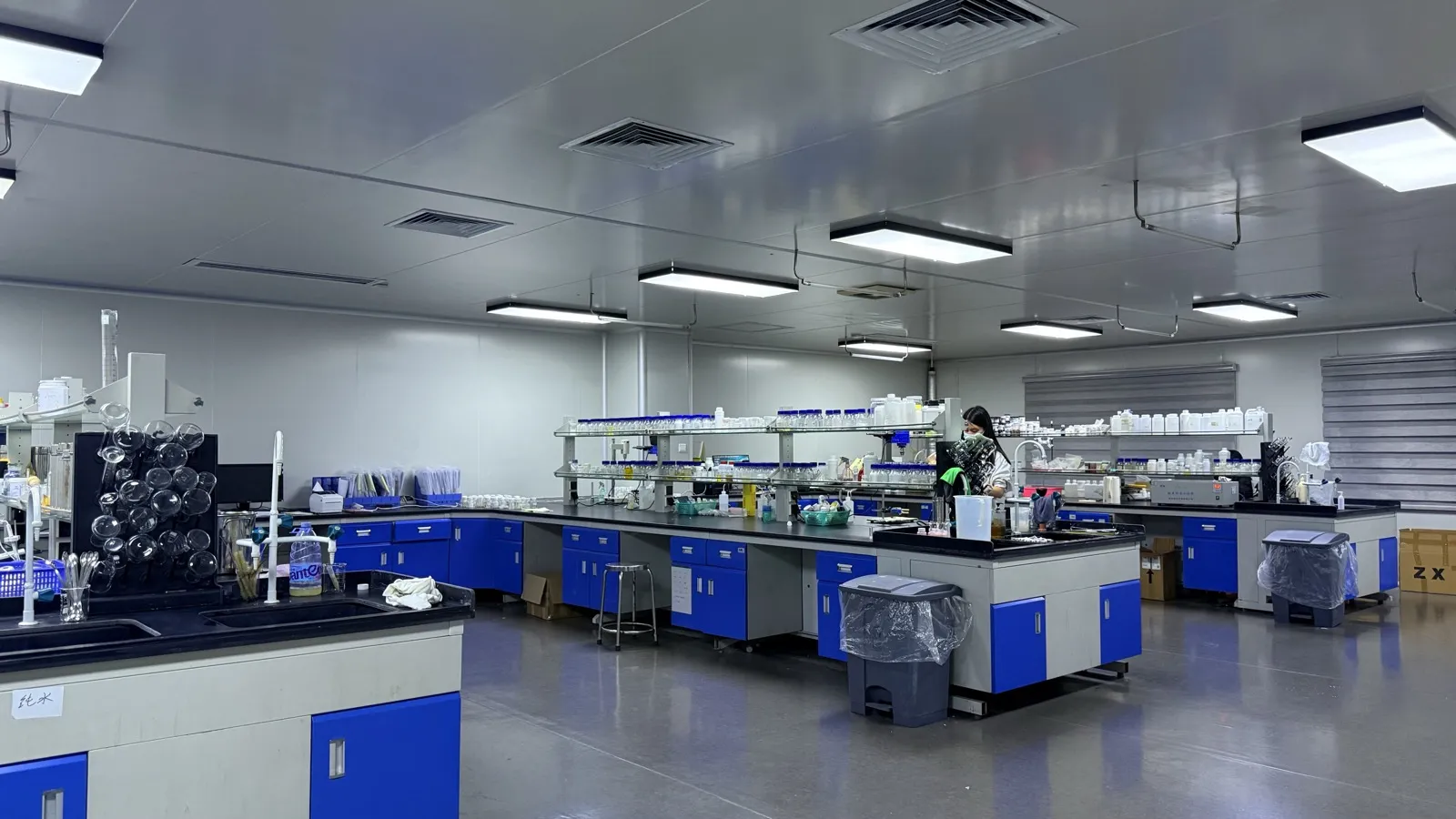
Cosmetics Manufacturing for Europe & the UK
Europe runs a pre-market system built on named legal accountability. Here is which parts of the file we generate, which parts structurally cannot be ours, and why a production transfer has a hard floor of about five months.
A system built on named accountability
Regulation (EC) No 1223/2009 does not work like a registration queue. There is no authority that approves your product before you sell it. Instead the regulation insists that a named legal person inside the market is accountable for the product's compliance, and that a complete technical file exists at a known address if anyone asks. Nothing gets stamped. Someone becomes liable.
That design has a specific consequence for brands manufacturing in China: the compliance work does not split neatly into "factory does the technical part, brand does the paperwork". Some of the file can only come from the facility that physically makes the product, and some of it can only come from a qualified person established in Europe. A supplier who blurs that line is not offering you more service, they are describing something the regulation does not permit.
Below is the split obligation by obligation, the four formulation constraints that come up in nearly every European project, and an honest answer on what a manufacturing transfer costs in elapsed time.
First-range solution
A sensitive-skin barrier routine built for the PIF
A focused routine reduces the number of formulas, safety assessments and claim files in the first launch. The factory supplies manufacturing evidence; the EU or UK Responsible Person and qualified safety assessor retain their legal roles.
Amino Acid Foam Cleanser
Mild-cleansing direction with foam-pump compatibility in scope.
Centella Repair Serum
Leave-on treatment step; sensitive-skin and repair claims need evidence.
Centella Repair Cream
Barrier routine anchor with claim wording agreed before testing.
Sensitive Skin Body Wash
Rinse-off extension with preservation evidence tied to the final process.
Confirm before sampling
- ✓Appoint the EU and UK Responsible Persons early.
- ✓Agree the Part A evidence package and Part B assessor responsibility.
- ✓Review allergens, claims and ingredient annexes before artwork.
- ✓Run stability, preservation and packaging work on representative production.
Market-specific project decisions
Confirm the EU and the UK Responsible Person separately. Do not assume one appointed entity covers both markets.
Settle the CPSR and PIF input list, the Part A evidence and the safety assessor's interface before development starts.
Run a consistency check across formula version, INCI, fragrance allergens, claim evidence and label text before artwork goes to print.
Evaluate stability, preservative challenge and packaging compatibility using the final formula, a representative process and the final pack.
The factory supplies manufacturing-side documentation. It is not the brand's Responsible Person and not the safety assessor.
From brief to production
The same five steps apply to every market. What changes is the regulatory and documentation work confirmed at step 4.
- 01
Submit the product brief
Tell us the destination market, product format, target claims, expected quantity, packaging direction and intended launch date. This lets us review the project against the correct market rather than offering a generic formula.
- 02
Select the development route
Choose an existing formulation when speed is the priority, or an ODM route when the texture, ingredients, claims or sensory profile need to be developed around your positioning.
- 03
Sample and review
We confirm the sample schedule after the brief, required reference information, formula route, and destination are clear. Existing-formula preparation, custom ODM development, dispatch, courier transit, and any additional rounds are planned separately for the project.
- 04
Confirm packaging, specification and testing
Before production, both parties confirm the formula version, packaging components, artwork responsibilities, agreed product specification and the testing plan required for the destination market.
- 05
Produce and release
Routine production is typically 35–60 days after the approved sample, packaging and order details are confirmed. The actual schedule depends on component availability, formula complexity, testing requirements and the agreed production plan; special formats may take longer.
MOQ, timing and testing boundaries
Starting MOQ
3,000 units / SKU
Applies to standard bottled or jarred skincare. The final quantity depends on the dosage form, formula, raw materials, filling process and packaging components. Sheet masks, patches, freeze-dried products, sunscreen and non-standard packaging are confirmed project by project.
Existing-formula sample
Confirmed per project
Preparation, dispatch, courier transit, and further rounds are scheduled after the brief, reference information, and destination are confirmed.
ODM development sample
Confirmed per project
The schedule follows the texture, ingredient system, claim direction, sensory brief, testing scope, and revision rounds agreed for the project.
Routine production
Typically 35–60 days
Counted after the approved sample, packaging and order details are confirmed. Special formats, regulatory registration, third-party laboratory scheduling and component supply time may extend or sit outside this window.
Included in manufacturing
- +Routine in-process quality control during production.
- +Finished-product release against the specification both parties confirmed.
- +Development screening during sampling, according to the agreed project scope.
Scoped and quoted separately
- ›Formal stability studies and preservative challenge testing.
- ›Packaging compatibility programmes.
- ›Claim substantiation and SPF testing.
- ›Safety assessment and accredited third-party testing.
Separate items are scoped according to the formula, packaging, destination market and required protocol. The testing plan is confirmed before the order rather than assumed after production.
We do not publish a one-price-fits-all list, because two products with the same fill volume can carry different formula, component, testing and regulatory costs. Send your target market, product format, quantity and packaging direction to receive a scoped quotation.
Scope an EU or UK launch
Send the destination market, appointed Responsible Person status, product list, claims, pack references and expected quantity. We will map the manufacturer documents, the development route and the tests that need to be agreed with your safety assessor.
Pricing depends on the formula, packaging, quantity, testing and destination market.
Who owns which part of the file
Six obligations. Two are ours, three are yours, and one is shared in a way worth reading carefully before you sign anything. The pattern is worth noticing: the parts that can only come from the production floor are ours, and the parts that require establishment or qualification inside the market cannot be.
Responsible Person
Yours, inside the EUA legal entity established in the EU, named on the packaging, accountable for the product's compliance. A Chinese manufacturer cannot be your RP; the requirement is establishment inside the market. Only the RP can notify, so leaving this appointment late blocks everything downstream. For Great Britain you need a second RP established in the UK.
Product Information File
Shared, kept at your RPThe technical dossier, held accessible at the RP's address. We generate and assemble the manufacturing content: method of manufacture, the GMP statement, specifications, stability and microbiological data. You hold the file and keep it current.
Safety report, Part A
OursThe compiled data set: quantitative and qualitative composition, physical and chemical characteristics and stability, microbiological quality, impurities and packaging, normal and foreseeable use, exposure. This is factory output rather than a document a brand can write.
Safety report, Part B
Your safety assessorThe assessment itself, which must be produced by a person holding an appropriate qualification, typically in pharmacy, medicine, toxicology or a comparable discipline recognised in a member state. A supplier claiming to provide the CPSR is providing the inputs. Confirm which side of that line their service sits on before assuming the assessment is covered.
CPNP notification
Yours, via the RPSubmitted before the product is placed on the market. Worth knowing: CPNP is free to use, so the figures quoted to you for EU registration are the cost of the safety assessment, the RP service and file preparation, not a government fee. UK products notify separately through the SCPN service.
Good manufacturing practice
OursISO 22716 is the harmonised standard demonstrating GMP compliance, and the PIF requires a GMP statement covering the facility that actually makes the product. This is a document requirement rather than a marketing point, which is why we publish certificate numbers instead of describing them.
The GMP statement has to name this site
Article 11(2)(c) requires the Product Information File to carry a description of the manufacturing method together with a statement of GMP compliance for the actual manufacturer. Read those as a pair, because it is the reason your factory choice is a compliance decision and not only a cost one: both attach to the facility that physically makes the product. When the facility changes, that content stops being accurate, and an inaccurate PIF is not a filing inconvenience. It is the file a competent authority will ask for if your product is ever questioned.
We hold ISO 22716:2007 cosmetics GMP under certificate HBPCER20260352 and GMPC under HBPCER20260353, both issued by Intertek on 16 July 2026 and valid to 15 July 2029, verifiable by anyone at certs.intertek.com.cn. ISO 22716 is the harmonised standard recognised as demonstrating GMP compliance under the regulation, which is why it is the certificate that carries weight in a European file rather than a general quality mark.
We publish the numbers rather than describing the certificates because a certificate held in the issuing body's own database is a stronger kind of evidence than a PDF attached to an email. Our legal entity, Jiumei (Guangzhou) Biomedical Co., Ltd. (Unified Social Credit Identifier 91440101MA59F7726Y), is the name printed on both, so you can confirm the company quoting you is the company that was audited. That check is worth two minutes: a trading company can forward a certificate belonging to a factory it does not own, and matching the entity name across documents is how you catch it.
Our facility is separately registered with the US FDA under MoCRA with FEI 3038966060, valid through 29 July 2028, which matters only if your plan includes a later US entry. The full framework is in our EU private label compliance guide, and the transfer economics in Europe vs China manufacturing.
What the EU framework changes about your formula
Four constraints that shape the brief rather than merely the label. The second one is the single most underestimated line item in a production transfer.
Fragrance allergen declaration is a formula decision, not an artwork one
Listed fragrance allergens have to appear in the ingredient list above 0.001% in a leave-on product and above 0.01% in a rinse-off one, and Commission Regulation (EU) 2023/1545 expanded that list well beyond the original 26 substances. That makes the scent brief a compliance input rather than a finishing touch: a higher fragrance level can turn a clean label into a long one. IFRA limits apply separately, and to the finished formula rather than to the oil as supplied, so we run that calculation as part of formulation work and provide the allergen breakdown for the accord you choose.
Relevant formats: Citrus Morning Eau de Toilette, Night Charm Eau de Parfum, Floral Fruity Fragrance Body Wash
The challenge test does not travel
The PIF requires microbiological specifications plus the results of a preservation challenge test, and a challenge test validates a preservative system in the product as manufactured, in a given water system and process flow. Carrying a European result across to a product now made in Guangzhou is not a shortcut, it is an unsupported claim in a legal file. Rinse-off and high-water formats are where this shows up most.
Relevant formats: Sensitive Skin Minimalist Body Wash, Cooling Peppermint Body Wash, Pore Tightening Cooling Toner
Annexes get amended, so reformulation capacity is a selection criterion
The regulation controls composition through annexes: prohibited substances, restricted substances with conditions, and positive lists for colourants, preservatives and UV filters. Those annexes are amended regularly, so a formula compliant when notified may need reformulating later. Your manufacturer's ability to respond to an annex change on a reasonable timeline is a real criterion, not a hypothetical one.
Relevant formats: Fragrance Long-Lasting Softening Body Lotion, Good Night Repair Sleeping Cream, Night Bounce Repair Essence Lotion
Claims need evidence, and animal testing is a hard wall
The PIF requires proof of claimed effects where the nature of the claim warrants it, so a claim you cannot substantiate is a file problem rather than a copywriting problem. Separately, the EU marketing ban prohibits selling cosmetics whose ingredients or final formulation were animal-tested, which is a sourcing constraint reaching back through your raw material chain. We document it rather than assert it.
Relevant formats: Curl Defining Conditioner, Color Lock Shine Hair Mask, Overnight Sculpting Sleep Cream
Formulation baselines are adjustable for your target market and price point. Ingredient levels are set within the annex limits applying to your destination market rather than to a fixed house recipe, and claims are agreed against what the file can support.
Questions buyers ask about Europe and the UK
Can you act as our EU Responsible Person?
No, and any Chinese factory telling you otherwise is misreading the requirement. The RP must be a legal entity established inside the EU, named on your packaging and accountable to market surveillance authorities there. We are established in Guangzhou, so we are structurally ineligible, and that is not a service gap we could close by trying harder. What we do instead is supply the manufacturing side of the file your RP needs: method of manufacture, GMP statement, specifications, stability data, microbiological results. Brands typically appoint either their EU distributor or a specialist RP service. One scheduling point worth planning around: only the RP can submit the CPNP notification, so if the RP appointment slips, your launch slips with it regardless of whether stock is ready. For Great Britain you will need a separate RP established in the UK.
Do you provide the CPSR?
We provide Part A, not Part B, and the distinction decides who you still need to hire. Part A is the compiled safety information: quantitative and qualitative composition, physical and chemical characteristics and stability, microbiological quality, impurities and packaging, normal and foreseeable use, exposure data. That is factory output and it is ours. Part B is the assessment and conclusion, and the regulation requires it to be produced by a person holding an appropriate qualification, typically in pharmacy, medicine, toxicology or a comparable discipline recognised in a member state. No manufacturer can sign that for you. When a supplier says they provide the CPSR, they almost always mean they provide the inputs, and it is worth asking them directly which part they mean before you budget for an assessor.
What does your GMP certificate do for our PIF?
The PIF requires a description of the manufacturing method together with a statement of GMP compliance, and that statement attaches to the facility that actually makes the product. So the certificate is a document requirement rather than a marketing point. We hold ISO 22716:2007 under certificate HBPCER20260352 and GMPC under HBPCER20260353, both issued by Intertek on 16 July 2026 and valid to 15 July 2029, verifiable by anyone at certs.intertek.com.cn. ISO 22716 is the harmonised standard recognised as demonstrating GMP compliance under the regulation, which is why it is the one that matters here. Our legal entity, Jiumei (Guangzhou) Biomedical Co., Ltd., is the name printed on both certificates, so you can confirm that the company quoting you is the company that was audited. To be clear on the limit: a GMP certificate says how the factory operates. It is not a product approval, and it does not complete your PIF, your safety assessment or your notification.
We already sell in the EU and want to move production to China. How long does that take?
Realistically five to six months from decision to landed stock for a single straightforward SKU, and longer for a multi-SKU range. The reason is physics rather than paperwork. Two parts of the safety file do not travel, because Annex I ties them to the product as actually manufactured. Stability belongs to a batch made on particular equipment, at a particular scale, in particular packaging, and accelerated stability commonly runs twelve weeks at elevated temperature. It cannot be shortened by paying more, because the evidence is generated by elapsed time. The preservation challenge test re-runs alongside it, since it validates a preservative system in one water system and process flow. Ingredient-level toxicological data does carry over. Then file work overlaps the back half of stability: safety report update by your assessor, new manufacturing description and GMP statement, CPNP amendment for country of origin and any RP change. First production run follows, then ocean freight, roughly 25 to 35 days China to Europe before port handling. Any supplier quoting a full transfer in six weeks is either skipping the stability work or planning to ship before it completes. Budget for re-testing and dual inventory rather than just the unit price difference.
Our European manufacturer is currently our Responsible Person. What happens if we move?
You lose the RP, and this catches brands out more than any other part of a transfer. Where a product is manufactured inside the EU, the manufacturer can hold the RP role by operation of Article 4(3). Once the product is imported instead, that obligation moves to an EU-established party under Article 4(5), which means the arrangement you had does not survive the move. So a transfer is not only a manufacturing decision, it silently removes a compliance function you may not have realised you were buying. Plan the replacement before you sample, not after: either your EU importer or distributor takes the role, or you appoint a specialist RP service. We cannot fill it from Guangzhou. Worth checking your existing contract too, because RP duties are sometimes bundled into a manufacturing agreement without a separate line item, and you will want to know what you are actually losing.
Will our formula stay identical after a transfer?
Only if the new factory can buy the identical grade from the identical supplier, and that is worth pinning down in writing rather than assuming. The moment it cannot, it substitutes, and a substitution changes your composition under Annex I Part A point 1, which can pull your safety assessor into a reassessment rather than a simple update. That is how a straightforward five-month transfer turns into a reformulation project. Whether it happens is decided by supplier relationships rather than good intentions, which is why we buy directly from BASF, Symrise, Croda, Dow Corning, SEPPIC, Lubrizol and Shin-Etsu among others. Ask any candidate factory for a written per-raw-material commitment before you pay for a sample, and treat a vague answer as the answer.
Is the UK still covered by our EU notification?
No. Post-Brexit, Great Britain runs its own regime, and while the requirements mirror the EU framework closely in substance they are administratively separate. That means a Responsible Person established in the UK, notification through the UK's Submit Cosmetic Product Notifications service rather than CPNP, and a file held for the UK market. Treat it as a second project with its own RP and its own submission rather than an extension of the EU one. The formulation work is generally the same, which is the good news; the administrative duplication is the cost. If both markets are in your plan, scope both RPs at the same time, because discovering the UK requirement after EU launch usually means artwork changes.
What does EU compliance actually cost?
We will not quote you a single figure, because the number depends on your product count, your claims and who you appoint, and a specific-sounding number here would be invented. What we can do is tell you where the money goes so you can price it properly. CPNP itself is free to use, which surprises most brands, so any cost quoted to you for EU registration is really the safety assessment, the RP service and file preparation. The variable costs on our side are the tests your claims require. Accelerated stability testing on the finished formula runs inside our standard lead time. Where a claim or a dossier needs work beyond that, for example real-time studies, additional efficacy substantiation or extra packaging compatibility rounds, those are scoped and quoted separately rather than assumed into the price. Tell us your claims list early, because claims are the single biggest driver of testing cost in a European project.
Europe and UK guides
Each written against the named regulation rather than summarised from other sites.
Private Label Cosmetics Europe: EU Compliance Guide (2026)
Private label cosmetics for Europe: the Responsible Person you must appoint, CPNP notification, the PIF your factory has to build, and Regulation 1223/2009.
Europe vs China Cosmetics Manufacturer: Transfer Guide
Moving cosmetics production from Europe to China: what transfers under Regulation 1223/2009, why stability data must be rebuilt, and a realistic timeline.
What Is GMPC? ISO 22716 Meaning & Certification Cost
GMPC means Good Manufacturing Practice for Cosmetics (ISO 22716). What it covers, certification cost, and how to verify a supplier's certificate - ask for ours.
How to Read a Cosmetic Stability Testing Report (2026)
There is no legally prescribed protocol for cosmetic stability testing, so a report that only says "pass" tells you almost nothing. The five things to check before you trust a shelf life.
How to Verify a Cosmetics Manufacturer's Formulation Capability
How to verify a cosmetics manufacturer's formulation capability with evidence: the documents to request, the stability data to insist on, and the red flags.
OEM vs ODM Cosmetics: Market, Cost & MOQ Compared
OEM and ODM cosmetics manufacturing compared: how the ODM market has shifted, real cost ranges, MOQ, and who owns the formula in each model.
New European launch, or moving existing production?
The two are different projects with different timelines. Tell us which one you are running, plus your claims list, and we will tell you what the file needs from our side before you pay for a sample.
Response within 24 hours · WhatsApp available · Factory visits welcome