
How to Choose a Cosmetics Manufacturer in China: Checklist
Why China Dominates Global Cosmetics Manufacturing
China manufactures an estimated 40% of the world's cosmetics by volume, making it the single largest production hub for beauty and personal care products on the planet. Within China, Guangzhou - and specifically its Baiyun and Huadu districts - concentrates the highest density of cosmetics manufacturers anywhere in the world, with over 2,800 licensed production facilities as of 2025. Most brands sourcing here are pursuing the private label cosmetics model, branding proven formulas rather than building a lab of their own.
The reasons behind this dominance are structural, not accidental. Decades of supply chain development have created an ecosystem where raw material suppliers, packaging manufacturers, testing laboratories, and finished goods producers all exist within a 50-kilometer radius. Labor costs remain competitive, though rising - a senior formulation chemist in Guangzhou earns roughly one-third of their counterpart in Western Europe or the United States. Direct proximity to global raw material distributors means manufacturers access ingredients from BASF, Symrise, CRODA, and other tier-one suppliers without the lead times and markups that distant factories face.
However, this concentration creates a paradox for international buyers. The same industrial zones that house world-class, FDA-registered, ISO 22716-certified facilities with 100+ R&D staff also contain small workshops operating with minimal quality controls. A buyer who selects purely on price - or worse, on Alibaba listings alone - risks product quality failures, regulatory non-compliance, or worse. The ranked directories and "Top N" articles that most buyers start from are built on data that never records formulation capability, a mechanism worth understanding before you shortlist anyone: see how lists of cosmetic manufacturing companies are built. This guide provides a systematic, step-by-step framework for evaluating and selecting a cosmetics manufacturing partner in China that meets international standards.
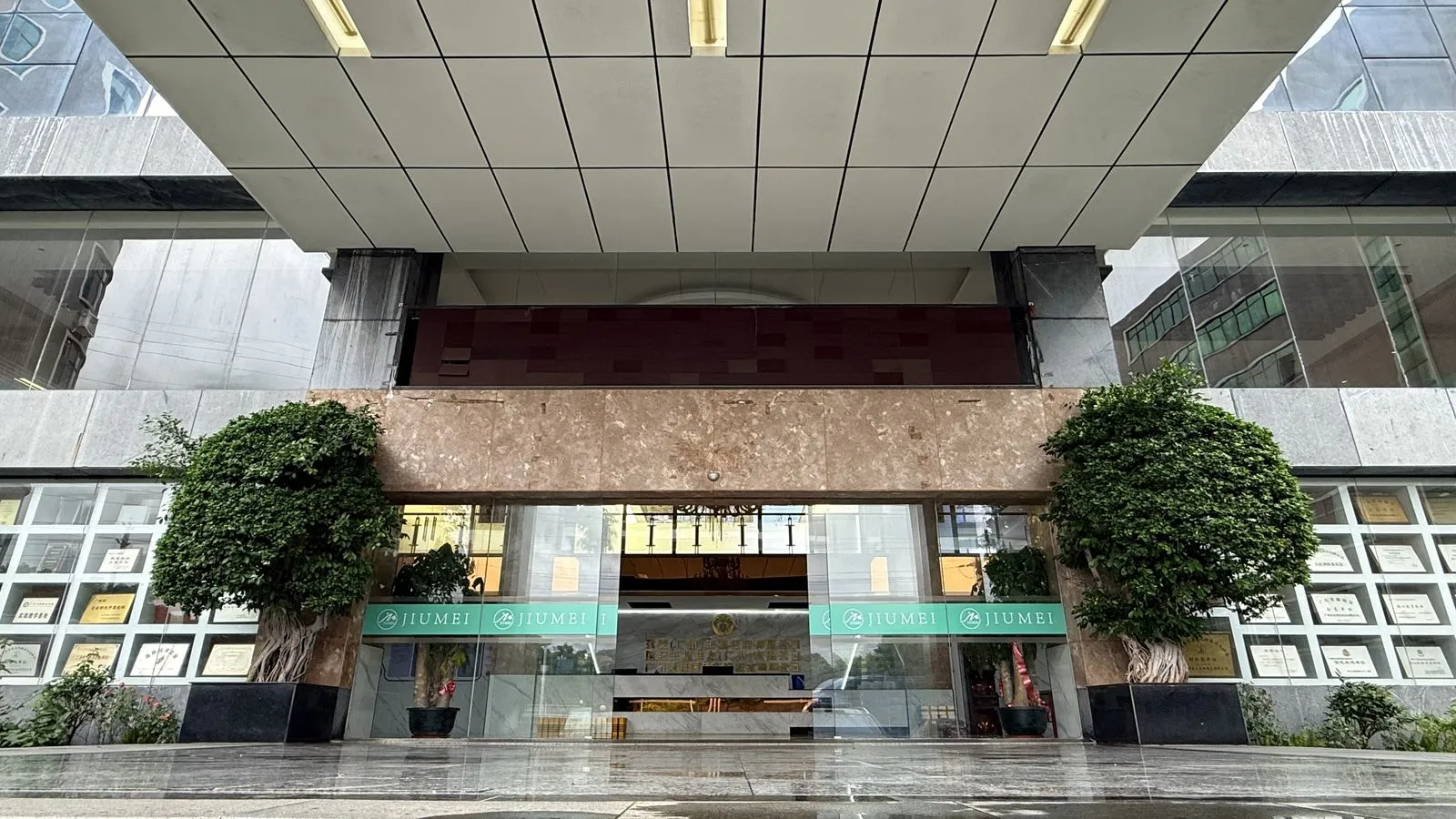
Step 1: Verify Certifications - The Non-Negotiable Foundation
Before discussing formulas, pricing, or timelines, verify certifications. This is the single most efficient filter in your selection process. A manufacturer lacking proper certifications should be eliminated immediately, regardless of how impressive their sample room looks or how competitive their pricing appears.
ISO 22716 Certification
ISO 22716 is the international standard specifically designed for cosmetics Good Manufacturing Practices (GMP). Published by the International Organization for Standardization, it covers production, control, storage, and shipment of cosmetic products. Within the European Union, ISO 22716 is referenced in EU Regulation 1223/2009 as the harmonized GMP standard - making it effectively mandatory for any manufacturer producing for the EU market.
How to verify: Request the full certificate (not a summary or excerpt). Check that the issuing body is accredited - legitimate certifiers include SGS, Bureau Veritas, TÜV, Intertek, and BSI. Verify the certificate number directly with the issuing organization. Confirm the certified address matches the actual production facility address (some manufacturers hold certificates for one location while producing at another). Check the validity period - ISO 22716 certificates are valid for 3 years with annual surveillance audits.
What it guarantees: Documented procedures for every manufacturing operation, controlled production environments, batch traceability from raw material to finished product, trained personnel, and systematic investigation of quality deviations.
GMPC Compliance
GMPC (Good Manufacturing Practice for Cosmetics) is an additional quality framework that originated from US FDA 21 CFR and EU guidelines. While it overlaps significantly with ISO 22716, GMPC places stronger emphasis on physical facility requirements - clean room classifications, air handling systems, water purification infrastructure, and equipment specifications. A manufacturer holding both ISO 22716 AND GMPC demonstrates commitment beyond minimum standards, covering both systematic process control (ISO 22716) and physical manufacturing environment quality (GMPC).
FDA Registration
If you plan to sell cosmetics in the United States, your manufacturer should hold an active FDA facility registration. Under the Modernization of Cosmetics Regulation Act (MoCRA) of 2022, cosmetic facility registration is mandatory, and the FDA has enforced it since July 2024. Facility registration is renewed every two years from the date of the initial registration; product listings, which are your responsibility as the brand, are updated annually. For the full split of who files what, see our MoCRA compliance guide.
How to verify: Ask for the FDA Establishment Identifier (FEI) number and the current fiscal year's registration confirmation. You can verify active registrations through the FDA's publicly accessible database. Note that FDA registration means the facility is registered - it does not mean the FDA has inspected or approved the facility or its products.
Chinese Domestic Production License
Every legitimate cosmetics manufacturer in China must hold a valid Cosmetics Production License (化妆品生产许可证) issued by the provincial drug administration (NMPA provincial branch). The license number follows a standardized format: province abbreviation plus year of issue plus sequential number. For example, a Guangdong-based manufacturer might hold a license reading "粤妆20200XXX."
Red flag: If a manufacturer cannot or will not provide this number, walk away immediately. Operating without this license is illegal in China, and any products manufactured in an unlicensed facility cannot legally be exported with proper documentation. You can verify license validity through China's NMPA public query system.
Third-Party Audit Reports (SGS, Bureau Veritas, TÜV)
Third-party audits go beyond certification by providing detailed, narrative assessments of actual manufacturing practices. An SGS or Bureau Veritas audit report typically runs 30-80 pages and covers facility conditions, production practices, quality systems, and worker welfare. These reports identify specific strengths and weaknesses - giving you insight that a binary "certified/not certified" status cannot provide.
Ask for the most recent audit report (within 12 months). Pay particular attention to non-conformances identified and whether corrective actions were implemented.
Not sure which route fits your product?
Send us your brief and our formulators will tell you what is realistic on formula, MOQ, and timeline before you commit to anything.
Step 2: Assess Production Capability and Scale
Production capability determines whether a manufacturer can reliably deliver your orders on time, at consistent quality, and at scale as your brand grows. Scale matters - but so does flexibility and range.
Key Production Metrics to Evaluate
- Number of production lines: More dedicated lines mean faster turnaround and the ability to produce multiple products simultaneously without cross-contamination risk. Serious manufacturers operate 10-15+ lines covering different product categories (emulsions, serums, cleansers, masks, oils). Ask which categories a factory actually runs day to day rather than which it can theoretically make - a factory with a live skincare range and separate hair care and body care lines is telling you something different from one quoting on a category it has never produced. Ask specifically about line dedication - shared lines require thorough cleaning between products, adding time and contamination risk.
- Daily output capacity: 100,000-200,000+ units per day indicates industrial-scale operation capable of handling growing brands. Smaller operations (10,000-50,000 units/day) may struggle with large reorders or seasonal demand spikes.
- Clean room classification: 100,000-class (ISO 8) is the minimum acceptable standard for cosmetics. 10,000-class (ISO 7) - pharmaceutical-grade - is preferred for premium skincare products, particularly those containing sensitive actives like PDRN, exosomes, or ectoin.
- Equipment age and brand: Modern vacuum emulsifying machines (Fryma-Koruma, IKA), high-pressure homogenizers, automated filling lines with CIP (Clean-In-Place) capability, nitrogen blanketing systems for oxygen-sensitive formulations, and laser batch coding machines all indicate serious investment in production quality.
- Flexibility: Can they handle initial orders of 3,000-5,000 units per SKU while having capacity to scale to 50,000-100,000+ units as your brand grows? Some very large factories refuse small orders; some small factories cannot scale. The ideal partner offers both. For a detailed breakdown of typical order quantities by manufacturing model, see our MOQ and cost guide.
Factory Visit Checklist
A physical factory visit - or at minimum a comprehensive live video tour - is essential before committing to any manufacturing partnership. No amount of documentation substitutes for seeing operations firsthand. During your visit, systematically observe:
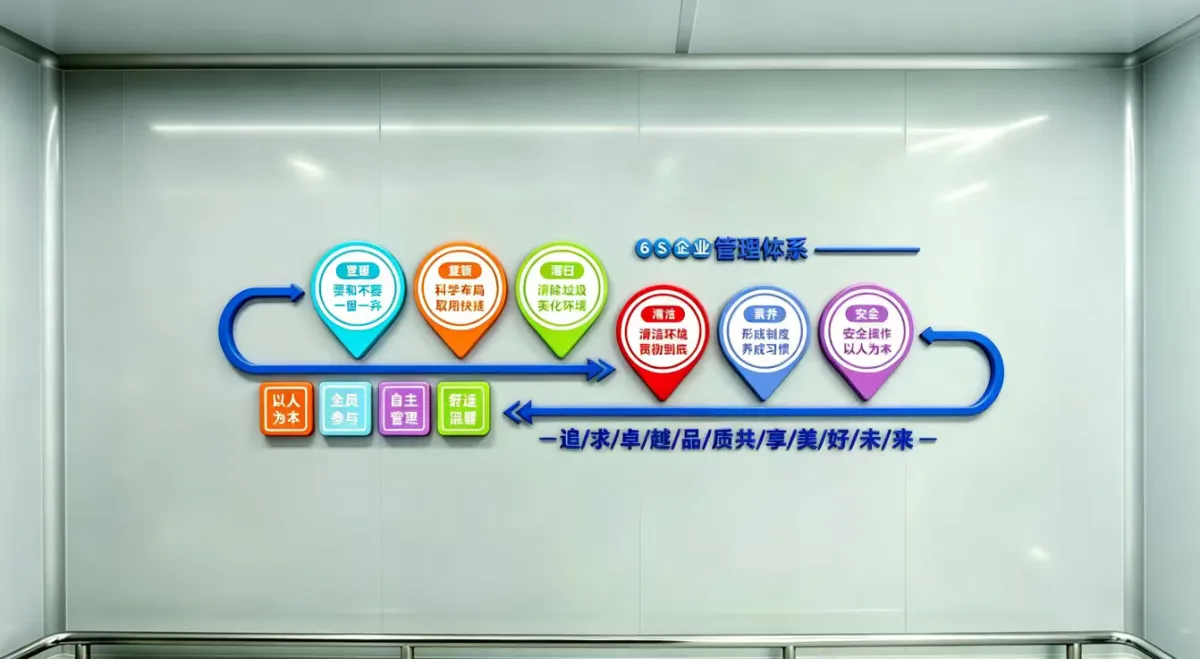
- Cleanliness and organization: Are production areas visibly clean? Is there a 5S or similar housekeeping system in evidence? Random clutter or visible contamination risk points are disqualifying.
- Zone separation: Raw material storage, weighing/dispensing, production, filling, packaging, and finished goods storage should be physically separated with controlled access between zones. This prevents cross-contamination.
- Personnel practices: Workers should wear appropriate PPE - hair nets, gowns, gloves, shoe covers. In clean rooms, full gowning with air showers between zones. Observe whether staff actually follow procedures or only when visitors are present.
- Environmental monitoring: Look for temperature and humidity displays, differential pressure gauges between rooms, particle counters, and documented environmental monitoring logs.
- Material flow logic: Raw materials should flow in one direction through the facility - from receiving, through production, to finished goods. There should never be a situation where raw materials and finished products share corridors or handling areas.
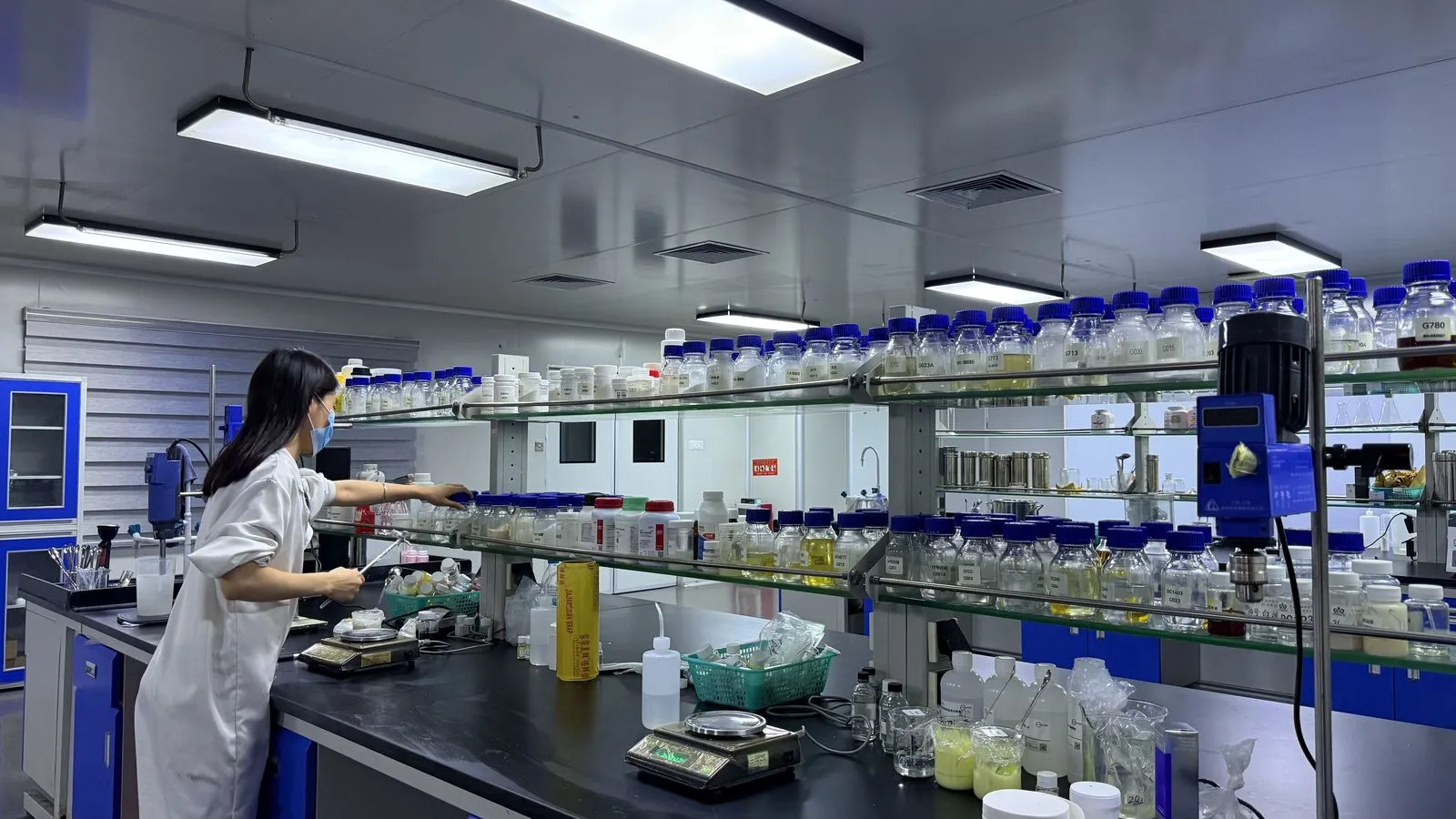
- Laboratory facilities: Does the factory have in-house quality control and R&D laboratories? What equipment is visible? A pH meter and viscometer alone are insufficient - look for HPLC, GC-MS, stability chambers, and microbiological testing suites.
- Documentation on the floor: Are batch records, SOPs, and cleaning logs visibly in use at workstations? Or does the factory only produce documentation for audits?
Step 3: Evaluate R&D Capability
This is the factor that separates a contract filler - a factory that simply puts liquid into containers - from a true development partner that adds value through formulation innovation. If you are pursuing an ODM partnership model, R&D capability is arguably the most important evaluation criterion.
Signs of Genuine R&D Capability
- Patent portfolio: Does the manufacturer hold invention patents (发明专利) - not just utility models (实用新型) or design patents (外观设计)? Invention patents require genuine novelty and undergo substantive examination. A portfolio of 30+ invention patents indicates sustained, meaningful innovation. Ask to see patent certificates and verify them through China's CNIPA patent search system.
- R&D team composition: Look for dedicated formulation chemists with advanced degrees (M.S. or Ph.D. in chemistry, pharmaceutical sciences, or related fields). A team of 15-30+ researchers suggests serious capability. Ask about team specializations - does the team include experts in emulsion technology, active delivery systems, stability science, and raw material chemistry?
- Laboratory equipment: HPLC (High Performance Liquid Chromatography) for active content analysis; GC-MS for volatile and fragrance analysis; stability testing chambers (40°C/75% RH for accelerated aging, -20°C for freeze-thaw cycling); in-vitro transdermal absorption testing (Franz cells); particle size analyzers for emulsion characterization; rheometers for texture profiling.
- Academic collaborations: Partnerships with universities or research institutions for joint research projects, published papers, or co-developed technologies demonstrate credibility beyond commercial claims.
- Raw material innovation: Are they developing or holding patents on novel active ingredients - such as proprietary plant extracts, fermentation-derived compounds, or next-generation actives like plant exosomes? Or are they only formulating with commodity ingredients available to any manufacturer?
- Proprietary delivery technologies: Advanced manufacturers develop their own delivery platforms - supramolecular technology, liposomal encapsulation, solid lipid nanoparticles, or microemulsion systems - that enhance active ingredient efficacy. These technologies represent genuine competitive advantage that transfers to your brand.
- Formula customization process: Ask them to walk you through how they develop a custom formula from brief to final product. A credible R&D team will describe a systematic process involving market analysis, concept development, prototype formulation, iterative refinement based on sensory evaluation, stability testing, and efficacy validation.
Red Flags in R&D Claims
- Cannot produce actual patent certificates when asked
- The "R&D lab" is visibly just a small sample-mixing room with basic equipment
- No stability testing data available for any existing products
- Cannot explain their formulation methodology or development timeline
- All products in their catalog look like variations of generic base formulas with different fragrances
- R&D "team" consists of 2-3 technicians rather than qualified scientists
- Claims of "thousands of formulas" but cannot show innovation or differentiation between them
Step 4: Scrutinize Raw Material Sourcing
The quality of your finished product is fundamentally limited by the quality of raw materials going into it. Two identical-looking serums - one made with pharmaceutical-grade hyaluronic acid from a reputable supplier, the other with industrial-grade material of uncertain purity - will perform and age very differently. Your customers will notice.
What to Evaluate
- Tier-one supplier relationships: Direct purchasing relationships with global ingredient houses - BASF (Germany), Symrise (Germany), CRODA (UK), SEPPIC (France), Lubrizol (US), Shin-Etsu (Japan), DSM-Firmenich (Netherlands), Evonik (Germany), Ashland (US) - indicate a commitment to quality that commands higher raw material costs but produces demonstrably better products. Ask for a supplier list.
- Certificate of Analysis (COA) traceability: Can the manufacturer provide COAs for every raw material batch used in your production? COAs should trace back to the original material manufacturer, not an intermediary or trading company. Each COA should include purity specifications, heavy metal limits, microbiological results, and identity confirmation.
- Storage conditions: Sensitive ingredients (enzymes, peptides, certain plant extracts, vitamin C derivatives) require temperature-controlled storage, sometimes refrigeration. Visit the raw material warehouse and check conditions. Look for temperature monitoring logs, FIFO (First In, First Out) management, and proper segregation of incompatible materials.
- Incoming quality inspection: Does the manufacturer conduct independent testing of raw materials upon receipt, or do they simply trust supplier COAs? Best practice is to verify identity, purity, and key specifications for every incoming batch through their own QC laboratory. Some manufacturers only test periodically or by exception - this creates risk.
- Alternative sourcing: For critical ingredients, does the manufacturer qualify multiple suppliers? Single-source dependency creates supply chain vulnerability - if that supplier has a production issue, your brand's production stops.
The Price-Quality Relationship in Raw Materials
The difference between generic Chinese-manufactured raw materials and tier-one imports is not trivial. Consider hyaluronic acid: pharmaceutical-grade, high-molecular-weight HA from an established biotech supplier costs 3-5x more than commodity-grade HA from a small Chinese manufacturer. The pharmaceutical grade offers verified molecular weight distribution, lower endotoxin levels, consistent batch-to-batch quality, and full regulatory documentation. For a premium brand positioning, the material cost difference per unit of finished product might be $0.30-$0.80 - but the performance and safety assurance is worth many times that in brand reputation.
Step 5: Quality Control Systems - Depth Over Claims
Every manufacturer claims "strict quality control." The difference lies in the depth, systematization, and documentation of their QC processes. A robust QC system catches problems before they reach your customers - and provides the documentation trail needed if problems ever arise post-market.
Multi-Layer QC Framework: What Best-in-Class Looks Like
- Incoming material inspection: Testing every batch of raw material against specifications. Identity testing (FTIR, HPLC), purity analysis, microbiological screening (total plate count, yeast/mold, pathogens), heavy metal testing (lead, arsenic, mercury, cadmium), and visual/organoleptic inspection.
- In-process controls: Monitoring critical parameters during production - temperature profiles, mixing speed and duration, pH at various stages, viscosity measurements, emulsion droplet size, homogeneity checks via sampling at multiple points in the batch. Real-time data logging rather than manual periodic checks indicates higher sophistication.
- Finished product testing: Comprehensive testing of every production batch before release - physicochemical parameters (pH, viscosity, specific gravity, color, odor), microbiological testing (TPC, yeast/mold, absence of pathogens including P. aeruginosa, S. aureus, E. coli), heavy metals, package compatibility verification, and visual inspection of filled units.
- Retention samples: Keeping sealed samples from every batch for the product's entire shelf life plus one year. This provides reference material for investigating customer complaints and demonstrates regulatory compliance.
- Stability testing: Both real-time (storage at recommended conditions for 12-36 months) and accelerated aging (40°C/75% RH for 3-6 months) for every unique formula. Intermediate conditions (30°C/65% RH) for additional data points. Stability-indicating methods that can detect degradation products, not just cosmetic appearance.
- Preservative challenge testing (PCT): Deliberately inoculating products with bacteria and fungi to verify that the preservation system maintains antimicrobial effectiveness throughout the product's shelf life. This is mandatory for EU market entry and should be standard practice regardless of target market.
- Out-of-specification (OOS) investigation procedures: What happens when a test result falls outside acceptable limits? A mature QC system has documented OOS investigation procedures, root cause analysis, and CAPA (Corrective and Preventive Action) processes.
Step 6: Regulatory Support and Market Access
Cosmetics regulations differ significantly between markets. A product perfectly legal in China may require substantial reformulation or documentation to enter the EU, US, or ASEAN markets. A manufacturer with regulatory expertise saves you months of delays, prevents costly reformulation after production, and reduces legal risk.
Regulatory Capabilities to Assess
- US FDA compliance: Product listing preparation under MoCRA requirements, label compliance review (Fair Packaging and Labeling Act, FD&C Act), ingredient nomenclature verification (INCI names), and understanding of prohibited/restricted ingredients per 21 CFR.
- EU Regulation 1223/2009: CPSR (Cosmetic Product Safety Report) authoring or coordination with qualified Safety Assessors, PIF (Product Information File) preparation, CPNP (Cosmetic Products Notification Portal) notification, Responsible Person designation coordination, and compliance with Annexes II-VI (prohibited and restricted ingredients).
- ASEAN Cosmetic Directive: Product notification procedures, compliance with ASEAN Cosmetic Ingredient Listing, and country-specific import requirements for Singapore, Thailand, Malaysia, Philippines, Indonesia, and Vietnam.
- Middle East and GCC markets: GCC country-specific registration (particularly Saudi FDA / SFDA and UAE registration), halal certification coordination, and Arabic labeling requirements - covered in detail in our guide to sourcing cosmetics for Saudi Arabia and the UAE.
- Australia and New Zealand: neither market registers cosmetic products, so the obligations attach to your local importing entity through AICIS or the New Zealand EPA group standard, and an SPF above 15 moves a product under the TGA - see our guide to sourcing cosmetics for Australia and New Zealand.
- China NMPA filing: For novel ingredients, the NMPA (National Medical Products Administration) new cosmetic ingredient registration process - which can take 12-18 months and requires extensive safety data.
- Claims substantiation: Documentation and testing to support marketing claims (anti-wrinkle, brightening, moisturizing, etc.) that satisfy regulatory authorities in your target markets.
A manufacturer that handles multi-market regulatory filing in-house eliminates the need to hire separate regulatory consultants for each target market - potentially saving $20,000-$50,000+ in external fees for a multi-market launch.
Step 7: Communication, Project Management, and Cultural Alignment
Operational capability means nothing if communication breaks down. Manufacturing partnerships involve months of collaboration on formulation development, sampling, packaging design, regulatory filing, and production coordination. Misunderstandings caused by language barriers or time zone gaps can delay launches by weeks or months.
Communication Factors to Evaluate
- Response time: During your initial inquiry phase, do they reply within 24 hours? Consistently? Track response times over 2-3 weeks of communication before committing. If pre-sales communication is slow, production communication will be worse.
- Language capability: Does the company employ English-speaking project managers - not just a sales person who passes messages to a Chinese-only technical team? Ideally, your primary contact should be able to discuss formulation details, regulatory requirements, and production issues directly without translation delays.
- Project management systems: Do they provide documented timelines, milestone tracking, and proactive updates? Or do you need to chase them for every status update? Some manufacturers use shared project management tools that give you real-time visibility into your order progress.
- Problem resolution culture: Problems will arise - a raw material shipment is delayed, a stability test shows unexpected results, a packaging component fails inspection. How the manufacturer communicates and resolves problems tells you more about the partnership quality than how smoothly things go when everything is perfect. Do they notify you proactively with proposed solutions? Or do you discover problems only when delivery deadlines are missed?
- Sample turnaround: Can they give you a written preparation, dispatch, evaluation, and revision schedule after reviewing the brief? A credible answer names the dependencies rather than promising one generic speed for every formula.
- Reference accessibility: Will they connect you with existing clients for references? Reputable manufacturers with satisfied customers readily provide references. Reluctance to provide references is a concern.
Step 8: Pricing Transparency and Value Assessment
Price is always a factor - but it should never be the primary selection criterion for a cosmetics manufacturing partner. The cost of a quality failure (product recall, brand damage, regulatory penalty) vastly exceeds the savings from choosing a cheaper manufacturer. Understanding the difference between OEM and ODM manufacturing models helps you evaluate whether pricing is reasonable for the service level and capabilities being offered.
Understanding What Drives Cost
- Raw materials (30-40% of unit cost): Premium raw materials from tier-one suppliers (BASF, Symrise, CRODA) cost 20-50% more than generic Chinese alternatives. This is the single largest cost variable and the area where cheap manufacturers most commonly cut corners.
- Manufacturing environment (15-20%): Clean room production (ISO 7 or ISO 8) costs significantly more than open-environment filling due to air handling, gowning, monitoring, and maintenance requirements.
- Quality control (5-10%): Comprehensive QC testing adds $0.10-$0.50 per unit. Manufacturers that skip tests or perform minimal testing can quote lower, but you bear the risk.
- Certification overhead: Maintaining ISO 22716, GMPC, FDA registration, and passing annual audits costs manufacturers $80,000-$150,000 annually. This overhead is amortized across all production - but it is real cost that uncertified factories simply do not bear.
- R&D amortization (5-10%): Manufacturers that invest heavily in R&D (patents, scientists, equipment) must recover this investment through pricing. You are paying for innovation access.
- Packaging (20-30%): For complete cost breakdowns by product type and manufacturing model, see our comprehensive MOQ and cost guide.
The True Cost of "Cheap"
A factory quoting 30-50% below comparable manufacturers is almost certainly cutting corners somewhere. Common cost-cutting measures that create risk for your brand:
- Substituting cheap, unverified raw materials for specified ingredients
- Reducing active ingredient concentrations below effective levels
- Skipping stability testing or performing abbreviated versions
- Producing in non-clean-room environments
- Omitting preservative challenge testing
- Using shared equipment without adequate cleaning validation between products
- Employing untrained production staff
The risk calculus is straightforward: saving $0.50-$1.00 per unit on production creates potential exposure to product recalls ($50,000-$500,000+), regulatory fines, customer injury claims, and permanent brand reputation damage.
Step 9: Assess Scalability and Long-Term Partnership Potential
Your first order is just the beginning. The right manufacturing partner grows with your brand - from initial launch quantities to full-scale production as demand increases. Evaluate forward-looking capabilities:
- Capacity headroom: Is the factory currently operating at 90%+ capacity (risk of delays during your growth phases) or 60-70% (room to accommodate your scaling)?
- New product development pipeline: Can they support ongoing NPD (new product development) for line extensions, seasonal limited editions, and reformulations?
- Continuous improvement culture: Do they proactively suggest formula improvements, cost optimization opportunities, or new technology applications as the relationship matures?
- Multi-category capability: As your brand expands from skincare into body care, hair care, or color cosmetics, can the same manufacturer support these categories? Consolidating at one partner simplifies logistics and strengthens negotiating position. Hair is a common second step, and planning a private label hair range early tells you whether a skincare-led factory can actually take it on.
- Payment term flexibility: Established relationships should evolve from 50% deposit/50% pre-shipment to more favorable terms (Net 30, Net 60). A manufacturer willing to discuss future term improvements demonstrates confidence in a long-term partnership.
Skincare Is Not the Same Sourcing Problem as Makeup
The nine checks above apply to any cosmetics factory. But the moment you name your category, the weighting changes, and a factory that is excellent for one is mediocre for the other. Buyers who skip this end up auditing the wrong things.
Skincare is decided by chemistry. An emulsion has to stay stable for two or three years across a temperature range you cannot control, which makes the emulsifier system, the preservative system and the stability data the things that matter. Colour cosmetics are decided by pigment handling. Dispersion quality, shade reproducibility between batches, and the ability to match a reference shade are the constraints, and none of them show up in a stability report.
This is why "we have 300 SKUs" is a weak answer. The useful question is narrower:
| If your product is | Ask specifically about | Weak-signal answer |
|---|---|---|
| Emulsions: cream, lotion, milk | Emulsifier systems they work with, accelerated and real-time stability protocol, how they handle separation on scale-up | "Our formulas are all stable" |
| Aqueous serums and essences | Preservative system choices, solubilisation of oil-soluble actives, pH stability of the active over shelf life | A claimed active percentage with no stability data behind it |
| Anhydrous: balms, oils, sticks | Melt-point control, crystallisation and graining behaviour, filling temperature | Quoting it as if it were the same process as a lotion |
| Colour cosmetics | Pigment dispersion equipment, batch-to-batch shade tolerance, how they match a reference | Showing you skincare stability data instead |
Rank Categories by Difficulty, Not by Company Size
A useful shortcut when comparing suppliers: ask which category they would decline. A factory that says yes to everything is either much bigger than it appears or is planning to outsource part of your order without telling you. The formats that genuinely separate capable factories from the rest are high-percentage active serums, stable sunscreen bases, and anhydrous sticks. If a supplier treats those as routine while showing no supporting data, treat the confidence itself as the warning.
Judge a Skincare Sample the Way a Chemist Would
Most buyers assess a sample by how it feels for thirty seconds. That is the least informative test available. Three things are worth more:
- Leave it somewhere hot. Two weeks at elevated temperature will surface separation, colour drift and odour change that a fresh sample hides. This is the single cheapest test a buyer can run.
- Ask what the pH is and why. A formulator who cannot state the target pH range and the reason for it is not the person who developed the formula.
- Judge texture against the claim, not against your preference. A barrier cream that feels light may be underdosed on lipids. Sensory and function pull against each other, and the factory should be able to explain which way they traded.
Then compare the sample to the technical data sheet. The gap between what the TDS says and what arrived tells you how the factory will behave at production scale, which is the thing you are actually trying to predict.
The Nine Checks in One Table
The sections above work through each check in detail. This table condenses them into something you can take into a supplier call: what to ask for, how to verify the answer independently, and the response that should end the conversation.
| Step | What to ask for | How to verify it independently | Disqualifying answer |
|---|---|---|---|
| 1. Certifications | Chinese production licence number, ISO 22716 and GMPC certificates with numbers and expiry dates | Check the certificate number in the issuing body’s own database, not a PDF they email you | No licence number, or certificates without a verifiable issuer |
| 2. Production capability | Line count, daily capacity, cleanroom class, categories run in-house | Live video tour of the actual line running your category | Refuses a visit or live tour; “too busy” and “security” do not count |
| 3. R&D capability | Team size, qualifications, sample lead time on a custom brief | Send a real brief and judge the technical questions that come back | No dedicated lab or no qualified formulation scientists |
| 4. Raw materials | Supplier names, INCI list, grades, and COA per material | Cross-check the named supplier and ask for the batch COA, not a spec sheet | Will not name suppliers or produce COAs |
| 5. Quality control | Written QC procedures, batch records, in-process control points | Ask to read a real batch record for a recent production run | No documented procedures or records available for review |
| 6. Regulatory support | Documentation experience for your specific destination market | Ask which dossiers they have filed and what the applicant was responsible for | Vague claims of “global compliance” with no market-specific detail |
| 7. Communication | A named technical contact, not only a sales channel | Put a formulation question in writing and see who answers it | No English-speaking technical staff; sales-only English is not enough |
| 8. Pricing transparency | Itemised quote separating formula, packaging, testing and tooling | Benchmark against two comparable quotes for the same brief | 30%+ below comparable quotes with no stated reason |
| 9. Scalability | Client references, payment terms, NDA willingness, compliance history | Call a reference; check NMPA public databases for violations | No references, 70%+ upfront with no escrow or LC, or refuses an NDA |
Red Flags Summary: Walk Away If...
After evaluating dozens of potential manufacturers, keep this consolidated red flag list as your final filter. Any single item is grounds for elimination:
- Cannot provide a valid Chinese cosmetics production license number (化妆品生产许可证)
- No ISO 22716 or GMPC certification from a recognized body
- Refuses factory visits or live video tours - "too busy" or "security reasons" are unacceptable excuses
- Cannot produce third-party audit reports (SGS, Bureau Veritas, TÜV)
- No dedicated R&D laboratory or qualified formulation scientists
- Pricing 30%+ below comparable manufacturers without clear justification
- No English-speaking technical staff (sales-only English is insufficient for complex projects)
- Demands large upfront payments (70%+) with no escrow, milestone-based, or LC payment options
- Cannot or will not provide client references
- No documented quality control procedures or batch records available for review
- Unwilling to sign NDA or confidentiality agreements
- History of regulatory violations (check NMPA public databases)
Recommended Selection Process: A Practical Timeline
Based on industry best practice, here is a realistic timeline for selecting a cosmetics manufacturing partner in China:
- Weeks 1-2: Initial research and longlist creation (8-12 potential manufacturers) - our tiered breakdown of private label skincare manufacturers in China is a practical starting point for that longlist
- Weeks 3-4: Certification verification and preliminary communication - narrow to 4-6 candidates
- Weeks 5-6: Detailed capability questionnaires, pricing discussions, and reference checks - narrow to 2-3 candidates
- Weeks 7-8: Factory visits (physical or comprehensive video) and sample requests
- Weeks 9-12: Sample evaluation, negotiation, and final selection
- Week 13+: Contract signing, first order placement
Rushing this process to save a few weeks almost always costs more time (and money) downstream through quality issues, communication failures, or partnership breakdown. If you are launching a private label skincare brand for the first time, building this evaluation timeline into your overall launch plan is essential. It also helps to know what a private label skincare manufacturer hands over at each stage, because those documents are what you will be evaluating them on.
Conclusion: Partnership Over Transaction
Choosing a cosmetics manufacturer in China is not a procurement exercise - it is a partnership decision that will determine your brand's product quality, speed to market, innovation capability, and regulatory compliance for years to come. The cheapest quote is almost never the best value. The most impressive website is not always backed by genuine capability.
Start with certifications as your non-negotiable filter. Verify through factory visits and third-party audit reports. Evaluate R&D depth, raw material sourcing, and quality systems with the rigor they deserve. Assess communication quality and cultural fit. Consider long-term scalability alongside immediate pricing.
If you are weighing China against a specific alternative, our head-to-head guides on China vs Malaysia OEM manufacturing and China vs Korea cosmetics manufacturing apply these same criteria to real sourcing decisions.
The right partner accelerates your brand's growth, brings innovation you could not develop independently, navigates regulatory complexity across markets, and becomes a genuine competitive advantage. The wrong partner - chosen for price or convenience - can destroy a brand through quality failures, delays, or regulatory non-compliance. Invest the time to choose well.
Frequently Asked Questions
What certifications should a Chinese cosmetics manufacturer have?
Two are non-negotiable: a valid Chinese cosmetics production licence, and ISO 22716, the international GMP standard written specifically for cosmetics. ISO 22716 is referenced in EU Regulation 1223/2009 as the harmonised GMP standard, which makes it effectively mandatory for anyone producing for the EU market. Ask for the full certificate rather than a summary, and check that the issuing body is accredited — SGS, Bureau Veritas, TÜV, Intertek and BSI are legitimate certifiers.
How do I verify that a factory's certificate is genuine?
Check the number with the issuing organisation directly rather than accepting a PDF. Then confirm the certified address matches the actual production address, because some manufacturers hold a certificate for one site while producing at another. Also check the validity window: ISO 22716 certificates run three years with annual surveillance audits, so a certificate can be authentic and still be out of date.
What are the clearest signs I should walk away from a manufacturer?
Any one of these is grounds for elimination on its own: no valid production licence number, no ISO 22716 or GMPC from a recognised body, refusal of a factory visit or live video tour, no third-party audit reports, no dedicated R&D lab or qualified formulation scientists, pricing 30% or more below comparable factories with no explanation, no English-speaking technical staff, demands for 70% or more upfront with no escrow or milestone option, refusal to provide client references, no documented batch records, unwillingness to sign an NDA, or a history of regulatory violations in the NMPA public databases.
How long does it take to select a cosmetics manufacturer properly?
Around twelve weeks to a signed contract. A realistic sequence is two weeks of research to build a longlist of eight to twelve factories, two weeks verifying certifications to narrow to four to six, two weeks on capability questionnaires and reference checks to reach two or three, two weeks for factory visits and sample requests, then three to four weeks for sample evaluation and negotiation. Compressing this to save a few weeks usually costs more downstream through quality issues or a partnership that breaks down.
Does a manufacturer need regulatory expertise for my specific market?
Yes, and it is worth testing rather than assuming. A product that is perfectly legal in China may need reformulation or additional documentation for the EU, US or ASEAN. The capabilities that matter differ by destination: MoCRA listing and INCI verification for the US; CPSR, PIF and CPNP notification for the EU; ASEAN Cosmetic Directive notification and the ASEAN Cosmetic Ingredient Listing for Southeast Asia; and SFDA or UAE registration plus halal coordination for GCC markets. Ask which of these the factory has actually filed against, not which it recognises.
Should I choose a manufacturer based on price?
Price is a reasonable input, but a large discount is a signal rather than a saving. Pricing 30% or more below comparable manufacturers without a clear structural reason is on the walk-away list, because the gap has to come from somewhere: raw material grade, quality control depth, or documentation that does not exist. Verify certifications first as the cheapest filter, then compare price among the factories that survive it.
Want to Verify Our Certifications Firsthand?
GZ Cosmetics Lab holds ISO 22716, GMPC, and FDA registration. We welcome factory visits and can share our Intertek certificates, patent documentation, and client references before your first order. Third-party product testing through SGS is supported upon request.
Ready to Start Your Project?
Tell us your product requirements. Within 24 hours, our technical team will reply with a quotation or the questions needed to prepare one.