
Skincare Formulation Cost: What Published Prices Actually Include
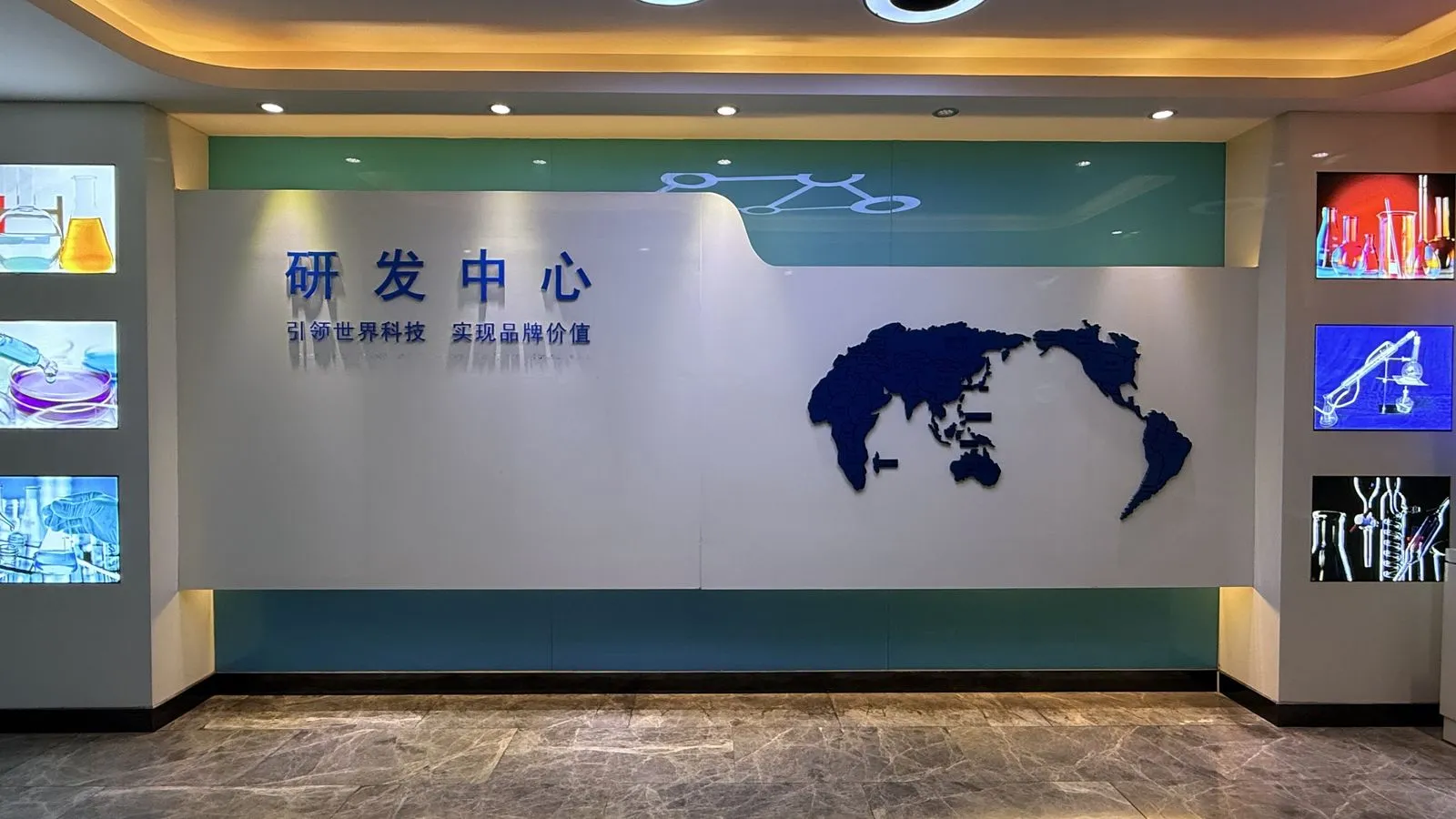
Our R&D centre, Guangzhou. Where a formulation quote turns into an actual formula.
Ask five suppliers what a skincare formula costs and you will get answers between a few hundred dollars and six figures. That spread is not market volatility and it is not one of them lying. It is five companies quoting five different things, and the published prices prove it: one US lab lists a stock formula at $4,500 and a custom formula at $15,000 on the same page, a European lab charges €120 an hour, and a signed manufacturing contract we found online prices a set of up to three experimental formulas at $100.
None of those numbers is comparable to the others, because a formulation quote bundles four separate things that vendors split up differently: the chemist's time, the physical samples, the third-party testing, and who owns the formula at the end. Change any one of those and the total moves by an order of magnitude.
This guide takes the published numbers apart line by line, so you can read any quote you receive and know what is missing from it. Everything priced below comes from a public price list, a published rate card, or a contract document, each one dated. Where a figure is a vendor's estimate rather than a transactable price, it is labelled as such.
Why Published Quotes Range From $100 to $50,000
Start with what is actually purchasable today, because it sets the floor and the ceiling honestly.
| What is being sold | Published price | What it includes | Source & date |
|---|---|---|---|
| A set of experiments up to 3 formulas | $100 per set | Bench experiments only. Liquid samples in about 2 weeks, solid in about 6 | Vermont Soap manufacturing agreement (contract document) |
| Stock formula adaptation | $4,500 per formula | 1 adjustment included; further adjustments $1,500 each; samples $50 each; ownership included | Freelance Formulations price list, updated Aug 2026 |
| Custom formula | $15,000 per formula | 2 adjustments, accelerated stability testing, preferred vendor list, ownership included | Same price list |
| Dedicated lab day | $25,000 | The lab closes to other clients for one day | Same price list |
| Formulation by the hour | €120 per hour | R&D time only. Their own guidance: most new formulas land at €3,000–€5,000; reformulations under €1,000; samples €200–€500 each | NOESIS Cosmetics published rate card |
Two things jump out. First, the cheapest and most expensive items on that table are not the same product at different quality levels — $100 buys you three experimental attempts with no testing and no ownership, while $15,000 buys a finished, stability-tested, transferable formula. Second, the hourly model and the project model cross over: at €120 an hour, a €3,000–€5,000 new formula implies roughly 25 to 40 hours of lab work. If a project quote works out to far fewer hours than that, something has been left out.
Independent chemists sit in a different band again. Practitioners on Chemists Corner have described $150–$300 an hour as normal, with an important caveat in the same discussion: that rate assumes you give up ownership of the formula. The alternative structure discussed there is royalties, with 1–2% called reasonable, and one contributor noting roughly 2% is common with large corporations against about 5% with smaller outfits. Those figures date from 2015, so treat them as structural guidance rather than current rates.
The Line Item Most Quotes Leave Out: Who Owns the Formula
This is the single largest variable in formulation cost, and it rarely appears as a line item. A formula you cannot take anywhere is a rental, not an asset, and the price should reflect that.
The clearest evidence is not marketing copy but an actual manufacturing agreement published online by Vermont Soap. Read the ownership clauses in sequence:
- “If the Client approves a Formula, the Formula shall be owned by the Client” — then, in the same sentence, the manufacturer “shall have a license for the use of the Formula.”
- All rights to an experimental formula stay with the manufacturer until the client approves it. Anything you look at and reject is not yours.
- The client owns the formula but “shall not share the Formula with, or attempt to authorize the manufacture of the Product by, any third person; nor shall it manufacture the Product itself.”
- To dissolve that exclusivity there is a priced exit: buy $5,000 of the product per year for five consecutive years, or pay a $25,000 lump sum designated as a licence buy-out.
Read plainly, that is ownership on paper with exclusivity in practice, and a $25,000 number attached to leaving. There is nothing improper about the structure — the manufacturer funded development it wants to recover — but a brand that reads only the first clause has badly mispriced its own position.
Other vendors handle it differently and say so publicly. Freelance Formulations states clients get “100% full ownership of their formula once the formulation stage has been completed and paid in full” — the payment condition is the whole clause. A Dutch manufacturer describes the market split directly: some contract manufacturers keep the base formula and grant an exclusive licence, while others assign full IP rights, “often for an additional fee.” And a formulation consultancy puts the base rate bluntly: “Most small to mid-sized beauty and personal care brands do not own their formulas.”
The practical consequence shows up years later, when you want to move production. As one lab puts it, if the lab owns your formula “this makes it much more difficult to change labs after the formulation is complete.” That is the real cost of a cheap development fee, and it is payable at the worst possible moment — when you have a selling product and a supplier problem.
Four questions settle it before you sign, and all four belong in the quote, not the conversation:
- Who owns rejected and experimental versions, not just the approved one?
- Does the manufacturer retain a licence to use the formula, and is it exclusive?
- Is there a buy-out price, and is it fixed now or negotiated later?
- What exactly transfers — the ingredient list, or the ratios, process parameters and supplier specifications too?
That last one matters more than it sounds. A Chinese manufacturer we found stating its terms publicly commits to transferring “full ownership of the formula (including ingredient ratios, process methods, and technical parameters).” An ingredient list without ratios and process parameters cannot be reproduced by another factory, so on its own it is not a transferable asset. If you want to understand how to test whether a factory can genuinely develop and document a formula in the first place, our guide on how to verify formulation capability covers the evidence to ask for.
Not sure which route fits your product?
Send us your brief and our formulators will tell you what is realistic on formula, MOQ, and timeline before you commit to anything.
Testing: The Costs That Are Published, and the Ones That Are Not
Testing is where quotes diverge most sharply, because some labs publish list prices you can pay by card while others quote per project. Both approaches are legitimate; the problem is comparing one against the other.
Here is what is actually listed publicly, currency as published:
| Test | Published price | Lab & region |
|---|---|---|
| Stability, anhydrous / standard / real-time | £200 / £285 / £500 | ISCA, UK |
| Challenge test, USP 51 topical | £185 standard, £350 double | ISCA, UK |
| Challenge test, EP topical | £200, £280 double | ISCA, UK |
| Challenge test (EP/USP 51, ISO 11930 options) | $231.35 | Certified Cosmetics, Netherlands |
| Stability & compatibility | $231.35 | Certified Cosmetics, Netherlands |
| Accelerated stability, 12-month shelf life | $219.78 | Certified Cosmetics, Netherlands |
| Microbiology | $79.81 | Certified Cosmetics, Netherlands |
| Challenge test, ISO 11930 or EP 5.1.3 | €320 per product, 45+ calendar days | NOESIS, Bulgaria |
| Stability, 40°C cycling | €100 per week (€400 at 4 weeks, €1,200 at 12) | NOESIS, Bulgaria |
| CPSR safety report | €250 per product | NOESIS, Bulgaria |
| Retail-ready panel (actives, heavy metals, USP 51 PET, USP 61 micro, pH) | $339 per sample | Gold Standard Analytics, US |
| MoCRA safety package (above plus accelerated stability and restricted substances) | $695 per sample | Gold Standard Analytics, US |
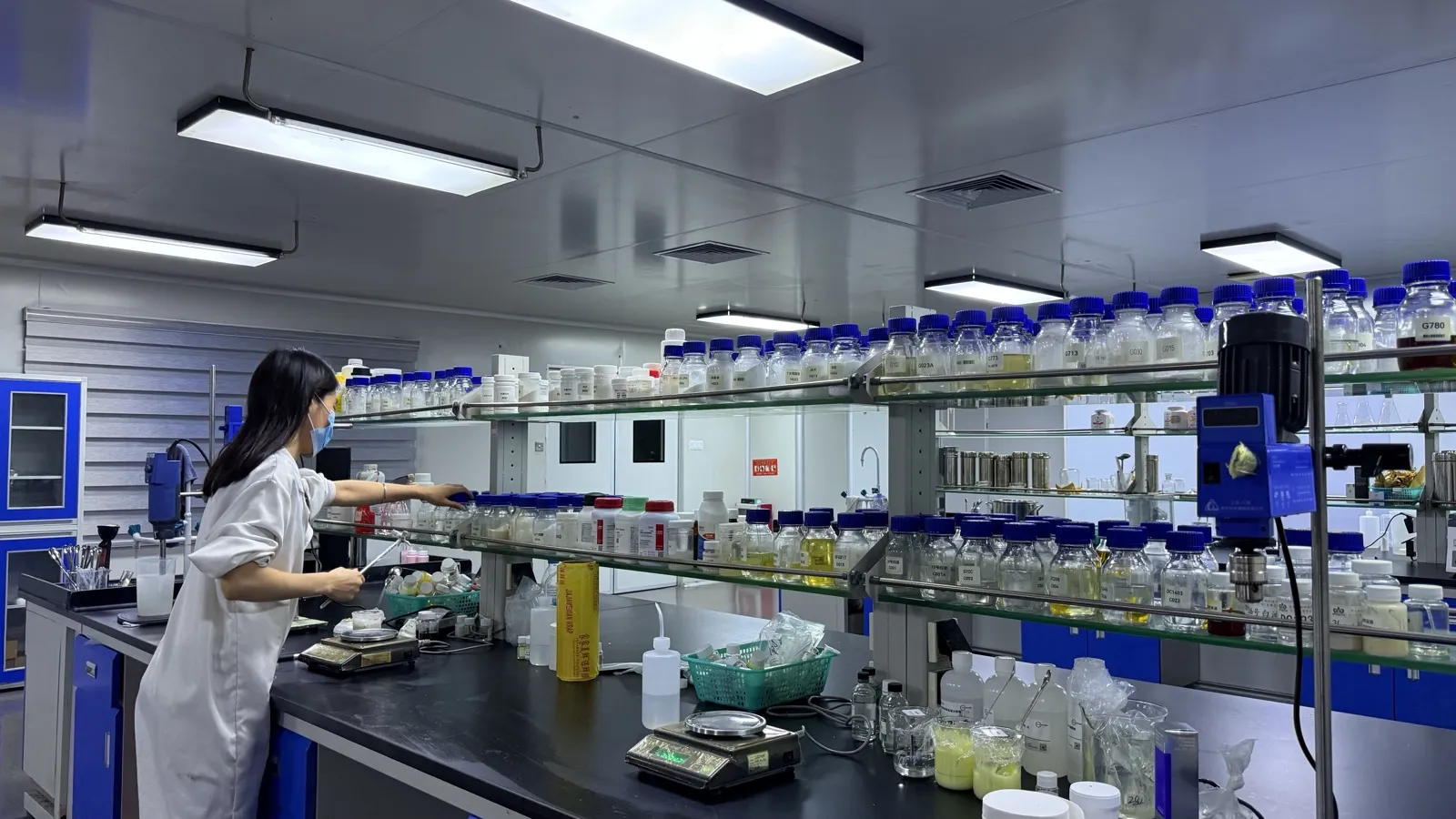
Bench work on a trial batch in our own lab. Where a lab is separate from the factory, this stage is billed as a project fee.
Two cautions on that table. The Dutch lab's terms page states prices in euros while its store data returns US dollars, so treat the currency as unconfirmed and ask before you budget. And the US figures come from a page marked as a Q1 2026 pricing snapshot, which is the kind of thing that moves.
Now the discrepancy worth knowing about. Those published challenge-test prices cluster between roughly £185 and €320. One US contract lab's guidance page — an estimate on a blog page, not a published price list — puts a basic preservative efficacy test at $2,500–$4,000 and challenge testing generally at $2,000–$8,000 or more. That is an order of magnitude apart from the list prices above, and both can be true: a standalone ISO 11930 run bought from a testing house is a commodity, while the same line item inside a full development programme may carry formulation troubleshooting, re-tests after preservative adjustments, and project management. When a testing number in a quote is ten times a published list price, the question is not whether it is inflated but what else it contains. The stability rows above work the same way: the £200 and £500 figures are different studies, not a budget and a premium version of one, and the price alone does not tell you whether the shelf life it produces will hold up. Since no regulation prescribes a stability protocol, that comes down to what the report puts in writing — the batch, the packaging, the conditions and the pre-set criteria.
Efficacy claims are the genuinely expensive tier, and the published prices make the jump visible: skin hydration instrumental measurement at about $492 and a dermatological patch test at about $174, against an anti-wrinkle study at roughly $1,330 and in vivo water-resistant SPF starting near $2,140 and running past $3,300. That SPF row is the one that reshapes a budget, because a water-resistant claim on something like our sport water-resistant SPF50 has to be earned in vivo and cannot be inherited from the base formula. Broader market guidance from the same Bulgarian lab puts in vivo human trials at €5,000–€20,000, rising past €25,000 for multi-endpoint or consumer-perception work — though note that page contradicts itself on SPF pricing in two places, so use it as a bracket rather than a quote.
The planning point: your claim strategy is a budget decision made before formulation finishes, not after. Deciding you want a measurable anti-wrinkle claim once the formula is locked can cost more than the formula did — and the claim you choose also constrains the dosage you are allowed to run, which we break down in our guide to peptide dosage tiers for anti-aging and firming OEM. Testing prices per formula also explain why MOQ and per-unit costs behave the way they do — fixed development and testing spend has to amortise across whatever volume you order.
The Two Routes, and Why One Genuinely Costs Less
Here is the part of the market that gets described dishonestly, so the claims below are limited to what we could verify in public sources.
There are two distinct paths, and their economics differ because the work differs:
- Building on an existing, proven formula. The base already exists and has already been through stability testing. You are paying for adaptation — fragrance, texture, actives level, packaging compatibility — not for original development. A documented base looks like our barrier-first moisturising essence lotion or multi-weight HA serum, where baseline levels, the pH window and packaging options are already documented, so the quote covers adapting them rather than deriving them.
- Developing a custom formula. Bench work from a brief, multiple iteration rounds, a fresh stability and preservative programme, and documentation built from scratch.
On the first route, development charges genuinely compress. One Chinese OEM states publicly that when you build on the manufacturer's mature formula, base products such as a moisturising lotion “often carry no development fee, or only a sampling fee.” A Shenzhen supplier publishes sample fees of about $10–$20 per unit, refundable against bulk orders of 200 pieces or more. Another Guangzhou factory advertises free formula consultation and free sample shipping for qualified buyers. Which tier of factory you are quoting matters here, and our guide to private label skincare manufacturers in China explains how tier drives development and sampling costs.
What we will not claim is that this is a China advantage. We went looking for evidence that Chinese factories waive custom formula development, and the evidence is not there — no manufacturer we could find publishes anything of the kind, and the exact phrase “free formula development” returns nothing as a stated industry practice. More usefully, a European lab spells out the same split we just described: its €200 sample fee is fully refunded on order, which “makes the sample effectively free,” but “for custom-made formulations, however, the fees are not refundable,” and R&D fees for custom work are non-refundable too.
So the real structure is this, and it holds in Guangzhou and in Plovdiv alike: existing formulas absorb the development cost, custom formulas charge for it. Anyone presenting waived development fees as a regional or company-specific advantage is describing a route, not a favour. The honest question to ask a supplier is not “do you charge development fees” but “which route are you quoting, and what happens to the fee if I order.”
Where sourcing region does change the arithmetic is further down the quote — unit cost, tooling, MOQ, and the cost of verification. That comparison is the subject of our Europe versus China manufacturing comparison rather than a formulation-fee question.
Why an Integrated Lab and Factory Prices Differently
There is one structural difference worth understanding, because it explains the pricing models rather than just comparing them. Most of the published prices above come from standalone formulation labs — companies that develop formulas but do not manufacture at scale. When development and production sit in two different companies, the lab has to recover its full cost inside the development fee, because it may never see your production volume. Hence €120 an hour, or $15,000 as a project, with the formula handed over at the end.
Our own structure is different, and it is why we quote differently. Our R&D team of 50+ works in the same facility as the 13 production lines that will run the finished formula. Development is not a separate business that has to pay for itself — it is the front end of a manufacturing relationship. That does not make development free, and we do not claim it does. What it changes is where the cost sits: it can be amortised into production rather than fully recovered upfront, which is the same reason the existing-formula route is cheaper anywhere in the world.
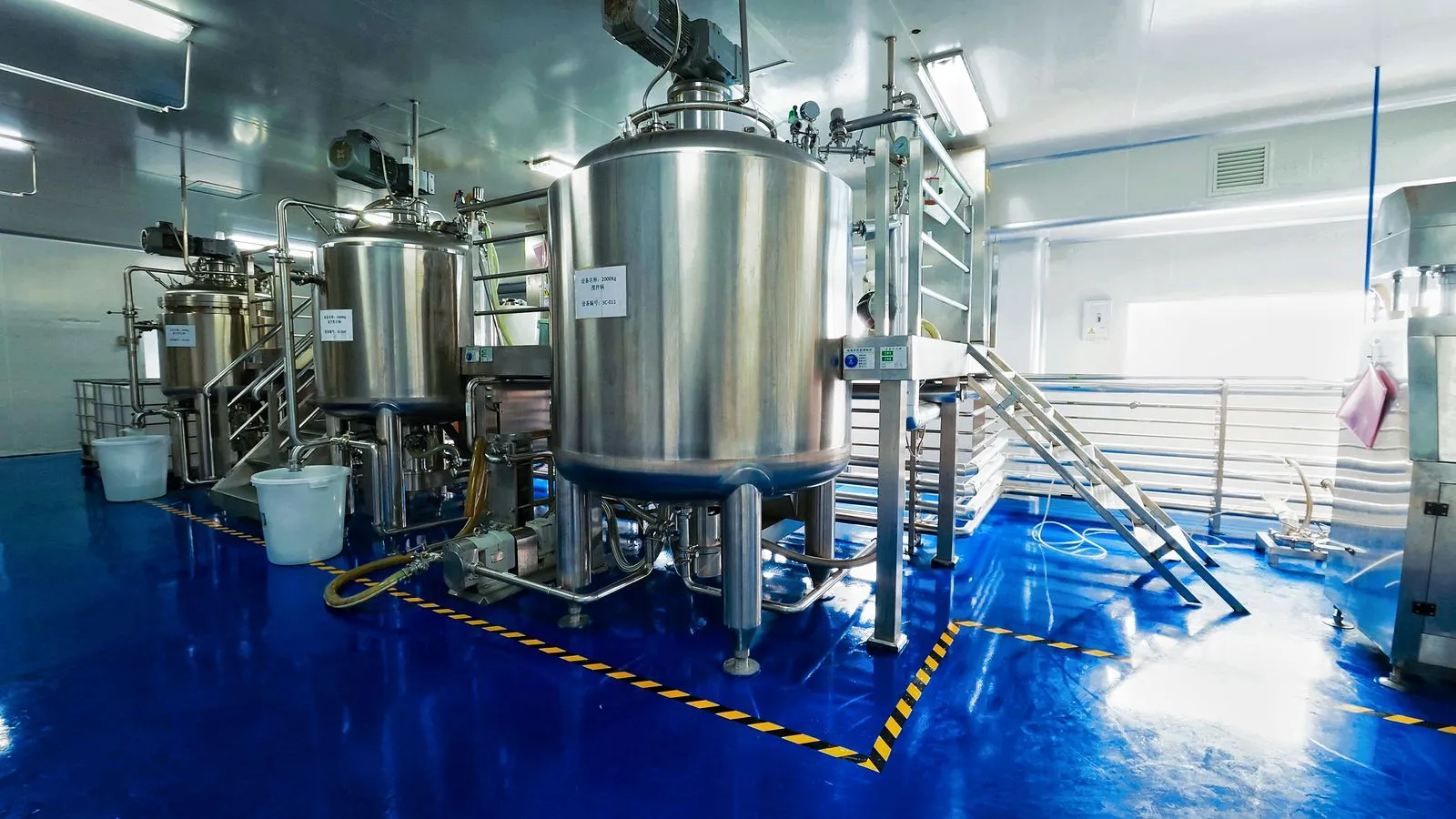
The scale-up tanks that receive a formula from our own bench. Same site, same team — which is why development cost behaves differently here than at a standalone lab.
The second difference is what is being developed. A lab billing hours is selling formulation time. Where a factory holds licensed delivery technology — in our case a supramolecular delivery platform plus transdermal systems for actives such as PDRN, Ectoin and S-Pro-Xylane — part of the development work is applying something that already exists and is already validated, rather than inventing it per project. That is a genuine cost difference, not a discount.
Where sourcing region genuinely does not help you is verification. An integrated factory is only an advantage if it can prove the lab exists and works, and that proof lives in documents rather than in the quote.
What a Transferable Formula Actually Looks Like on Paper
Go back to the ownership problem for a moment, because there is a practical test that cuts through all of it. A formula you own but cannot hand to another factory is not transferable, whatever the contract says. So the question is not just who owns it but what document you receive. Our guide to moving a formula to a new factory sets out the full handover package that makes a formula genuinely portable.
Here is the difference between the two, and it is worth checking against any quote you are holding:
| Document | Not transferable | Transferable |
|---|---|---|
| Ingredients | INCI list in descending order, as on the label | Full INCI list with exact percentages |
| Process | “Heat phase A, add phase B” | Temperatures, mixing speeds, order and timing of addition, cool-down points |
| Raw materials | Generic ingredient names | Grade, supplier specifications and approved sources |
| Quality control | “Passed QC” | Release specifications with limits, and the test methods used |
| Evidence | A statement that testing was done | Stability and challenge test reports with dates, conditions and results |
The right-hand column is what a second factory needs to reproduce your product without redeveloping it. Without percentages and process parameters, an ingredient list is a starting point for a new development project — which means paying the development cost twice.
This is also the cheapest form of due diligence available to you, because you can ask for the document structure before you pay anything. A factory that develops formulas in-house can describe what it hands over. One that outsources formulation often cannot, because the documentation belongs to someone else. On our ODM projects the handover package is the five right-hand items above; our guide on verifying formulation capability covers how to test the claim before you commit.
Reading a Formulation Quote Line by Line
Use this to compare quotes that look nothing alike. The right-hand column is what an incomplete answer usually costs you later.
| Line item | What to confirm | Cost of leaving it vague |
|---|---|---|
| Iteration rounds included | How many adjustments before extra charges, and what counts as one | Published example: adjustments beyond the first billed at $1,500 each |
| Sample cost and quantity | Price per sample, fill size, and whether raw materials are extra | One lab excludes prototype raw materials from its development quote entirely |
| Stability programme | Accelerated or real-time, duration, and how many time points | Real-time roughly doubles the anhydrous list price; extra time points run about $159 each |
| Preservative testing | Which standard, and whether re-tests after adjustment are included | The 10x gap between list price and programme pricing lives here |
| Efficacy claims | Which claims, tested how, in vitro or in vivo | The jump from a $174 patch test to a five-figure clinical study |
| Regulatory documents | CPSR, PIF, notification — included or billed per product per market | Published separately at roughly €250, €150 and €100 per product |
| Ownership and licence | Approved and rejected versions, exclusivity, buy-out price, what transfers | A $25,000 licence buy-out clause in a real contract |
| Payment schedule | Deposit, milestones, and what event releases the formula | A common term: 50% up front, formula released only on final payment |
One structural note on payment. Both a US lab and a practitioner guide describe the same convention — 50% up front, the balance on delivery, with the formula released when the final payment clears. That is normal and reasonable. What matters is knowing that release on final payment and ownership are two separate clauses, and that satisfying the first does not automatically give you the second.
Timelines run alongside the money. The published examples: a first sample about six weeks after a kickoff call at one US lab; liquid experimental samples in around two weeks and solid in about six under the contract we cited; and a challenge test that needs 45 calendar days or more regardless of what you pay. Preservative testing and stability have fixed minimum durations, so a schedule that compresses them has skipped them.
What the Published Numbers Do Not Tell You
A note on the state of the information, because it affects how much weight to put on any figure including the ones above.
Very few labs publish formulation prices at all. Across this research, exactly one contract lab published hard per-formula development prices; one published an hourly rate card; and the most detailed ownership terms came from a contract PDF rather than any pricing page. Most US microbiology labs — the ones handling challenge testing at volume — publish no prices whatsoever and quote per project.
Meanwhile the pages ranking for cost questions are mostly not written by people who quote this work. Several are undated and unsigned, one runs under 900 words while quoting more than twenty different price ranges, and another discusses formulation cost at length without naming a single figure. Wide ranges with no attached conditions are the tell: a range that spans two orders of magnitude is not pricing information, it is a hedge.
Which is why every number in this guide carries its source and its date, and why the conflicts are flagged rather than averaged away. Averaging a $231 list price with a $4,000 programme price produces a figure that describes nothing that exists.
Frequently Asked Questions
How much does it cost to develop a skincare formula?
It depends on which of four things you are buying: chemist time, samples, testing, or ownership. Published prices for the development work itself run from $4,500 for adapting a stock formula to $15,000 for a custom formula at one US lab, while a European lab charges €120 an hour and puts most new formulas at €3,000–€5,000. Building on a manufacturer's existing proven formula can carry no development fee at all beyond a sample charge. Testing and regulatory documents are usually separate line items.
Do I own the formula after paying a development fee?
Not automatically, and this is the clause to read before price. One published manufacturing agreement gives the client ownership of approved formulas while the manufacturer keeps a licence, keeps all rights to rejected experimental versions, and prices the exclusivity buy-out at $25,000. Another lab grants full ownership, but only once the project is paid in full. A formulation consultancy states that most small and mid-sized brands do not own their formulas. Ask specifically about rejected versions, exclusivity, and whether ratios and process parameters transfer or just the ingredient list.
Why do formulation quotes vary so much?
Because they are priced on different models and include different scopes. An hourly quote at €120 covers lab time only. A project quote may bundle stability testing, a vendor list, and ownership. A cheap per-experiment charge may cover bench attempts with no testing and no rights. The spread narrows quickly once you normalise for iteration rounds, testing scope, and ownership.
Is stability and preservative testing included in a formulation fee?
Sometimes, and it changes the total substantially. One published custom-formula price includes accelerated stability; standalone list prices elsewhere run about £200–£500 for stability and roughly £185–€320 for a challenge test. Note that one US lab's guidance puts basic preservative efficacy testing at $2,500–$4,000, roughly ten times those list prices, which usually reflects bundled troubleshooting and re-tests rather than the same service at a higher price.
Is it cheaper to develop a formula in China?
On the existing-formula route, development charges are often minimal or limited to a refundable sample fee — one Shenzhen supplier lists $10–$20 per sample refunded against orders of 200 units or more. But this is a function of the route, not the region: a European lab applies the same logic, refunding its sample fee on order for ready-made formulas while charging non-refundable fees for custom work. We found no manufacturer in any country publishing free custom formula development. Where region does shift the numbers is unit cost, tooling and MOQ.
What should I budget for efficacy claims?
Far more than for the formula, if the claims are instrumental or clinical. Published prices put a dermatological patch test near $174 and skin hydration measurement near $492, while an anti-wrinkle study sits around $1,330 and in vivo water-resistant SPF starts above $2,140. Market guidance for full in vivo human trials runs €5,000–€20,000 and beyond €25,000 for multi-endpoint studies. Decide your claims before the formula is locked, because retrofitting a claim can cost more than the development did — and the wording itself carries its own risk, since the same claim can be legal in one market and turn your product into an unapproved drug in another, which our guide to cosmetic claims compliance across the US, EU and China works through.
Before You Compare Another Quote
The useful takeaway is not a number, it is a normalisation step. Take every quote in front of you and write down four figures for each: iteration rounds included, testing scope, regulatory documents included, and the ownership position with any buy-out price. Quotes that looked incomparable usually resolve into two or three real options, and the cheapest headline figure frequently stops being the cheapest total.
If you want that breakdown for a specific product rather than a market survey, tell us the product, the target market and the claims you need to make, and we will itemise the formulation, testing and documentation lines separately. Our formulation and delivery technology page covers what our R&D side can take on, the ODM service page explains the existing-formula route, and you can request an itemised quote or talk to our team directly.
Ready to Start Your Project?
Tell us your product requirements. Our technical team responds within 24 hours with a detailed quotation.