
Value (Brightening)
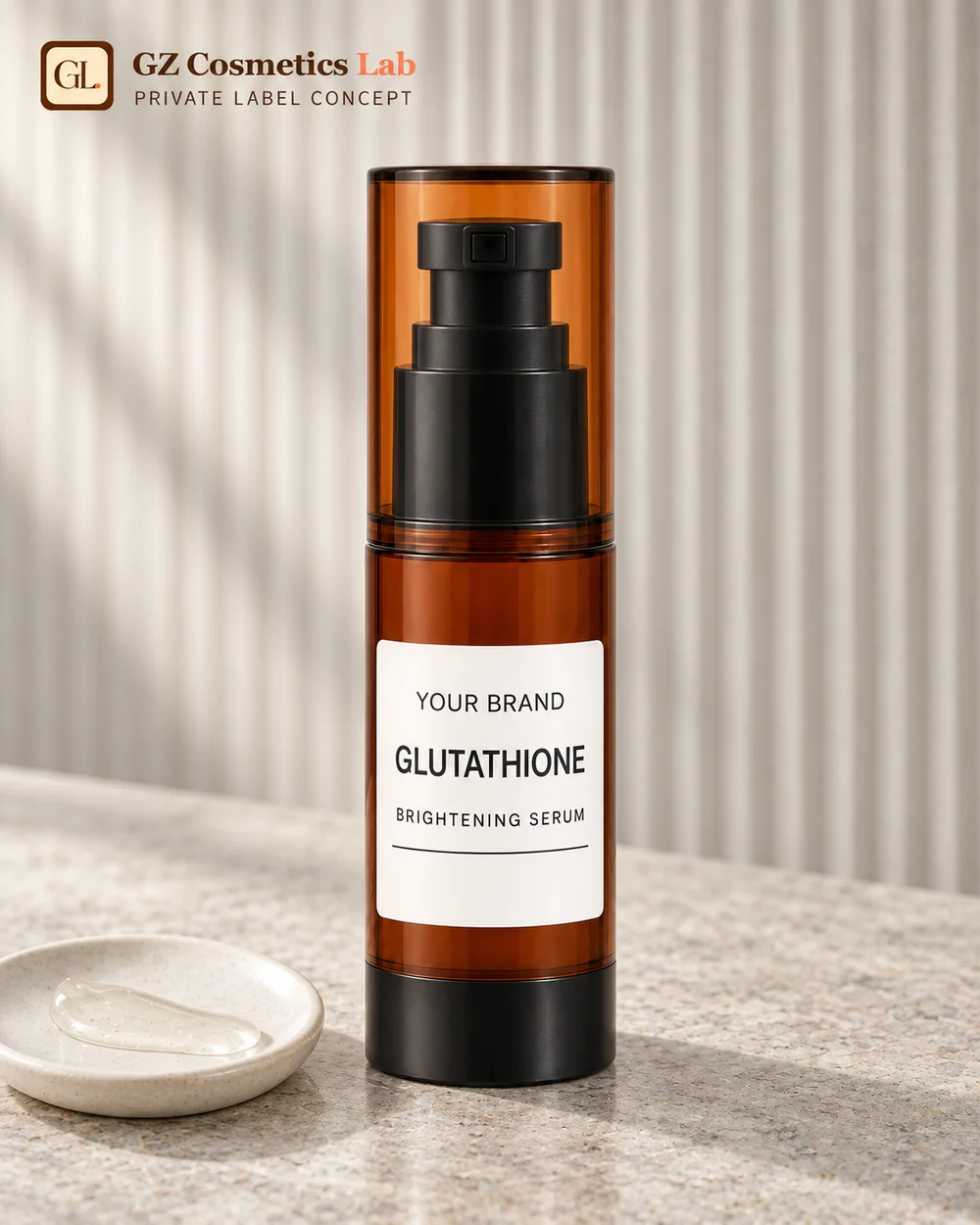
Glutathione Brightening Serum
A four-active brightening serum — glutathione, vitamin C (MAP), niacinamide and alpha-arbutin, with hyaluronic acid as a humectant — built to help support a more even-looking tone and visibly reduce the look of dark spots. For topical use only. Formulated and manufactured under ISO 22716 for brands selling into Southeast Asia’s brightening category. Baseline concentrations below reflect our standard ODM formula; each can be adjusted within the range shown to suit your positioning, target market regulations, and cost structure. Other markets on request — we confirm ingredient compliance against your destination market before sampling.
Product Overview
| MOQ | 3,000 bottles / SKU |
| Lead Time | 45–55 days |
| Sampling | 2–3 weeks for a custom sample round |
| Sizes | 30ml / 50ml |
| Packaging | Airless pump bottle (recommended for glutathione stability); opaque or amber glass dropper available on request |
| Mini Pack | Yes - Mini size 5-10ml. Suitable for trial sizes/Travel kit |
| Suitable For | All skin types, especially dull, uneven skin tone |
| Pricing | Quote-based — depends on actives concentration, packaging, and order volume. |
Quote response within 24 hours · Sample terms confirmed by project
Key Active Ingredients
How the Active Ingredients Work
This serum uses four brightening actives — glutathione, MAP, niacinamide and alpha-arbutin — rather than a single one, plus hyaluronic acid as a humectant. Concentrations below are our standard ODM baseline, adjustable for your target market and price point.
Glutathione baseline 1.0% · range 0.5–2.0%
A tripeptide antioxidant and the anchor active of the Southeast Asian brightening category—the ingredient buyers search for by name. Published topical work is thin: the closest study using the same form of the molecule is a double-blind trial in 74 Indonesian women, where a reduced-glutathione cleanser-and-cream regimen was effective at both 0.1% and 0.5%. Only two concentrations were tested, so it does not establish a dose-response curve, and our 1.0% baseline is a commercial standard rather than a figure derived from the literature. We will formulate at 0.5%, which is within the published levels, at our 1.0% baseline, or at up to 2.0% if your positioning calls for it. The range stops at 2% because the sulfur note becomes noticeable above it: glutathione’s thiol group releases hydrogen sulfide, and measured release rises with concentration. For topical use only—this is a leave-on cosmetic, not the injectable form, which is not approved for skin lightening in the Philippines.
Alpha-Arbutin baseline 1.0% · range 0.5–2.0% (EU face-product cap 2.0%)
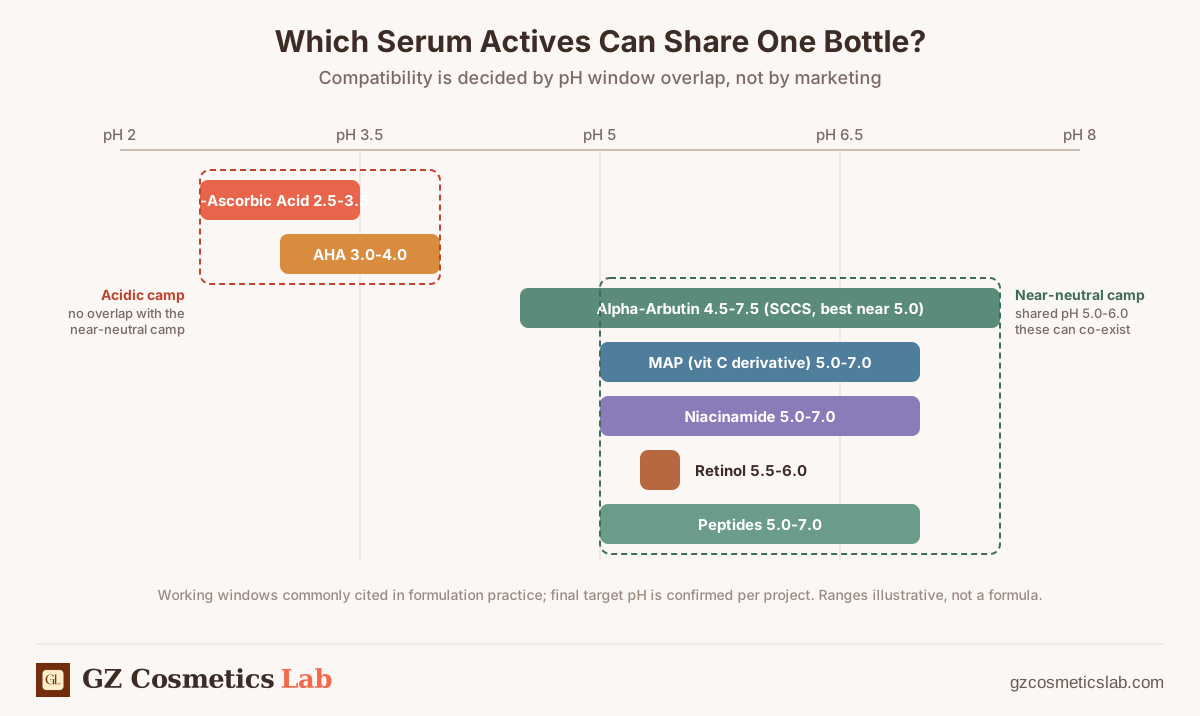
A targeted brightening agent that helps visibly reduce the look of dark spots. The 2.0% figure set by Regulation (EU) 2024/996 is a safety ceiling, not an efficacy optimum — worth stating plainly, because buyers often read the cap as a target. A largely aqueous serum is the format where its stability data is most directly relevant: it holds for at least three months at pH 4.5–7.5 below 40 °C, best near pH 5.0 (SCCS). Hydroquinone is not used as an ingredient here, and the SCCS reviewed an aqueous serum in which hydroquinone stayed below the 3 ppm limit of quantification over three months at both 0.5% and 2% alpha-arbutin — the closest published read-across to this format.
Vitamin C derivative (MAP) baseline 2.0% · range 0.5–3.0%
Magnesium Ascorbyl Phosphate is a vitamin C derivative, far more stable in formulation than pure L-ascorbic acid, and contributes to a more even-looking tone. It is where the four-active approach costs something: its recommended pH range sits above alpha-arbutin’s, so the target pH becomes a trade-off rather than a free choice, and that trade-off is confirmed per project. Accelerated stability testing for tropical-climate shipping is run on the finished formula before production.
Niacinamide baseline 3.0% · range 2.0–5.0%
Vitamin B3 works on a different pathway — it reduces the transfer of pigment to the surface skin cells, so tone looks more even over time. The published evidence most often cited is an eight-week split-face trial in 27 melasma patients, where the 4% side showed significant improvement; we set our baseline at 3% as a tolerability and cost decision, and brands can move up to 4–5% within the range. Korea caps niacinamide at 5% in its functional-cosmetic framework, so the top of this range is also the ceiling for a Korean filing. A 2% sensitive-skin version is available for brands whose promise is tolerability; within this range the level is a tolerability and cost decision.
Hyaluronic Acid baseline 0.3% · range 0.1–0.5% (total)
A blend of low and high molecular weight sodium hyaluronate, used for skin-feel and surface hydration. We position this as a supporting humectant rather than an efficacy active — high molecular weight hyaluronic acid does not meaningfully penetrate, so we do not claim it hydrates at different skin depths. Its real job here is keeping the serum light and comfortable so the brightening actives sit on well-hydrated skin, which matters in humid markets. Total use level above roughly 0.5% turns the texture tacky.
Formulation & Customization Options
| Service model | ODM (adjust our existing base) or full OEM custom development |
| Adjustable actives | Glutathione grade & concentration; MAP / niacinamide / alpha-arbutin ratio; added actives on request |
| Target pH | Set inside alpha-arbutin’s stable window of pH 4.5–7.5 (SCCS). Because MAP prefers a higher pH than alpha-arbutin, the final figure is a four-active compromise confirmed per project. |
| Texture & base | Lightweight aqueous serum, gel-serum, or essence-lotion hybrid |
| Fragrance | Fragrance-free (default) or custom scent |
| Packaging | Airless pump preferred; opaque or amber glass dropper on request, plus custom color, print, and secondary packaging |
| Certifications | ISO 22716, GMPC; SGS testing supported upon request |
Launch-fit guide
Who This Product Is Built For
SEA brightening brands
Brands selling into the Philippines, Thailand, Indonesia, and Vietnam, where glutathione and brightening claims drive the largest skincare demand.
TikTok Shop & e-commerce sellers
Before/after and ingredient-education content performs strongly for this category. The 5–10ml mini size supports trial kits and sampling campaigns.
Founders wanting an existing base fast
The ODM route lets you launch on our existing brightening base with the active ratios adjusted to your positioning, rather than developing a serum from a blank sheet.
Brands scaling a skincare range
This serum is the anchor of our brightening range, and the other formats carry the same actives at levels set by their job. The Glutathione Brightening Cream is the leave-on step for brands wanting one hero product; the Glutathione Brightening Cleanser is the rinse-off entry step; and for body coverage there is the Glutathione Brightening Body Lotion, or the glutathione-free Niacinamide Brightening Body Lotion where regulations or positioning call for it.
Planning Your Glutathione Brightening Serum Project
What to prepare before quotation and sampling, which checks are part of routine manufacturing, and which items are confirmed separately for this product type.
What to include in your brief
- Destination market and intended brightening terminology.
- Glutathione grade and target positioning, plus the desired MAP, niacinamide or alpha-arbutin combination.
- 30ml or 50ml airless, opaque/amber dropper or other packaging reference.
- Expected quantity, launch timing and desired colour/odour tolerance.
- All brightening, dark-spot, antioxidant or sensitive-skin claims planned for use.
Quality and testing plan
Routine production controls and release against the agreed serum specification are part of manufacturing. The specification should cover appearance, odour, pH, viscosity, fill weight and agreed microbiological criteria.
Formal stability, preservative challenge, oxidation or colour/odour monitoring, package compatibility, claim substantiation, safety work and third-party reports are scoped against the final active system, packaging and destination market. The airless recommendation does not replace formula–pack compatibility work.
Market and claims checkpoints
- Confirm glutathione, alpha-arbutin and vitamin C derivative use and claims against the destination market before artwork.
- Keep cosmetic brightening and even-tone wording separate from bleaching, disease or injectable-product associations.
- Lock the pH target only after the combined active system has been reviewed; the actives do not share one universal optimum.
- Use opaque, amber or airless packaging where selected, and verify rather than assume its protection of the final formula.
Pricing and testing scope depend on the final formula, packaging, quantity and destination market.
Frequently Asked Questions
What is the minimum order quantity?
MOQ is 3,000 bottles per SKU. Note that the airless pump we recommend for glutathione stability is the component most likely to set your real minimum, since packaging suppliers carry their own minimums that can sit above ours.
Can I adjust the formula?
Yes. This is offered as ODM, so the glutathione grade and concentration and the pairing of brightening actives — MAP, niacinamide, alpha-arbutin — are all adjustable, and full custom OEM development is available. The one constraint worth knowing early is pH: glutathione, a vitamin C derivative and alpha-arbutin each have their own stable window, so the final target pH is a compromise we confirm per project rather than a fixed number.
How long does sampling and production take?
Custom sample rounds take 2–3 weeks and bulk production runs 45–55 days after sample approval. Where glutathione is involved we usually want one extra sampling round rather than fewer, because the stability and the sulfur note both need confirming in your actual packaging before you commit to a production run.
Is it certified for export?
Manufacturing is ISO 22716 and GMPC compliant, with SGS testing on request, and ingredient compliance is confirmed against your destination market before sampling. For a glutathione product one market needs naming specifically: in the Philippines, topical glutathione must be presented separately from injectable glutathione, which the FDA there has warned against. We mark the formula for external use only and review your claim wording against that before artwork is signed off.
Can you package it under my own brand?
Yes. Private label and full custom packaging are standard — bottle, colour, print and secondary packaging. For this product we would steer you toward an airless pump rather than a clear dropper: glutathione is sensitive to air and light, so packaging is doing real work on shelf life here, not just presentation. Opaque or amber glass droppers are available if the dropper gesture matters to your brand.
Customization
OEM/ODM supported; glutathione grade/concentration and brightening actives (MAP, niacinamide, alpha-arbutin) pairing adjustable
Target Markets
Certifications
ISO 22716 & GMPC certified; SGS testing supported upon request
Need a Custom Glutathione Brightening Serum Formula?
Tell us your requirements — target actives, texture, packaging, quantity, and target market. Within 24 hours, we will reply with a quotation or the questions needed to prepare one.
Response within 24 hours · WhatsApp available · Factory visits welcome