

Value (Curly Hair)
Curl Defining Conditioner
A rinse-off conditioner for naturally curly and permed hair, where the brief is different from straight hair in a specific way: curly hair is not simply drier, it is mechanically more fragile. The fibre bends along its length, and the cuticle at each bend lifts more easily, so moisture escapes faster and comb damage happens sooner. That is why this formula runs a heavier butter and oil load than a smoothing conditioner and why slip during detangling matters more than final shine. Built for humid markets, where curls lose definition to swelling rather than to dryness alone.
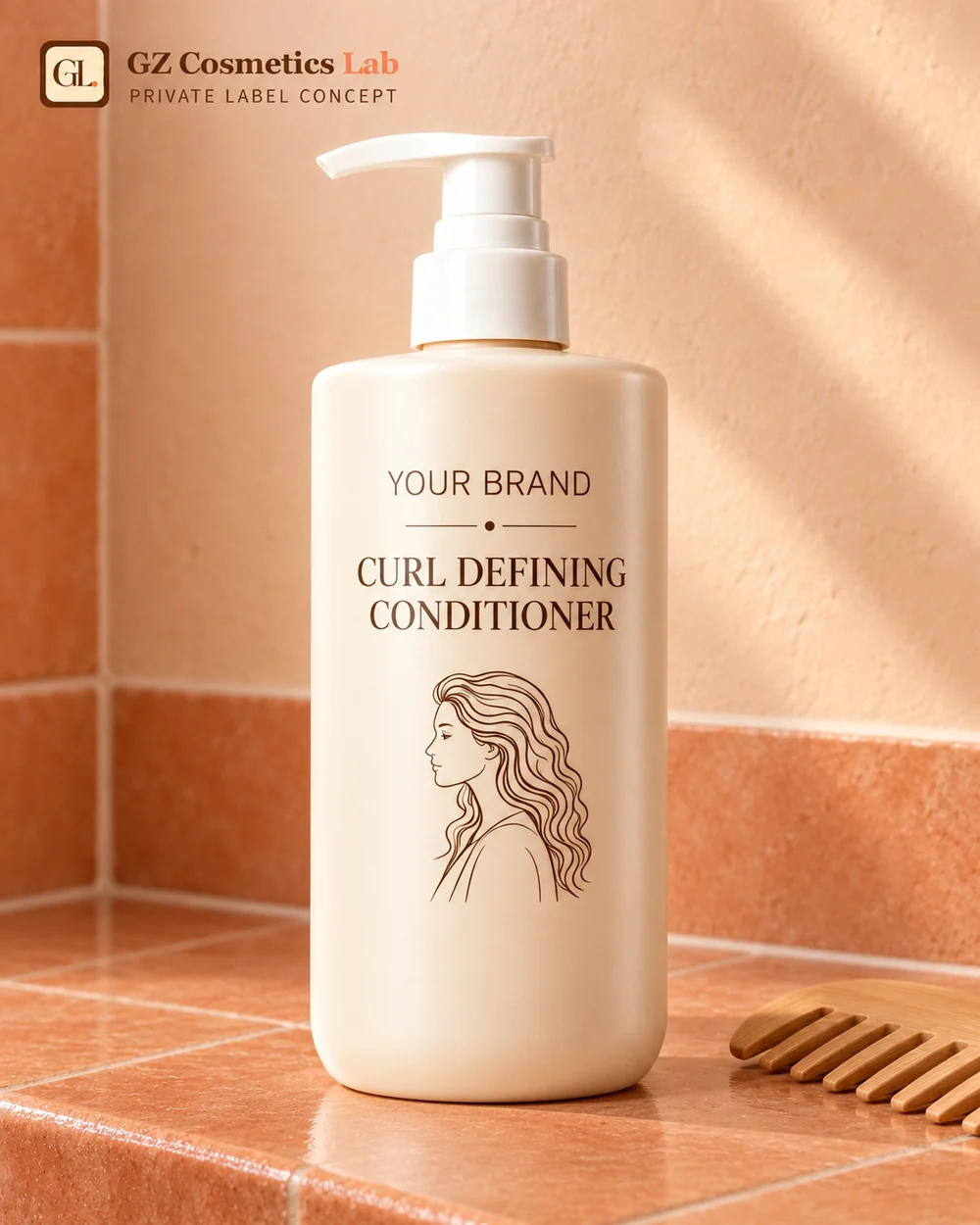
Product Overview
| MOQ | 3,000 bottles / SKU |
| Lead Time | 35–45 days |
| Sampling | 2–3 weeks for a custom sample round |
| Sizes | 300ml |
| Packaging | Pump bottle |
| Mini Pack | Yes - Sachet 5-10ml. Same as shampoo. Matching set |
| Suitable For | Naturally curly or permed hair |
| Pricing | Quote-based — depends on butter and oil load, cationic level, bottle format, and order volume. |
Quote response within 24 hours · Sample terms confirmed by project
Key Active Ingredients
How the Active Ingredients Work
A richer conditioning base built around shea butter and coconut oil, with glycerin holding water in the fibre. The baseline below is our standard ODM starting point, adjustable for your target market and price point.
Cationic conditioning emulsifier baseline 5.5% · range 5–6% (BTMS-50 basis)
Run at the upper end of the standard rinse-off range, because curly hair needs more deposit than straight hair to reach the same detangling result. The mechanism is the same charge attraction: hair keratin carries a net negative surface charge and the positively charged C22 quat adsorbs onto it, with damaged and lifted areas taking up more. On curly hair those lifted areas cluster at the bends, so the deposit tends to land where the fragility is. Slip during detangling is the practical target here rather than surface shine, because most breakage on curly hair happens during combing. Behentrimonium methosulfate is not listed in Annex III of Regulation (EC) No 1223/2009; grade percentages refer to active content, so conversions run on active basis.
Shea butter primary emollient
Butyrospermum Parkii Butter, carried at a higher level than a smoothing conditioner would tolerate. It is solid at room temperature and melts on contact, which is what gives the rich cushion that curly-hair consumers associate with a product working. Functionally it slows water loss from the fibre and adds weight that helps curl clumps hold together instead of separating into frizz. Load is a judgement rather than a maximum: too much and curls read greasy and lose bounce, which is the most common complaint on over-rich curl products.
Coconut oil penetrating oil
Cocos Nucifera Oil, included for a reason distinct from shea. Its straight-chain structure lets it penetrate the fibre more readily than most plant oils rather than resting on the surface, so it works from inside the hair while shea works on the outside. Paired this way the two cover different failure points, which is why we run both instead of a single higher oil load.
Glycerin humectant
The workhorse humectant, and the ingredient with the most honest trade-off on this page. Glycerin draws water into the fibre, which is what keeps curls soft rather than crisp. In very humid air it can also draw in more water than the curl pattern holds, which shows up as swelling and frizz. We set the level against your target market climate rather than to a fixed number — a formula tuned for a dry season and one tuned for coastal humidity are not the same product, and we will say so at sampling rather than after launch.
Formulation & Customization Options
| Service model | ODM (adjust our existing base) or full OEM custom development |
| Adjustable elements | Cationic level for detangling slip; shea and coconut load; glycerin level tuned to destination climate; silicone or silicone-free route |
| Target pH | Formulated in the mildly acidic range that is industry practice for conditioners, which helps the cuticle lie flatter along the bends where curly hair lifts most. Final target pH confirmed per project. |
| Silicone route | Available with or without silicone. Silicone-free is the more common request in curl positioning, where consumers often avoid it by preference. Where silicone is specified we use straight-chain grades such as dimethicone, outside the scope of the cyclic siloxane restrictions — D5 has been restricted below 0.1% in rinse-off cosmetics since 31 January 2020 under entry 70 of Annex XVII to REACH, and D4 is prohibited under Annex II of Regulation (EC) No 1223/2009. |
| Texture and base | Rich cream with a thick cushion in the hand; can be moved lighter for wavy rather than tightly curled positioning |
| Fragrance | Tropical, coconut and floral profiles standard; fragrance-free available |
| Certification support | ISO 22716 and GMPC production, with SGS testing on request. Halal, COSMOS and vegan-positioned formulations can be scoped to your requirement — tell us the destination market and we will confirm what is achievable for your specification. This formula carries no animal-derived protein, so a vegan route is a shorter path here than on a keratin-based conditioner. |
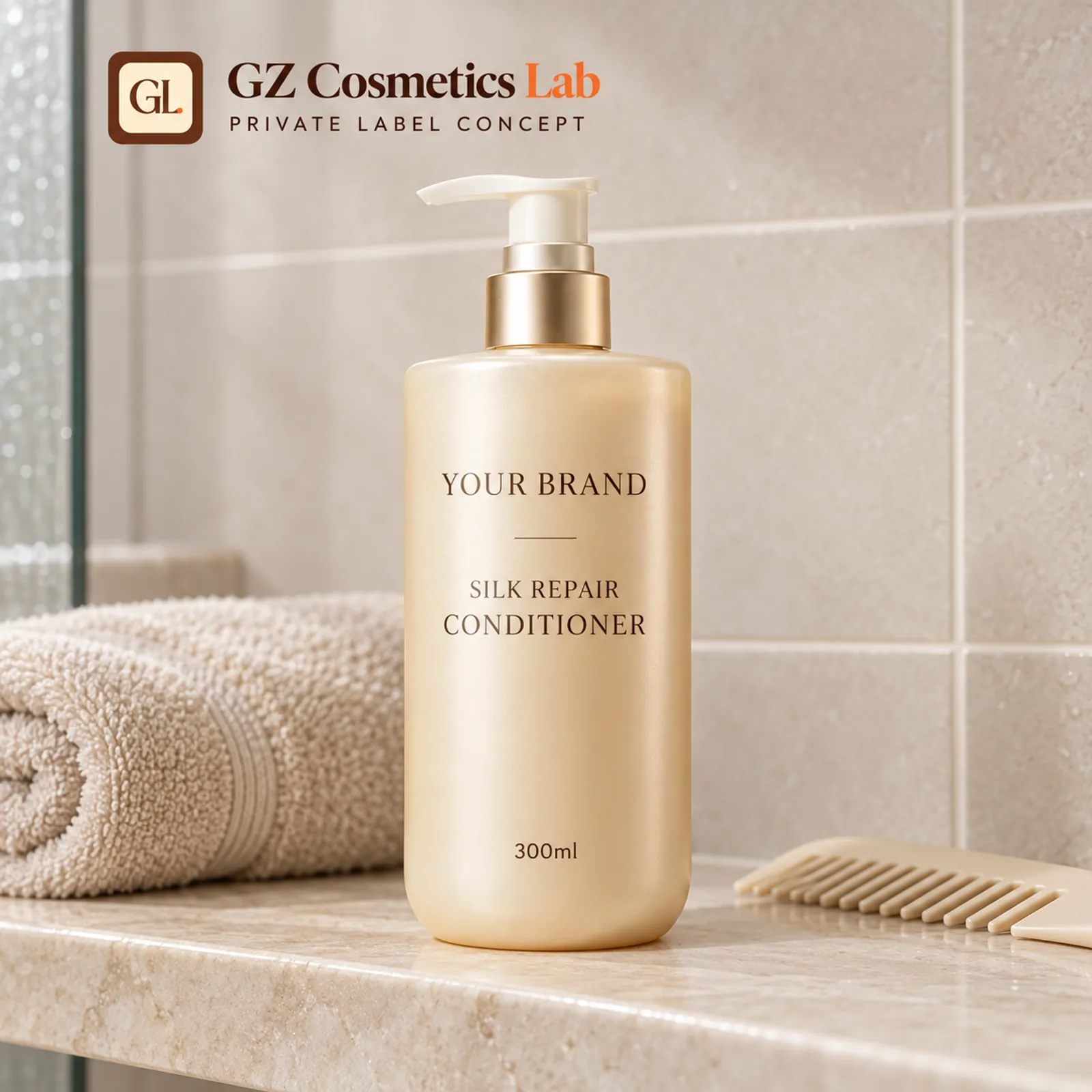
| Packaging | Industry-standard formats supported — 300ml pump bottle standard, with wide-neck jar and tube options for thicker textures and 5–10ml sachet for trial |
| Regulatory alignment | Cationic level, silicone route and claim wording confirmed against your destination market rules per order |
Launch-fit guide
Who This Product Is Built For
Curly and permed hair positioning
A distinct segment rather than a variant of dry-hair products. Curly-hair consumers buy on detangling and definition, and they judge a conditioner in the shower during comb-out rather than after drying, which is where a richer formula proves itself.
Humid-climate curl retention
In Southeast Asia curls lose definition mainly to swelling: humid air enters a lifted cuticle unevenly and the clump separates into frizz. The butter and oil load addresses that mechanism directly, and the glycerin level is tuned to the destination climate rather than left at a default.
Silicone-free natural lines
Curl-focused ranges are where silicone-free positioning sells hardest, and this base carries enough plant butter and oil to hold up without it. That makes it a practical starting point for brands whose whole range is silicone-free rather than only this SKU.
Building a full curl routine
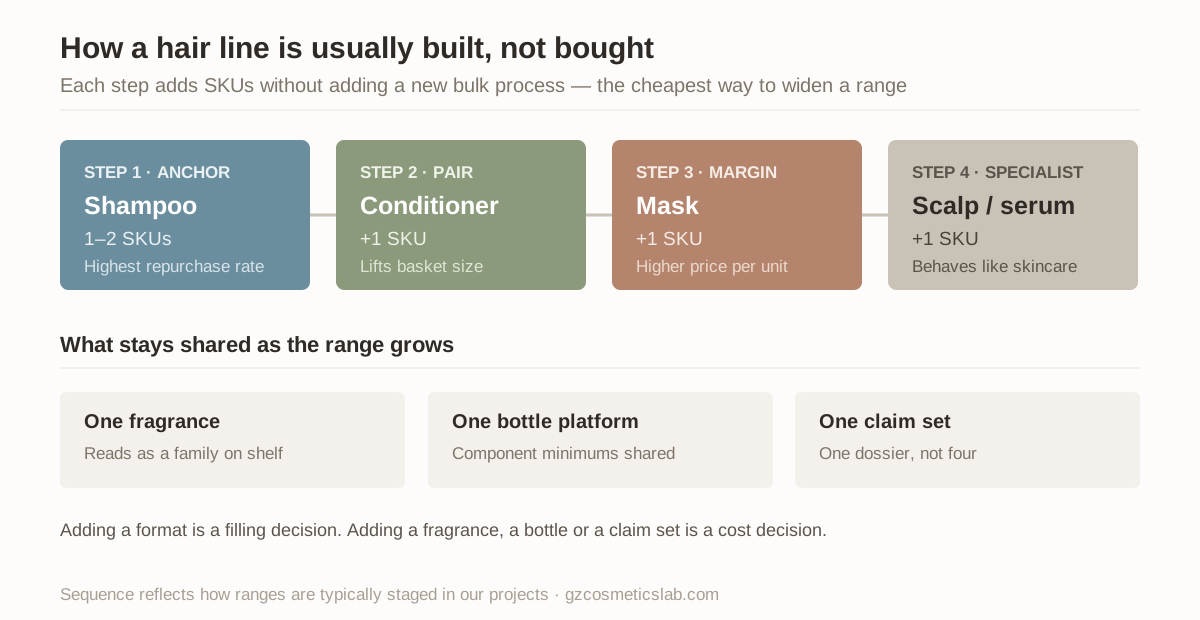
Curl consumers buy routines rather than single products. This step pairs with the Deep Nourish Leave-In Conditioner for definition after towel-drying, and with a matching cleanse step such as the Silky Repair Shampoo where a gentle amino acid surfactant base suits fragile curly fibre.
Planning Your Curl Defining Conditioner Project
What to prepare before quotation and sampling, which checks are part of routine manufacturing, and which items are confirmed separately for this product type.
What to include in your brief
- Identify loose waves, tighter natural curls or permed hair, and the usual detangling method.
- Provide the target climate, wash frequency and any leave-in styling step used afterward.
- Set the desired curl grouping and bounce, plus cream thickness and pump or tube preference.
Quality and testing plan
Agree a wash-and-dry routine without changing styling products; score wet detangling, dry curl grouping, frizz and bounce at defined observation points.
Confirm cream dispensing and routine release checks separately from any humidity comparison, including acceptance criteria, study owner and report scope.
Market and claims checkpoints
- Match definition wording to a rinse-off result; specify a separate substantiation plan before promising styling hold or lasting humidity protection.
Pricing and testing scope depend on the final formula, packaging, quantity and destination market.
Frequently Asked Questions
What is the minimum order quantity and lead time?
Minimum is 3,000 bottles per SKU, produced in 35–45 days once you approve the sample. Custom sample rounds take 2–3 weeks, and sachets are filled at their own minimum if you want a trial size alongside.
Why does curly hair need a different conditioner rather than just more of a normal one?
Because the failure mode is mechanical, not only moisture. Curly fibre bends along its length and the cuticle lifts at each bend, so it loses water faster and takes comb damage sooner. More of a smoothing conditioner adds weight without adding the detangling slip that prevents breakage during comb-out. This formula raises the cationic load and the butter and oil load together, which is what changes detangling rather than just richness.
Will the glycerin cause frizz in humid weather?
It can if the level is set without reference to climate, and this is the one thing worth deciding before sampling. Glycerin draws water into the fibre, which keeps curls soft, but in very humid air it can pull in more than the curl pattern holds and the clump swells and separates. Tell us the destination market and we will set the level accordingly. We would rather flag this at specification stage than have you discover it in a coastal launch.
Can you define curls the way a styling cream does?
Only partly, and it is worth being clear about the limit. A rinse-off conditioner improves definition by keeping the fibre soft and the clumps together, but it is washed out, so it cannot hold a curl shape the way a leave-in or a styling product with film formers does. Brands that need visible hold usually pair this with a leave-in step rather than asking one product to do both.
Can this be made vegan and silicone-free at the same time?
Yes, and it is the most common combination requested in this category. The formula carries no animal-derived protein to begin with, and shea and coconut carry the conditioning load, so removing silicone is a texture adjustment rather than a rebuild. We would sample it against the silicone version so your panel can compare wet comb-through, which is where the difference shows most.
Is the conditioning level capped by regulation?
Not on our standard route. Behentrimonium methosulfate is not listed in Annex III of Regulation (EC) No 1223/2009, so the level is a performance and cost decision. Where a chloride-based quat is specified instead, Annex III entry 287 caps behentrimonium chloride at 5.0% in rinse-off hair products and entry 286 caps cetrimonium and steartrimonium chloride at 2.5%, with the sum respecting both limits at once. Both entries also require the ingredient to be present for conditioning rather than preservation. We formulate below whichever cap applies to your route.
Customization
OEM/ODM supported
Target Markets
Certifications
ISO 22716 & GMPC certified; SGS testing supported upon request
Need a Custom Curl Defining Conditioner Formula?
Tell us your requirements — target actives, texture, packaging, quantity, and target market. Within 24 hours, we will reply with a quotation or the questions needed to prepare one.
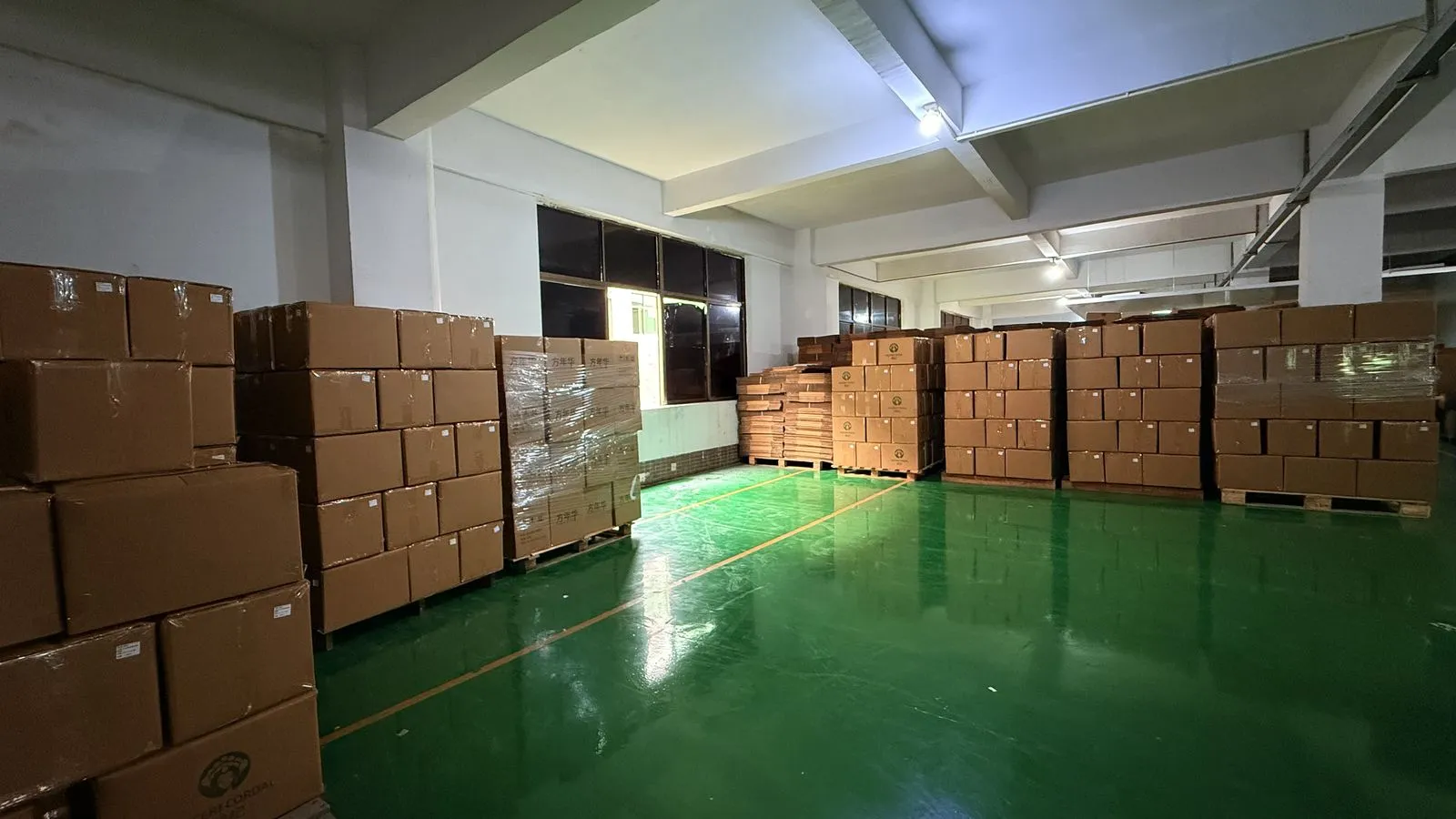
Response within 24 hours · WhatsApp available · Factory visits welcome