
How to Read a Cosmetic Stability Testing Report (2026)
Every quote for a new product includes a line for cosmetic stability testing, and almost every brand treats the resulting report the same way: look for the word "pass", file it, move on. That habit is the reason a lot of products reach retail with shelf lives nobody can actually defend.
Here is the fact that makes report-reading a skill rather than a formality. There is no legally prescribed protocol for cosmetic stability testing anywhere in the world. Two of the most cited documents in the field say so in plain language. ISO/TR 18811:2018 is a Technical Report rather than a standard, and it states that it "does not aim to specify the conditions, parameters or criteria of stability testing." The Cosmetics Europe and CTFA guidelines are blunter still: "Because of the wide variety of cosmetic products and their inherent complexity, 'standard' stability tests cannot be prescribed."
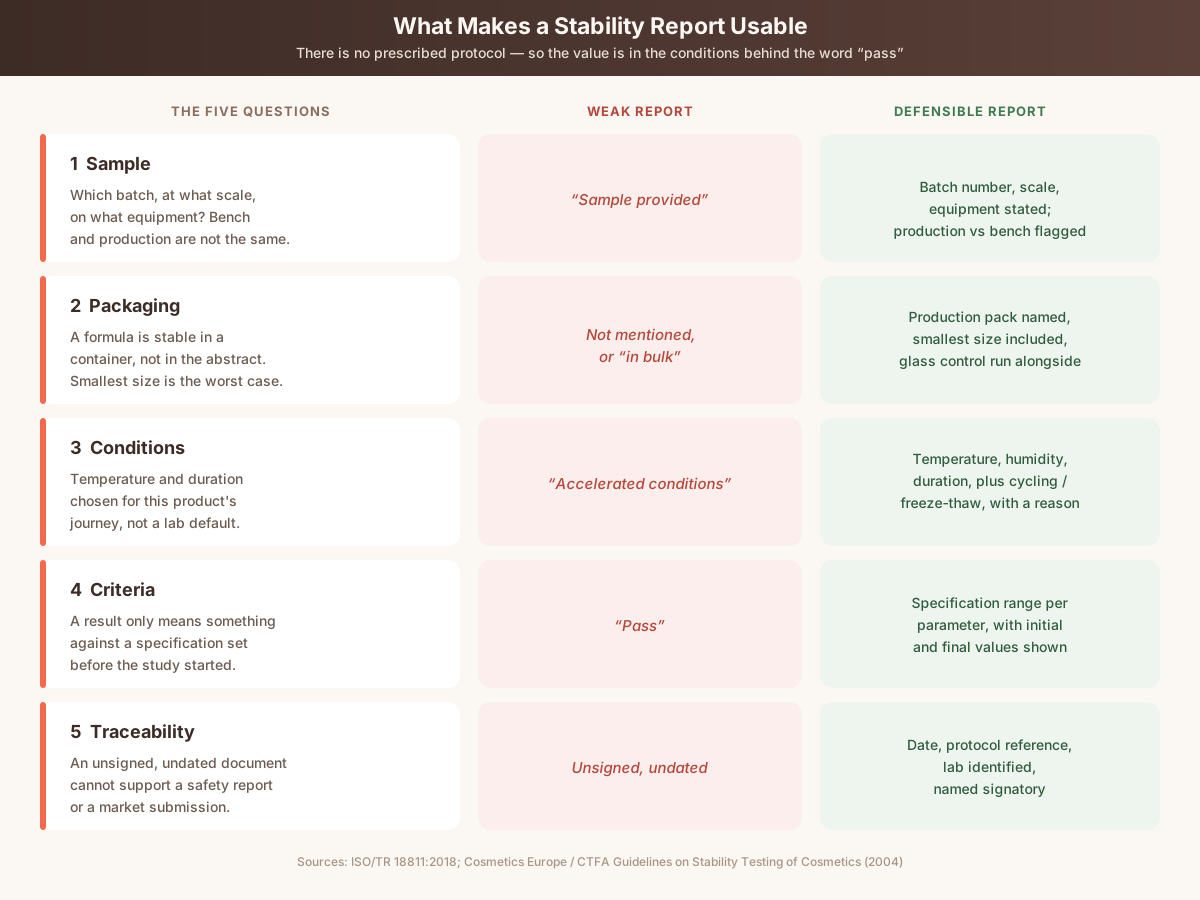
So the value of a stability report is not in its conclusion. It is in the conditions behind the conclusion, and a report that states a result without stating those conditions has told you almost nothing. Two factories can hand you documents that look equally official, run to a similar page count, and both say "pass", while one is a defensible piece of evidence and the other is a formality. The difference is visible, but only if you know which five things to look for.
This guide is written from the receiving end. It is not about how to run the tests or what they cost. If you are budgeting, the line items and real market prices are in our skincare formulation cost breakdown. What follows is how to audit a report you have already been handed.
Accelerated Stability Is a Prediction, Not a Shelf Life
The most expensive misunderstanding in this area is the arithmetic that turns three months at 40°C into a two-year shelf life. That conversion is a working heuristic used across the industry. It has no regulatory standing, and the guidelines are candid about why.
According to the Cosmetics Europe and CTFA guidance, "there is very little generally-applicable published research to support specific accelerated methods for predicting cosmetic shelf life." The document lists the reasons: the variety and complexity of cosmetic formulas and packaging, the proprietary nature of many products and test methods, and the range of change types that have to be examined at once, from physical to chemical to microbiological.
Accelerated conditions themselves are a choice rather than a rule. The same guidance notes that tests "are often performed at 37°C, 40°C or 45°C during 1, 2, 3… months but the temperature used and the duration will depend on the product type." Three different laboratories can each pick a defensible condition and produce three non-comparable datasets.
What this means in practice is narrow but important. An accelerated result is a screening tool that tells you a formula is unlikely to fail quickly. It is not proof of a date you print on a carton. The recognised way to close that gap is boring and slow: the same guidance describes the common practice of supporting accelerated forecasts with periodic post-launch monitoring of retained samples held at ambient temperature. If your supplier keeps retention samples under a quality system, that programme already exists and is worth asking about. Our explainer on ISO 22716 and GMPC covers how retention sampling works and how long samples are held.
A brand that understands this stops asking "is the shelf life 24 months or 36 months" and starts asking "what evidence supports the number, and when does real-time data catch up with the prediction."
The Five Questions a Usable Report Must Answer
Strip away the letterhead and a stability report is only useful if it answers five questions. If you can read a report and still not know one of these, that is a gap in the evidence rather than a detail you can assume.
1. Which batch was tested, and was it representative?
A bench sample mixed in a beaker and a batch produced on a production line are not the same material. Heat transfer, shear, mixing time and vessel geometry all differ with scale, and those differences change emulsion droplet size and therefore physical stability. A report on a laboratory sample is a legitimate development document. It is not evidence about the product you will actually receive. The same logic is why a change of factory requires a fresh stability run even when the formula is untouched.
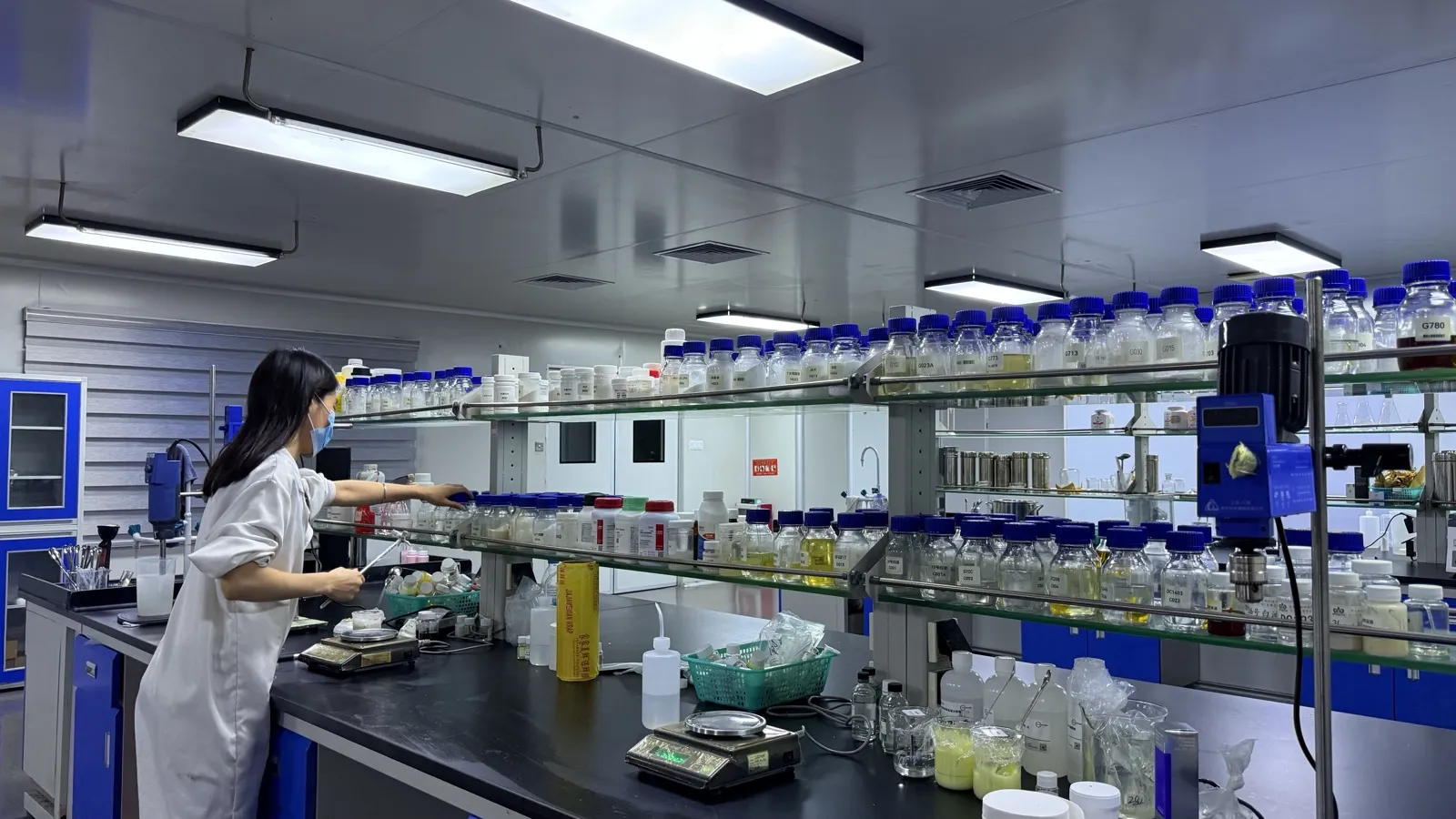
Ask which batch was used, at what scale, and on what equipment. If the study was run on bench material, ask what confirmatory work is planned on production batches and when.
2. What was it packed in?
This is the question brands skip most often, and it is the one with the sharpest consequences. A formula is stable in a container, not in the abstract. Product can interact with the pack and the pack can interact with the product, which is why compatibility is treated as one of the four dimensions of stability alongside physical, chemical and microbiological behaviour.
The guidance gives two specific instructions that are easy to check and rarely followed in the reports we see. Where a product will be sold in several sizes, it advises testing in the smallest container, because that is the worst case for the ratio of surface area to contents. And it advises using appropriate controls, "for example, product in glass containers." Glass is close to inert, so a glass arm run alongside the real pack is what separates a formula problem from a packaging problem. Without that control, a failure is uninterpretable: you cannot tell whether to reformulate or change the pack.
The same guidance also suggests testing in various orientations, upright, inverted and on its side, which matters for anything with a pump, a dropper or a closure liner. A dropper-packed product such as a multi-HA hydrating serum is a good example of why orientation is not a formality: the closure, the liner and the headspace all behave differently once the bottle spends a month on its side in transit.
For dispenser-specific checks and report fields, see our guide to pumps, droppers and airless packaging compatibility testing.
3. What conditions were used, and were they chosen for this product?
Temperature and duration should follow the product's vulnerabilities and its expected journey, not a laboratory's default. Temperature cycling and freeze-thaw testing deserve particular attention because, in the words of the guidance, they "can reveal some types of inadequacies more quickly than can storage at a constant temperature." The problems they surface are specific: crystallisation or clouding in suspensions, emulsion breakdown, and packaging failures such as wrinkled or detached labels and cracked components.
If your product will sit in a container ship, then a warehouse without climate control, then an air-conditioned shop, a single constant-temperature study does not describe that journey. Products destined for hot and humid markets need conditions chosen for that climate; we cover those specifics in our guide to formulating for tropical climates.
4. What were the acceptance criteria, and were they set in advance?
This is where most reports quietly fail. A result is only meaningful against a criterion that was defined before the study started. The guidance is explicit that a company should "define clearly what will be considered as acceptable stability", and equally explicit that this "will be dependent on each company's internal procedures and experience."
Read that second half carefully, because it is the licence that makes reports incomparable. Acceptable drift is set by the manufacturer. So a report that says "pH: pass" is not a finding. A report that says "pH specification 5.0 to 6.0; initial 5.4; after 12 weeks at 40°C, 5.2" is a finding, because you can see the specification, the movement and the margin left.
5. Who signed it, and when?
A report needs a date, a protocol reference, the identity of the laboratory or department that ran it, and a named signatory. This sounds administrative until the moment your safety assessor or a market authority asks for the underlying study. Unsigned and undated documents cannot support a safety report. If the study came from an external laboratory, our guide to verifying a cosmetic testing laboratory covers how to check its accreditation scope, trace the sample back to your batch and read the report itself.
What "Pass" Conceals
A one-word conclusion hides three things worth knowing, and all three are recoverable from a properly written report.
It hides which parameters were actually monitored. Colour, odour, viscosity, pH, phase separation, active content and microbiological quality are separate measurements. A study can watch four of them and stay silent on the rest. The guidance also makes a subtler point: as products age their properties may change, so a protocol may need to examine properties beyond those measured at the start.
It hides how much movement was tolerated. A formula that drifted to the edge of its specification passed. So did one that barely moved. Those are very different products to build a brand on, and only the numbers distinguish them. This matters most where a parameter is doing real work: in a glutathione brightening serum, pH is not a housekeeping number, so pH drift within specification still tells you something about how much margin the formula has left.
It hides what happened at each timepoint. A study with results at week 4, week 8 and week 12 shows you a trend. A study reporting only the final timepoint shows you an endpoint and no direction. Trends are what let you predict the second year from three months of data, which is the entire premise of accelerated testing.
One format changes what the report is even measuring. Where an active degrades in water rather than on the shelf, a two-part set that stores it as a dried cake and reconstitutes it at first use has no aqueous ageing period to test in the first place, so stability work shifts onto residual moisture and the packaging seal instead of pH and active content over time. Our Professional Repair Freeze-Dried Set is specified that way for exactly this reason. It is not a way to avoid testing, only a different set of parameters to hold a supplier to, and it carries a higher MOQ and a longer lead time in exchange.
Why Two Factories' Reports Are Not Comparable
Brands sourcing from several suppliers often try to compare stability reports side by side, and conclude that the more detailed one reflects the better factory. Sometimes it does. Structurally, though, the comparison does not hold, and it is worth understanding why so you stop trying to make it work.
Because no standard protocol can be prescribed, each manufacturer designs a programme suited to its products and technologies, sets its own acceptance criteria from its own procedures and experience, and selects conditions per product type. Every one of those choices is legitimate. Together they mean two reports on similar products can differ in conditions, duration, parameters, packaging arm and pass criteria simultaneously.
The productive move is to stop comparing conclusions and compare disclosure instead. A supplier that documents conditions, criteria, packaging and timepoints is showing you its quality system. A supplier that reports only outcomes may have done identical work, but has given you nothing you can audit, submit or defend.
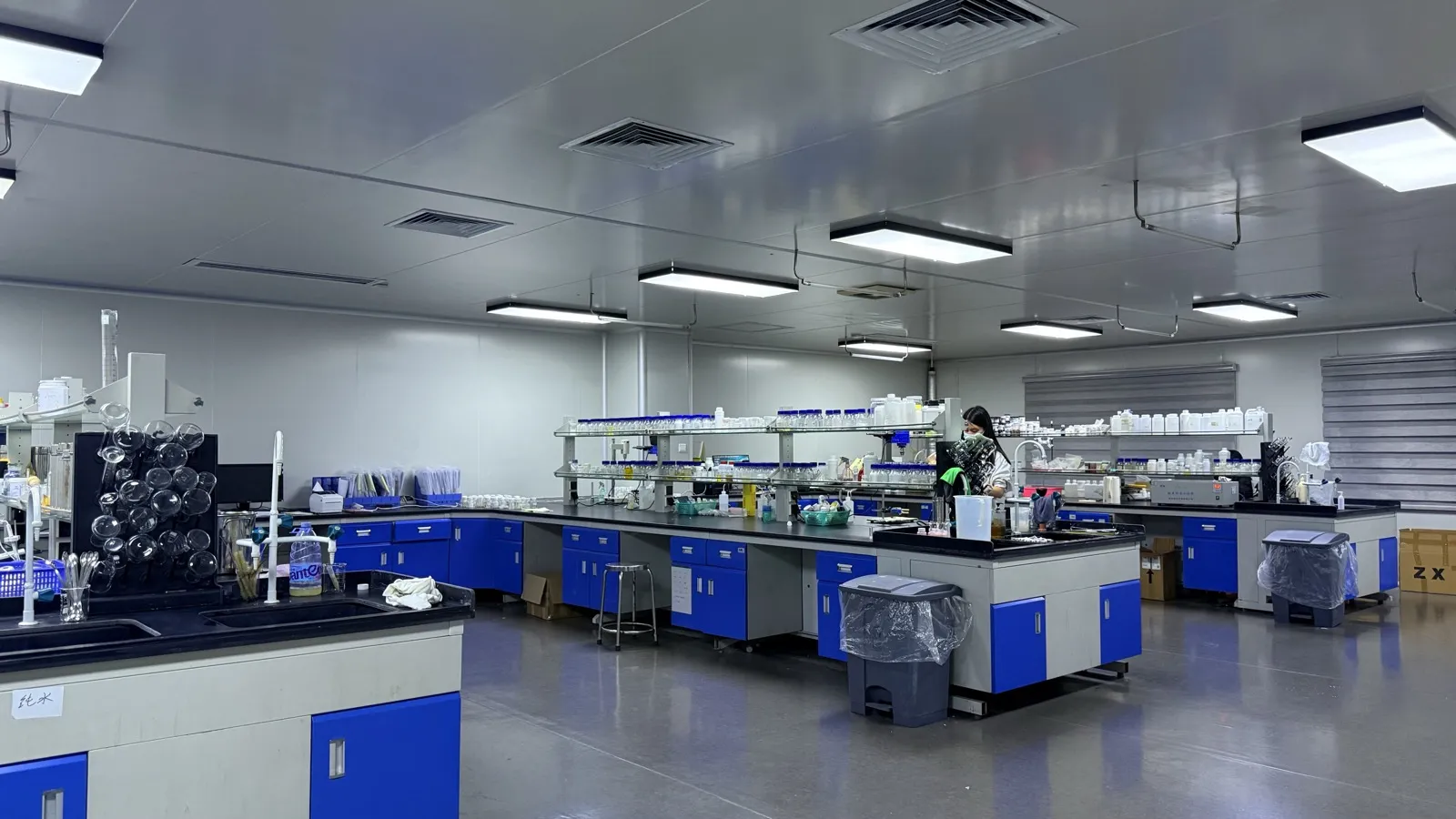
One caveat that catches brands moving production: stability data does not travel with a formula. It describes the product as actually manufactured, in a given plant, at a given scale, in a given pack. Change any of those and the study has to be re-run. We work through the full consequences of that in our guide to transferring production between Europe and China.
The Checklist
Use this against any report before you accept a shelf life. The right-hand column is what turns a document into evidence.
| Item | Weak report | Defensible report |
|---|---|---|
| Sample | "Sample provided" | Batch number, scale, equipment, production or bench stated |
| Packaging | Not mentioned, or "in bulk" | Production-intent pack named, smallest size included, glass control run alongside |
| Conditions | "Accelerated conditions" | Temperature, humidity, duration, plus cycling or freeze-thaw where relevant, with a reason for the choice |
| Parameters | "Appearance normal" | Each parameter listed: appearance, odour, colour, pH, viscosity, separation, microbiological quality |
| Criteria | "Pass" | Specification range stated per parameter, defined before the study |
| Timepoints | Final result only | Values at each interval, so a trend is visible |
| Real-time support | None | Retention samples held at ambient with a monitoring schedule |
| Traceability | Unsigned, undated | Date, protocol reference, laboratory identified, named signatory |
What to Ask For, and When to Send It Back
Three requests, made at the right moment, prevent most of the problems above.
Ask for the protocol before the study runs, not the report after. A protocol names conditions, parameters, timepoints, packaging arms and acceptance criteria in advance. Reviewing it takes ten minutes and is the only point at which criteria can still be adjusted. Once a study has finished, criteria set after the fact are not criteria.
Ask for your actual pack to be in the study. If component selection is still open, say so and agree a point at which the production-intent pack enters testing. Sequencing this badly is what produces the classic outcome of a formula that was stable throughout development and fails in the pump you chose in the final week.
Ask what happens if a parameter drifts. The answer tells you whether you are dealing with a quality system or a document service. A supplier that can describe its investigation path, whether it reformulates, changes the pack, adjusts the process or requalifies a raw material, has done this before.
Send a report back when any of the five questions cannot be answered from the document itself. That is not an adversarial move. A stability study is one of the inputs a safety assessor relies on, and an incomplete study becomes your problem at submission, not the factory's.
We run 13 production lines in Guangzhou, which is why the packaging and process questions above are not theoretical here: the line a formula runs on affects the shear and heat it sees, and that is part of what a stability study has to represent. Protocols, conditions and durations are confirmed per project, because as the guidance says, they depend on the product type. If you want to judge how a supplier structures a study, ask for a sample protocol rather than a sample report. The protocol is where the rigour lives.
Ask us for a sample protocol, not a sample report
Tell us the product type and destination market and we will show you how the protocol is set up — batch, pack, conditions, duration and the pre-set acceptance criteria — before anything is sampled.
Frequently Asked Questions
Is cosmetic stability testing legally required?
The evidence is required; the method is not specified. In the EU, Annex I Part A point 2 of the Cosmetic Products Regulation requires the product information file to address the stability of the product under reasonably foreseeable storage conditions, and under MoCRA in the United States you must be able to substantiate safety. Neither tells you which protocol to run. That is why ISO/TR 18811:2018 explicitly does not specify conditions, parameters or criteria, and why the Cosmetics Europe and CTFA guidance states that standard tests cannot be prescribed.
How long does stability testing take?
Accelerated studies commonly run one to three months at an elevated temperature, with the exact condition and duration depending on the product type. The important constraint is that the evidence is generated by elapsed time, so a schedule cannot be compressed by paying more. Preservative challenge testing has its own fixed minimum duration and runs in parallel rather than after.
Can I use accelerated results to claim a 24-month shelf life?
Accelerated data supports a shelf life; it does not by itself prove one. Extrapolation from elevated temperature is a working practice with no regulatory standing, and published research supporting specific accelerated methods for predicting cosmetic shelf life is scarce. The accepted way to strengthen the claim is periodic monitoring of retention samples stored at ambient temperature after launch.
Why does the report need a glass control?
Because without it, a failure is ambiguous. Glass is effectively inert, so running the formula in glass alongside the production pack separates a formula that is degrading on its own from one being affected by its container. The guidance recommends appropriate controls for exactly this reason, and also recommends testing the smallest container size in a range, since that is the worst case.
Does stability data transfer if I change factories?
No. A stability study describes the product as actually manufactured, in a specific plant, at a specific scale, in a specific pack, so a change to any of those requires the study to be re-run. Ingredient-level toxicological data does carry over, which is a different category of evidence.
What is the difference between stability testing and challenge testing?
Stability testing asks whether the product still meets its physical, chemical and microbiological specifications over time in its packaging. Preservative challenge testing asks whether the preservative system can control organisms deliberately introduced into the product as manufactured. They answer different questions, both are normally needed, and they usually run in parallel.
Ready to Start Your Project?
Tell us your product requirements. Within 24 hours, our technical team will reply with a quotation or the questions needed to prepare one.