
Private Label Massage Oil Manufacturer: Spa & Hotel Supply
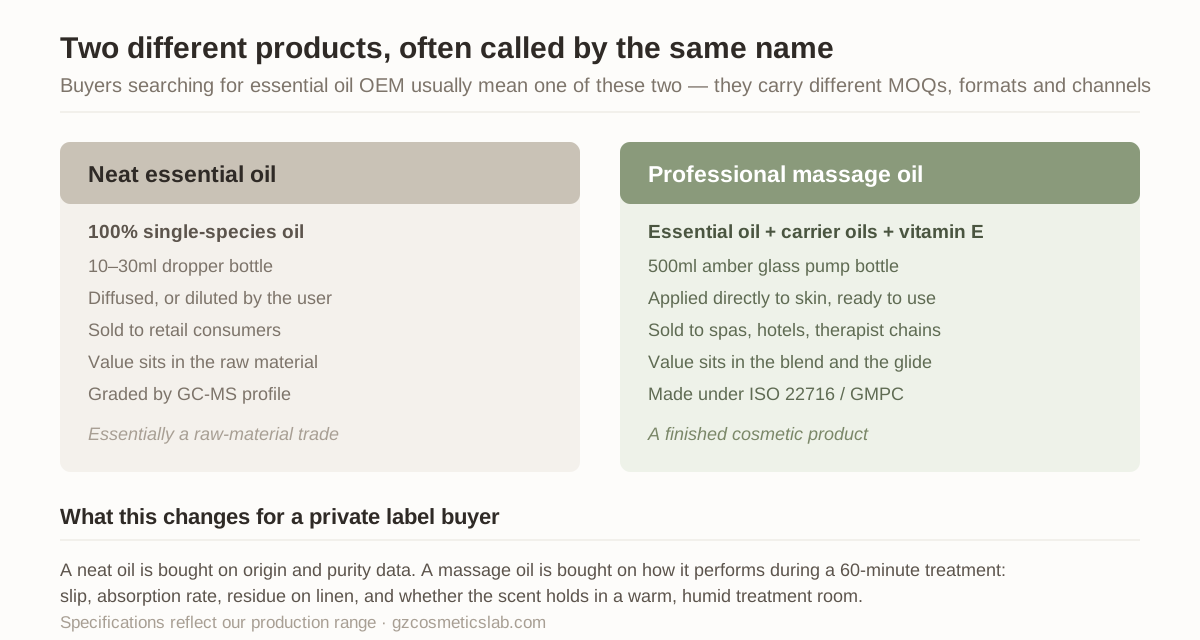
Chart by GZ Cosmetics Lab · Free to reuse with a link back to this page.
Enquiries for essential oil OEM arrive from two completely different businesses, and they want two completely different products. One is a retail brand planning 10ml dropper bottles of neat lavender to sell online. The other is a spa group, hotel chain or therapist network that needs 500ml pump bottles of ready-to-use massage oil for treatment rooms. The words overlap; the manufacturing, the minimums and the buying criteria do not.
This guide is about the second business. It covers what professional massage oil production actually involves, what spa buyers evaluate before they commit to a supplier, and how to structure a range that matches a treatment menu rather than a retail shelf. If you are planning a retail aromatherapy line instead, the packaging and format logic in our MOQ and cost guide will be more useful to you than this page.
Neat Essential Oil and Professional Massage Oil Are Different Products
A neat essential oil is a single-species distillate at full strength. Its value sits almost entirely in the raw material, it is graded on origin and GC-MS profile, and it is not applied to skin undiluted. Buying it is closer to a raw-material trade than to cosmetics manufacturing, and the supplier that serves that market well is often a distiller or an oil trader rather than a cosmetics factory.
A professional massage oil is a finished cosmetic product. It combines essential oils at a working concentration with carrier oils that carry most of the volume, usually with vitamin E as an antioxidant, and it is formulated to perform during a treatment rather than to smell strong in a bottle. The value sits in the blend, in how the oil behaves under a therapist's hands, and in the manufacturing system that makes every batch behave the same way.
That distinction matters commercially because it changes who you should be talking to. A cosmetics manufacturer working under ISO 22716 and GMPC can document batch records, stability data and safety assessments for a finished massage oil. An oil trader generally cannot, which becomes a problem the moment you need to notify the product in a regulated market.
The same split runs through the wider fragrance category, where neat oils and alcohol-based products diverge even further apart on lead time, minimums and freight classification. Our guide to fragrance and perfume manufacturing covers that side, including why an alcohol base makes a product restricted cargo.
What Spa Buyers Actually Judge a Massage Oil On
Retail customers judge an oil by scent in the shop and by how the bottle looks on a shelf. Professional buyers judge it by what happens across a sixty-minute treatment, which produces a very different specification.
Slip and working time. The therapist needs the oil to stay workable for the length of the treatment. An oil that absorbs too fast forces reapplication mid-session, interrupts the treatment and increases consumption per client. An oil that never absorbs leaves the client feeling coated. The balance between the two is set by carrier oil selection, and it is the single most common reason a spa rejects a sample.
Residue on linen. Spas launder towels and sheets constantly, and an oil that leaves stubborn residue or oxidises into a rancid smell in stored linen creates a real operating cost. This rarely appears in a brief but it decides repeat orders.
Scent behaviour in a warm room. Treatment rooms are warm and often humid, which lifts volatiles faster than a testing table at room temperature. A blend that reads as balanced when sniffed cold can become overpowering once it is warmed on skin in an enclosed room. Southeast Asian spa environments make this more pronounced, which is why the same considerations we cover for tropical market formulation apply to spa products too.
Consistency between batches. A spa builds a treatment around a specific oil and trains therapists on it. If the next batch is thinner, darker or differently scented, every therapist notices and the spa has to explain it to regular clients. Batch consistency is a manufacturing-systems question rather than a formulation question, which is why factory certification matters more in this channel than in retail.
Not sure which route fits your product?
Send us your brief and our formulators will tell you what is realistic on formula, MOQ, and timeline before you commit to anything.
Carrier Oils Carry the Formula
In a massage oil the carrier is not a filler, it is most of the product and most of the performance. Three carriers do the bulk of the work in professional blends, and choosing between them is a decision about feel, absorption and shelf life rather than about cost alone.
Sweet almond oil is the workhorse of professional massage. It gives generous slip and a long working time, which is why it suits full-body treatments, and it feels nourishing on dry skin. It absorbs relatively slowly, so it can feel heavy on oily skin or in very humid conditions.
Grape seed oil is lighter and absorbs faster, leaving a drier finish. That makes it the sensible base where residue is a concern, for treatments on the back and shoulders, or for clients with oily or congested skin. The trade-off is shorter working time.
Jojoba oil behaves like skin's own sebum and gives a silky absorption without a greasy film. It is more oxidatively stable than most vegetable oils, which helps shelf life, and it sits naturally in premium positioning. It also costs more, so it usually appears as part of a base rather than the whole base.
Most professional blends use a combination rather than a single carrier, because that is how you tune working time and finish independently.
| Carrier | Slip & working time | Finish | Best fit | Trade-off |
|---|---|---|---|---|
| Sweet almond | Generous, long | Slow absorption, nourishing | Full-body treatments, dry skin | Can feel heavy on oily skin or in high humidity |
| Grape seed | Shorter | Fast absorption, drier | Back and shoulders, oily or congested skin | Less working time per application |
| Jojoba | Moderate | Silky, no greasy film | Premium positioning; more oxidatively stable, which helps shelf life | Costs more, so usually part of a base rather than the whole base |
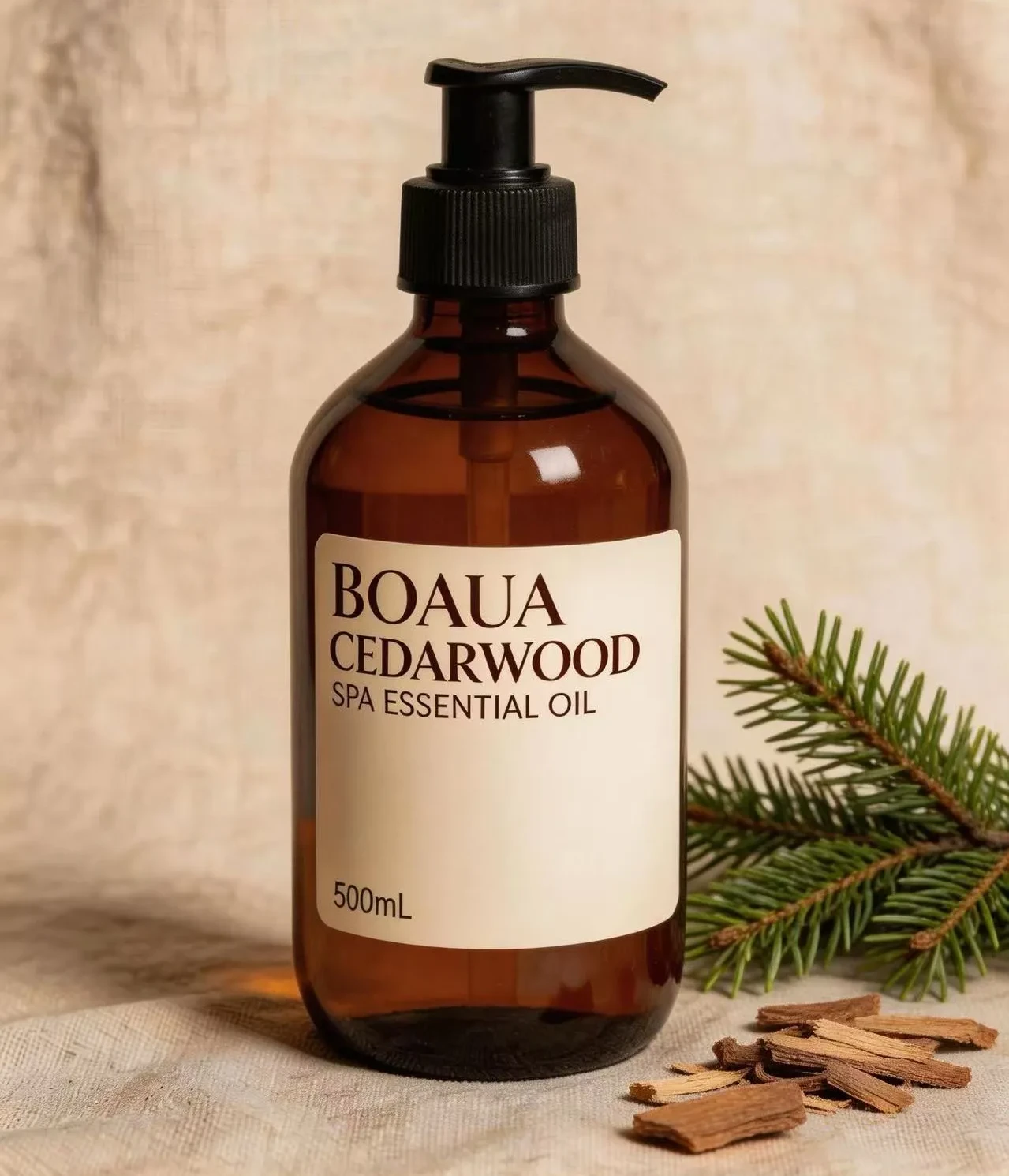
Our own production range reflects this: the cedarwood blend uses a sweet almond base for glide on dry, tight skin, while the tea tree blend is built primarily on grape seed oil because back and body treatments for congested skin need faster absorption.
Build the Range Around a Treatment Menu, Not Around Scents
The most common mistake in a first spa oil brief is specifying a range by fragrance: lavender, lemongrass, rose, sandalwood. A spa does not sell fragrances, it sells treatments, and its purchasing follows its menu. A range organised by scent leaves the spa to work out which oil belongs to which service. A range organised by function sells itself.
Functional positions that map onto most spa menus include a relaxation or sleep-support oil for evening treatments, a deep-tissue or muscle-recovery oil, a contouring or firming oil for body-sculpting services, a purifying oil for back and body treatments on congested skin, and a premium signature oil for the top of the menu. That is five positions, and it covers the majority of what a mid-sized day spa or hotel spa runs.
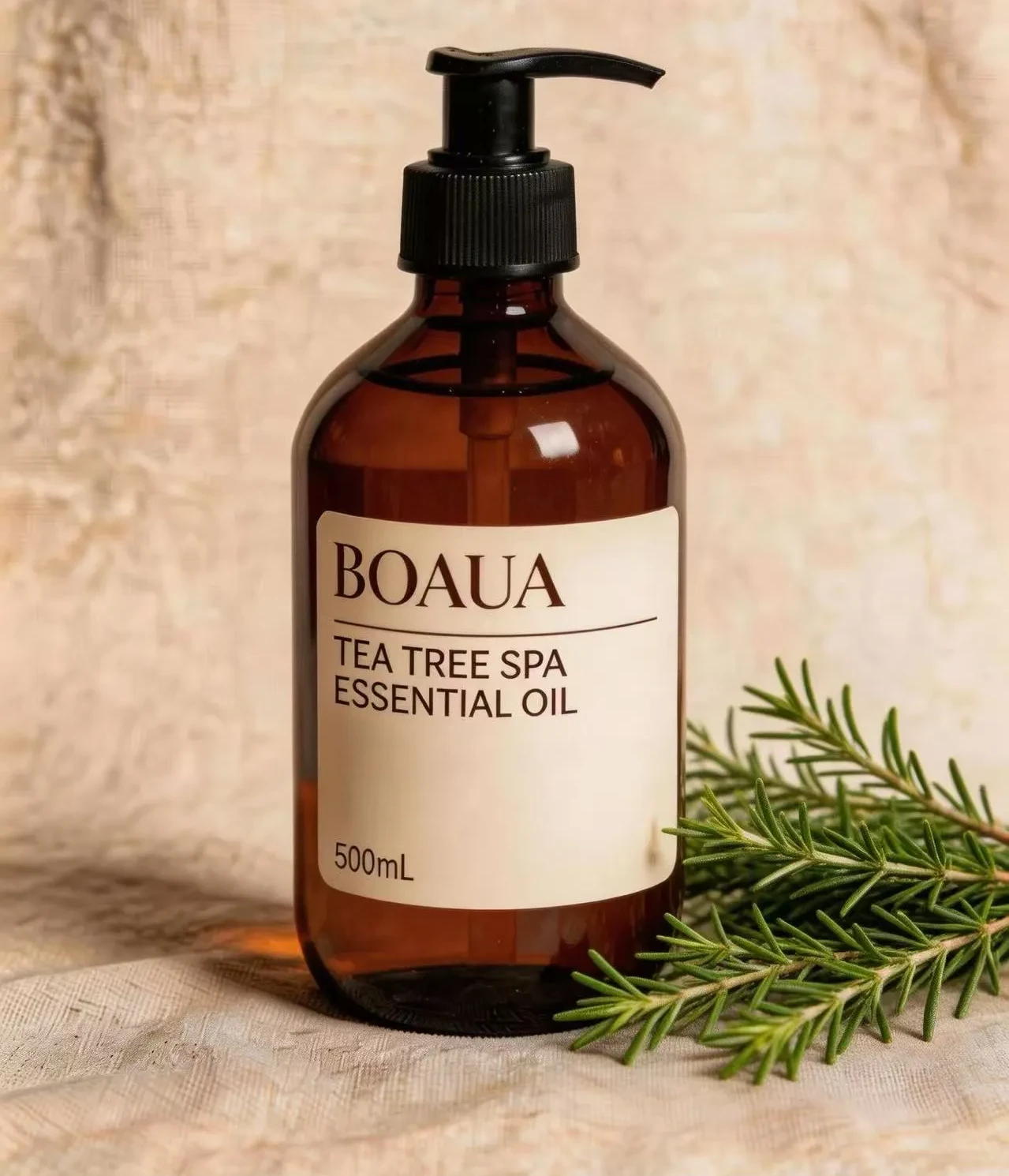
Our aromatherapy production range is built on exactly this logic rather than on a fragrance list, which is why each blend has a stated function: relaxation and sleep, body contouring, muscle and dryness, purifying for congestion, and a premium fragrance-led signature. Fragrance is then chosen to support the function rather than being the specification itself.
The premium tier deserves separate thought
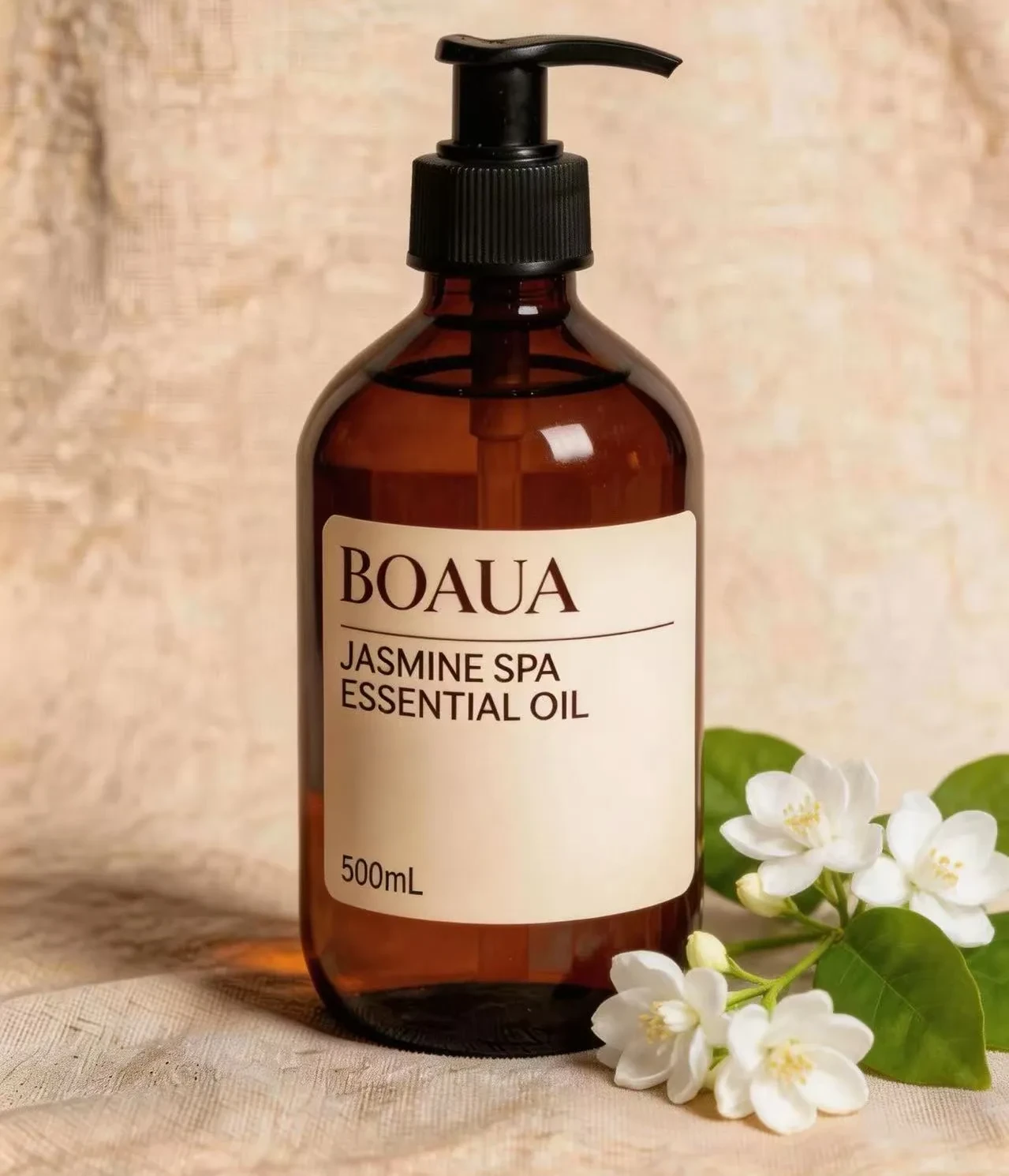
Hotels and higher-end spas usually want a signature oil that is theirs alone, because it becomes part of the brand experience and can be sold as a retail take-home item. This is where bespoke fragrance development is worth the extra cycle, and where a floral premium blend serves a different purpose from the functional workhorses. It carries the identity; the rest of the range carries the volume.
Packaging Decisions Specific to Professional Channels
Treatment-room packaging is a working tool, not a display item, and it follows different rules from retail.
Amber glass protects the blend. Essential oils and vegetable carriers both degrade under light, and oxidised carrier oil develops an unmistakable rancid note that will get a product rejected. Amber glass is the standard for professional oils because it addresses this directly.
Pump dispensing suits one-handed use. A therapist has one hand on the client and needs to dispense with the other without breaking contact or setting a bottle down. Pumps also meter roughly consistent doses, which helps a spa forecast consumption per treatment rather than guessing.
Volume follows treatment economics. Professional formats are large because a spa running multiple treatments a day works through oil quickly, and smaller bottles mean more frequent changeovers and more packaging cost per millilitre. Our spa blends are produced in 500ml pump format for this reason. Retail take-home sizes are a separate decision and a separate SKU rather than a smaller version of the same order.
Labels live in a wet environment. Treatment room bottles get handled with oiled hands and wiped down between clients, so label stock and lamination matter more than they do on a retail shelf. A label that peels or smudges after two weeks looks like a quality problem even when the oil inside is fine.
Hotel and Hospitality Supply Works Differently Again
Hotel spa programmes tend to arrive as a package rather than as single products. Alongside treatment oils, the brief often includes room amenities, retail take-home items for the spa boutique, and sometimes a scent identity that carries across the property. That widens the conversation beyond massage oil into body and fragrance products.
This is where an aromatherapy range that also includes fragrance formats becomes practical, because a single supplier can align the scent story across a treatment oil, a body mist for the boutique, and an eau de toilette as a signature retail piece. Splitting these across suppliers usually means the scents never quite match, which defeats the purpose of a property-wide identity.
Hospitality buyers also work on longer approval cycles and expect documentation up front: safety assessments, ingredient disclosure for their compliance team, insurance-relevant paperwork, and often a factory audit. That is slower than a retail brand launch but it produces longer contracts and steadier reorder patterns, which is the trade-off that makes this channel attractive.
Manufacturing Route and Development Cycle
Most spa oil projects start from an existing blend rather than from a blank brief, because the performance characteristics of professional oils are well understood and there is little advantage in redeveloping them from zero. The usual path is to select a base blend that already performs, then adjust the essential oil ratio and the fragrance direction to fit the brand or the treatment menu.
Adjusting a proven blend is materially faster than full custom development, because the carrier system and its stability behaviour are already established. Full custom development makes sense when a signature scent is central to the brand, or when a treatment protocol requires a specific active or texture that no existing blend delivers. Our OEM and ODM comparison sets out where the line falls between the two routes.
Lead times in our aromatherapy range run around 35 to 45 days for standard blends, extending for premium fragrance-led products where the scent work needs additional rounds. Sample rounds sit ahead of that, and for this channel it is worth budgeting for the samples to be trialled in an actual treatment room rather than assessed on a desk, since slip and residue only reveal themselves in use.
Minimums in this category
As in any private label project, the minimum is a combination of the bulk batch, the packaging component minimum and the filling setup rather than a single number. Amber glass pump bottles are a standard professional component, which generally helps, and large-format filling means fewer units for a given volume of product. Confirmed quantities depend on the blends, the packaging specification and the destination market, so they belong in a quote against a specific brief.
Essential Oil Concentration Is a Safety Decision, Not a Strength Preference
Buyers new to this category sometimes ask for a higher essential oil percentage on the assumption that more is better. In professional massage oil it is not a preference dial, because essential oils are potent materials and the working concentration is set by skin tolerance over repeated, large-area, long-duration contact.
Three things make the professional context stricter than retail use. The application area is large, often the whole body rather than a patch of face. The contact time is long, typically forty-five to ninety minutes rather than seconds. And the exposure is repeated for the therapist, who works with the same oil on client after client, day after day. A concentration that a consumer tolerates on their own forearm once a week is a different proposition for a therapist's hands across a full shift.
Certain materials also carry their own constraints regardless of the overall blend strength. Citrus oils such as grapefruit include phototoxic components that matter when a treatment is followed by sun exposure, which is a real scenario in resort spas. Some fragrance components are restricted by concentration in specific markets, and several are recognised allergens with labelling obligations. Blends intended for pregnancy massage, facial treatments or paediatric services carry additional restrictions on which oils can appear at all.
The practical consequence for a brief is that essential oil ratio is adjustable within a safe working range rather than open-ended, and the range depends on the treatment type and the destination market. We confirm the level against both, which is why a spa oil specification is agreed per project rather than quoted as a fixed percentage.
Compliance for Spa and Massage Products
A massage oil applied to skin is a cosmetic product in most jurisdictions, which means it follows the same notification routes as any other leave-on cosmetic. It is not exempt because it is sold business-to-business rather than at retail.
For Southeast Asian markets, that means notification under the ASEAN Cosmetic Directive through each country's portal, with the details set out in our ASEAN guide and, country by country, for Indonesia and Thailand. Two points catch spa businesses out in particular.
First, claims. Massage and spa marketing gravitates towards therapeutic language about pain, inflammation, detoxification or medical conditions, and that language can reclassify a cosmetic into a medicinal product with an entirely different approval burden. Describing what a treatment feels like is cosmetic; claiming it treats a condition generally is not.
Second, allergens. Essential oils and fragrance compositions contain recognised fragrance allergens that carry labelling obligations in several markets, and some components are restricted by concentration. This is a formulation-stage input rather than a labelling afterthought, because it can require a blend to be adjusted for a specific destination.
Our role is to supply the documentation your regulatory consultant or local distributor needs for filing: formulation disclosure, stability and compatibility data, and manufacturing records under our GMPC-certified quality system. The notifier in each market is the brand or its authorised local representative rather than the factory.
Frequently Asked Questions
Is a spa massage oil the same as an essential oil?
No. A neat essential oil is a single-species oil at full strength, sold in small dropper bottles for diffusing or for the user to dilute. A professional massage oil is a finished cosmetic blending essential oils at a working concentration into carrier oils, packaged in large pump bottles and applied directly to skin. They are made differently, sold through different channels and bought on different criteria.
What carrier oil should a professional massage oil use?
It depends on the treatment. Sweet almond oil gives the longest working time and suits full-body work on dry skin. Grape seed oil absorbs faster and leaves a drier finish, which suits back and body treatments and oily skin. Jojoba gives a silky absorption with better oxidative stability and sits in premium positioning. Most professional blends combine carriers to tune working time and finish independently.
Why are spa oils packaged in 500ml amber glass pump bottles?
Amber glass protects both essential oils and carrier oils from light-driven degradation, which otherwise produces a rancid note. Pumps let a therapist dispense one-handed without breaking contact with the client and meter roughly consistent doses. The large volume matches the consumption rate of a spa running treatments through the day and lowers packaging cost per millilitre.
Can I order a signature scent for my hotel spa?
Yes. Fragrance direction and essential oil ratio are both adjustable, and a bespoke signature scent is a common request for hotel and premium spa programmes because it becomes part of the property experience. It is usually worth reserving bespoke fragrance work for the premium tier while running functional blends elsewhere in the range, since the signature carries identity and the functional oils carry volume.
Do massage oils need product registration?
In most markets yes, on the same basis as any other leave-on cosmetic, and selling business-to-business rather than at retail does not exempt them. In ASEAN markets that means notification through each country's portal under the ASEAN Cosmetic Directive. Therapeutic claims about treating pain or medical conditions can reclassify the product as a medicine with a much heavier approval burden, so claim wording should be settled before filing.
Should I specify my range by fragrance or by function?
By function. Spas purchase against their treatment menu, so a range organised as relaxation, deep tissue, contouring, purifying and premium signature maps directly onto what they sell. A range specified as a list of scents leaves the buyer to work out which oil belongs to which service, which slows adoption.
How long does a spa oil project take?
Standard blends in our aromatherapy range run around 35 to 45 days production, with premium fragrance-led products taking longer where scent development needs additional rounds, plus sample rounds ahead of production. For this channel, build in time to trial samples in a real treatment room, because slip, absorption and linen residue only show up in actual use.
Briefing a Spa Oil Project
Decide whether you are buying a neat oil or a finished massage oil first, because it determines what kind of supplier you need. If it is the latter, define your range by the treatments you sell rather than by scents, settle carrier behaviour against how your therapists actually work, and get samples into a treatment room before signing anything off. Reserve bespoke fragrance for the premium tier and let proven functional blends carry the rest.
Our spa blends are produced in 500ml amber glass pump format under an ISO 22716 and GMPC certified system, with essential oil ratio and fragrance direction adjustable, and SGS testing available on request. If you already have a treatment menu and want costing built around it, request a quote with your intended blends, formats and destination markets, and we will work back from the menu rather than from a generic product list.
Ready to Start Your Project?
Tell us your product requirements. Our technical team responds within 24 hours with a detailed quotation.