
Makeup Remover & Cleansing Balm OEM: 3 Removal Routes
Most makeup remover briefs arrive describing a texture. Water, oil, or balm. That is the wrong first decision, and it is why so many cleansing projects need a second and third sample round for reasons the brand never anticipated.
The three formats are not three textures of one product. They are three different answers to a single physical problem: how does the oil phase carrying the pigment get off the face and down the drain? Micellar water traps it in surfactant micelles. Cleansing oil dissolves it, then relies on an emulsifier to invert when water hits it. A balm does both of those and adds a solid-to-liquid phase change on skin. Each route breaks in its own place, and each carries a different testing burden before it can be released to production.
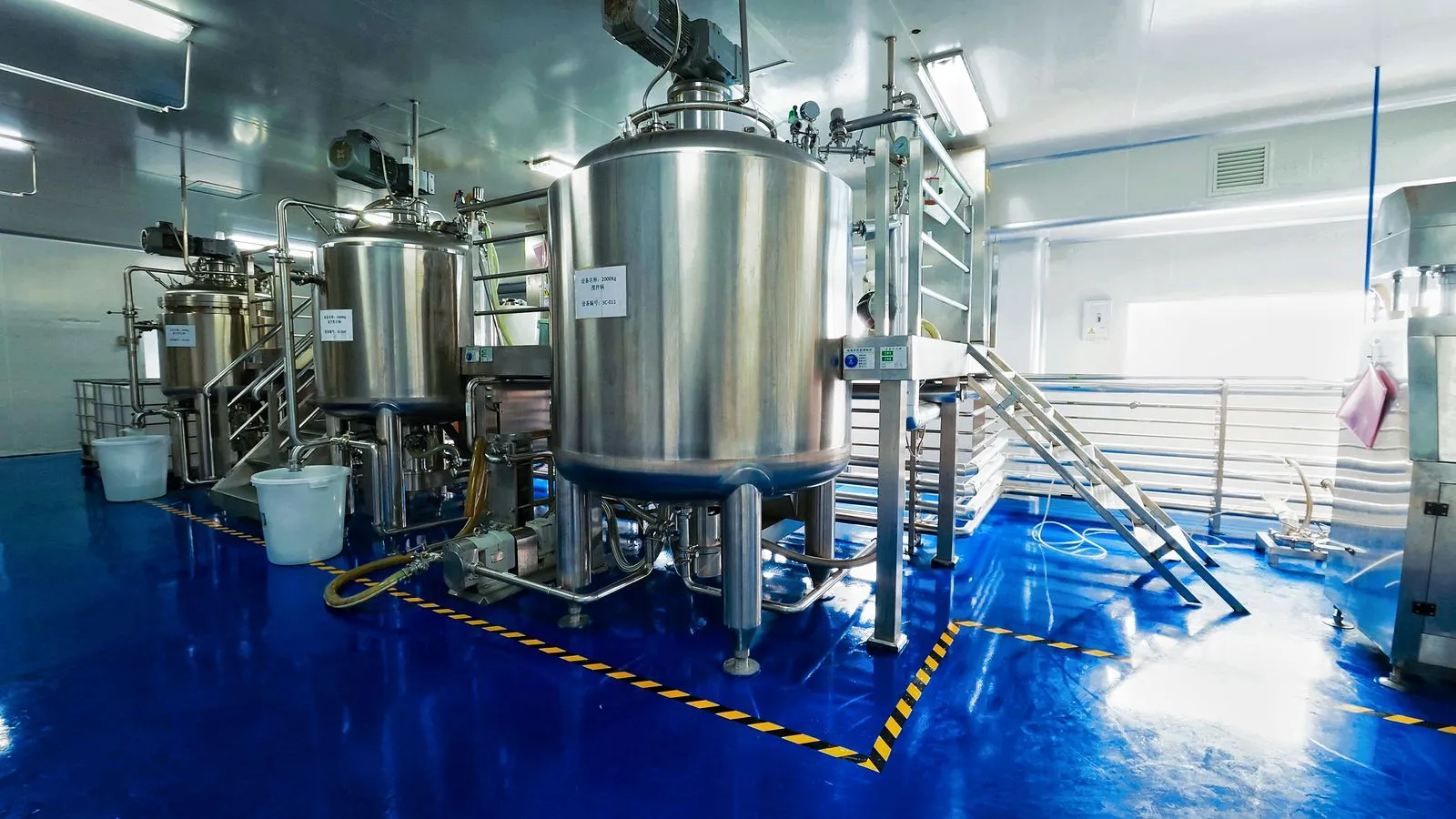
This guide works through the three routes as manufacturing decisions rather than marketing positions. Our cleansing line runs eight products across all three, so the trade-offs below are the ones we actually quote against.
Route One: Micellar Water, Where the Surfactant Does the Work
A micellar water is a mostly aqueous system in which surfactant molecules organise into micelles with the lipophilic tails inward. Makeup dissolves into those cores. There is no emulsion to break and no wax to melt, which makes this the simplest of the three to manufacture and the fastest to sample. Our micellar range samples in 2–3 weeks per custom round.
The engineering question is not whether it cleans, it is how hard the surfactant has to work and what that costs the barrier. This is the axis the whole format sits on, and it is why we run five different micellar waters rather than one:
- Minimal surfactant, sensitive positioning. Our Ultra Gentle Micellar Water for Sensitive Skin pairs a deliberately low surfactant load with ceramides and centella, accepting slower removal in exchange for tolerance. Removal performance is the thing being traded away here, and a brief that wants both is asking the formula to contradict itself.
- Enhanced system for waterproof makeup. Our Deep Cleansing Micellar Water raises the surfactant level and adds gentle solvents, because film-forming waterproof mascara does not yield to micelles alone. This is where the bi-phase decision appears: it can be built as a single-phase system or as a dual-layer oil-water separation bottle that the user shakes. Same brief, two different filling setups and two different packaging costs.
- Functional add-ons. Our Oil Control Fresh Micellar Water carries Zinc PCA alongside tea tree and green tea. Zinc PCA has a defined ladder: 0.1–0.3% as a supporting position where you want zinc on the ingredient list, and 0.5–1% where oil control is the actual claim. In a rinse-free cleansing water the supporting band is the honest place to sit, because contact time is seconds.
- Cleanse-and-treat hybrids. Our All-in-One Makeup Remover & Toner carries niacinamide at a 2% baseline, adjustable across 2–4%. That is the supporting-to-main transition band rather than a high-dose position, which is the correct call for a product that is not left on the skin.
- Soothing-led minimal. Our Derma Calm Micellar Cleansing Water sits between the gentle and functional ends, with aloe and panthenol on a standard micellar base.
One claim discipline worth stating plainly, because it comes up in almost every brief for this format. Tea tree in a cleansing water gets described as anti-acne, and we write it as fresh oil-control instead. The reason is not timidity: attaching an acne claim to a product changes its regulatory classification in several markets, and doing that to a rinse-free water with seconds of contact time is a claim the format cannot support. Our guide to actives in tropical climates covers where oil-control claims do hold up.
Route Two: Cleansing Oil, Where the Emulsifier Decides Everything
A cleansing oil is the easiest format to formulate badly, because the oil phase is the part everyone focuses on and the emulsifier is the part that determines whether the product works. Oils dissolve makeup readily. The difficulty is the rinse: without a correctly chosen and correctly loaded emulsifier, the oil inverts poorly under water and leaves a film. Every complaint about a cleansing oil feeling greasy after rinsing is an emulsifier problem, not an oil problem.
Our Heartleaf Cleansing Oil is built on jojoba and olive oil with squalane and vitamin E, carrying houttuynia cordata extract. Note where the quotation actually moves: pricing depends on the emulsifier system first, then oil selection and grade, then extract loading. That order is not arbitrary, it reflects which decision carries the most engineering risk.
Two things follow from the oil phase that brands rarely budget for:
Oxidation is a real shelf-life constraint, not a formality. A high-unsaturation oil phase oxidises, and oxidised oil smells like it. Peroxide value and accelerated oxidation checks run inside our standard 35–60 day bulk-production window for this format. Real-time oxidation studies over the intended shelf life are a separate exercise, quoted separately, and worth commissioning if a registration dossier calls for it. We say that explicitly because the two get conflated, and a brand that assumes real-time data is included finds out at the wrong moment.
Sachets change the arithmetic. This product is also offered in 5–10ml sachet format alongside the 250ml pump bottle. For a market-entry test or a hotel and travel channel, a sachet run gets a product into hands at a fraction of the landed cost of a filled pump bottle, and the fill line is different from the bottle line. If sampling into a new market is the goal, raise this at the brief stage rather than after bottle tooling is chosen. Our packaging selection guide covers how component minimums interact with fill format.
Not sure which route fits your product?
Send us your brief and our formulators will tell you what is realistic on formula, MOQ, and timeline before you commit to anything.
Route Three: Cleansing Balm, Which Adds a Phase Change
A balm is a cleansing oil that has been structured into a solid, and that structuring is the whole product. It has to stay solid in the jar, soften on contact with skin at body temperature, and then emulsify under water. Three requirements, one wax and emulsifier system, and they pull against each other.
Melt point is the specification that decides whether the product survives its destination market. A balm tuned to soften readily at 32–34°C skin temperature performs beautifully in a temperate market and can slump into a semi-liquid in an unconditioned warehouse in Jakarta or Riyadh. Raise the melt point for heat stability and the same product feels waxy and drags on the face. There is no single correct answer, which is why we treat melt point as a per-project specification confirmed against the destination climate rather than a house standard.
Our Camellia Deep Cleansing Balm is built on camellia oil with an emulsifying wax base, squalane, vitamin E and centella. Its quotation depends on the wax and emulsifier system, the camellia oil grade, and the melt-point specification, in that order. It fills at 80g or 100g in a PP or glass jar with an included spatula.
The related format is a cleansing cream, which reads as a balm commercially but is built differently. Our Amino Acid Repair Cleansing Cream uses high-purity amino acid surfactants with ceramides, centella, oat extract and panthenol in a 100g clinical-style tube. It sits closer to the systems on our cleanser manufacturing page than to a wax-structured balm, which means it avoids the melt-point problem entirely and cleans less aggressively. If your brief says balm but your market is hot and your channel is unconditioned retail, this is the format worth discussing.
Both wax-structured and cream formats sample in 3–4 weeks rather than the 2–3 weeks a micellar water needs. The extra week is not administrative. It is the phase-behaviour work: confirming the product holds its form at the top of its temperature range, softens correctly at skin temperature, and still rinses clean.

Preservation: Three Formats, Three Different Problems
This is the part of a cleansing brief that almost never gets discussed and that most often causes a failed batch release. Preservation is not one problem solved one way. It follows directly from how much water the formula contains, which means the three routes face three genuinely different situations.
A micellar water is mostly water, and needs a full preservative system. It is a high-water-activity product in a bottle the user will dip cotton pads into, or decant, for weeks. That is an open system with repeated contamination opportunities, and it needs a preservative package validated by challenge testing rather than chosen from a supplier list. We run preservative efficacy assessment to ISO 11930 on aqueous cleansing formulas before release, and the result sometimes sends the formula back a round, because a preservative that performs well in a serum can behave differently in a surfactant-rich matrix. Surfactants can partition preservatives into micelles and reduce the free concentration available to do the work, which is exactly the kind of interaction that only shows up when you test the actual formula.
A cleansing oil is anhydrous, and the microbiological risk profile changes completely. With no water phase there is no water activity to support microbial growth, so a traditional broad-spectrum preservative system is not the control point. The control point moves to the oil itself: antioxidant protection, packaging that limits headspace and light, and manufacturing hygiene. This is why we build the Heartleaf oil with vitamin E in the formula rather than as a marketing ingredient. Brands sometimes ask for a preservative-free claim on an oil, which is defensible here in a way it is not for a water, but it needs to be phrased as a formulation fact rather than as a safety superiority claim.
A wax-structured balm is also anhydrous, with one extra exposure. The jar and spatula format means fingers or a spatula enter the product repeatedly. Low water activity still does the heavy lifting, but the spatula is not decoration and is not primarily a premium cue: it is a hygiene control. A balm sold in a jar without one is a different risk conversation. The cleansing cream format sits differently again, because it does contain water and therefore returns to the full preservation requirement of the micellar route despite reading like a balm on shelf.
The practical consequence for a brief is that a three-format cleansing line needs two separate preservation strategies and two separate sets of microbiological data, not one. Budget the testing accordingly.
Packaging Compatibility Is Part of the Formula
Brands treat packaging as a decision that happens after the formula is signed off. For cleansing products specifically, that sequence causes rework, because an oil phase and a plastic bottle interact in ways an aqueous product never does.
The issue is environmental stress cracking. Certain oils and solvents act on stressed regions of a plastic container, particularly around threads, weld lines and the base, and a bottle that passed a drop test empty can fail after weeks holding an oil-rich formula. PET is the default for our micellar waters because an aqueous surfactant system is undemanding, and it is the wrong reflex for a high-oil formula without a compatibility check. This is why compatibility testing on the actual formula in the actual component matters more than a generic material recommendation, and why we run it as a standard step for oil-phase products rather than an optional extra.
Three related decisions that come out of this:
- Pumps and dispensers are the failure point more often than bottles. A pump has springs, gaskets and a dip tube, and a gasket compound that swells slightly in an oil phase produces a pump that stops priming halfway through the shelf life. Component substitution late in a project is the most common cause of an otherwise finished product being held.
- The bi-phase bottle is a component decision made at brief stage. Our Deep Cleansing Micellar Water can be built single-phase or as a dual-layer oil-water separation product. The second version needs a bottle that shows the separation cleanly and a fill process that handles two phases. Deciding this after tooling is committed means starting the packaging line over.
- Glass solves compatibility and creates freight cost. The camellia balm offers a glass jar for good reason on the shelf, and glass is inert against any oil phase. It is also heavier and breaks, which shows up in carton specification and per-unit freight rather than in the unit price you compare at quotation.
Filling, Cooling and Why the Balm Quote Looks Different
Micellar waters and cleansing oils fill cold. The liquid goes into the container at ambient temperature on a standard liquid line, and the only real variables are viscosity and foaming. Fill speed is high, changeover is quick, and there is nothing to wait for after the container is closed.
A wax-structured balm is hot-filled, and that changes the economics of the run. The product has to be held above its melt point as a liquid, dosed into the jar, and then cooled in a controlled way. The cooling stage is the part that carries risk. Cool it too fast or unevenly and you get surface defects, shrinkage away from the jar wall, or a grainy texture where the wax crystallises coarsely instead of setting into a smooth mass. None of that is a formula fault; it is a process control question, and it is why balm production occupies line time in a way an equivalent volume of micellar water does not.
Two operational consequences worth knowing before you compare quotes across formats:
- Jars cannot be closed immediately. Hot-filled product needs to set before capping and cartoning, which introduces a staging step and floor space into the run. This is the concrete reason balm sampling runs 3–4 weeks against 2–3 for a water: we are confirming the cooling profile produces the surface finish and texture you approved, not just that the formula is right.
- Texture is reproducible only if the cooling profile is fixed. A balm sample made in a lab beaker and a balm made on a production line cool at different rates and can differ in feel from the same formula. We set the cooling profile as part of the specification, which is also the answer to the more common version of this question: why the second production batch of a balm should feel identical to the first.
All of this holds within the same 35–60 day bulk-production window across the three formats. The difference is not the published window, but how much of it is process validation rather than manufacturing.
MOQ and Lead Time Across the Three Routes
The commercial picture is more uniform than the technical one, which surprises brands expecting balms to carry a penalty:
- MOQ: 3,000 bottles or jars per SKU across all three routes on our standard lines. Specialist or bespoke packaging can set a higher floor, and the binding constraint is almost always the packaging component minimum rather than the batch size. A jar with a custom spatula and a 250ml pump bottle are different component sets with different component requirements.
- Production: 35–60 days across all three formats, counted from formula, artwork, and packaging sign-off.
- Sampling: 2–3 weeks for micellar waters and cleansing oil, 3–4 weeks for balm and cream formats.
- Fill sizes in production: 250–300ml for micellar waters, 250ml for cleansing oil with a 5–10ml sachet option, 80–100g for balm, 100g for the cleansing cream.
The place a multi-format cleansing line does cost more is in minimums multiplying across formats rather than in any single format being expensive. A micellar water, a cleansing oil and a balm are three fill lines and three component sets, so a three-SKU cleansing launch is genuinely three minimums. Two SKUs sharing a bottle body is the most effective way to hold a first order down. Our MOQ and cost guide works through how component minimums stack.
Choosing a Route From the Brief
Working backwards from what the brand actually needs, rather than from a texture preference:
- Sensitive-skin or dermatological positioning points to a low-surfactant micellar water or the amino acid cleansing cream. Both accept slower removal deliberately.
- Waterproof and long-wear makeup needs either the enhanced micellar system with solvents, or an oil or balm. A gentle micellar water will not do this job and should not be sold as though it might.
- Hot climate, unconditioned distribution argues against a low-melt-point balm. Either raise the melt point and accept a firmer feel, or use the oil or cream instead.
- Premium shelf presence favours the balm: a glass jar with a spatula reads more expensive than a PET bottle, and the ritual of the phase change is part of what the customer is buying.
- Market-entry testing on a small budget favours the cleansing oil in sachets, which is the cheapest way to get the product into a buyer's hands at volume.
All eight products are ISO 22716 and GMPC certified with SGS testing available on request, and all sit in our skincare range. If your market requires notification before launch, the ASEAN Cosmetic Directive guide covers what the dossier needs.
Frequently Asked Questions
What is the MOQ for private label makeup remover?
Our standard minimum is 3,000 bottles or jars per SKU across micellar water, cleansing oil, and cleansing balm. Specialist or bespoke packaging can set a higher floor, and the packaging component minimum is usually the binding constraint rather than the batch size. Sharing a bottle body across two SKUs is normally the most effective way to simplify a first order.
How long does cleansing product manufacturing take?
Bulk production runs 35–60 days across all three formats from formula, artwork, and packaging sign-off. Sampling differs: 2–3 weeks for a micellar water or cleansing oil, 3–4 weeks for a balm or cleansing cream, because phase behaviour and melt point need confirming before release. Packaging component lead times frequently run as the critical path rather than production.
Why does a cleansing oil feel greasy after rinsing?
Almost always the emulsifier system rather than the oils. A cleansing oil has to invert into an emulsion when water is applied so it can be rinsed away, and if the emulsifier is the wrong type or underloaded, that inversion is incomplete and a film remains. Changing the oil blend rarely fixes it. This is why emulsifier selection, not oil selection, is the first cost driver we quote on for this format.
Can one cleansing balm formula work in both temperate and tropical markets?
Rarely without compromise, because melt point is the constraint. A balm that softens easily at skin temperature can slump in an unconditioned warehouse in a hot climate, and a balm firm enough to survive that heat feels waxy in use. We set melt point per project against the destination climate. If a single formula genuinely has to serve both, a cleansing cream or a cleansing oil avoids the problem, since neither depends on staying solid.
Is a bi-phase makeup remover better than a single-phase micellar water?
It is better at waterproof makeup and worse at convenience, and it is a packaging decision as much as a formulation one. A bi-phase product separates in the bottle and needs shaking before use, which requires a dual-layer separation bottle rather than a standard flip-cap PET. Single-phase enhanced micellar systems with gentle solvents handle most long-wear makeup without that trade-off. We quote both from the same brief.
Do you offer sachet formats for cleansing products?
Yes, in 5–10ml sachets on the cleansing oil. Sachets run on a different fill line from bottles, so it is worth raising at brief stage rather than after bottle tooling is selected. The common use cases are market-entry sampling, hotel and travel channels, and gift-with-purchase inserts.
Does a cleansing oil need preservatives?
Not in the conventional sense, because an anhydrous formula has no water activity to support microbial growth, so a broad-spectrum preservative system is not the control point. What it does need is oxidative protection, which is a different problem: antioxidant selection, packaging that limits light and headspace, and peroxide value monitoring. A preservative-free description can be accurate for an oil in a way it is not for a micellar water, but it should be written as a formulation fact rather than implying the product is safer than a preserved one. Note that a cleansing cream containing water returns to the full preservation requirement despite reading like a balm.
Can I use the same PET bottle for a micellar water and a cleansing oil?
Not without a compatibility check on the actual formula in the actual component. Oil phases and some solvents can cause environmental stress cracking in plastics at stressed regions such as threads and weld lines, so a bottle that performs perfectly with an aqueous surfactant system can fail after weeks holding an oil-rich one. Pumps fail more often than bottles, because gasket compounds can swell in an oil phase and stop the pump priming. We run compatibility testing as a standard step for oil-phase products rather than as an add-on, and glass is the straightforward answer when a component has to be inert.
Why does my balm sample feel different from the production batch?
Cooling rate. A wax-structured balm is hot-filled and then cooled, and a lab beaker and a production line cool at different rates. The same formula can set into a smooth mass or a slightly grainy one depending on how fast and how evenly the wax crystallises. The fix is to fix the cooling profile as part of the written specification rather than treating it as a plant-floor variable, which is what we do at the sampling stage and the main reason balm sampling takes 3–4 weeks.
What claims can a rinse-free cleansing water support?
Cleansing and removal claims, plus mild sensory and comfort claims from supporting actives. What it does not reliably support is treatment claims, because contact time is measured in seconds and the product is wiped away. An ingredient such as tea tree or zinc PCA sits at a supporting level in this format and belongs on the ingredient list rather than in a treatment claim. Attaching an acne claim also changes the product's regulatory classification in several markets, which is a separate decision from the formulation one.
Ready to Start Your Project?
Tell us your product requirements. Within 24 hours, our technical team will reply with a quotation or the questions needed to prepare one.