
Private Label Hair Care: OEM Shampoo & Conditioner
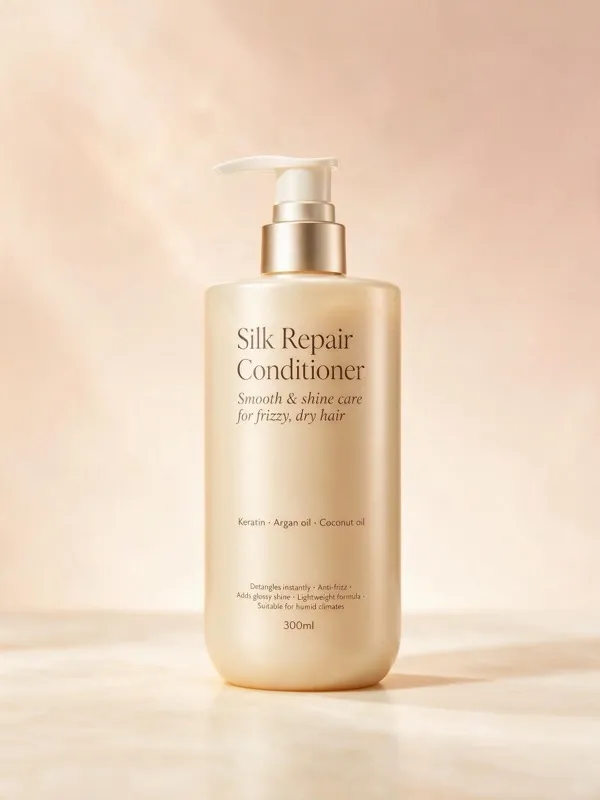
When brands approach a private label hair care manufacturer, the first question is usually about price. The more useful first question is about format, because in hair care the format decides almost everything else: which parts of the formula you can change, which filling line your order runs on, what your minimum order will be, and how much of the finished product's character is actually yours.
Hair care is not a single category with one set of rules. A shampoo and a hair mask are different manufacturing problems with different customisation ranges, and the private label options that are cheap and easy in one are expensive or impossible in the other. This guide goes format by format through the main hair care products, sets out what is genuinely adjustable in each, and then covers where MOQ comes from and where the popular marketing claims have real regulatory and formulation limits.
Why Format Comes Before Price in Hair Care
Two things about hair care manufacturing drive the whole conversation before you look at a quote.
Different formats run on different equipment. A thin shampoo and a thick mask do not fill the same way, and a pump bottle, a flip-top cap, a tube, and a sachet are four different filling and sealing setups. A large part of any MOQ you are quoted is the cost of setting up and cleaning down a line for your run.
Frequency of use shapes the brief. Shampoo and conditioner are used daily, so mildness and cost per use dominate; a mask is used occasionally, so it can carry richer systems and support a higher price. That is why the same brand often runs a low-margin shampoo alongside a high-margin mask, and why your product mix matters as much as any single formula.
Shampoo: The Anchor Product and Its Real Variables
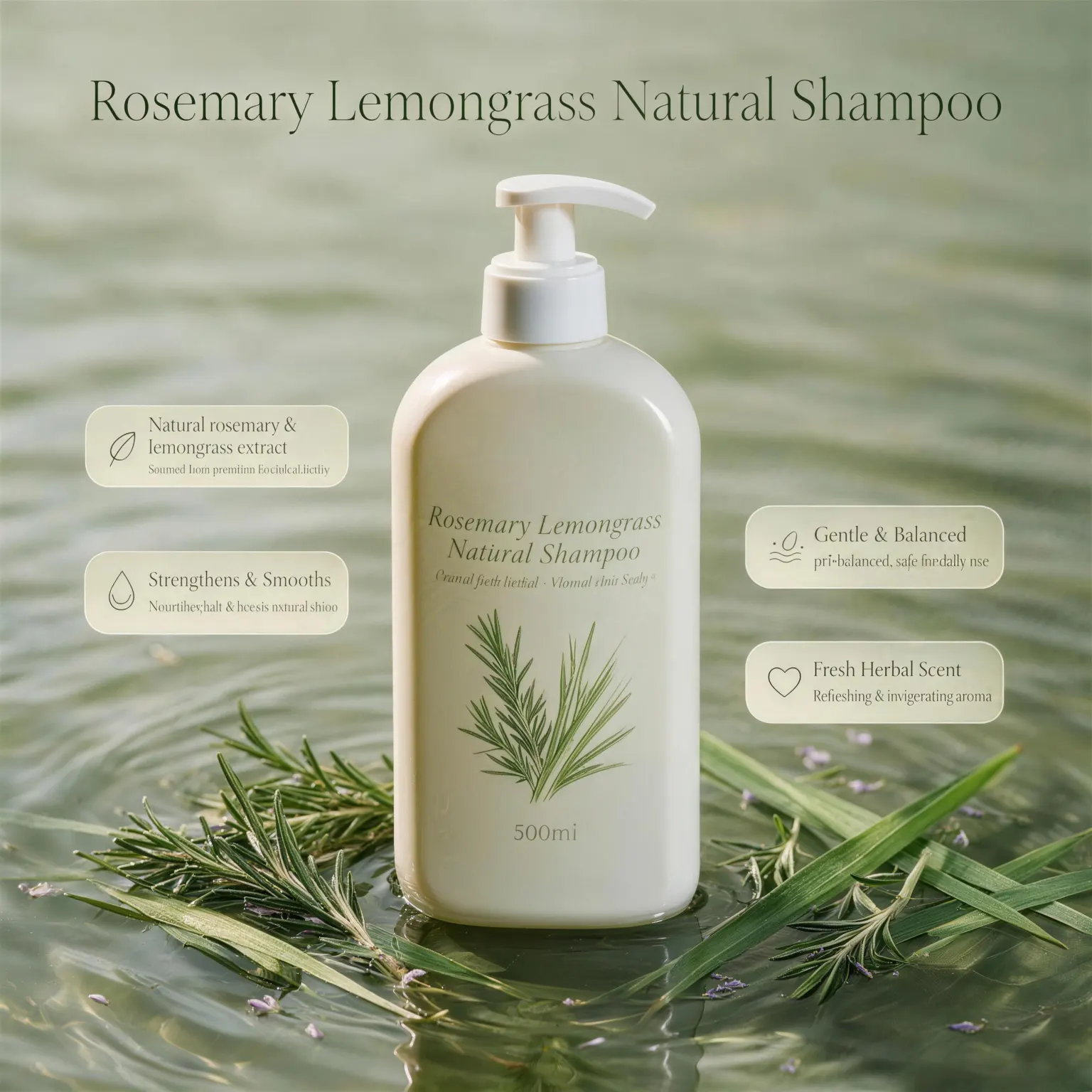
Shampoo is where most hair care brands start, because it is the highest-frequency purchase and the product customers replace most often. On a private label basis it is also one of the more flexible formats, because the base is well characterised and the levers are clear.
What is genuinely adjustable in a private label shampoo:
- Surfactant system. This is the biggest single decision and it changes cost, lather character, and mildness together. A sulfate-based system lathers generously and costs less; a sulfate-free system built on gentler surfactants feels different in use and prices higher. This choice also drives the claim you can make, which is covered below.
- Conditioning and deposition agents. Whether the shampoo leaves the hair squeaky or slippery is a formulation decision, adjustable within the base.
- Functional direction. Anti-dandruff, oil control, volumising, colour-safe, and anti-hair-fall positioning are largely built by adjusting the base rather than starting from nothing - which is exactly why they suit private label. Compare an anti-dandruff oil control shampoo with a colour-treated repair shampoo: same category, different system priorities. Oil control is the direction with the most formulation depth behind it, and the one where an anti-dandruff variant changes your regulatory position rather than just your claim; our oil control shampoo formulation guide works through the surfactant and active decisions in detail.
- Fragrance. The most cost-effective differentiator in the whole category, and the one customers notice first.
- Viscosity, colour, and clarity. Clear versus pearlised is a visible brand decision made at formulation.
- Fill size and pack format. Bottle, pump, sachet, or travel size.
What is harder to change on a private label basis: the fundamental preservative system, the pH architecture of the base, and anything that would require the whole formula to be re-engineered and re-tested rather than adapted. If your brief needs those changed, you have moved from private label into custom development, and your MOQ and timeline move with it.
Not sure which route fits your product?
Send us your brief and our formulators will tell you what is realistic on formula, MOQ, and timeline before you commit to anything.
Conditioner: Where Sensory Work Decides Repeat Purchase
Conditioner is the natural companion SKU and the one where in-use feel most directly drives whether a customer buys again. The formulation problem is different from shampoo: instead of cleansing and rinsing clean, you are depositing conditioning agents and controlling exactly how much stays behind.
The adjustable levers:
- Conditioning weight. A lightweight smoothing conditioner and a rich repair conditioner sit at opposite ends of the same adjustable scale. This single choice determines who the product is for.
- Silicone strategy. Whether to use silicones, which types, and at what level - or to build a silicone-free system using alternative emollients. This is a formulation and claims decision at once.
- Rinse-out versus leave-in. A leave-in conditioner is a different product architecture, not simply a rinse-out formula in a different bottle - it has to be light enough to stay on hair without weighing it down.
- Hair-type targeting. A curl-defining conditioner and a volumising conditioner are built on opposing priorities - definition and moisture retention versus lift and minimal residue.
- Fragrance matching with your shampoo. Worth deciding early. Matching fragrance across a range is one of the cheapest ways to make separate SKUs feel like a single brand.
Hair Mask and Treatment: The Margin Format
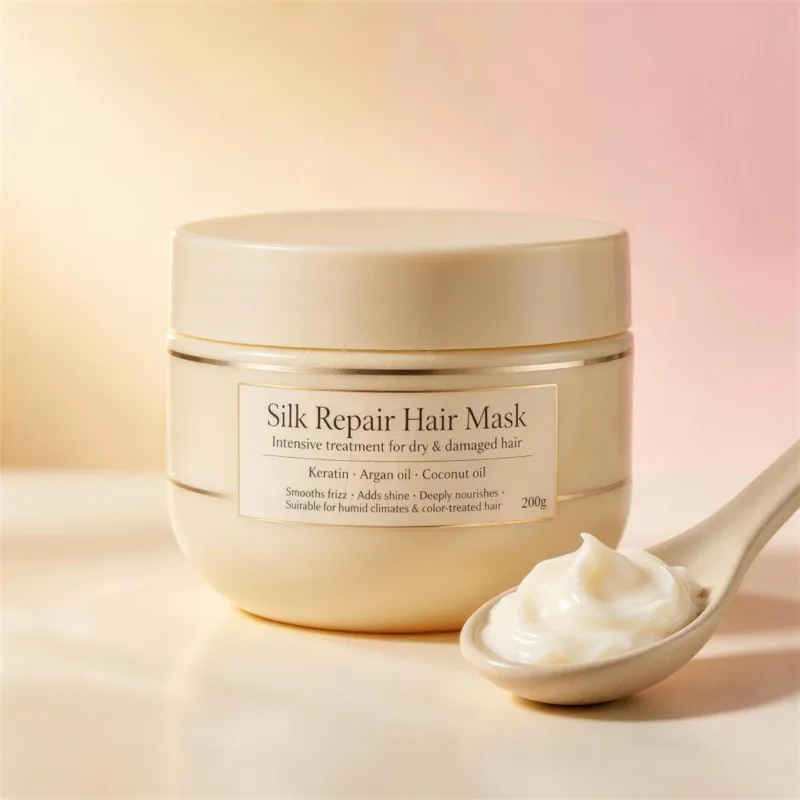
Masks and intensive treatments are used occasionally rather than daily, which changes the economics in your favour. Customers accept a higher price for a treatment, and the format supports richer systems that would be uneconomic in a daily product.
What you can specify:
- Treatment intensity and contact time. A rapid three-minute mask and an overnight leave-in mask are different formulation briefs built around how long the product stays on the hair.
- Target concern. Repair, colour protection, and scalp focus each shift the system - compare a silk repair mask, a colour-lock mask, and a scalp-focused refreshing mask.
- Texture and richness. Butter, cream, or lighter gel-cream, which affects both the sensory story and the fill process.
- Packaging format. Jar, tube, or single-dose sachet. Sachets deserve serious consideration for a new brand: they lower the trial barrier for customers and often carry a lower entry MOQ than jarred products.
One practical note on jars versus tubes: a jar reads as premium and displays well, while a tube protects the product better and is more travel-friendly. That choice affects your packaging cost, your filling line, and your compatibility testing, so make it before samples are finalised rather than after.
Scalp Care and Hair Serums: The Category That Behaves Like Skincare
Scalp-focused products are the fastest-changing part of hair care, and they sit closest to skincare in how they are formulated and how they are marketed. Serums, tonics, and scalp treatments use lighter bases, often with actives more familiar from facial skincare, and they are usually leave-on rather than rinse-off.
Two things follow from that. First, the actives conversation becomes more like a skincare conversation, with concentration, pH window, and stability all mattering more than in a rinse-off product. Second, the claims conversation gets more sensitive, because leave-on scalp products aimed at hair loss sit close to a regulatory line that varies by market. A product presented as supporting the look and feel of fuller hair is a cosmetic. A product presented as treating a medical condition is not, and in most markets that reclassification brings a completely different registration burden.
This is the format where you should be most careful about how a supplier discusses efficacy. An anti-hair-fall shampoo positioned around reducing breakage and supporting the appearance of density is a straightforward cosmetic proposition. The same product positioned as a treatment for hair loss is a different legal product in most jurisdictions, whatever is in the bottle.
Where MOQ Actually Comes From in Hair Care
Brands often treat MOQ as a single number a factory either offers or does not. It is more useful to see it as the sum of three separate minimums, because that tells you where you can negotiate and where you cannot.
| Minimum | What sets it | Room to negotiate |
|---|---|---|
| Bulk batch | The practical floor of the mixing vessel — below a certain volume you cannot mix consistently | Limited by physics. Use a shared or lightly adapted base instead of a bespoke formula needing its own batch |
| Packaging components | Supplier minimums on bottles, caps and tubes. Custom moulds, custom colours and custom printing carry their own floors, often higher than the formula's | The most negotiable of the three, and usually the real constraint. Stock components drop it immediately |
| Filling line setup | Setup and cleandown are a fixed cost per run | Not negotiable, but it spreads: per-unit price falls sharply as volume rises |
If a quoted MOQ looks too high, the packaging row is almost always where it came from — a brand insisting on bespoke packaging on a first order usually discovers its MOQ problem is a packaging problem, not a formula one. Destination climate is the other input worth settling early, because a hot and humid market changes the preservative load, the viscosity target and the packaging spec rather than just the fragrance; our tropical hair and body OEM guide covers what shifts.
- The bulk batch minimum. Mixing vessels have a practical floor - below a certain volume you cannot mix consistently. This is why a shared or lightly adapted base is cheaper to start with than a bespoke formula that requires its own batch.
- The packaging component minimum. Frequently the real constraint. Stock bottles and caps can be bought in modest quantities; custom-moulded components, custom colours, and custom printed tubes carry their own supplier minimums that are often higher than the formula minimum. A brand that insists on bespoke packaging on a first order usually discovers the MOQ problem is a packaging problem.
- The filling line setup. Each run requires setup and cleandown. Short runs carry that fixed cost over fewer units, which is why per-unit price drops sharply as volume rises.
As a planning baseline, MOQ runs 2,000 to 3,000 bottles or jars per SKU for shampoos, conditioners and treatments, with fragrance-led formats from 1,000 to 2,000 bottles, varying with format and packaging complexity. Standard custom sample cycles run 2 to 3 weeks per round and production runs 35 to 45 days. Our MOQ and cost guide breaks down the cost components in more detail if you are building a first-order budget.
The practical implication for a first launch: keep the packaging standard, put your customisation budget into the formula and the fragrance, and use a focused range rather than a wide one. Three well-made SKUs that share components will almost always outperform eight SKUs that each carry their own packaging minimum.
Sulfate-Free, Silicone-Free, and Vegan: Where the Claims Have Limits
These three claims sell, which is why they appear on so many hair care briefs. Each one is achievable, and each one has a real constraint worth knowing before you build a launch around it.
Sulfate-free. Achievable and increasingly standard in premium positioning. The trade-offs are genuine rather than marketing objections: alternative surfactant systems generally cost more, produce a different lather character that some customers read as "not cleaning properly," and may need reformulation work to hit the same viscosity. None of this argues against sulfate-free - it argues for setting customer expectations in your product copy rather than assuming the swap is invisible.
Silicone-free. Achievable using alternative emollients and conditioning agents. The honest trade-off is in immediate slip and detangling feel, where silicones perform very well. A silicone-free conditioner can be excellent, but it behaves differently on first use, and brands that switch without adjusting their messaging tend to hear about it in reviews.
Vegan and cruelty-free. These are two separate claims and conflating them causes problems. Vegan concerns formula composition - no animal-derived ingredients, which in hair care most often means finding alternatives to keratin from animal sources, silk protein, honey derivatives, and some fatty acid sources. Cruelty-free concerns testing rather than composition. A formula can be vegan and still not satisfy every cruelty-free certification standard, and vice versa. If both matter to your brand, specify both explicitly in your brief and ask your manufacturer for supporting documentation for each ingredient. Our vegan private label guide covers how the documentation and certification side works.
A general rule for all three: a claim on the front of pack has to be supportable from the ingredient documentation behind it. Whichever claims you choose, ask your manufacturer what paperwork substantiates them before the artwork is printed.
Building a Range Rather Than a Product
Hair care rewards ranges more than most categories, because usage is sequential - shampoo then conditioner, with a weekly mask. That creates a natural basket rather than a single purchase, and it changes how you should plan a first order.
A workable first range is usually three SKUs: a shampoo, a matching conditioner, and one treatment. Match the fragrance across all three, share packaging components where you can, and keep the treatment as your margin and gifting SKU. Deciding how far that range should extend is its own exercise, and we walk through the SKU ladder and what to share across it in how to decide what your hair range should be. Add hair-type variants only after you know which one sells - splitting a small launch across four hair types means four times the packaging minimums and four times the inventory risk on unproven demand. And brief your manufacturer on how the product should feel, not only on what it contains, because in hair care the differentiation lives in the sensory experience and the system design rather than in a headline active percentage.
What a Private Label Hair Care Project Looks Like From Our Side
We manufacture hair care in Guangzhou under ISO 22716 and GMPC with SGS testing supported on request, alongside skincare, body care, and aromatherapy. Our hair care range covers shampoo, conditioner, mask, and leave-in formats, which means a shampoo-conditioner-mask range can be built on bases that already exist and adapted to your brief rather than developed from zero.
Practically, that means the adjustable levers described above are the ones we actually work with: surfactant system and mildness, conditioning weight, silicone strategy, fragrance, viscosity and appearance, fill size, and pack format. Each sample ships with a Technical Data Sheet, and each production batch ships with its own Certificate of Analysis, so the product you approve is the product you can hold later batches against. On claims we would rather have the harder conversation early - what your ingredient documentation supports, and where a scalp or hair-fall claim crosses from cosmetic into a territory that changes your registration obligations in the destination market.
Frequently Asked Questions
What is a private label hair care manufacturer?
A private label hair care manufacturer produces shampoo, conditioner, masks, and related products on existing or lightly adapted formula bases and applies your brand to them. You choose from adjustable options - surfactant system, conditioning level, fragrance, packaging - rather than developing a formula from scratch, which lowers both cost and time to market.
What can I actually customise in a private label shampoo?
The surfactant system, conditioning and deposition agents, functional direction such as anti-dandruff or volumising, fragrance, viscosity, colour and clarity, and fill size and pack format. Harder to change on a private label basis are the preservative system and the pH architecture of the base, since altering those moves the project into custom development.
What is the MOQ for private label hair care?
Typically 2,000 to 3,000 bottles or jars per SKU for shampoos, conditioners and treatments, varying with format and packaging. MOQ is really three minimums combined: the bulk mixing batch, the packaging component minimum, and the filling line setup. Packaging is most often the binding constraint on a first order.
Can I match fragrance across my shampoo, conditioner, and mask?
Yes, and it is one of the most cost-effective ways to make separate SKUs feel like a coherent range. Specify it at the briefing stage, because fragrance behaves differently in a rinse-off surfactant base than in a rich leave-on treatment and may need adjusting per format to read as the same scent.
Is sulfate-free shampoo harder to manufacture?
Not harder, but different. Alternative surfactant systems generally cost more, produce a different lather character, and may need reformulation to reach the same viscosity. The formulation is well established; the part brands underestimate is setting customer expectations about how a sulfate-free product feels in use.
What is the difference between vegan and cruelty-free hair care?
Vegan concerns composition - no animal-derived ingredients, which in hair care usually means replacing animal-sourced keratin, silk protein, and some honey and fatty acid derivatives. Cruelty-free concerns testing rather than composition. They are separate claims, so specify both if both matter and ask for ingredient documentation supporting each.
Should I start with a single product or a full range?
Three SKUs is a practical starting point for hair care - shampoo, matching conditioner, and one treatment - because usage is sequential and creates a natural basket. Splitting a small first launch across multiple hair-type variants multiplies your packaging minimums and your inventory risk before you know which variant sells.
Can a manufacturer make hair loss claims for my product?
Be careful here. A product positioned around reducing breakage or supporting the appearance of fuller hair is a cosmetic. A product positioned as treating hair loss as a medical condition is generally a different regulatory category with a different registration burden, and where that line falls varies by market. Settle the claim wording before artwork, not after.
The Short Version
In private label hair care, format is the decision that drives everything else. Shampoo gives you the widest set of adjustable levers and the highest purchase frequency. Conditioner is where sensory work decides repeat purchase. Masks and treatments carry your margin. Scalp serums behave like skincare and need the most care on claims. Your MOQ is three minimums added together, and packaging is usually the one that binds. Sulfate-free, silicone-free, and vegan are all achievable with real trade-offs worth planning for rather than discovering in reviews. Start with three SKUs on shared components and a matched fragrance, then widen once you know what sells. If you want a quote built around a specific format and claim set rather than a generic price list, request a quote with your target markets and SKU list.
Ready to Start Your Project?
Tell us your product requirements. Our technical team responds within 24 hours with a detailed quotation.