
Private Label Conditioner Manufacturer for Your Hair Care Range
Choose the use mode, hair type and finish first. Compare existing conditioner directions, then confirm the formula route, packaging and quotation for your brand.
A focused conditioner project
Select the conditioner before building the range
A daily smoothing rinse, a fine-hair formula and a curl-focused conditioner are different briefs. Use the catalogue below to choose a starting direction, then define the finish and packaging you want buyers to experience.
For a wider shampoo, mask or scalp-care project, keep the Hair Care manufacturing overview as your range-planning starting point.
Discuss your conditioner brief
Share rinse-off or leave-in use, target hair type, market, packaging idea and quantity per SKU. We can then discuss the scope that needs confirming.
Rinse-off catalogue directions
Compare four rinse-off conditioner options
These are existing catalogue directions, not a claim that every configuration is in stock. Size, packaging, MOQ and production timing below are read from the corresponding product records; confirm the selected configuration in your quotation.
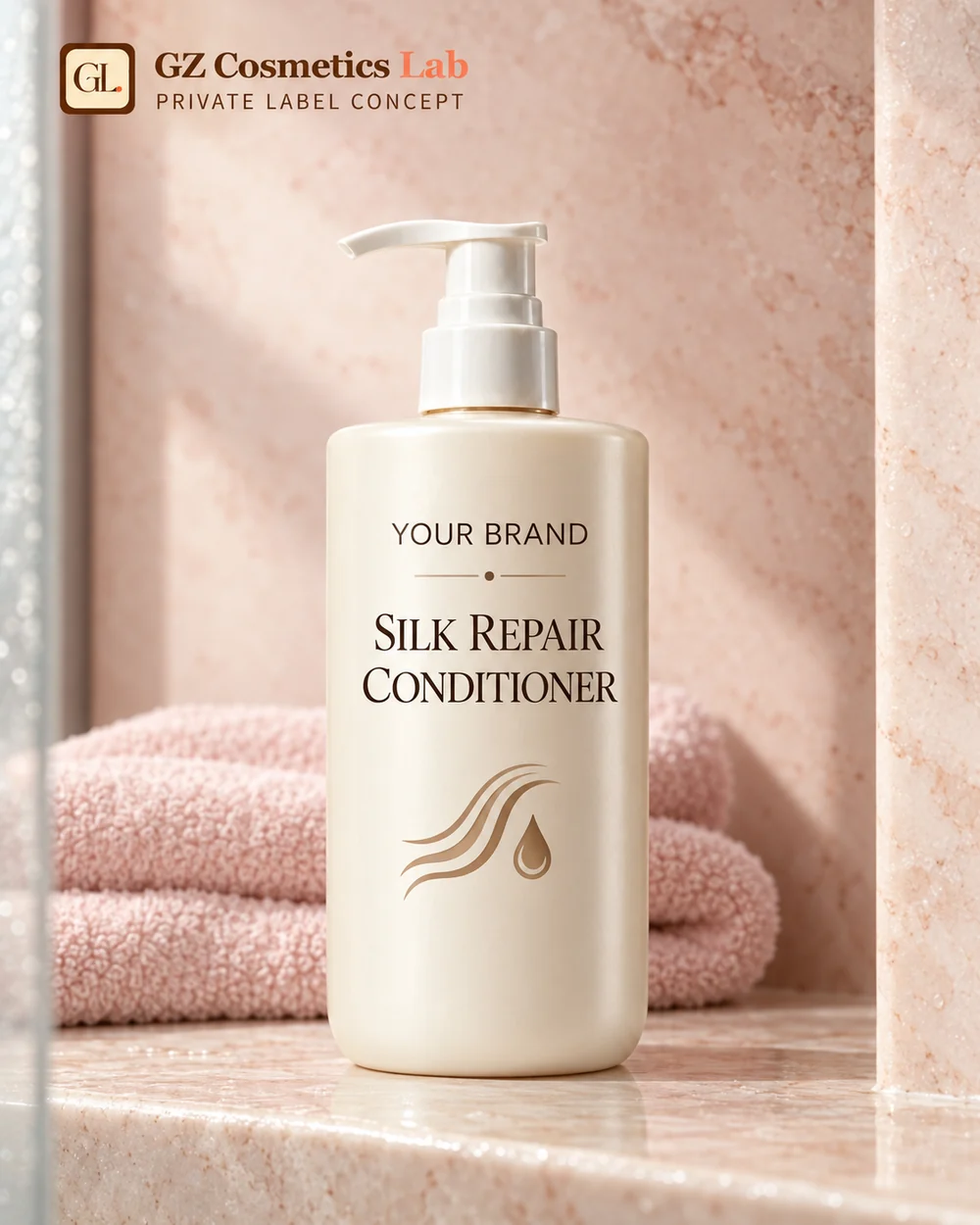
Rinse-off · Dry or rough-feeling hair
Silk Repair Conditioner
Compare wet detangling, dry softness and the finish after rinsing.
- Sizes
- 300ml
- Packaging
- Pump bottle
- MOQ
- 3,000 bottles / SKU
- Listed lead time
- 35–45 days
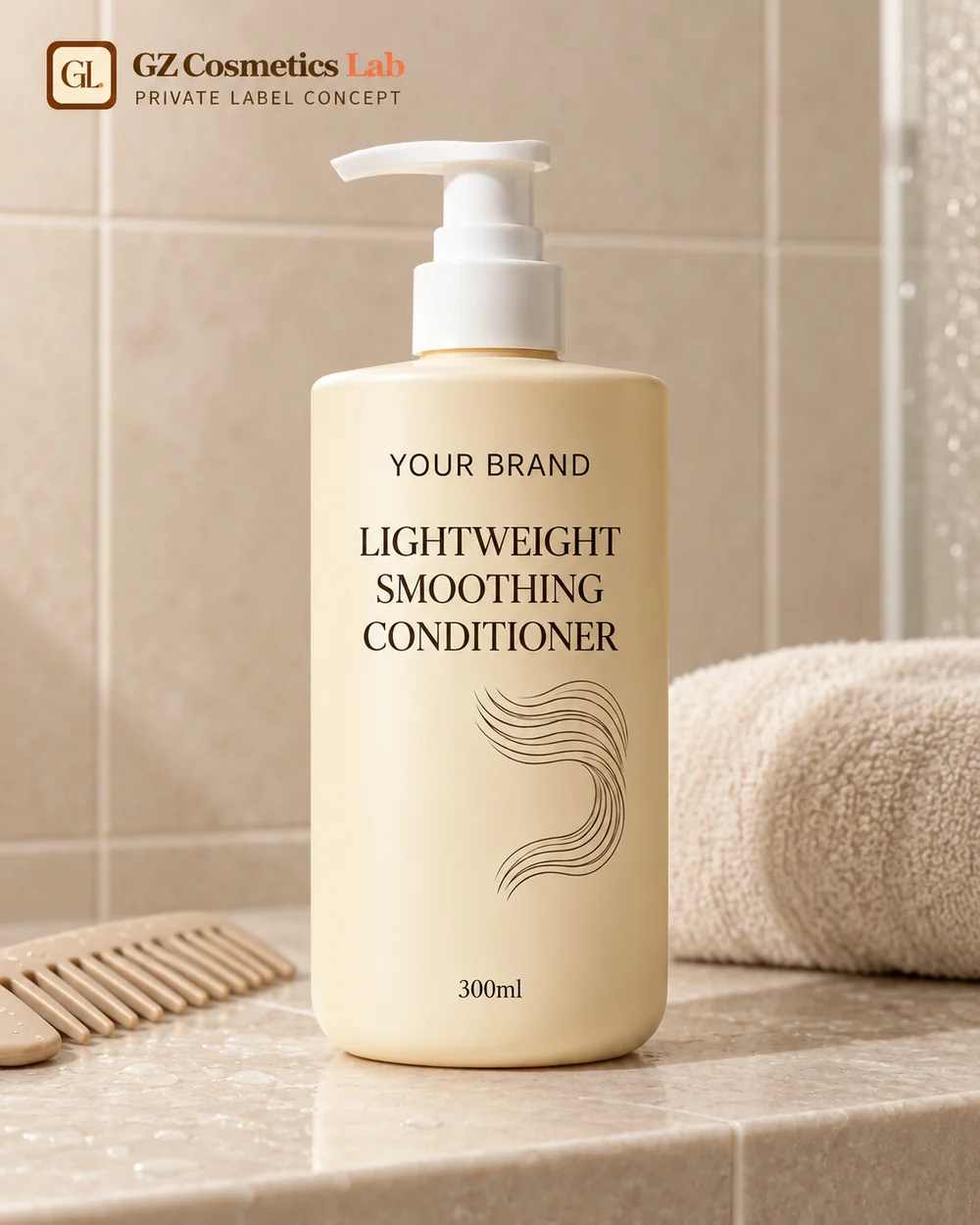
Rinse-off · Everyday smoothing
Lightweight Smoothing Conditioner
Define the slip and softness you want without an overly coated after-feel.
- Sizes
- 300–400ml
- Packaging
- Pump bottle or Tube
- MOQ
- 3,000 bottles / SKU
- Listed lead time
- 35–45 days
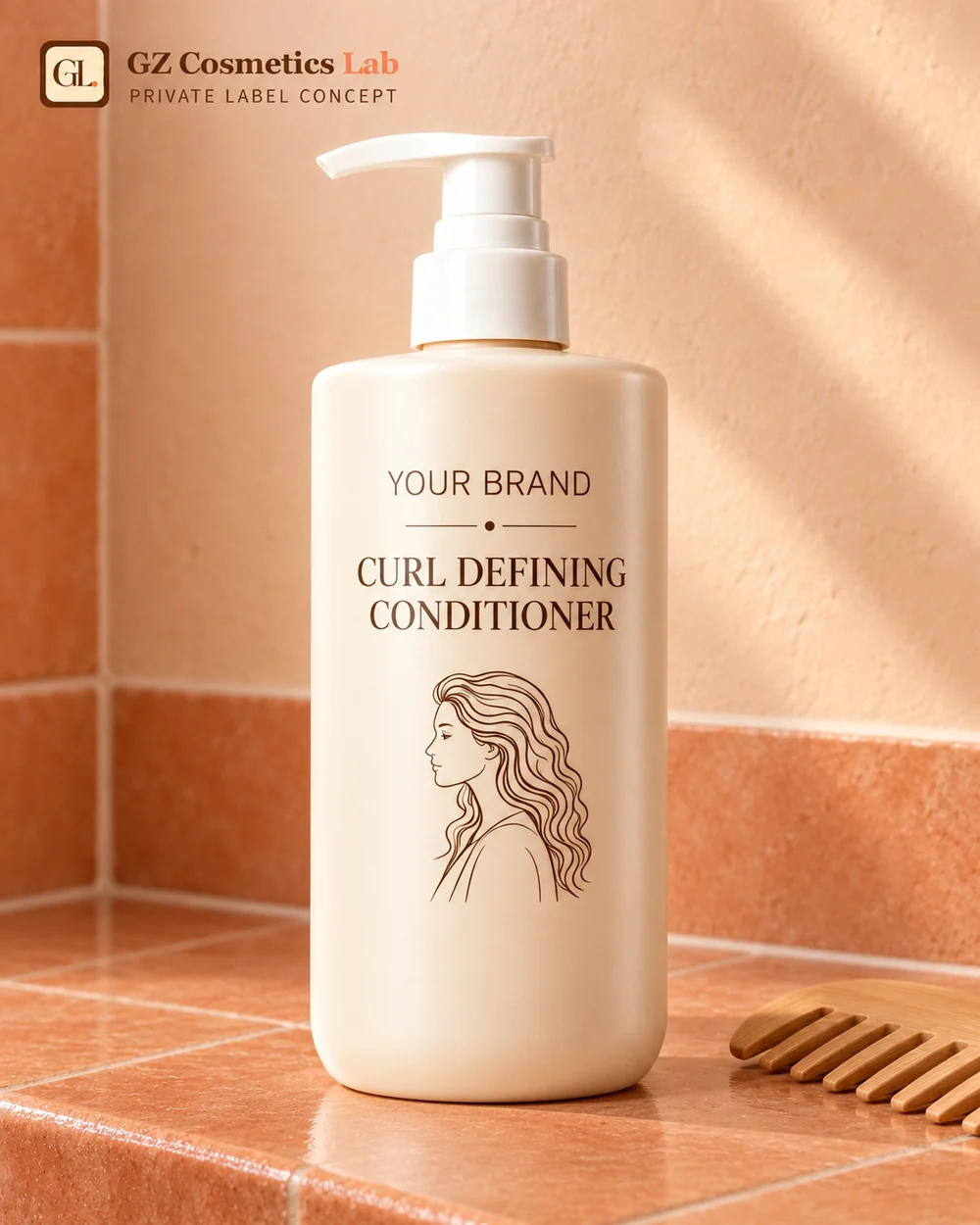
Rinse-off · Curly-hair routines
Curl Defining Conditioner
Agree how curl feel and detangling will be assessed alongside the rest of the routine.
- Sizes
- 300ml
- Packaging
- Pump bottle
- MOQ
- 3,000 bottles / SKU
- Listed lead time
- 35–45 days
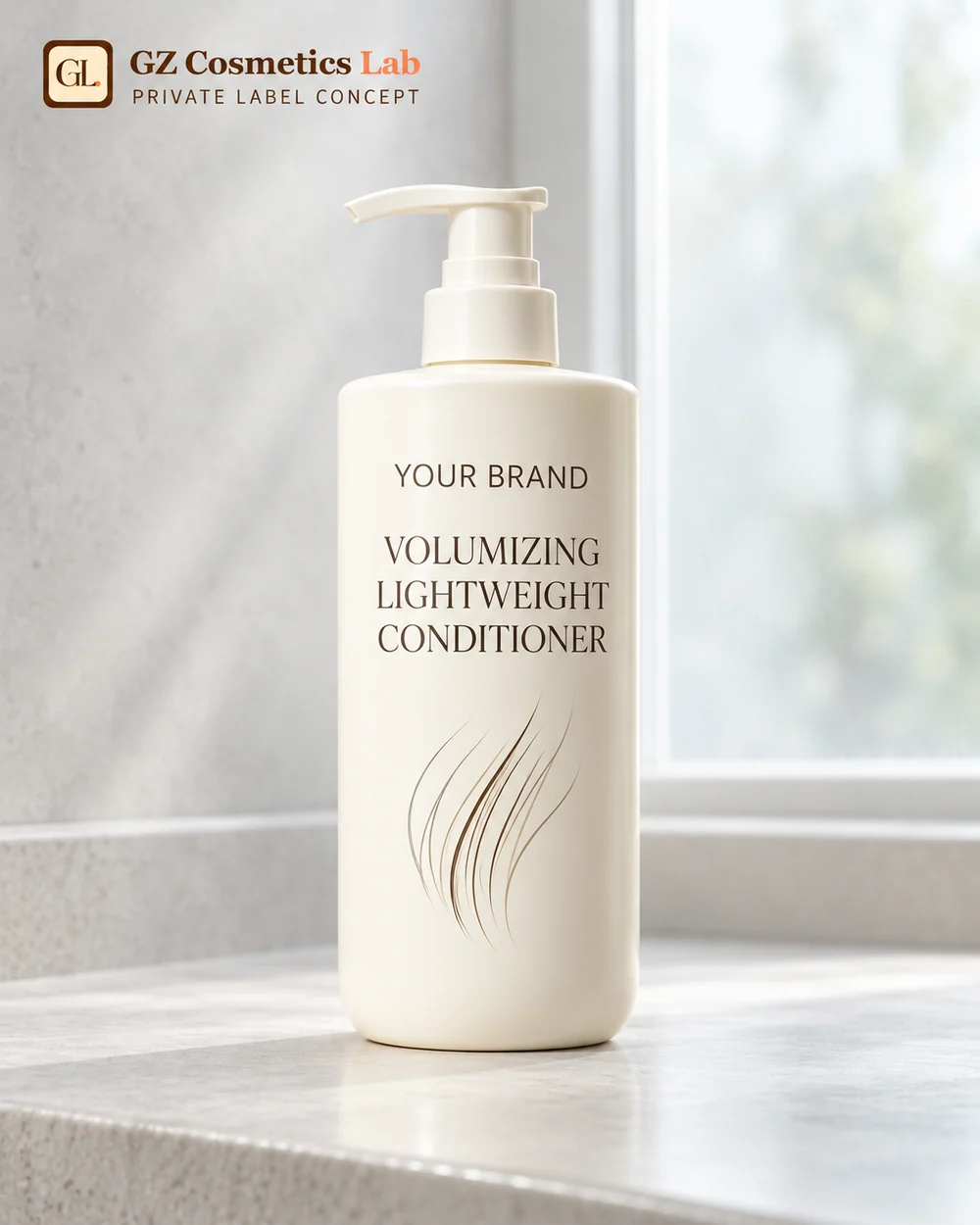
Rinse-off · Fine or easily weighed-down hair
Volumizing Lightweight Conditioner
Review conditioning on the lengths and ends, and how the hair feels once dry.
- Sizes
- 300ml
- Packaging
- Pump bottle
- MOQ
- 3,000 bottles / SKU
- Listed lead time
- 35–45 days
Images are private-label product and packaging concepts. Final formula, appearance and packaging are confirmed for the project; an image does not establish product performance.
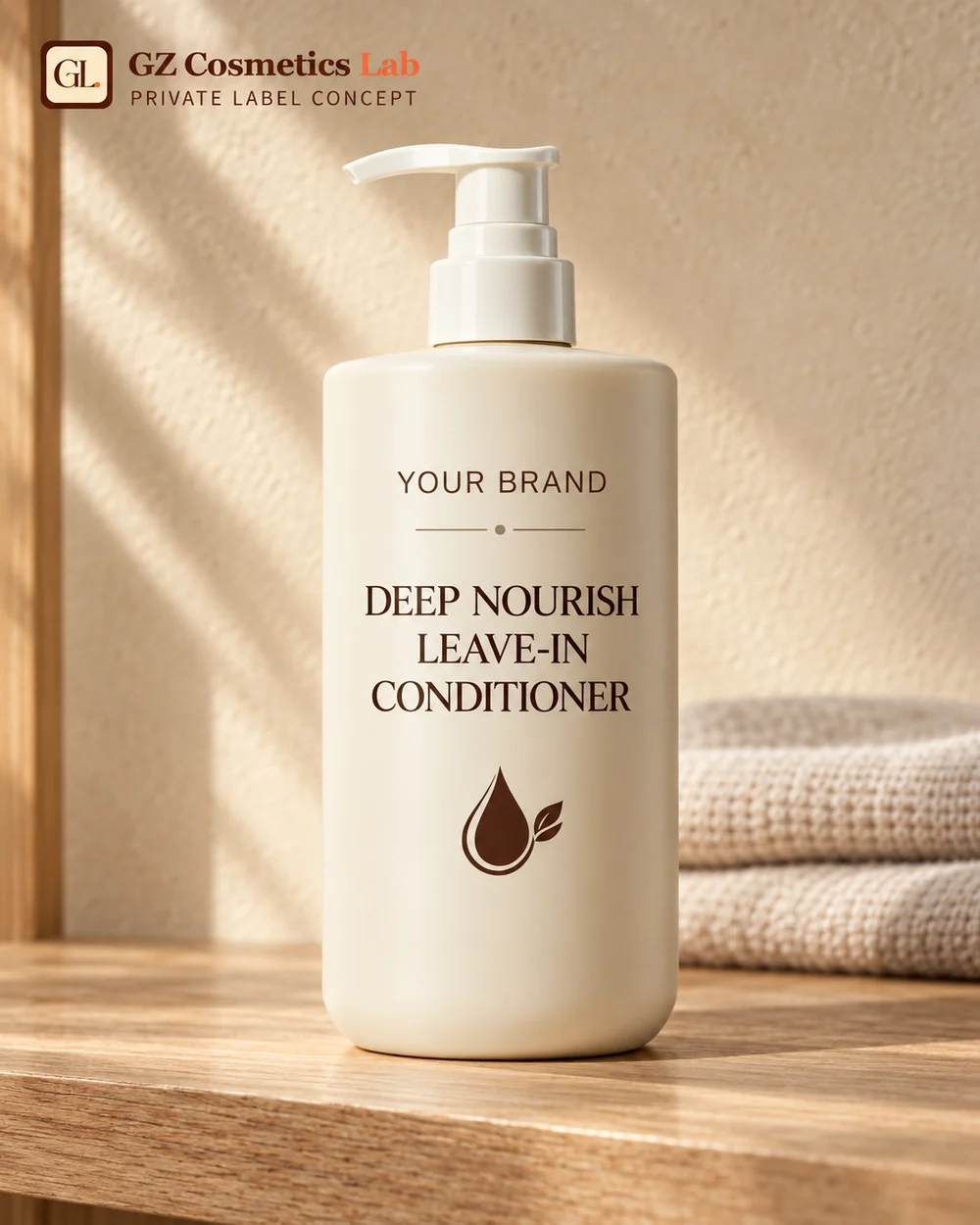
A separate leave-in route
Need a conditioner that stays on the hair?
The Deep Nourish Leave-In Conditioner is listed separately at 100–150ml. Its use mode is not interchangeable with the rinse-off options above. Review the formula, application instructions, packaging and destination-market requirements for that specific product.
Read the leave-in development and compliance guide →Choose how your conditioner will be developed
A catalogue starting point, your own formula and a new development brief require different work. Confirm what is included rather than comparing service names alone.
Private label
Start by reviewing an existing catalogue direction. Confirm the formula reference, fragrance, packaging and permitted adjustments before comparing quotations.
Existing-formula projects →OEM manufacturing
Bring a formula and specifications you are entitled to use. Raw-material sourcing, transfer requirements and manufacturing feasibility need review before production is agreed.
Manufacture your formula →ODM development
Use a product brief when the formula needs to be developed or adjusted. Agree sensory targets, claims, sample review and testing separately from the bulk-production scope.
Develop from your brief →Agree what an approved sample must demonstrate
Turn the desired finish into review questions before samples are compared. The points below help define your brief; they are not claims of test results or a promise that every study is included.
Wet application
Specify application amount, distribution and the detangling feel you want to compare. Use the same routine when reviewing sample versions.
Rinse and dry finish
For rinse-off products, record rinse feel and the result after drying. Softness, residue and weight are separate questions, not one general approval.
Formula and packaging together
Review dispensing in the intended pump or tube, including the closure and fill. A texture approved in a sample jar does not establish final-pack suitability.
Claims and evidence
Record the exact claims intended for the market. Agree what evidence is needed, who provides it, which product version it covers and which work is separately quoted.
For the wider evidence plan, see quality and testing and the guide to commissioning cosmetic efficacy testing.
Prepare a conditioner project brief
- Target country, sales channel and intended user.
- Rinse-off or leave-in use, hair type and the role in the routine.
- Reference product or sample, with the qualities you want to change.
- Desired texture, fragrance and ingredient or positioning restrictions.
- Fill volume, pump or tube, decoration and packaging responsibility.
- Quantity per SKU, budget direction and intended launch window.
- Proposed claims, required documents and testing expectations.
Keep quotation boundaries clear
Use the selected product card for its listed MOQ and production timing. MOQ is per SKU; a matched shampoo and conditioner do not automatically share one minimum. Sachets, custom components and decoration need separate confirmation.
A listed lead time is not a first-enquiry-to-launch promise. Sample approval, component readiness, formula changes and the agreed evidence plan can affect the schedule.
Separate routine manufacturing QC from final-pack compatibility, safety work and claim-support studies. Confirm the responsible party, included documents and any external laboratory costs in writing.
Conditioner sourcing questions
Can I start a private label conditioner project from your catalogue?
The four rinse-off directions listed here provide starting points for discussion. Select the closest product and explain your hair type, sensory target, market and packaging. The formula reference, availability, adjustments and final project scope must be confirmed in the quotation; the catalogue is not a promise of ready-to-ship stock.
Are rinse-off and leave-in conditioners interchangeable?
No. They have different use conditions, exposure and after-feel requirements. Do not turn a rinse-off sample into a leave-in by changing the bottle or instructions. The leave-in direction shown separately needs its own formula review, packaging, use instructions and market assessment.
What is the MOQ for private label conditioner?
The selected product cards display the current catalogue MOQ per SKU. Confirm that figure for the final formula and packaging configuration. Quantities are not automatically pooled across different conditioners or a shampoo-and-conditioner pair. Sachets, custom components and decoration need their own quotation conditions.
Can a shampoo and conditioner share fragrance and packaging?
You can brief them as a coordinated range, but each formula, dispenser, fill and label needs its own review. A shared fragrance direction or bottle design does not establish compatibility, combine the MOQ or replace a separate release specification for each SKU.
Can I request silicone-free or vegan positioning?
Include it in the brief so the proposed formula can be reviewed before sampling. Neither label is established by the product name or image: the actual ingredients, relevant supplier documentation and intended claim must support it. Do not assume a keratin-based catalogue direction is vegan.
Does sample approval include all performance and market testing?
No. Sensory sample approval, routine manufacturing QC and studies supporting product claims have different scopes. Confirm the required methods, laboratory responsibilities, documents, acceptance criteria and cost before treating an approved sample as evidence for launch.
How should I interpret the lead time on a conditioner card?
It is the listed product-level production timing, not a guarantee from first enquiry to market launch. Development, sample approval, components, final-pack checks and market-specific evidence can affect the schedule. Agree the start conditions and final timeline in the quotation.
Bring your conditioner brief to the next step
Send your target hair type, use mode, market, formula route, packaging and quantity per SKU. If you are planning a pair, compare the private label shampoo options as a separate product scope.
The final quotation defines the formula, packaging, sampling, testing, documents and production schedule agreed for your project.