Vegan Private Label Cosmetics: OEM Manufacturing Guide
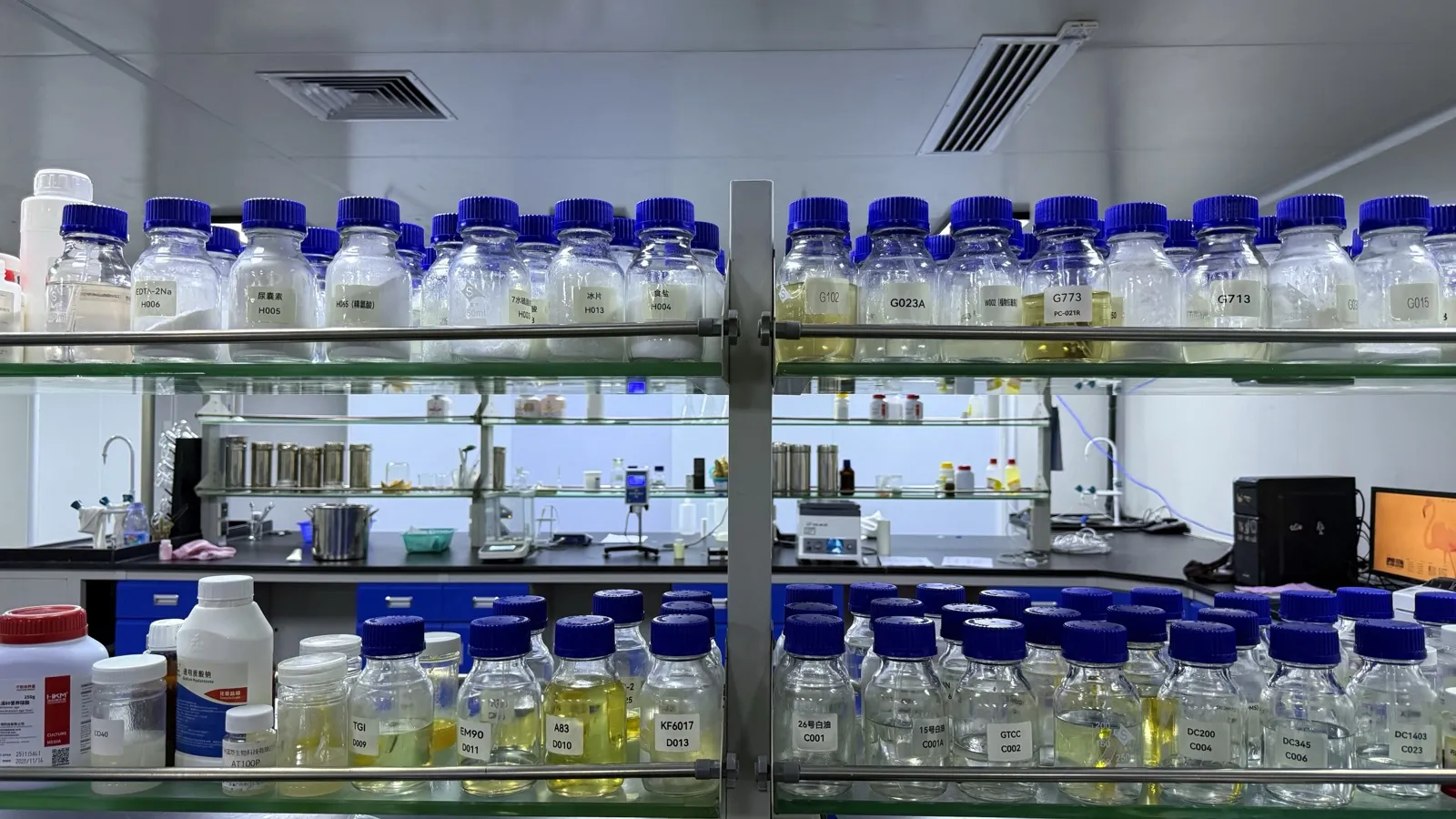
Vegan private label cosmetics look simple from the outside: leave out the beeswax, skip the carmine, put a leaf on the carton. From the factory floor, it is a documentation problem before it is a formulation problem. The formula is usually the easy part. Proving that every raw material, every processing aid, and every shared production line is free of animal origin is what separates a claim you can defend from one that gets pulled off a retailer's shelf.
This guide is written from the manufacturing side. It covers what a vegan claim actually requires, which animal-derived ingredients need substituting and what they get replaced with, how the substitutions change the formula in ways your development team will feel, and what documentation your OEM partner has to produce before a certification body or an EU market regulator will accept the claim.
What "Vegan" Means in Cosmetics, and What It Does Not
There is no statutory definition of "vegan" for cosmetics in the EU, the UK, or the US. No regulation sets a threshold, an audit standard, or a permitted-claims list for it. That legal vacuum is exactly why third-party certification carries weight in this category: absent a legal definition, the certifier's standard becomes the de facto standard, and buyers have learned to ask which scheme you hold rather than whether you say "vegan" on the box.
Three terms get used interchangeably on product pages and they are not the same thing:
- Vegan concerns composition. No animal-derived ingredients, by-products, or derivatives anywhere in the formula, including processing aids that never appear on the INCI list.
- Cruelty-free concerns testing. No animal testing of the finished product or its ingredients, by you or on your behalf. A product can be cruelty-free and still contain lanolin or honey.
- Natural / organic concerns sourcing and processing. Plenty of certified-organic formulas contain beeswax or milk protein, which makes them organic and decisively not vegan.
A vegan product is not automatically cruelty-free, and a cruelty-free product is not automatically vegan. Brands that conflate the two in their marketing create a claims problem for themselves the first time a consumer or a regulator reads the ingredient list carefully. The same discipline applies to the word organic, which is not a positioning choice but a measured percentage with thresholds that differ between the US and Europe — we cover how those are calculated in our guide to organic private label cosmetics.
The EU Animal Testing Timeline, Since It Comes Up Constantly
Buyers frequently ask whether Chinese-manufactured cosmetics can be cruelty-free. The relevant regulatory history is the EU's, and it is worth knowing the actual dates rather than the vague version that circulates online. Under the EU framework, the testing ban on finished cosmetic products took effect in September 2004; the testing ban on cosmetic ingredients took effect in March 2009; and the full marketing ban, prohibiting the sale of cosmetics whose ingredients or final formulation were animal-tested, took full effect in March 2013.
The practical consequence for anyone manufacturing for European distribution: animal testing is not merely a marketing preference in that market, it is a market-access condition. Whatever your brand positioning, if you intend to sell in the EU, the underlying testing status of your formula and its ingredients has to hold up regardless of whether you pursue a cruelty-free logo.
The Certification Landscape: What Each Scheme Actually Audits
Certification schemes differ in what they inspect, and the difference matters when you are choosing which one to pursue. The most widely recognised vegan scheme for cosmetics is the Vegan Society's Vegan Trademark, which has been certifying products since 1990. Its criteria are worth reading closely because they define the scope of work your factory has to support:
- No animal ingredients. No animal products, by-products, or derivatives in the finished product or in any of its ingredients.
- No animal testing. No testing on animals by the manufacturer or by third parties on the manufacturer's behalf.
- No animal-derived processing aids. Carriers, filtration media, and incidental additives must be animal-free even though they do not appear on the label.
- No animal-based GMOs. Genetically modified organisms involving animal genes or animal-derived substances are excluded.
- Cross-contamination controls. Production in shared facilities is permitted, but cleaning procedures have to be documented and contamination risk demonstrably minimised.
Two features of that list catch factories out. The third criterion reaches ingredients that never appear on your INCI list, which means the paper trail has to go deeper than the label. The fifth criterion is the one that makes vegan certification a manufacturing question rather than a formulation question: almost no contract manufacturer runs a dedicated vegan-only plant, so the claim rests on documented changeover cleaning rather than on physical segregation.
Certification review is primarily documentary, with site inspection where the certifier considers it necessary. That is not a loophole, it is a reflection of where the risk actually sits. A vegan claim fails at the raw material declaration or at the line changeover record far more often than it fails at the mixing tank.
Cruelty-Free Schemes Sit Alongside, Not Inside
Leaping Bunny, operated by Cruelty Free International, and PETA's Beauty Without Bunnies certify testing status rather than composition. If your brand wants both claims, you are pursuing two separate certifications with two separate evidence sets: composition documentation for the vegan mark, supply-chain testing declarations for the cruelty-free mark. Our explainer on ISO 22716 and GMPC covers how these voluntary schemes relate to the mandatory manufacturing certifications underneath them.
A Word on ISO 16128
ISO 16128 gives definitions and calculation methods for natural and organic indices in cosmetic ingredients and products. It is useful for substantiating "natural origin" percentages and it is regularly misrepresented as a vegan standard. It is not one. A high natural-origin index says nothing about whether the natural material came from a plant or an animal, and beeswax scores well on it. If a supplier offers ISO 16128 documentation as evidence for a vegan claim, that is a signal they have not worked on a certified vegan project before.
Not sure which route fits your product?
Send us your brief and our formulators will tell you what is realistic on formula, MOQ, and timeline before you commit to anything.
The Substitution Table: Animal-Derived Ingredients and What Replaces Them
This is the part of the project where an experienced manufacturer saves you weeks. Most animal-derived cosmetic ingredients have well-established plant-derived, fermentation-derived, or synthetic equivalents, but the substitutions are not always drop-in, and some of them change the product you end up with.
Waxes and Emollients
- Beeswax (Cera Alba) is replaced with candelilla wax (Euphorbia Cerifera Cera), carnauba wax (Copernicia Cerifera Cera), or rice bran wax (Oryza Sativa Cera). These are not interchangeable by weight: candelilla and carnauba are harder and higher-melting than beeswax, so a straight one-for-one swap in a balm or stick typically produces a firmer, draggier product. The usual correction is to reduce the wax fraction and rebalance the emollient phase.
- Lanolin, from wool, is replaced with plant butters and esters such as shea butter (Butyrospermum Parkii Butter) or synthetic occlusives. Lanolin's specific property is its water-holding, semi-occlusive film; replicating that usually takes a blend rather than a single ingredient.
- Squalene historically came from shark liver oil. The vegan route is squalane derived from olives or from sugarcane fermentation. This one is a genuine upgrade rather than a compromise: the hydrogenated form is more oxidatively stable than squalene, and the fermentation route gives batch-to-batch consistency that an agricultural source struggles to match.
- Stearic acid and cetyl alcohol exist in both tallow-derived and plant-derived grades with identical INCI names. Nothing on the label distinguishes them, which is precisely why the supplier declaration matters more than the ingredient list.
Proteins and Actives
- Collagen is animal-derived by definition. The vegan positioning uses plant proteins, peptides, or fermentation-derived alternatives, and the claim language has to change with it: a plant peptide is not collagen and should not be labelled as though it were.
- Keratin and silk protein (Sericin) are replaced with hydrolysed plant proteins, commonly wheat, soy, rice, or pea. In hair care this affects substantivity, so conditioning performance needs re-testing rather than assuming parity.
- Hyaluronic acid is the reassuring case. Cosmetic-grade sodium hyaluronate is now overwhelmingly produced by bacterial fermentation rather than from rooster comb, so most HA on the market is already vegan-compatible. It still needs a supplier declaration, because "usually" is not evidence.
- Glycerin comes in both animal-fat and vegetable grades under the same INCI name. Vegetable glycerin is the default in most cosmetic supply chains, but this is a per-supplier confirmation, not an assumption.
Colourants and Miscellaneous
- Carmine (CI 75470), from cochineal insects, is replaced with iron oxides, plant-derived pigments, or approved synthetic colourants. Shade matching is the real work here, because carmine's blue-red is difficult to reproduce exactly.
- Guanine, from fish scales, is replaced with synthetic mica or borosilicate-based pearlescent pigments.
- Shellac, an insect secretion, is replaced with plant resins or synthetic film formers.
- Honey, propolis, royal jelly, and milk proteins have no direct functional equivalent. These are reformulation decisions rather than substitutions, and they usually mean rebuilding the marketing story around a different hero ingredient.
- Vitamin D3 is conventionally lanolin-derived; lichen-derived D3 is the vegan route, at a meaningfully higher raw material cost.
The pattern across all of these: the INCI name frequently does not tell you the origin. That is the single most important thing to understand about vegan formulation. Roughly a dozen common ingredients are origin-ambiguous under identical nomenclature, which means a vegan formula cannot be verified by reading a label. It can only be verified with supplier documentation behind every line item.
| Animal-derived ingredient | Vegan route | What changes in the formula | Same INCI name? |
|---|---|---|---|
| Beeswax (Cera Alba) | Candelilla, carnauba or rice bran wax | Harder and higher-melting, so a one-for-one swap gives a firmer, draggier product; reduce the wax fraction and rebalance the emollient phase | No |
| Lanolin (wool) | Plant butters and esters, or synthetic occlusives | Its water-holding semi-occlusive film usually takes a blend to replicate, not a single ingredient | No |
| Squalene (shark liver) | Squalane from olives or sugarcane fermentation | A genuine upgrade: more oxidatively stable, with better batch-to-batch consistency | No |
| Stearic acid, cetyl alcohol (tallow grades) | Plant-derived grades | Functionally equivalent; the supplier declaration is the only evidence | Yes — identical |
| Collagen | Plant proteins, peptides, or fermentation-derived alternatives | Claim language must change too: a plant peptide is not collagen and must not be labelled as though it were | No |
| Keratin, silk protein (Sericin) | Hydrolysed wheat, soy, rice or pea protein | Substantivity differs, so conditioning performance needs re-testing rather than assumed parity | No |
| Hyaluronic acid (rooster comb, historically) | Bacterial fermentation, now the overwhelming majority of supply | Usually already vegan-compatible, but still needs a declaration because "usually" is not evidence | Yes — identical |
| Glycerin (animal fat grades) | Vegetable glycerin, the default in most supply chains | No formulation change; per-supplier confirmation, not an assumption | Yes — identical |
| Carmine (CI 75470, cochineal) | Iron oxides, plant pigments, approved synthetics | Shade matching is the real work; carmine's blue-red is hard to reproduce exactly | No |
| Guanine (fish scales) | Synthetic mica or borosilicate pearlescent pigments | Direct substitution | No |
| Shellac (insect secretion) | Plant resins or synthetic film formers | Direct substitution | No |
| Vitamin D3 (lanolin) | Lichen-derived D3 | Meaningfully higher raw material cost | Yes — identical |
| Honey, propolis, royal jelly, milk proteins | No direct functional equivalent | A reformulation decision, not a substitution; usually means rebuilding the story around a different hero ingredient | — |
Read the last column first. Where it says "identical", the label cannot tell you the origin and the supplier declaration is the entire basis of the claim — those five rows are where vegan claims actually fail.
Where Vegan Projects Actually Fail: The Supply Chain
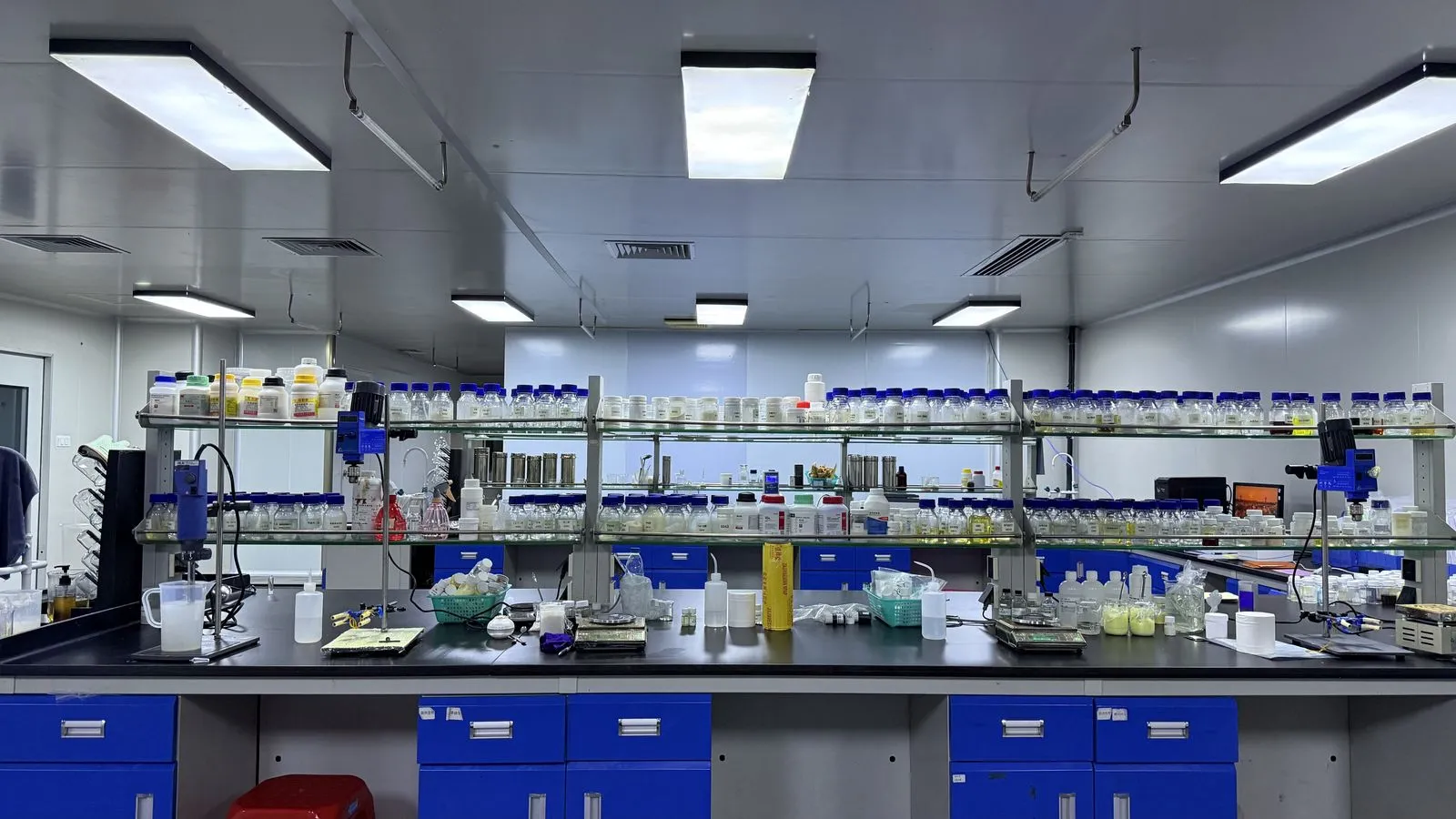
Assume the formula is solved. Three things still commonly derail certification, and all three sit upstream or downstream of the formulation bench.
Raw Material Declarations
Every ingredient needs a supplier statement confirming non-animal origin, and the statement has to cover the material's own processing history, not just its final composition. A plant-derived surfactant purified over a filtration medium of animal origin is not vegan, and nothing on the specification sheet will tell you that. Collecting these declarations across a full formula, and chasing the suppliers who send back a generic specification sheet instead of an origin statement, is typically the longest step in a vegan project.
Shared Lines and Changeover
If the same emulsifying tank ran a lanolin-containing cream last week, the vegan claim depends on your cleaning validation. Certifiers accept shared facilities with documented cleaning; they do not accept "we washed it." This means changeover records, cleaning agent specifications, and often production scheduling that groups vegan SKUs together to reduce changeover frequency.
Claim Drift Between Markets
Because no jurisdiction defines "vegan" for cosmetics, retailers and marketplaces have written their own rules. Some accept a self-declaration; some require a named certification; some prohibit the leaf-and-bunny graphic unless a specific mark is held. A formula that is genuinely vegan can still fail a marketplace listing review on documentation grounds. Deciding which certification you will pursue before production, rather than after, avoids reformulating or relabelling later.
How to Verify a Manufacturer Can Actually Do Vegan: A 7-Point Check
Almost every contract manufacturer will say yes to a vegan brief. Far fewer can produce the evidence a certifier or a retailer asks for afterwards. These seven questions separate the two groups, and they are worth asking on the first call rather than after the first sample.
1. Ask for a non-animal-origin declaration on a specific ingredient, not a policy statement
Pick glycerin, stearic acid, or cetyl alcohol from a formula they have already made and ask for the supplier's origin declaration on that exact material. A factory that has run certified vegan projects produces it within a day or two because the file already exists. A factory that has not will send you a general specification sheet, a company policy page, or a promise to check. That response tells you where their documentation actually stands.
2. Ask how they handle processing aids
Processing aids never appear on the INCI list, and certification schemes still require them to be animal-free. If the answer treats the ingredient list as the whole scope, they have not worked to a vegan standard before. The right answer references carriers, filtration media, and incidental additives explicitly.
3. Ask whether the line is dedicated or shared, and what the changeover record looks like
Shared lines are normal and acceptable. Undocumented cleaning is not. Ask to see a changeover record from an actual production run and the cleaning agent specification. If neither exists as a document, your vegan claim has no evidentiary base regardless of what the formula contains.
4. Ask which specific certification they have supported, and for which client market
"We can do vegan" and "we have supplied documentation for a Vegan Trademark application" are different capabilities. Naming a scheme, and being able to describe what the certifier asked for, is the difference between a factory that has been through the process and one that is describing it from a website.
5. Ask what they would substitute in your specific formula, before you ask for a quote
Give them a formula or a product brief containing something awkward, a balm with beeswax, a cream with lanolin, a shade built on carmine. A capable partner names the substitute, tells you the substitution changes the product, and estimates the extra sample rounds. A weak partner quotes the same price and timeline as the non-vegan version, which means they have not thought about it yet and you will discover the problem at sampling.
6. Ask for ISO 22716 certification with the scope page
Not the summary, the full certificate including scope and the issuing body. Check that the scope covers your product category and that the certifier is accredited. This is not vegan-specific, but it is the manufacturing base every other claim sits on, and it is where the most easily-checked misrepresentation in this industry occurs.
7. Ask who assembles the documentation package and when
The right answer is that it is built during the project and handed over as a set: origin declarations per raw material, quantitative formula breakdown, INCI listing in correct order, changeover and cleaning records, Certificates of Analysis, and ISO 22716 evidence. The wrong answer is that documentation is prepared on request after production, because that is when missing declarations turn into a reformulation.
A useful shortcut across all seven: the questions that get fast, specific, document-backed answers indicate a factory that has done this before. The questions that get reassurance indicate one that has not. On a vegan project, reassurance is the single most expensive thing you can accept, because the cost of discovering a tallow-derived ingredient arrives after the goods are made. The same verification logic applies to manufacturer selection generally, which our guide on how to choose a cosmetics manufacturer in China covers in more depth.
What This Looks Like as an OEM Project
At our Guangzhou facility we develop and produce under ISO 22716 and GMPC, with SGS testing supported on request, across skincare, body care, hair care, and aromatherapy. For vegan projects specifically, the workflow differs from a standard private label brief in three places.
First, ingredient screening comes before formulation. We screen the target formula against origin-ambiguous materials and identify which ones need supplier substitution before development starts, rather than discovering a tallow-derived stearic acid at the documentation stage.
Second, sample rounds account for the substitution effects described above. A vegan balm or stick reformulated from a beeswax base generally needs an extra sample round for texture, because the wax substitution changes hardness and payoff. Our standard custom sample cycle runs 2 to 3 weeks per round, and we plan vegan wax-system projects with that additional round built in rather than discovered.
Third, the documentation package is assembled as part of the project, not requested afterwards: non-animal-origin declarations per raw material, formulation breakdown with percentages, ISO 22716 evidence for the production site, changeover and cleaning records for shared equipment, and Certificates of Analysis. This is the same evidence base your certifier and your EU Responsible Person will ask for, which is why it is worth assembling once, properly.
MOQ runs 2,000 to 3,000 bottles or jars per SKU for most skincare, body and hair care, with 1,000 to 2,000 bottles for fragrance and essential oils and 5,000 to 10,000 sheets for sheet masks, alongside 35 to 45 day production lead times, and vegan projects do not carry a separate minimum. What they do carry is a longer front-end, because raw material verification is real work. Categories that convert well as vegan lines tend to be the ones where the substitution is straightforward and the story is clean: plant-oil botanical serums, botanical shampoos, and essential oil ranges, where no animal-derived ingredient was ever central to the formula.
Market Context: Why Buyers Keep Asking
Market research firms size the global vegan cosmetics category in the high teens to low twenties of billions of US dollars, with published forecasts clustering between roughly 6% and 9% compound annual growth depending on the firm and the definition used. Treat any single figure with caution: the estimates diverge widely because there is no agreed definition of what counts as a vegan cosmetic, which is the same definitional gap discussed at the top of this guide.
The directional signal is more reliable than the number. Demand growth is concentrated in North America and Europe, and the strictness of EU animal testing rules is a recurring driver in every analysis. For a brand deciding whether to build a vegan line, the more useful question is not the market size but whether your target retailers require certification, because that determines whether this is a marketing project or a documentation project.
Building a Vegan Line: Practical Sequence
If you are starting from a brief rather than an existing formula, the order that avoids rework looks like this:
- Decide the certification target first. Self-declared, Vegan Trademark, or vegan plus cruelty-free. This determines the evidence you need and therefore the timeline.
- Screen the category for substitution difficulty. Serums, toners, gels, and shampoos are usually straightforward. Balms, sticks, colour cosmetics, and anything built on beeswax, carmine, or collagen need development time.
- Lock raw material sourcing before finalising the formula. Confirm origin declarations for every origin-ambiguous ingredient, glycerin, stearic acid, cetyl alcohol, HA, and any hydrolysed protein among them.
- Build sample rounds around the substitutions, not around the original formula's timeline.
- Assemble documentation in parallel with production, so certification and market notification do not start from zero after the goods are made.
If you are converting an existing range rather than starting fresh, the general approach to model selection and cost structure in our private label cosmetics sourcing guide applies unchanged; the vegan requirement adds a verification layer rather than a different manufacturing model.
Frequently Asked Questions
Is "vegan" legally defined for cosmetics?
No. Neither the EU, the UK, nor the US sets a statutory definition, threshold, or audit standard for vegan cosmetics. That is why third-party certification schemes function as the practical standard, and why retailers increasingly ask which certification you hold rather than accepting a self-declaration.
Does vegan mean cruelty-free?
No. Vegan addresses composition, cruelty-free addresses animal testing. A product can contain no animal-derived ingredients while its ingredients have been animal-tested, and a product can be free of animal testing while containing beeswax or lanolin. Claiming both requires two separate evidence sets.
Can a Chinese factory produce certified vegan cosmetics?
Yes. Vegan certification assesses formula composition, raw material origin documentation, testing status, and cross-contamination control, none of which is jurisdiction-specific. What matters is whether the factory can produce complete non-animal-origin declarations for every raw material and documented cleaning validation for shared production lines.
How can I tell whether an ingredient is animal-derived from the INCI name?
Often you cannot. Glycerin, stearic acid, cetyl alcohol, and several others carry identical INCI names whether the source is plant or animal. Hyaluronic acid is now mostly fermentation-derived but the name does not confirm it. Origin can only be established through supplier declarations, which is the core documentation task in any vegan project.
Does vegan reformulation change how the product performs?
Sometimes, and predictably so. Replacing beeswax with candelilla or carnauba wax raises the melting point and hardness, so balms and sticks need the wax fraction rebalanced. Replacing keratin or silk protein with hydrolysed plant proteins changes substantivity in hair care. Replacing shark-derived squalene with olive or sugarcane squalane generally improves oxidative stability.
Can vegan products be made on shared production lines?
Yes, provided cleaning procedures are documented and contamination risk is demonstrably minimised. Certification schemes accept shared facilities on that basis. What they do not accept is undocumented cleaning, so changeover records and cleaning agent specifications become part of your compliance file.
Is ISO 16128 evidence of a vegan claim?
No. ISO 16128 provides definitions and calculation methods for natural and organic indices. It does not distinguish plant origin from animal origin, and beeswax performs well against it. It is useful for natural-origin percentage claims and it is not a substitute for vegan certification.
The Short Version
Vegan private label cosmetics are a documentation discipline wearing a formulation costume. The reformulation work is real, particularly in wax systems and colour, and it is well understood with established substitutes for nearly every animal-derived ingredient. What determines whether your claim survives a certifier's review or a retailer's listing check is whether every raw material carries an origin declaration and whether your shared production lines have validated cleaning records. Get the paperwork architecture right at the start and the formula follows. Get it wrong and you find out at the certification stage, with product already made. If you are planning a vegan line and want a manufacturing partner who assembles that evidence as part of the project, request a quote and tell us your target markets and certification goal.
Ready to Start Your Project?
Tell us your product requirements. Our technical team responds within 24 hours with a detailed quotation.