
Cosmetics Manufacturer for Australia & New Zealand
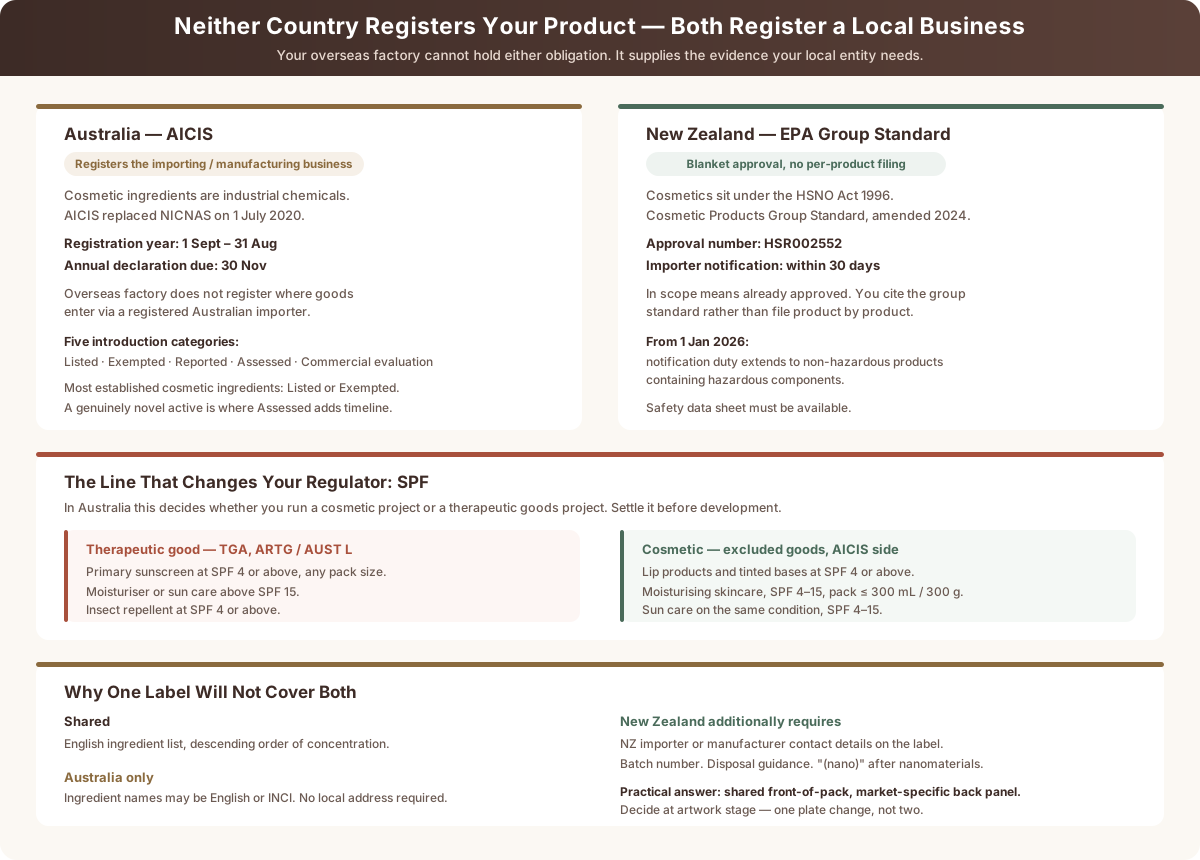
Australia and New Zealand run separate systems. Neither one registers your product — both register a local business.
Australia and New Zealand look like one market on a sales forecast and behave like two on a compliance calendar. Brands that have already launched in Southeast Asia arrive expecting a familiar pattern: file a product notification, wait for a number, ship. That pattern does not exist here. Neither country operates a cosmetic product registration scheme. What both operate instead is a registration of the local business that brings the goods in, plus a set of standards your product has to meet on its own without anyone checking it first.
That difference reshapes the project. There is no approval number to wait for, which means launch timing is genuinely faster than an ASEAN rollout. There is also no regulator reading your file before the product hits a shelf, which means an error in a label or a sunscreen classification surfaces as a customs hold, a Commerce Commission enquiry, or an ACCC penalty rather than a rejected application. The compliance burden does not disappear; it moves from before launch to after it, and it lands mostly on your Australian or New Zealand importing entity.
This guide is written for brand owners and sourcing managers supplying Australia and New Zealand from a Chinese manufacturer. It covers who carries which obligation, the sunscreen rule that reclassifies your product as a therapeutic good, the two labelling standards that differ in ways a single artwork file cannot satisfy, and the seasonal calendar that catches every northern-hemisphere supplier out at least once.
The Structural Difference: Nobody Registers Your Product
Start with what your factory owes you versus what your local entity owes the regulator, because getting this backwards is the most expensive misunderstanding in the region.
In Australia, cosmetic ingredients are regulated as industrial chemicals under the Australian Industrial Chemicals Introduction Scheme (AICIS), which replaced NICNAS on 1 July 2020. AICIS registers businesses that introduce chemicals into Australia — importers and local manufacturers — and it registers them as companies, not as products. An overseas factory does not register with AICIS. If your goods enter Australia through an Australian importer or distributor that holds its own AICIS registration, the scheme's own guidance is that the overseas business does not need to register.
The practical consequences for your calendar:
- The AICIS registration year runs 1 September to 31 August. Registration has to be in place before goods arrive, and it renews annually.
- An annual declaration is due by 30 November covering the registration year that just closed.
- Every chemical you introduce sits in a category that determines what paperwork attaches to it. There are five: Listed (already on the Australian Inventory of Industrial Chemicals), Exempted (very low risk, with a post-introduction declaration), Reported (low risk, with a pre-introduction report), Assessed (higher risk, requiring an assessment certificate before you introduce), and Commercial evaluation. Most conventional cosmetic ingredients in an established formula fall into Listed or Exempted; a genuinely novel active is where Assessed becomes a real timeline item.
New Zealand takes a different route to a similar place. Cosmetics are hazardous substances under the Hazardous Substances and New Organisms (HSNO) Act 1996, and the Environmental Protection Authority issues a blanket approval called the Cosmetic Products Group Standard (approval number HSR002552, amended in 2024). If your product falls inside that group standard's scope, it is already approved. You cite the group standard; you do not file per product.
What New Zealand does require of the local business:
- A safety data sheet available for the substances involved.
- An importer or manufacturer notification to the EPA within 30 days of first import or manufacture — business contact details, filed once rather than per shipment.
- From 1 January 2026, that notification duty extends to non-hazardous cosmetic products that contain hazardous components, which pulls in a wider set of ordinary skincare than before.
So the honest summary for a brand: your Chinese manufacturer cannot carry your Australian or New Zealand compliance position, because both schemes attach to a local entity. What the factory can and should carry is the evidence that entity will need — ingredient documentation, specifications, batch records, stability data, and label content that already matches the destination standard. A factory that has shipped into these markets treats those as deliverables. A factory that has not will send you a commercial invoice and a packing list and consider the job done. Which documents come as standard is set out on our OEM service page.
Side by side, the two systems differ in the places that generate work:
| Requirement | Australia | New Zealand |
|---|---|---|
| Product registration | None | None |
| What is registered | The importing or manufacturing business, with AICIS | Nothing per product; the group standard applies automatically |
| Governing framework | Industrial Chemicals Act 2019 / AICIS | HSNO Act 1996, Cosmetic Products Group Standard (HSR002552) |
| Who holds the obligation | The Australian introducer | The New Zealand importer or manufacturer |
| Overseas factory registers? | No, where a registered Australian importer brings the goods in | No |
| Key recurring date | Registration year 1 Sept – 31 Aug; annual declaration due 30 Nov | One-off EPA notification within 30 days of first import |
| Ingredient names on label | English name or INCI name accepted | English; descending order of concentration |
| Local contact on label | Not required by the cosmetics information standard | Required — NZ importer or manufacturer contact details |
| Batch number on label | Not required by that standard | Required |
| Sunscreen authority | TGA for primary sunscreens and SPF above 15 skincare | Commerce Commission, as a consumer product safety standard |
| Enforcement style | ACCC, after the product is on sale | Commerce Commission and EPA, after the product is on sale |
Sunscreen Is Where Australia Stops Treating It as a Cosmetic
This is the single most common way an Australia-bound project goes wrong, and it happens at the briefing stage rather than at the border.
In Australia, a primary sunscreen — a product whose main purpose is sun protection — with SPF 4 or above is a therapeutic good. It has to be included in the Australian Register of Therapeutic Goods, most commonly as a listed medicine carrying an AUST L number, under the TGA rather than AICIS. That is a different regulator, a different application, a different set of manufacturing expectations, and a different timeline from anything on the cosmetic side.
Secondary sunscreens — products where SPF is a supporting claim on something that is primarily a moisturiser, a foundation, or a lip product — can be excluded from therapeutic goods regulation under the Therapeutic Goods (Excluded Goods) Determination 2018 and treated as cosmetics. The exclusions are specific, and the numbers matter:
- Lip products at SPF 4 or above.
- Tinted bases and foundations at SPF 4 or above.
- Moisturising skincare — including anti-wrinkle, anti-ageing and brightening products — in packs of 300 mL or 300 g or less, at SPF 4 to 15.
- Sun care products on the same pack-size condition, at SPF 4 to 15.
Read the last two lines again, because they contain the trap. An SPF above 15 on a moisturiser pushes the product back under the TGA. A brand that asks for "a day cream with sun protection, make it SPF 50 because that is what sells" has, in one sentence, converted a cosmetic project into a therapeutic goods project. A product containing an insect repellent at SPF 4 or above is likewise a therapeutic good.
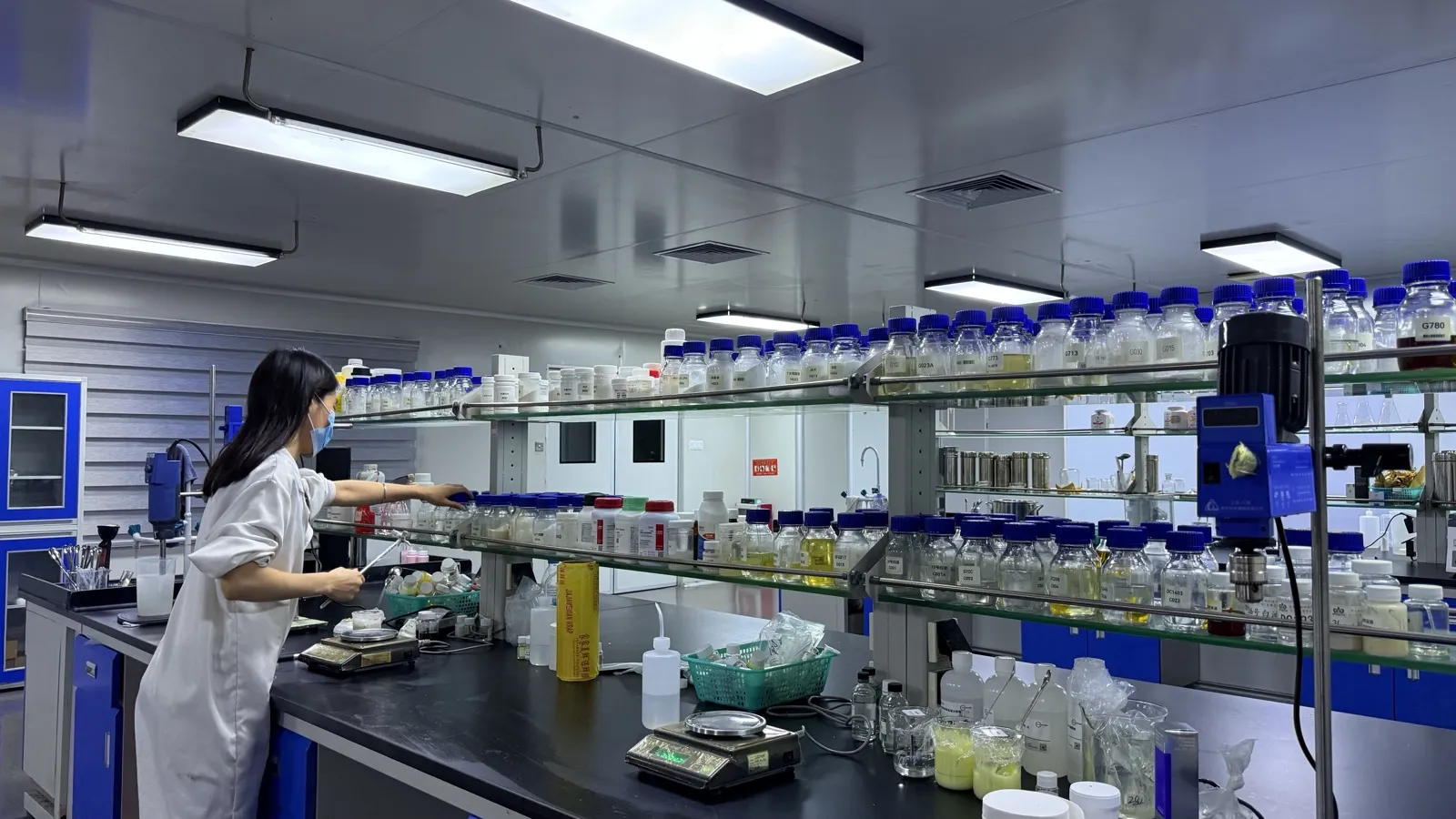
In-process sampling in our lab. SPF level is a formulation decision with a regulatory consequence attached, so it is settled here rather than at artwork stage.
Because that boundary decides your regulator, it is worth reading as a decision table rather than prose:
| Your product | SPF level | Pack size | Australian classification |
|---|---|---|---|
| Sunscreen, sun protection is the main purpose | 4 or above | Any | Therapeutic good — TGA, ARTG listing (AUST L) |
| Moisturiser or anti-ageing skincare with SPF | 4 to 15 | 300 mL / 300 g or less | Cosmetic — excluded goods, AICIS side |
| Moisturiser or anti-ageing skincare with SPF | Above 15 | Any | Therapeutic good — TGA |
| Moisturiser with SPF in a larger pack | 4 to 15 | Above 300 mL / 300 g | Therapeutic good — pack size fails the exclusion |
| Sun care product | 4 to 15 | 300 mL / 300 g or less | Cosmetic — excluded goods |
| Lip product with SPF | 4 or above | Any | Cosmetic — excluded goods |
| Tinted base or foundation with SPF | 4 or above | Any | Cosmetic — excluded goods |
| Insect repellent with SPF | 4 or above | Any | Therapeutic good — TGA |
Australian sunscreens are held to AS/NZS 2604:2021, and since 1 July 2024 all products newly entered on the ARTG must comply with that edition. New Zealand reached the same standard from the opposite direction: the Sunscreen (Product Safety Standard) Act 2022 made AS/NZS 2604 a mandatory consumer product safety standard, enforced by the Commerce Commission rather than a medicines regulator, for products manufactured or imported after 8 March 2022. Its scope covers sunscreens, insect repellents labelled SPF 4 or above, and skincare labelled above SPF 15.
One caveat worth stating plainly rather than papering over: New Zealand government sources currently cite different editions of AS/NZS 2604, with the Act referring to the 2012 version and product safety guidance referring to 2021. If you are testing sunscreen for New Zealand, confirm the current edition with the Commerce Commission before you commission SPF testing, because a test to the wrong edition is money spent twice.
Our practical read for brands: if sun protection is the reason someone buys your product, plan an Australian launch around a therapeutic goods pathway and budget the SPF testing and ARTG work from the start. If sun protection is a secondary benefit, keep the SPF at 15 or below and the pack at 300 mL or less, and you stay in cosmetics. Trying to have both — a high SPF marketed as a cosmetic — is where projects stall. A high-SPF base built as a primary sunscreen sits on the therapeutic goods side of that line in Australia, not the cosmetic side. We say that up front rather than after you have paid for artwork. If the brief is sun care as a secondary benefit, our skincare range is the side of the line to build from.
Not sure which route fits your product?
Send us your brief and our formulators will tell you what is realistic on formula, MOQ, and timeline before you commit to anything.
Two Labelling Standards, One Artwork File: Where They Diverge
Both countries require an English ingredient list in descending order of concentration. That surface similarity leads brands to assume one label serves both. It does not, and the differences are in the fields that require a plate change rather than a text edit.
Australia's requirements sit in the Consumer Goods (Cosmetics) Information Standard 2020, made under the Australian Consumer Law and in force since 25 November 2020, enforced by the ACCC. What it actually requires:
- Ingredients listed on the container in descending order of concentration. Alternatively, ingredients at 1% or more in descending order, then those below 1% in any order, then colourants in any order.
- Ingredient names may be either the English name or the INCI name. INCI is permitted, not compulsory — a point worth knowing when you are reconciling artwork with a market that mandates INCI.
- Fragrance may appear as "fragrance" or "parfum"; flavour as "flavour" or "aroma".
- No local address or contact details are required by this standard, and no ingredient percentages.
New Zealand's group standard adds requirements Australia does not impose:
- Contact information for the New Zealand importer or manufacturer must be on the label. This is the field that most often forces a separate print run.
- A batch number is mandatory.
- Disposal guidance must be included.
- Nanomaterials must be flagged with "(nano)" after the ingredient name.
- Labelling must be in English.
Two ingredient-side restrictions also belong on your radar for New Zealand: plastic microbeads have been banned from sale since 7 June 2018, and PFAS in cosmetics face an import and manufacture ban from 31 December 2026, with a supply ban following on 31 December 2027. The PFAS date is close enough that any formula or packaging component you are developing now for New Zealand should be screened for it rather than reviewed later.
The operational conclusion: build one artwork system with a New Zealand variant that carries local contact details and a batch field, rather than one label you hope covers both. If your volumes are small, the cheapest route is usually a common front-of-pack design with a market-specific back panel, which limits the change to a single plate. Deciding this before the print run is the difference between one plate cost and two, and it is a decision that has to be made at artwork stage, alongside the formulation work itself.
Animal Testing: A Real Constraint on Ingredient Choice
Both countries restrict animal testing, and the Australian version affects formulation decisions in a way brands routinely underestimate.
Under Australia's Industrial Chemicals Act 2019, new animal test data cannot be used to support the categorisation of, or a certificate application for, an industrial chemical introduced solely for use in cosmetics. "New" means testing conducted on or after 1 July 2020, the day AICIS commenced. New Zealand's Animal Welfare Amendment Act 2015, in force from 25 March 2015, inserted section 84A into the Animal Welfare Act 1999, prohibiting animal testing for cosmetic purposes — though where an ingredient is tested for a purpose unrelated to its cosmetic use, that testing sits outside the ban.
Where this bites: a novel active with no existing safety dataset, intended only for cosmetic use, cannot be substantiated in Australia with animal data generated after mid-2020. That makes the availability of non-animal safety data an ingredient selection criterion for Australia-bound formulas, not a marketing consideration. It is one reason established actives with mature dossiers are the pragmatic choice for a first Australian launch, and why we raise it during formula selection rather than after.
The related marketing point deserves care. "Cruelty-free" and "vegan" are separate claims resting on separate evidence, and the second one has a supply-chain trail behind it, which is a documentation question rather than a labelling one. Our formulation and raw material partners are where that trail starts, because the substitution has to hold up at the ingredient level before it reaches your label. Neither claim is verified by a government body in either country before you print it, which is exactly why the next section matters.
Environmental Claims Are Enforced Here, With Penalties Attached
Australia is one of the more active jurisdictions in the world on greenwashing enforcement, and this is a genuine difference from the markets most China-supplied brands are used to.
The ACCC published its final guidance, Making environmental claims: A guide for business, on 12 December 2023, setting out eight principles for substantiating environmental claims. It is not advisory in effect. In April 2024 the ACCC brought its first greenwashing civil penalty proceedings, against Clorox Australia over "50% Ocean Plastic" labelling on GLAD products; the Federal Court ordered the company to pay A$8.25 million in April 2025, along with compliance program and corrective notice orders.
Translate that into a sourcing requirement. If your packaging is going to say "recycled", "ocean plastic", "biodegradable", "carbon neutral" or "plastic free", the substantiation has to exist before the claim is printed, and it has to be specific enough to survive scrutiny about which component and what proportion. In practice that means:
- Ask your packaging supplier for the recycled content figure in writing, per component — bottle, cap, pump and label are usually different, and a claim implying the whole pack qualifies when only the bottle does is precisely the exposure the Clorox case illustrates.
- Keep the documentation with your product file, not in an email thread.
- Prefer a narrower claim you can prove to a broad one you cannot. "Bottle made from 30% post-consumer recycled PET" is defensible in a way "eco-friendly packaging" is not.
We can supply the component-level documentation our packaging suppliers give us, and we will tell you when we cannot get it for a particular component. That trail runs back to the raw material partners we work with. What no factory can do is substantiate a claim on your behalf after the fact.
The Southern Hemisphere Calendar Changes Your Production Schedule
Australia's Bureau of Meteorology defines summer as December, January and February. That single fact reorganises the production calendar for any supplier working from a northern-hemisphere habit.
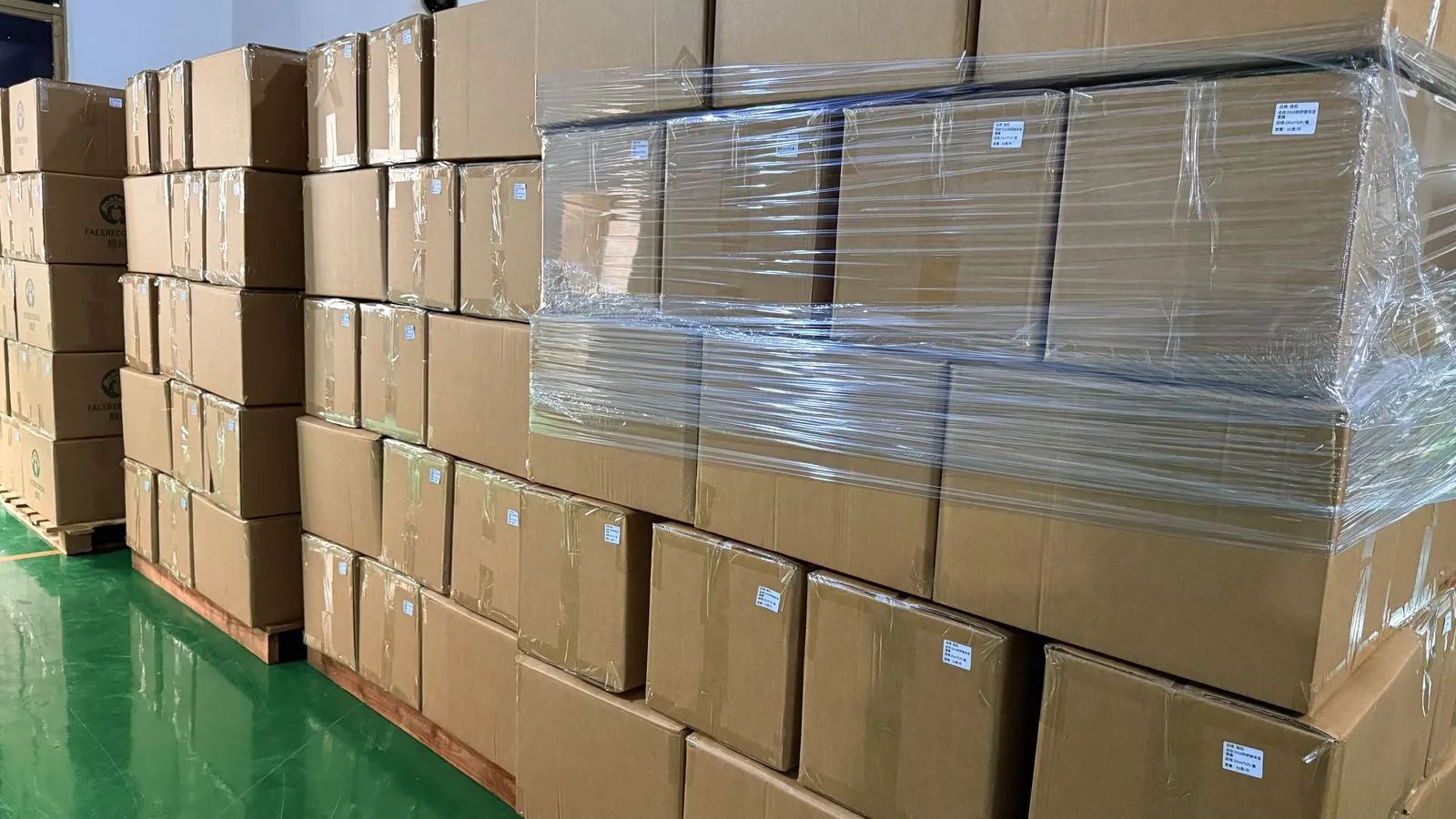
Export packing at our Guangzhou facility. For a December shelf date, this stage has to be finished by roughly September.
The consequences compound rather than sitting in isolation:
- Peak sun care demand and the Christmas trade land in the same quarter. In the northern hemisphere those are two separate peaks with a buffer between them. In Australia and New Zealand they overlap, so a single stockout takes out both.
- Working back from a December shelf date, with production time that varies by category once formula, artwork and packaging are locked, plus sea freight, plus the buffer any experienced importer keeps for customs and inland distribution, the order needs to be placed around the middle of the year. For custom development rather than an existing base, add the development and stability window on top — and the practical deadline moves into the first quarter.
- Chinese New Year sits directly in the replenishment window. Factory capacity across China tightens for several weeks either side, which is exactly when an Australian brand is reordering after a strong summer. Plan the reorder before the shutdown, not after the sell-through data arrives.
On transit time, we would rather give you a usable instruction than a confident number: sea freight schedules from South China to Sydney, Melbourne and Auckland vary enough between carriers and services that the figures circulating on freight-forwarder marketing pages are not reliable planning inputs. Get the transit time from your actual carrier for your actual service, then add your own buffer. We build the production side of the calendar and leave the freight leg to a quoted schedule rather than an average. Send us the category and volume and the production window for your specific product comes back with the quotation.
One tariff note, stated with the same caution. The China-Australia Free Trade Agreement entered into force on 20 December 2015 with its final tariff reductions completed on 1 January 2019, and the New Zealand-China FTA Upgrade Protocol took effect on 7 April 2022. Most cosmetic categories move at zero tariff under these agreements, but the rate that applies to your product depends on its HS classification and on holding a valid certificate of origin. Confirm the line with your customs broker rather than assuming a category-wide rate, and make sure the certificate of origin is part of your document package, alongside the rest of your export document package.
What Australian and New Zealand Buyers Ask That Other Markets Do Not
Category demand in these two markets does not mirror Southeast Asia, and briefing a factory as though it does produces a range that sells poorly.
Sun care is a year-round category rather than a seasonal add-on, and the consumer baseline of SPF knowledge is unusually high — which is why the classification question in section two is a commercial issue rather than a paperwork one. Barrier repair and sensitive-skin positioning travel well, and dry-climate hydration matters more than the oil-control focus that dominates tropical briefs; a formula developed for humid Southeast Asia often reads as insufficient on Australian skin in winter. Brightening, by contrast, does not carry the weight it does in ASEAN, and the claim language that works in Manila or Jakarta is both less effective and more legally exposed here.
Two more patterns worth planning around. Ingredient transparency expectations run high, so a full INCI list with no vague "complex" placeholders is the safer choice even though Australia permits English names. And pack sizes skew larger than in Asian retail, which interacts with the 300 mL sunscreen exclusion threshold in a way that is easy to miss: a generous 500 mL body moisturiser with an SPF claim cannot use the cosmetic exclusion regardless of its SPF level, because the pack size itself falls outside the condition.
Categories that transfer cleanly from our lines with formulation adjustment rather than redevelopment include barrier-support moisturisers, multi-weight hyaluronic acid serums, body care in larger formats, and haircare. The adjustment is usually climate and sensory rather than structural, adjusted for a climate that runs opposite to the northern hemisphere.
How to Vet a Manufacturer for These Two Markets Specifically
General factory due diligence applies here as anywhere. Ask which certifications can be verified directly with the issuing body, what the batch documentation actually looks like, and whether the factory can show formulation work rather than a product catalogue — our supramolecular delivery technology and patent portfolio is what that looks like on our side, alongside ISO 22716 and GMPC certification you can verify with the issuing body. What follows is the Australia and New Zealand overlay.
Ask the sunscreen question first, and listen for the classification. "Can you make an SPF 50 day cream for Australia?" A supplier who answers yes without mentioning the TGA either has not shipped sun care into Australia or is not thinking about your regulatory position. The correct answer identifies that the product would be a therapeutic good and asks what you intend.
Ask who registers with AICIS. A factory claiming it will register on your behalf has the scheme backwards; AICIS registration attaches to the Australian introducing business. Some suppliers will claim it to sound accommodating, which tells you what else they might claim.
Ask for a New Zealand label mock-up before you commit. If the returned artwork lacks local contact details and a batch field, the supplier has not worked to the group standard.
Ask what documentation the local entity will receive. Ingredient documentation, specifications, batch records and stability data should come back as a list, not as a reassurance.
Ask about non-animal safety data for any novel active. For an Australia-only launch this can decide whether an ingredient is usable at all.
Ask for packaging substantiation per component. Given ACCC enforcement, a supplier who cannot produce recycled-content figures by component is a supplier whose claims you should not print.
Sequencing an Australia and New Zealand Launch
The order of operations avoids the rework that costs the most:
- Settle the sunscreen classification before anything else. If any product in the range carries an SPF claim, decide whether it is a primary or secondary sunscreen and confirm the SPF and pack size against the exclusion conditions. This decision governs the regulator, the testing budget and the timeline.
- Confirm your local entity. Both schemes attach to an Australian or New Zealand business. If you do not have one, your importer or distributor becomes the registered party, and that has to be agreed in writing rather than assumed.
- Select the formula with market fit and ingredient dossiers in view — dry-climate hydration and barrier support rather than a tropical transplant, and established actives with non-animal data where Australia is the target.
- Run stability in the final packaging before locking artwork.
- Finalise artwork last, with a New Zealand variant. Local contact details, batch field, disposal guidance, "(nano)" flags where applicable, and any environmental claim already substantiated in writing.
- Book production against the summer calendar, working back from a December shelf date and accounting for the Chinese New Year window in the reorder cycle.
Steps one and two are the ones brands skip, and they are the two that cannot be fixed later without redoing the rest. If you are still deciding how much of this you want to run yourself, our private label service and ODM development pages set out where the work sits in each model.
Frequently Asked Questions
Do I need to register my cosmetic product in Australia or New Zealand?
No. Neither country operates a per-product cosmetic registration scheme. Australia registers the business that imports or manufactures, through AICIS, on a registration year running 1 September to 31 August, with an annual declaration due 30 November. New Zealand covers cosmetics under an EPA group standard (HSR002552) that applies automatically to products within its scope, with a one-off importer or manufacturer notification to the EPA within 30 days of first import. The absence of product registration is why launch timing here is faster than an ASEAN rollout — and why label and classification errors surface as enforcement rather than as a rejected filing.
Does my Chinese manufacturer need to register with AICIS?
No. AICIS registration attaches to the business introducing chemicals into Australia. Where goods enter through an Australian importer or distributor holding its own registration, the overseas manufacturer does not register. If a supplier offers to hold your AICIS registration for you, they have misunderstood the scheme.
Can I sell an SPF 50 moisturiser in Australia as a cosmetic?
No. The cosmetic exclusion for moisturising skincare with sun protection applies at SPF 4 to 15 in packs of 300 mL or 300 g or less. Above SPF 15, the product is a therapeutic good requiring ARTG inclusion under the TGA. A primary sunscreen at SPF 4 or above is a therapeutic good regardless of pack size. Decide which side of that line you want to be on before development starts, because it changes the regulator, the testing and the timeline.
Can one label serve both Australia and New Zealand?
Not without compromise. Both require an English ingredient list in descending concentration order, but New Zealand additionally requires New Zealand importer or manufacturer contact details, a batch number, disposal guidance, and "(nano)" flags for nanomaterials. Australia's standard requires none of those and permits English ingredient names as an alternative to INCI. Artwork is also where the category decision becomes concrete, so it is worth working from our skincare, body care and haircare ranges to see which formats carry the label content you need. The workable approach is a shared front-of-pack design with a market-specific back panel, decided at artwork stage rather than after the plates are cut.
What is the minimum order and lead time for an Australia or New Zealand launch?
For a private label product built on an existing base, production time depends on the category — a sun care product carrying SPF testing runs materially longer than a basic moisturiser, so take the figure for your specific product from your quotation rather than a category average. Order size, category and packaging interact on the quotation, and our private label programme sets out where each of those sits. Custom development adds a development and stability window ahead of that. Because summer and Christmas overlap in December, work backwards from a December shelf date rather than a calendar quarter, and place the order around mid-year. Sea freight schedules vary enough by carrier that we recommend taking transit time from your actual booked service rather than a published average.
Is animal testing a practical constraint on my formula?
For Australia, sometimes yes. New animal test data — meaning testing conducted on or after 1 July 2020 — cannot support the categorisation of, or a certificate application for, a chemical introduced solely for cosmetic use. For a novel active with no pre-existing dataset, that can make the ingredient unusable in an Australian launch, which is why we raise it at formula selection. New Zealand has prohibited animal testing for cosmetic purposes since March 2015 under section 84A of the Animal Welfare Act 1999.
The Short Version
Australia and New Zealand are the rare pair of export markets where nobody reviews your product before it goes on sale, and that is the thing to plan around rather than celebrate. There is no registration queue, so launches move faster than in ASEAN. There is also no regulator catching a misclassified sunscreen, a missing New Zealand contact field, or an unsubstantiated recycled-content claim before a consumer or a competitor does — and both countries enforce after the fact, with penalties that have reached eight figures.
Three decisions carry most of the risk: whether your SPF product is a cosmetic or a therapeutic good, which local entity holds the registration and notification duties, and whether your environmental claims are substantiated per component before printing. Settle those and the rest of the project is ordinary manufacturing on a southern-hemisphere calendar. Skip them and you find out after the shipment lands, which is the expensive way to learn a regulatory system that trusted you to get it right on your own.
If you are scoping an Australian or New Zealand range and want the classification and documentation questions worked through before formulation, send us the brief and tell us which of the two markets comes first.
Ready to Start Your Project?
Tell us your product requirements. Our technical team responds within 24 hours with a detailed quotation.