
Color Cosmetics Private Label: The Pigment Rules

GZ Cosmetics Lab, Guangzhou · ISO 22716 & GMPC certified by Intertek.
Choosing a private label manufacturer for color cosmetics is a different decision from choosing one for skincare, and most brands find that out too late. On the skincare side, the questions are familiar: MOQ, lead time, whether the factory can hit your texture. Color cosmetics carry all of that plus a regulatory layer that skincare barely touches — every pigment in your lipstick or eyeshadow has to be individually approved for that specific use in that specific market, and getting it wrong is one of the most common reasons cosmetic shipments get held at the US border.
This guide is written from the factory floor. It covers what actually separates a color cosmetics manufacturer from a skincare one, the pigment rules that decide whether your formula is legal in the US, EU and Southeast Asia, and the questions worth asking before you commit to a supplier. If you are still deciding between manufacturing models, our guide to OEM versus ODM covers that ground first.
Why Color Cosmetics Are a Different Manufacturing Problem
The physical difference is easy to see. Skincare production is mostly emulsions and aqueous solutions: you build a base, add actives at the right temperature, fill it. Color cosmetics split into formats that behave nothing like each other — pressed and loose powders need milling and compression control, lip products are anhydrous systems where pigment dispersion determines whether the colour pays off, and liquid foundations sit somewhere between an emulsion and a pigment slurry. A factory good at one of those is not automatically good at the others, which is why the useful question is never "do you make color cosmetics" but "which formats do you run in-house, and on what equipment."
The harder difference is regulatory, and it is the one competitors do not talk about. In skincare, your actives are the compliance risk. In color cosmetics, the pigments are, and they operate under an entirely separate legal system in the United States.
Pigments Are an Approval List, Not an Ingredient Choice
Here is the structural point that reframes everything else. Under US law, a colour additive is not something you may use until proven unsafe — it is something you may not use unless it has been specifically listed and approved for that use. The definition in 21 CFR 70.3(f) is deliberately broad: any dye, pigment or other substance, synthesised or extracted from a vegetable, animal, mineral or other source, that when applied to the body is capable of imparting colour to it. Titanium dioxide, iron oxides, carmine, mica-based pearls, a synthetic red — all of them are colour additives, and all of them need a listing regulation behind them.
The FDA is explicit that colour additive violations are a common reason for detaining imported cosmetic products offered for entry into the country. That single fact should shape how you evaluate a supplier. A factory that cannot tell you which listing regulation covers each pigment in your formula is a factory that has never had to think about it, and the cost of that gap lands on your shipment, not theirs.
The list splits into two halves that behave very differently in practice. Pigments in 21 CFR Part 73 — the mineral, plant and animal derived ones like iron oxides, titanium dioxide and mica — are exempt from batch certification. Pigments in Part 74, the synthetic FD&C and D&C series, are not: each individual batch has to be submitted to the FDA's own Color Certification Branch, analysed for composition and purity, and issued a lot number before it can legally be used. Under 21 CFR 70.25(d), that FDA-assigned lot number has to appear in the labeling of the colour additive itself.
This is where brands sourcing pigment from Asia most often get caught. A pigment can be chemically correct, correctly named on a certificate of analysis, carry a CI number and an EU E number, and still be illegal in a US-bound product because that batch was never certified. Tartrazine is the textbook case: it is not the same thing as FD&C Yellow No. 5 for regulatory purposes, cannot substitute for it, and cannot be declared as it. A CI number tells you what a molecule is. It tells you nothing about whether that drum in the warehouse has FDA certification.
So the question to put to any color cosmetics manufacturer is narrow and revealing: for each pigment in this formula, which part is it listed under, and for the Part 74 ones, can you produce the FDA lot number for the batch you will actually use in my production run. We work from certified pigment lots for US-bound color formats and keep the certification paperwork with the batch record, so the answer to that question exists before anyone asks it.
Not sure which route fits your product?
Send us your brief and our formulators will tell you what is realistic on formula, MOQ, and timeline before you commit to anything.
The Rule That Decides Your Product Range: Eye, Lip and Face Are Separate Permissions
Skincare has nothing equivalent to this. A colour additive approved for general cosmetic use is not thereby approved for use around the eye, on the lips, or in injection. The same use-specific logic governs nail colour, which we cover in our guide to custom nail polish manufacturers. Each of those is a separate permission that the listing regulation has to grant explicitly, and this single rule quietly determines which products a given palette of pigments can be used to make.
For the eye area, 21 CFR 70.5(a) states that no listing or certification of a colour additive authorises its use in any article intended for use in the area of the eye unless the listing specifically provides for it. If a pigment is used there without that permission, it is treated as an unlisted colour additive — even though it is properly certified and listed for other uses. The regulation also defines "area of the eye" with unusual precision in 21 CFR 70.3(s): the area enclosed within the circumference of the supra-orbital and infra-orbital ridges, including the eyebrow, the skin below the eyebrow, the eyelids and eyelashes, the conjunctival sac, the eyeball, and the soft areolar tissue within the perimeter of the infra-orbital ridge. That is a much larger zone than most brands assume, and it means an eyeshadow, a brow product and a concealer used under the eye are all inside it.
Lip products run into a different trap, and it hides in a definition. Under 21 CFR 70.3(v), "externally applied cosmetics" means products applied only to external parts of the body — and explicitly not to the lips or any body surface covered by mucous membrane. So a pigment approved for external application is not approved for a lipstick, a lip gloss or a lip liner unless its own regulation says so. Brands regularly assume that "external use" is the permissive category that covers everything you put on the outside of a person. Legally, the lips sit outside it.
The eyebrow and eyelash case shows how narrow these permissions can get. The only colour additive approved for dyeing eyebrows and eyelashes is silver nitrate, and 21 CFR 73.2550(c) attaches conditions that read more like a medical device specification than a cosmetic one: not more than 4 percent by weight, formulation viscosity between 120 and 180 Pascal-seconds, not intended for anyone under 16, application not to exceed one minute followed by immediate removal, applied by a professional, and not distributed or sold directly to consumers. Mandatory label warnings are prescribed word for word. If a supplier offers to make you a retail lash tint, that offer is the answer to your due diligence question.
Injection is the clearest line of all: under 21 CFR 70.5(b), no colour additive is approved for injection. That covers tattoo inks and permanent makeup pigments, which means these products sit outside the conventional colour additive framework entirely — worth knowing if a supplier presents PMU pigment as a routine extension of a color cosmetics range.
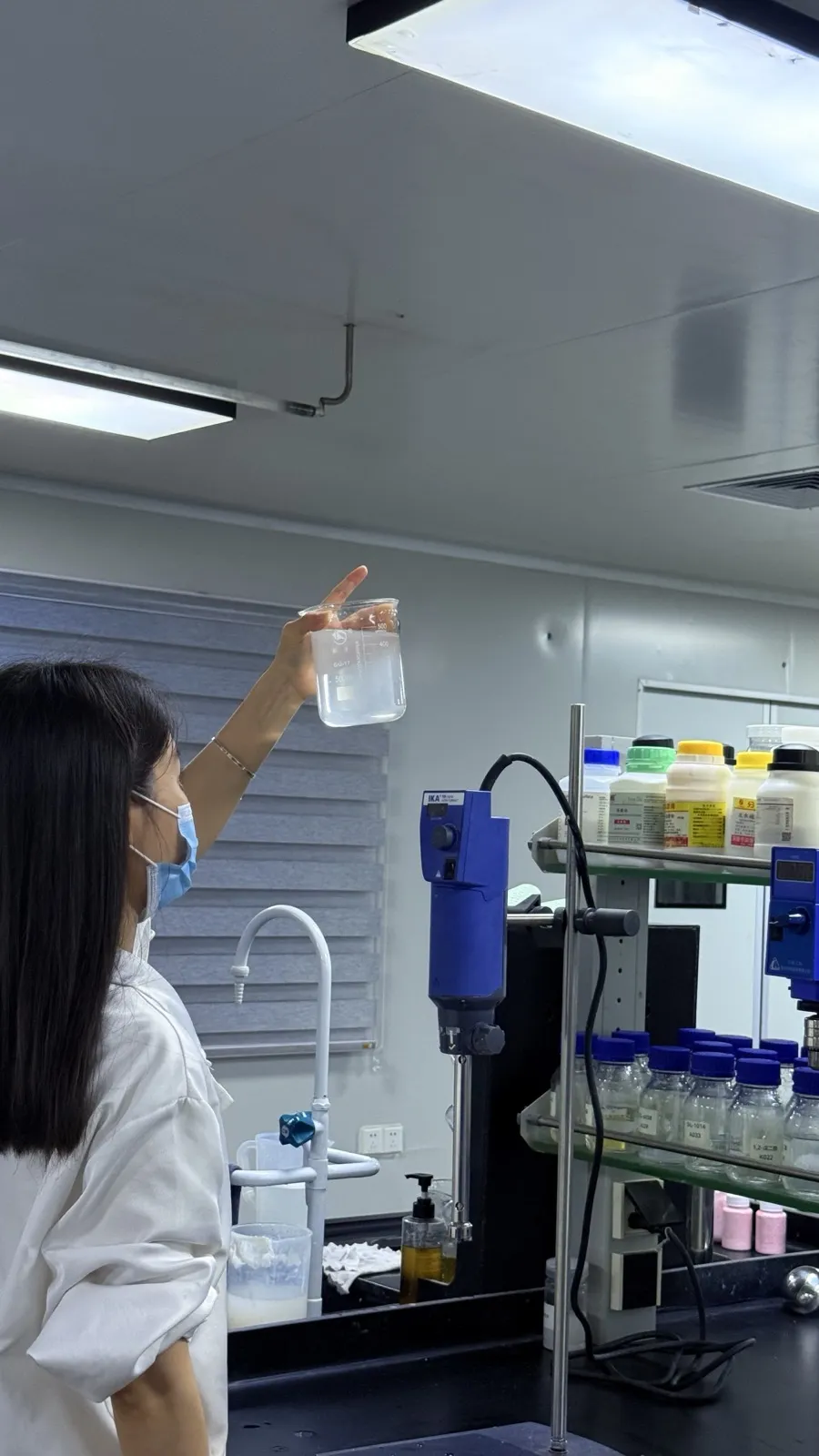
Pigment listings and certified lot numbers are verified against the destination market before production, not after a shipment is held.
Specialty Effects: Where the Trend Products Get Legally Complicated
The finishes that sell on social media are often the ones with the thinnest regulatory footing, and this is close to a blind spot across the industry's English-language content. A few worth knowing before you brief a supplier.
Fluorescent shades have a very short approved list: only D&C Orange No. 5, No. 10 and No. 11, and D&C Red No. 21, No. 22, No. 27 and No. 28, each with its own use restrictions. Glow-in-the-dark effects have exactly one approved option, luminescent zinc sulfide under 21 CFR 73.2995, and its listing carries its own limits. Liquid crystal colour effects are not approved for cosmetic use at all. Holographic glitter is the subtle one: aluminium itself is an approved colour additive, but aluminium bonded to an etched plastic film is a composite pigment, and the composite may fall outside the approved use even though its components look familiar. Colour-changing pigments that respond to pH, oxygen or temperature are held to the same standard as any other colour additive, and combining pigments can create a new composite that has no approval of its own.
The EU draws its line in a different place, and the difference matters if you sell into both markets. Article 14 of Regulation (EC) No 1223/2009 prohibits colorants other than those listed in Annex IV, and also prohibits Annex IV colorants used outside the conditions laid down there. It goes further: substances listed in Annex IV but not intended to be used as colorants must still comply with the Annex conditions. Then comes the part that catches effect pigments. Recital 27 of the Regulation clarifies that the Annex IV list covers only substances that colour through absorption and reflection — not substances that colour through photoluminescence, interference or chemical reaction. Interference pearls, which produce colour through optical interference rather than absorption, sit in exactly that ambiguity. Any supplier telling you an effect pigment is simply "EU approved" has not read the recital.
Heavy Metals and Micro Limits: Three Markets, Three Sets of Numbers
Every pigment carries trace heavy metals — the FDA notes they may be found in pigments and other raw materials, so the more colour a formula uses, the more exposure it has to these limits. Skincare has the same limits in principle, but color cosmetics hit them harder because they are pigment-dense by design. The problem for an exporting brand is that the numbers are not the same across your target markets, and a formula that clears one can fail another.
| Contaminant | ASEAN limit (finished product) | Notes that trip brands up |
|---|---|---|
| Mercury (Hg) | Not more than 1 ppm | Tested by the ASEAN Cosmetic Method (ACMTHA05) |
| Lead (Pb) | Not more than 20 ppm | A recurring impurity in mineral pigments |
| Arsenic (As) | Not more than 5 ppm | Watch mineral and pearl pigment sources |
| Cadmium (Cd) | Not more than 5 ppm (Thailand: 3 ppm) | Thailand sets a stricter national limit than the ASEAN baseline |
Source: ASEAN Guidelines on Limits of Contaminants for Cosmetics, Release Version 3.0. Test method ACMTHA05 adopted at the 8th ACSB Meeting, 2007.
Two things on that table are worth dwelling on. First, Thailand's cadmium limit of 3 ppm against the ASEAN baseline of 5 ppm is a real, published national divergence — if you sell into Thailand, a formula built to the regional number can still be non-compliant there. Second, the microbiology limits split by product type in a way that penalises color cosmetics specifically. The ASEAN guideline sets a total aerobic count of not more than 500 cfu/g for products intended for children under three, for the eye area, and for mucous membranes, against 1,000 cfu/g for everything else. Eye makeup and lip products fall straight into the stricter 500 cfu/g tier, along with the requirement that P. aeruginosa, S. aureus and C. albicans be absent in a 0.1 g sample. That is a manufacturing burden a face powder or a body lotion does not carry.
The US approach is different again. Rather than one blanket finished-product limit, the individual colour additive regulations in Parts 73 and 74 each set their own purity specifications, including heavy metal caps for that specific pigment. Silver nitrate's listing, for example, caps arsenic at 3 ppm, lead at 10 ppm and mercury at 1 ppm within the additive itself. Compliance in the US is built pigment by pigment through those specifications, not checked once at the end. A manufacturer that understands both systems is screening your pigments against the additive specs and screening your finished product against the destination market's contaminant limits — two separate checks, both necessary.
Southeast Asia: Same Notification Route, Heavier Technical File
This is where an exporting brand needs an honest answer rather than a scare story, because the honest answer is still an advantage. Color cosmetics in Southeast Asia do not go through a separate registration process from skincare. Under the ASEAN Cosmetic Directive, member states run a common notification system — the company responsible for placing the product on the market notifies it to each national authority before launch. Makeup and skincare travel the same channel.
What changes is the technical file behind the notification, and it changes in proportion to how many pigments you use. Indonesia's regulation is a clear example: under Pasal 14 of PerBPOM No. 21 of 2022, a notified cosmetic must conform to a defined product category listed in the regulation's Lampiran I, and that annex carries specific category entries for foundation, face powder, eye and lip makeup. So the framework recognises color cosmetics as their own categories — but they still notify through the one process. The real weight lands in the Product Information File. The ASEAN Cosmetic Directive requires the PIF to hold the qualitative and quantitative composition, raw material and finished product specifications, the manufacturing method to ASEAN GMP, the safety assessment, and claims support. For a lipstick with a dozen pigments, "qualitative and quantitative composition" and "raw material specifications" are an order of magnitude more work than for a single-active serum, because every pigment has to be documented and traceable to its spec.
That is the point most suppliers miss and where a compliance-literate factory earns its place: the difficulty in Southeast Asia is not a different door, it is a fuller file at the same door. To be straight about the limits of this: the notification route above is grounded in the ASEAN Cosmetic Directive and Indonesia's BPOM regulation. National procedures in Thailand, the Philippines, Vietnam and Malaysia sit on that ASEAN backbone but carry their own detail, and a specific launch should be confirmed against the destination country's current requirements rather than assumed from the regional framework. We work through this market by market — our guides to BPOM registration in Indonesia and TFDA registration in Thailand go country-deep, and for the US the MoCRA compliance guide covers facility registration and product listing.
What to Ask a Color Cosmetics Private Label Manufacturer
Pull the regulatory points above into the questions that actually sort a capable supplier from a repackager. None of these are trick questions; they are the ones a factory that runs color cosmetics can answer without hesitation.
- Which formats do you run in-house? Pressed powder, loose powder, lip, liquid foundation and cream products need different lines. Ask which are yours and which get subcontracted, because a subcontracted format means one more party in your compliance chain.
- For each pigment, which listing regulation covers it, and for Part 74 pigments, can you produce the FDA-certified lot number? This one question separates factories that own their pigment compliance from those that assume it.
- Is every pigment approved for the specific use — eye, lip, face — that my product needs? A supplier should be able to map your palette to the eye, lip and external-use permissions without checking back a week later.
- How do you handle shade matching, and how many rounds are included? Colour is where sampling drags out. A vague answer here predicts a slow, frustrating development cycle.
- Will you screen my finished formula against the destination market's heavy metal and micro limits before I commit? The right time to find a cadmium problem is at development, not after a Thai border test.
- Can you supply the pigment-level data my Product Information File or MoCRA listing needs? If the factory cannot hand over qualitative and quantitative composition with raw material specs, your notification stalls at the paperwork.
A manufacturer that answers these cleanly is one you can build a range with. One that deflects them is one whose gaps you will inherit at the border.
How We Approach Color Cosmetics From the Factory Side
To be straight about scope: our color cosmetics capability sits within a broader OEM and ODM operation, so it is best to confirm a specific format and shade brief with us directly rather than assume every finish is on the shelf. On our OEM service page we list color cosmetics — foundations and lip products — alongside powder products (loose and pressed) among the formats we run, and the honest way to scope a project is to send the exact format and finish you have in mind so we can tell you what we produce in-house versus what would be developed.
The manufacturing base behind that is real and verifiable. Our facility operates as Jiumei (Guangzhou) Biomedical Co., Ltd., manufacturing since 2010 across a 16,000 m² site with 13 production lines in 100,000-class cleanrooms and capacity over 200,000 units a day. We hold ISO 22716 (Cosmetics GMP) and GMPC certification issued by Intertek — certificate numbers HBPCER20260352 and HBPCER20260353, verifiable at certs.intertek.com.cn — alongside ISO 9001, ISO 14001 and ISO 45001. For US-bound work, our facility is registered with the FDA under MoCRA (FEI 3038966060), which is the facility registration a US color cosmetics launch now requires. That certification and registration base is what stands behind the pigment documentation, the PIF data and the compliance claims a color cosmetics brand depends on.
On process, color cosmetics behave differently from skincare before production because shade matching adds development rounds, and the number of rounds depends on how far your target shade sits from a known base. Once the formula, approved shade sample, artwork, and packaging are locked, our standard bulk-production window is 35-60 days. Rather than promise a fixed sampling window for colour, we confirm it per project once we see the shade brief. What we hold constant is the compliance work around it: pigment listings mapped to your destination market and intended use, certified lots for US-bound Part 74 pigments, finished-product screening against the market's heavy metal and micro limits, and pigment-level data prepared for your PIF or MoCRA listing.
If you are scoping a color cosmetics range, the most useful first step is to request a quote with the formats, finishes and target markets noted, so the compliance and shade questions get answered before anything is sampled. For a formula the factory develops for you rather than one you bring, our ODM service page covers that route, and if you are running the brand under your own name our private label page sets out how that works. To talk through a specific palette or format, contact us with what you are planning and we will tell you what we can run and what the compliance path looks like.
Frequently Asked Questions
What is a color cosmetics private label manufacturer?
It is a factory that produces makeup — foundation, powder, lip and related formats — which you sell under your own brand. In a private label arrangement the manufacturer handles formulation, pigment sourcing, production and often packaging, while you own the brand and the market relationship. For color cosmetics specifically, the manufacturer also carries the pigment-compliance work: making sure every colour additive is legally listed for your product's use in your target market, which is a burden skincare private label does not have.
Why is a certified pigment lot number so important for US sales?
Synthetic FD&C and D&C pigments, listed under 21 CFR Part 74, are not exempt from batch certification. Each batch must be submitted to the FDA's Color Certification Branch, tested and issued a lot number before it can legally be used, and that lot number has to appear in the colour additive's labeling under 21 CFR 70.25(d). A pigment can be the right molecule with the right CI number and still be illegal in a US product if that specific batch was never certified — and colour additive violations are a common reason imported cosmetics are detained at the border.
Can the same eyeshadow pigment be used in a lipstick?
Not automatically. US colour additive listings grant permission by use — eye area, lips, external application — separately. Under 21 CFR 70.3(v) the lips are excluded from "externally applied," and under 21 CFR 70.5(a) the eye area needs its own explicit permission. A pigment approved for the eye is not thereby approved for the lip, and vice versa. Each pigment has to be checked against the specific product you intend to make.
Do color cosmetics need a separate registration from skincare in Southeast Asia?
No. Under the ASEAN Cosmetic Directive, makeup and skincare notify through the same common notification system, and Indonesia's BPOM regulation places color cosmetics in their own product categories within that one process. What differs is the depth of the Product Information File — a pigment-heavy formula requires far more composition and raw-material documentation than a single-active serum, so the workload is in the file, not in a separate procedure.
How is shade matching handled and why does it affect lead time?
Shade matching is an iterative process: the factory produces trial batches against your target colour and adjusts pigment ratios until it matches, sometimes across several rounds. Because colour is judged by eye and under different lighting, it typically takes longer than matching a skincare texture. This is why a fixed sampling window is misleading for color cosmetics — the number of rounds depends on how far your target shade is from a known base, and it is better confirmed per project.
The Short Version
A color cosmetics private label manufacturer is judged on a layer skincare suppliers never face: pigment compliance. In the US, every colour additive is an approval-list item, synthetic pigments need certified batch lot numbers, and permissions are granted separately for eye, lip and external use — get any of it wrong and the shipment is a detention risk. The EU controls colorants through Annex IV and treats effect pigments as an open question. Southeast Asia uses one notification route for makeup and skincare but demands a much fuller technical file for pigment-dense formulas, with stricter micro limits for eye and lip products and a tighter cadmium limit in Thailand. The supplier worth choosing can map every pigment to its listing and its permitted use, produce certified lots for US-bound work, and screen your formula against each destination market before you commit. Ask those questions first, and colour stops being the part of your range that gets stuck at the border.
Ready to Start Your Project?
Tell us your product requirements. Within 24 hours, our technical team will reply with a quotation or the questions needed to prepare one.