
Private Label Skincare Manufacturer in China: OEM Guide
Most guides to choosing a private label skincare manufacturer tell you what questions to ask. This one tells you what paperwork you should be holding at the end of each stage. The difference matters, because the gap between a professional supplier and a risky one is rarely visible in a sales conversation. It shows up in the documents: whether the quote itemises what you are paying for, whether the sample arrives with a technical data sheet, whether every batch ships with a Certificate of Analysis, and whether the factory is honest about which compliance documents it can produce and which it structurally cannot.
A private label skincare manufacturer produces skincare on an existing or lightly adapted formula base and puts your brand on it. The private label model is fast and capital-light, but it does not remove your regulatory obligations, and it does not mean the factory carries every piece of paper your target market requires. This guide walks the project stage by stage from the document you should receive at each one, so you can judge a manufacturer by evidence rather than by promises.
Stage 1: Inquiry and Brief - What the Quote Should Actually Contain
The first document you receive is a quotation, and it tells you more about a manufacturer than any brochure. A vague quote that lists only a per-unit price and an MOQ is a warning sign, because it means the real costs surface later. A complete quote itemises the parts of the project separately so you can see what is bundled and what is extra.
What a properly structured skincare quote breaks out:
- Formula basis - whether you are buying a stock formula, a lightly customised base, or a fully bespoke development, because that decides your MOQ and your lead time.
- MOQ per SKU - typically 2,000 to 3,000 bottles or jars per SKU for most skincare, body and hair care, 1,000 to 2,000 bottles for fragrance and essential oils, and 5,000 to 10,000 sheets for sheet masks. If a quote gives one blanket MOQ across every product type, ask how it changes by format.
- Sample and development fees - and whether they are credited against a production order.
- Packaging - separated from the bulk product cost, because packaging is frequently where budgets are blown.
- Testing and documentation - stated as included or extra. This line is the one brands most often overlook and most often get billed for later.
At this stage you also supply documents rather than only receive them. A serious manufacturer will ask for a brief covering your target markets, your positioning, your target price point, and any claims you intend to make. The reason claims matter this early is that a claim like "reduces the look of dark spots" changes what testing your file will eventually need. If your supplier never asks what you intend to claim, that is itself informative.
Stage 2: Formula Selection and Sampling - The TDS Is the Real Deliverable
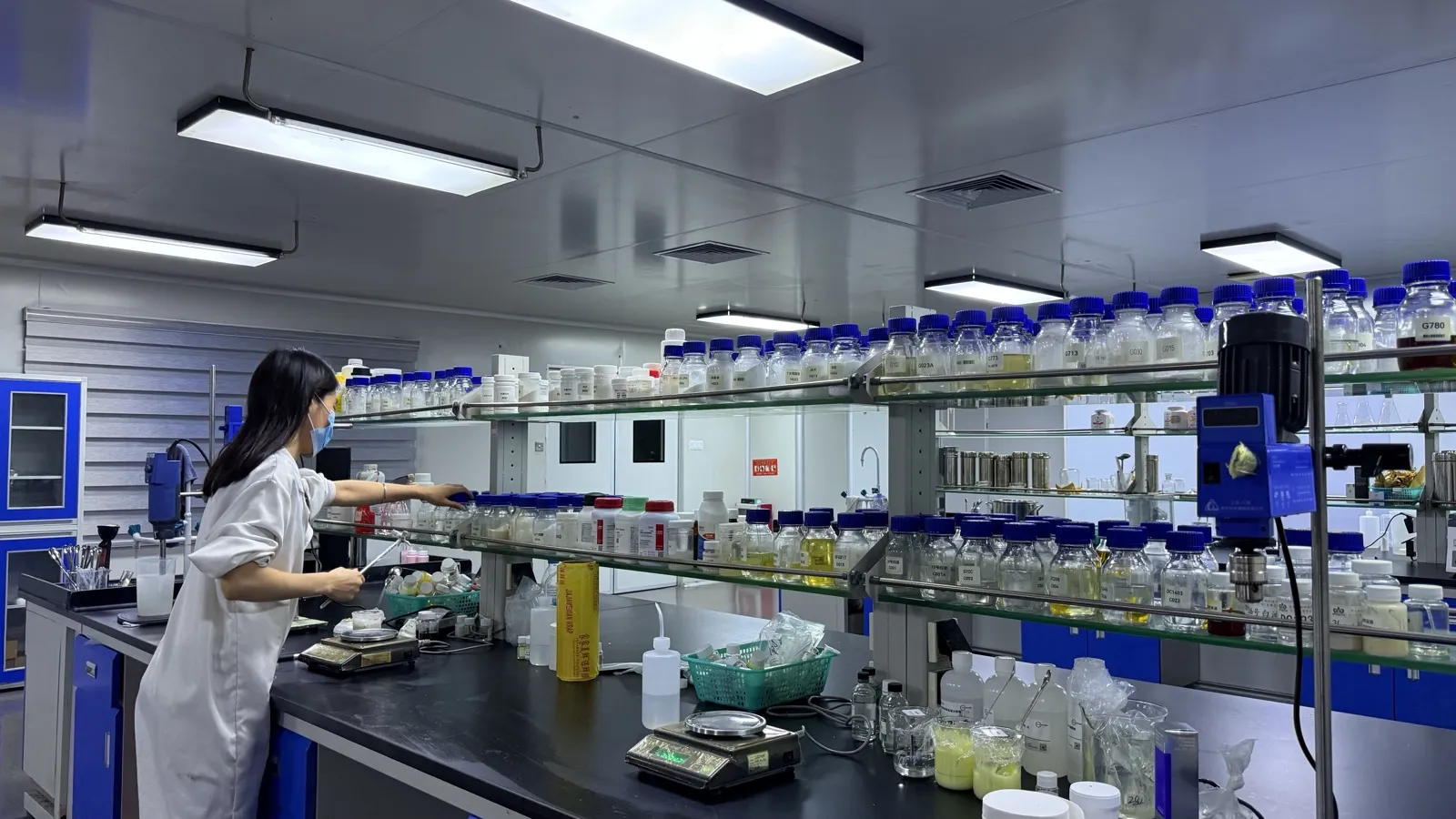
Once you select a direction, the manufacturer produces samples. The physical sample is what everyone focuses on, but the document that comes with it is what you should be reading. A sample without paperwork is just a nice-smelling unknown. The deliverable that matters is the Technical Data Sheet (TDS).
A TDS for a skincare sample should tell you the product's appearance, colour, and odour, its target pH range, its viscosity, its recommended storage conditions, its usage directions, and the headline of what it contains. It is the reference document you use to confirm that later production batches match the sample you approved. Without it, "the second batch smells different from the first" becomes an argument with no baseline to settle it.
Standard custom sample cycles run 2 to 3 weeks per round. Plan for more than one round; a first sample that is perfect is less common than a first sample that is close. What you are evaluating in this stage is not only the sample itself but how the manufacturer responds to revision requests, because that same responsiveness is what you will depend on if a formula needs adjusting after launch.
This is also the stage where the difference between models becomes concrete. If you are still weighing how much you want to customise, our OEM skincare manufacturer guide covers how development depth changes cost and timeline. The more you customise, the more the sampling stage produces documents unique to you rather than pulled from a shelf.
Not sure which route fits your product?
Send us your brief and our formulators will tell you what is realistic on formula, MOQ, and timeline before you commit to anything.
Stage 3: Pre-Production - The File That Makes Your Product Legal to Sell
Before bulk production begins, a capable manufacturer assembles the technical documentation your product needs to be registered and sold. This is the single most important document package in the entire project, and it is where under-equipped suppliers quietly fall short. Here is what a complete pre-production file contains and what each piece is for.
- Full INCI ingredient list in descending order. This is the exact wording that goes on your label and into any market notification. It has to come from the factory, because only the factory knows the real composition. Building label artwork from anything other than the factory's INCI output is how brands end up reprinting cartons.
- Certificate of Analysis (COA). Confirms the finished product meets its defined specification for a given batch - appearance, pH, viscosity, microbiological limits. You should receive one per batch, not once at the start.
- Material Safety Data Sheet (MSDS/SDS). Required for shipping and for downstream handling, covering hazards, handling, and transport classification.
- Stability testing report. Evidence that the product holds up over its intended shelf life under defined temperature conditions, which is what supports your period-after-opening or durability marking.
- Compatibility testing. Evidence that the formula and its chosen packaging do not react adversely - relevant when actives meet certain plastics or when a formula is filled into a new container type.
- Microbiological and challenge (preservative efficacy) testing. Evidence the preservative system actually works across the product's life.
Notice what this list means in practice. A manufacturer that runs its own testing, or has established third-party testing relationships with bodies such as SGS, can hand you this file as a package. A trading company or a broker without a real lab behind it cannot, and the shortfall does not appear until you are trying to register the product and discover half the file is missing. Manufacturing to ISO 22716 GMP standards is what makes this documentation credible rather than decorative, because the standard is precisely about the records that prove a product was made under controlled conditions.
Stage 4: Production and QC - Records That Prove Consistency
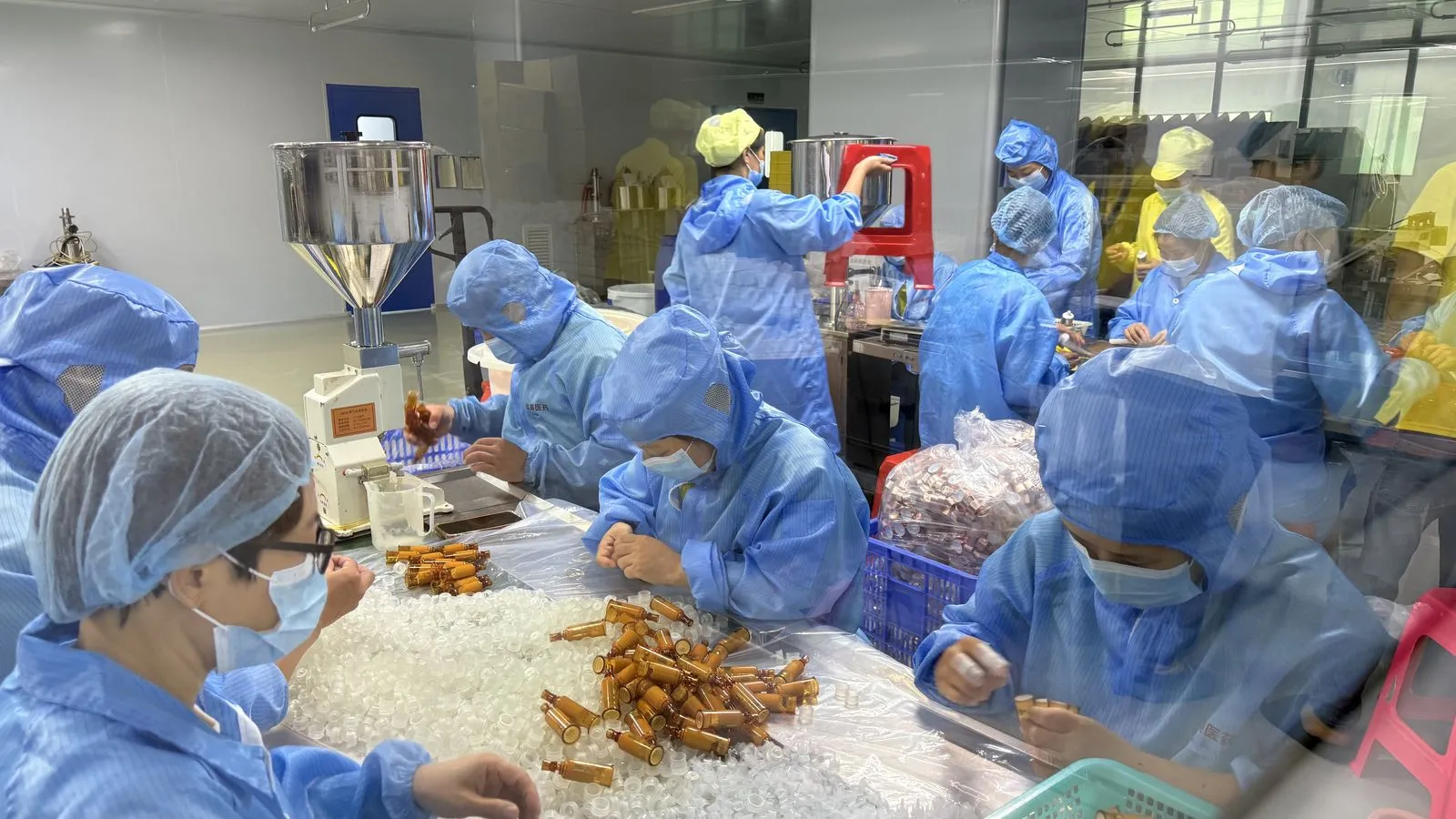
During and after bulk production, the documents shift from "is this product safe and legal" to "is this batch the same as the one I approved." The records that matter here are the ones a market surveillance authority or a demanding retailer might one day ask to see.
- Batch production record. The internal record of how a specific batch was made, tied to a batch number printed on your product. This is the thread that lets any unit be traced back to its production run.
- Batch-specific COA. As above, issued per batch, confirming that this run meets the same specification as your approved sample.
- In-process and finished-goods QC records. Checks performed during filling and at completion, from fill weight to seal integrity to visual inspection.
- Third-party test reports where required. For specific claims or specific markets, independent lab reports carry more weight than in-house data alone.
The practical test of a manufacturer at this stage is simple: ask whether every shipment will include a batch-specific COA as standard. A supplier that treats this as a routine, no-cost part of delivery is operating a real quality system. One that treats it as an unusual request is telling you something.
Stage 5: Shipping and Handover - The Documents That Clear Customs
The final set is export paperwork: the commercial invoice and packing list (which must match each other and the physical shipment exactly), the bill of lading or air waybill, and often a Certificate of Origin. The MSDS from your pre-production file is reused here for transport classification, and any market-specific import documents depend on where the goods land, covered below. None of this is skincare-specific, but a missing or mismatched document strands a shipment as effectively as a quality failure.
What Your Manufacturer Can Sign - And What It Structurally Cannot
This is the section most supplier conversations skip, and it is the one that saves brands from a nasty surprise during registration. There is a hard line between documents a manufacturer can produce and legal roles a manufacturer outside your target market cannot occupy, no matter how comprehensive its "full compliance support" sounds.
What a competent manufacturer can provide: the full technical data set described above, ISO 22716 manufacturing evidence for the production site, stability and compatibility and microbiological testing, per-batch Certificates of Analysis, the full quantitative formula breakdown and correctly ordered INCI list, raw material specifications and supplier documentation, and - for the EU specifically - the assembled Part A safety information that a safety assessor needs.
What a manufacturer outside your market structurally cannot provide:
- The EU Responsible Person role. This requires a legal entity established inside the EU. A Chinese manufacturer cannot hold it regardless of how strong its documentation is.
- The signed CPSR Part B safety assessment. This must be produced and signed by a qualified assessor recognised in a member state - a pharmacist, toxicologist, or comparable professional. The factory assembles the data; it does not write the conclusion.
- The market notification or registration submission. In the EU, only the Responsible Person can notify through CPNP. In other markets the equivalent submission sits with a local entity or licence holder, not the overseas factory.
| Deliverable or legal role | Who holds it | Why |
|---|---|---|
| Full technical data set, quantitative formula, ordered INCI list | Manufacturer | Generated in the lab and on the line |
| ISO 22716 manufacturing evidence for the production site | Manufacturer | Attaches to the site, not the brand |
| Stability, compatibility and microbiological testing | Manufacturer | Run against the specific formula and its packaging |
| Per-batch Certificates of Analysis | Manufacturer | Batch-specific, issued at production |
| Raw material specifications and supplier documentation | Manufacturer | Sits with whoever buys the materials |
| EU Part A safety information, assembled | Manufacturer | Data assembly, not the safety conclusion |
| EU Responsible Person | You or your appointed EU entity | Requires a legal entity established inside the EU |
| Signed CPSR Part B safety assessment | A qualified assessor recognised in a member state | A pharmacist, toxicologist or comparable professional must sign the conclusion |
| CPNP notification, or the local equivalent submission | The Responsible Person, or a local entity or licence holder | Only an in-market legal entity can submit |
If a supplier claims the bottom three rows, that is the moment to ask which legal entity inside your market is actually holding them.
Being direct about that boundary is more useful than a supplier claiming end-to-end compliance and then failing to deliver the part that legally cannot be delivered from outside the destination market. When you evaluate manufacturers, the real question is not "do you handle compliance" but "is the documentation you hand over complete enough that my local Responsible Person or registration agent never has to come back to you with follow-up questions." A factory that understands that distinction is one that has done it before.
How the Document Package Changes by Target Market
The core technical file travels well - a good COA, stability report, and INCI list are useful everywhere. What changes market to market is the legal wrapper around that file and who has to hold it.
- European Union. The file feeds a Product Information File held by an EU Responsible Person, a CPSR with a signed Part B, and a free CPNP notification. The factory supplies the data; the Responsible Person and the assessor carry the legal parts.
- ASEAN markets. Most follow the ASEAN Cosmetic Directive's notification model with a locally established notification holder and a Product Information File. Our ASEAN Cosmetic Directive guide breaks down what the shared framework requires and where individual countries add their own steps.
- Cost planning. Registration and compliance costs are separate from your manufacturing quote and vary widely by market. Our MOQ and cost guide lays out where these line items sit so they do not ambush your first-order budget.
The through-line is that a manufacturer's job is to hand you a technical file clean enough to feed any of these systems. It cannot be the legal holder inside your market, but the quality of what it hands over determines how smoothly the registration you do handle actually goes.
Document Red Flags: What Missing Paperwork Tells You
Because this whole project is legible through its documents, the gaps are diagnostic. Treat these as signals to slow down and verify, alongside the wider evaluation sequence in our skincare manufacturer buyer's checklist:
- Samples arrive with no TDS. You have no baseline to hold future batches against.
- COA offered once, not per batch. Suggests batch-level quality control is not routine.
- No stability or challenge testing available. The shelf-life and preservative claims on your label would be unsupported.
- An ISO 22716 certificate that cannot be produced on request, or whose scope does not cover your product category.
- A supplier that claims it can be your EU Responsible Person or sign Part B. This is not a strong service; it is a misunderstanding of the law, and it undermines confidence in everything else they tell you.
- INCI list that does not match the sample TDS. A consistency problem that will surface on your label if not caught.
What a Private Label Skincare Project Looks Like From Our Side
We manufacture skincare in Guangzhou under ISO 22716 and GMPC with SGS testing supported on request, alongside body care, hair care, and aromatherapy. On a private label project the documentation is not an add-on; it is the deliverable. Each sample ships with a TDS, each production batch ships with its own COA, and the pre-production file - INCI, MSDS, stability, compatibility, and microbiological data - is assembled as a package rather than produced piecemeal when a registration agent chases us for it.
Our standard custom sample cycle runs 2 to 3 weeks per round, production runs 35 to 45 days, and MOQ runs 2,000 to 3,000 bottles or jars per SKU for most skincare, body and hair care, 1,000 to 2,000 bottles for fragrance and essential oils, and 5,000 to 10,000 sheets for sheet masks. Categories that move smoothly through private label tend to be the ones with a clean file and a straightforward formula - hydrating serums, soothing repair serums, and brightening serums built on well-characterised actives. Where we are clear-eyed is the compliance boundary: we assemble the technical file and the EU Part A data set, and we tell you plainly that the Responsible Person role, the signed Part B, and the market notification sit with an entity inside your destination market.
Frequently Asked Questions
What is a private label skincare manufacturer?
A private label skincare manufacturer produces skincare products on an existing or lightly adapted formula base and applies your brand to them. You get a faster, lower-cost route to market than fully bespoke development, while the manufacturer handles formulation, production, and the technical documentation your product needs to be registered and sold.
What documents should I receive from a private label skincare manufacturer?
At minimum: an itemised quote, a Technical Data Sheet with each sample, and a pre-production file containing the full INCI list, a Certificate of Analysis, an MSDS, and stability, compatibility, and microbiological testing. During production you should receive batch production records and a batch-specific COA, and at shipping the standard export documents. If any of these are unavailable, treat it as a signal.
Can a private label skincare manufacturer handle my product registration?
It can assemble the technical file your registration depends on, but it cannot be the legal holder of the registration in your market. In the EU, only an EU-established Responsible Person can notify through CPNP; in other markets the equivalent role sits with a local entity. A good manufacturer gives you a file clean enough that your local registration goes smoothly.
What is a TDS and why does it matter for skincare?
A Technical Data Sheet records a product's appearance, pH range, viscosity, storage conditions, and directions. It is the reference you use to confirm that later production batches match the sample you approved. Without a TDS, a difference between batches becomes an argument with no baseline to resolve it.
Is a Certificate of Analysis issued once or per batch?
Per batch. A COA confirms that a specific production run meets its defined specification - appearance, pH, viscosity, microbiological limits. A manufacturer that issues one only at the start of a relationship, rather than with each shipment, is not running batch-level quality control as a routine.
Does private label mean my product is identical to competitors' products?
It can, if you take a stock formula unchanged, since other brands may buy the same base. Most brands adjust fragrance, active concentration within compliant limits, packaging, and positioning to differentiate. The more you customise, the more the documentation becomes specific to you rather than shared.
What MOQ should I expect from a private label skincare manufacturer?
It depends on the dosage form. Typically 2,000 to 3,000 bottles or jars per SKU for most skincare, body and hair care, 1,000 to 2,000 bottles for fragrance and essential oils, and 5,000 to 10,000 sheets for sheet masks. MOQ varies by product format and by how much customisation the formula and packaging require, so a quote that gives a single blanket number across all product types is worth questioning.
How do I verify a manufacturer's ISO 22716 certification?
Ask for the certificate itself and check that its scope covers your product category and the production site making your goods. A certificate that cannot be produced on request, or whose scope does not match what you are ordering, does not give your Responsible Person the manufacturing assurance they need to accept accountability.
The Short Version
You can judge a private label skincare manufacturer by its documents more reliably than by its sales pitch. A complete quote itemises what you pay for. A sample arrives with a TDS. The pre-production file - INCI, COA, MSDS, stability, compatibility, microbiological - is handed over as a package. Every batch ships with its own COA. And a manufacturer worth trusting is candid about the hard line between the documents it can produce and the legal roles - Responsible Person, signed Part B, market notification - that can only sit with an entity inside your destination market. Get the paperwork right and the rest of the relationship tends to be right too. If you want a manufacturing partner that treats the document package as the deliverable it is, request a quote with your target markets and SKU list.
Ready to Start Your Project?
Tell us your product requirements. Our technical team responds within 24 hours with a detailed quotation.