
Cosmetic Claims Compliance: What Turns a Cosmetic Into a Drug (US, EU, China)
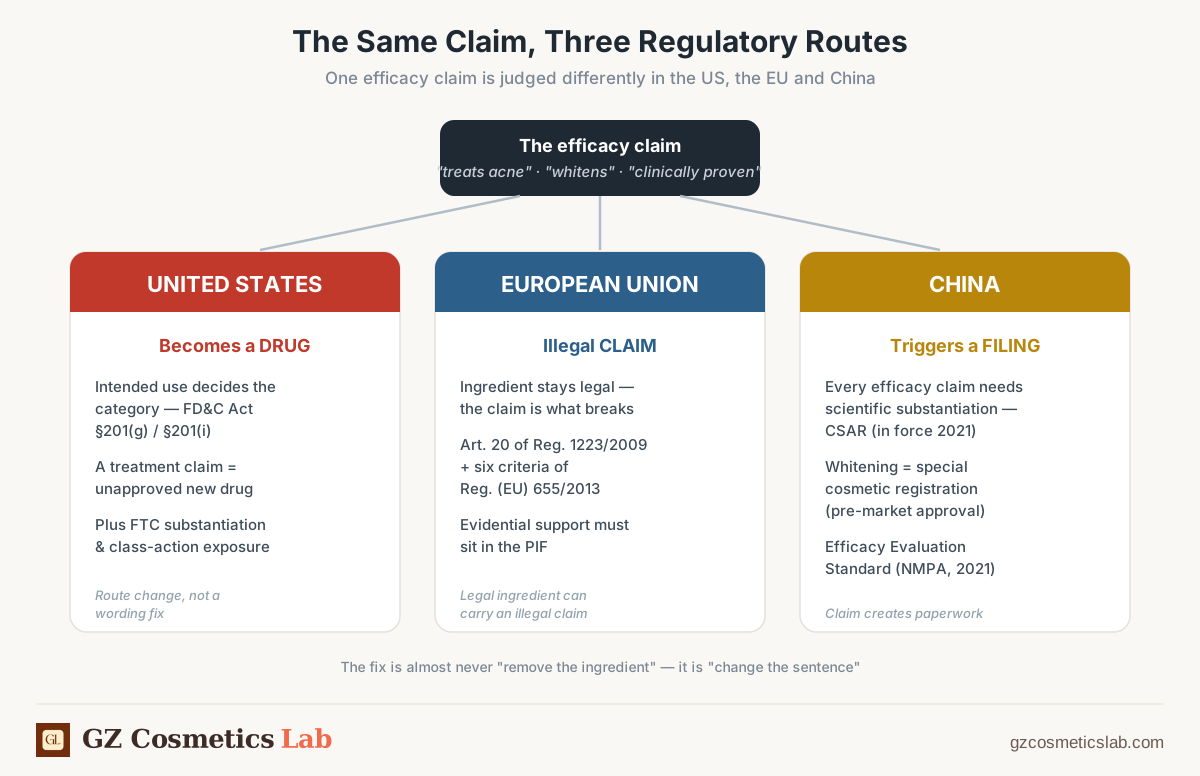
The most expensive line in a cosmetic launch is rarely on the ingredient list. It is a sentence in the marketing copy. A brand can formulate a product that is fully compliant in the United States, the European Union and China, and then write one claim that quietly reclassifies it as an unapproved drug in one market, an illegal claim in another, and a mandatory filing in a third. Cosmetic claims compliance is where most avoidable regulatory trouble actually starts, because the same words carry three different legal consequences depending on where the product ships.
We run 13 production lines under ISO 22716 and GMPC certification, and a large share of the copy questions we field from brands are really claims questions in disguise: "can we say this product treats acne?", "can we call it whitening?", "can we print clinically proven?" The honest answer is always the same — it depends entirely on where you sell it, because the claim, not the formula, decides the regulatory route. This guide is the manufacturing-floor version of that answer, built from the claim decisions we make on our own product pages every week.
The claim decides the route — not the ingredient
Here is the mechanism most brands miss. In every major market, a product's regulatory category is not fixed by its formula alone; it is influenced or outright determined by what you say the product does. The exact same jar of cream can be a cosmetic or a drug, a legal claim or an illegal one, an exempt filing or a mandatory registration — and the deciding factor is frequently the wording on the label and the website.
This is why claims cannot be an afterthought handled by the marketing team once the formula is locked. A treatment claim written late in the process can force the whole product down a route that requires testing, registration and labelling the brand never budgeted for. The three markets below each police claims through a different legal instrument, so a claim that is safe in one can be the trigger in another.
United States: intended use turns a cosmetic into a drug
The US has no single "cosmetic claims regulation". The risk comes from the definition of a drug itself. Under the Federal Food, Drug, and Cosmetic Act, sections 201(g) and 201(i) define drugs and cosmetics largely by intended use — and intended use is established chiefly through what you claim. A cosmetic is intended to cleanse or beautify. The moment your claim says the product affects the structure or function of the body, or treats or prevents a condition, the FDA can treat it as a drug regardless of how mild the formula is.
The practical consequence is severe: a "drug" claim on an unregistered product makes it an unapproved new drug. It cannot legally be sold, and enforcement usually arrives as a warning letter and a demand to pull the listing.
Two categories catch brands most often, and both sit on our own shelves:
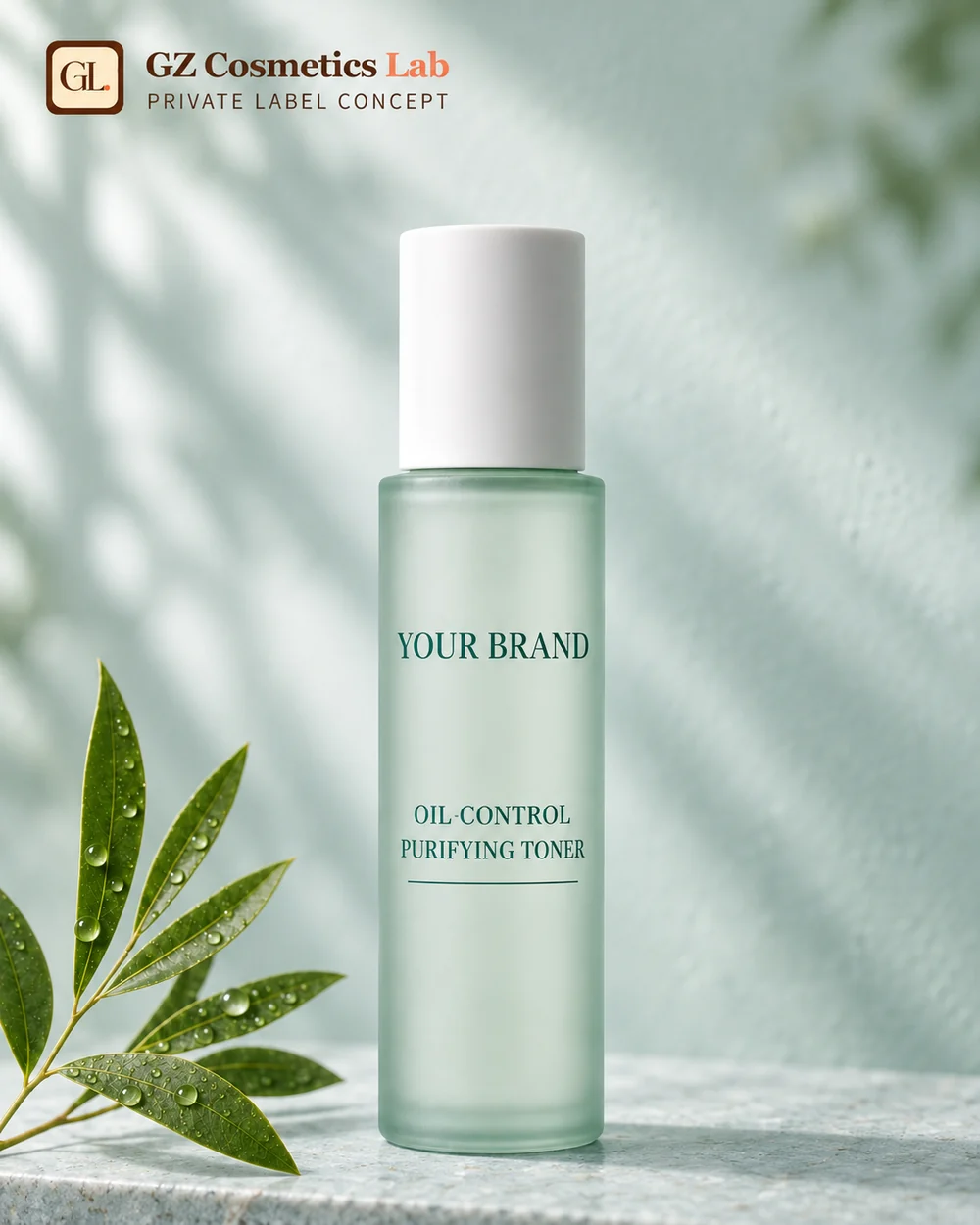
Anti-acne claims. Salicylic acid at 0.5–2% is listed as an acne drug active in the FDA's OTC monograph for acne products. So the combination of "salicylic acid" plus an "anti-acne" or "treats breakouts" claim defines the product as an over-the-counter drug in the US, requiring a Drug Facts panel and the OTC route — not the cosmetic route. This is why, on a salicylic-acid toner, we word the benefit as oil control and shine reduction rather than acne treatment, and we set the acid level against the destination market's rules rather than printing a fixed "anti-acne" concentration. The concentration is legal; the treatment claim is what would reclassify the product.
Sunscreen. In the US, sunscreen is regulated as an OTC drug through the monograph system, not as a cosmetic at all. An SPF claim is a drug claim. So when we run a line like our SPF 50 sun essence, the SPF value stays on the label but the product goes down the US drug route — this is a full route change rather than a wording fix, and we cover it in our MoCRA compliance guide. The short version is that a sun product and a moisturiser from the same production run belong in two different regulatory files the moment they are US-bound.
The cross-border lesson: in the US, you do not choose the drug route by filing for it. You choose it by what you write. A structure/function or treatment claim makes the choice for you.
The second US risk: the FTC, and the lawsuit that follows
The FDA drug line is only half of the US picture. The other half is the Federal Trade Commission. Under Section 5 of the FTC Act, every advertising claim — express or implied — must be truthful, non-misleading, and substantiated before you make it, to a standard the FTC calls "competent and reliable scientific evidence." For anything performance- or health-adjacent, that increasingly means human testing on the finished formula, not a supplier's ingredient study.
What makes the US distinctive is the enforcement layer sitting on top of the FTC: the National Advertising Division, where competitors challenge each other's claims, and the plaintiff's bar. Unsubstantiated performance and "clean/natural/non-toxic" claims have become a fixture of US consumer class actions, and the settlements are not small. The recent class action against a wellness brand over the accuracy of its tracking claims is the same mechanism aimed at a different product — the allegation is not that the device is unsafe, but that a marketed claim outran the evidence. For a cosmetic brand, that is the exact risk profile of a hero claim like "proven to reduce wrinkles by 40%" with a thin file behind it. The FDA can reclassify you; the FTC and a class-action firm can sue you. A US claims review has to clear both. The filing side of US entry is separate again, and we cover it in our guide to MoCRA facility registration and who owes which filing.
Not sure which route fits your product?
Send us your brief and our formulators will tell you what is realistic on formula, MOQ, and timeline before you commit to anything.
European Union: the ingredient can be legal, the claim illegal
The EU polices claims differently. Here the two questions — is the ingredient allowed, and is the claim allowed — are genuinely separate, and brands routinely satisfy the first while failing the second.
Take salicylic acid again. Under the EU cosmetics regulation it is permitted in leave-on and rinse-off products within set limits, so the ingredient is legal. But an "anti-acne" or "treats acne" claim is a therapeutic claim, and a product making a therapeutic claim is by definition a medicinal product, not a cosmetic — which is not what the brand registered. The concentration is compliant; the wording is not. These are two different compliance checks, and passing one tells you nothing about the other.
On top of that, every cosmetic claim in the EU must satisfy Commission Regulation (EU) No 655/2013, which sets six common criteria that every claim must meet: legal compliance, truthfulness, evidential support, honesty, fairness, and enabling informed decision-making. The one that trips brands most often is evidential support — the claim has to be backed by adequate, relevant evidence held in the Product Information File. "Clinically proven" is not a decoration; it is a claim that a national authority (in France, the DGCCRF) can ask you to substantiate on demand, and an unsupported one is a straightforward breach.
So the EU failure mode is the mirror image of the US one. In the US, the wrong claim changes the product's category. In the EU, the ingredient stays a legal cosmetic ingredient, but the claim itself becomes illegal — either because it is therapeutic, or because it fails one of the six 655/2013 criteria. The underlying prohibition sits in Article 20 of Regulation (EC) No 1223/2009, which bans attributing to a product characteristics or functions it does not have; 655/2013 is the working rulebook for how that is judged.
The "free-from" trap
One claim type deserves a specific warning because brands ask us for it constantly: "paraben-free", "free from sulfates", "no silicones". In the EU, the fairness criterion of 655/2013 and the 2017 Technical Document on Cosmetic Claims treat many "free-from" claims as non-compliant when they denigrate a legally permitted, safe ingredient — "paraben-free" being the textbook example. In the US, the same free-from and "clean/non-toxic" language is one of the most heavily litigated claim categories in consumer class actions. So a phrase that reads as a harmless selling point is, in fact, one of the higher-risk lines you can print in both markets at once. When a brand wants it, we flag it rather than simply setting it in the copy.
China: an efficacy claim triggers a filing
China is the market where a claim most directly creates paperwork. Under the Cosmetic Supervision and Administration Regulation (CSAR), in force since 1 January 2021, every efficacy claim must be supported by scientific evidence, and a summary of that efficacy evaluation is published. The Standard for the Evaluation of Efficacy Claims of Cosmetics, issued by the NMPA in April 2021 and effective 1 May 2021, sets out how each claim type must be substantiated — literature, lab testing, human trial, or consumer testing depending on the claim.
Two consequences matter for anyone selling into China:
Whitening is a special cosmetic. Whitening, brightening and freckle/spot-fading claims move a product out of the ordinary "filing" (notification) lane and into special cosmetic registration, which is pre-market approval, not notification. This is why on brightening lines like our glutathione brightening serum we use "brightening" and "radiance" wording for overseas pages and treat any China-bound whitening claim as a registration decision, not a copy decision — and why a market where the brand does not want the registration burden simply does not carry the whitening claim. The product can be identical; the claim is what forks the regulatory path.
Ingredient-driven pharmacology claims are a separate trap. Tranexamic acid, for example, is a drug substance in several markets. When it appears in a product — as it does in our tranexamic-acid spot-care emulsion — the safe copy stops at "helps improve the look of dullness and even out tone" and never describes the pharmacological mechanism ("inhibits plasmin", "treats melasma"), because a mechanistic therapeutic claim pushes the product toward drug territory and, in China, layers a functional-claim filing on top. It also restricts where the product can ship: tranexamic acid is a quasi-drug active in Japan, so a general cosmetic claim will not carry there. The rule we apply on the floor is simple: describe the visible outcome, never the biological pathway.
The claims that get products pulled: a cross-market view
The table below is the working reference we use internally. The left column is copy we see brands send us; the right is how we reword it to keep the product a cosmetic across all three markets. Note that the fix is almost never "remove the ingredient" — it is "change the sentence".
| Risky claim | What it triggers | Cosmetic-safe wording |
|---|---|---|
| "Treats acne" / "clears breakouts" | US: OTC drug (salicylic acid monograph). EU: therapeutic = medicinal. China: functional filing | "Helps control excess oil and reduce the look of shine" |
| "Whitens skin" / "removes dark spots" | China: special cosmetic registration (pre-market approval). US/EU: pushes toward drug/therapeutic if paired with a condition | "Helps brighten and even out the look of the complexion" |
| "SPF 50 sun protection" | US: OTC drug (sunscreen monograph) — full route change, not a wording fix | SPF stays, but the product goes down the drug route in the US; keep the SPF file separate |
| "Inhibits melanin production" / "blocks plasmin" | All: mechanistic/pharmacological = drug-leaning. China: functional filing | "Supports a more radiant, even-looking tone" (outcome, not mechanism) |
| "Repairs the skin barrier" (as a cure) | US: structure/function drug claim if framed as treatment | "Helps support and visibly strengthen the skin's moisture barrier" — the wording we use on our centella repair serum |
| "Clinically proven" (no file) | EU: 655/2013 evidential-support breach; enforceable by national authorities | Only usable with substantiation in the PIF; otherwise drop it |
How claims get decided at the factory level
Because we manufacture for brands shipping into all three of these markets from a single production run, we cannot afford to write one set of claims. The way we handle it on our product pages is the same discipline we recommend to brands building a private label cosmetics line:
- Separate the two questions. First: is the ingredient legal at this level in the destination market? Second, and independently: is the claim legal there? Passing the first never guarantees the second — the EU salicylic-acid case is the cleanest example.
- Describe the outcome, not the mechanism. "Helps improve the look of…" is a cosmetic claim. "Inhibits…", "treats…", "cures…" are drug-leaning. The visible-outcome phrasing is what keeps a product cosmetic across markets.
- Treat the strongest-regulating market as the ceiling — or split the copy. If you want a whitening claim, you are accepting China special-cosmetic registration; if you do not, that market carries the softer "brightening" line. Same product, different claim, different path.
- Never let a supplier print a claim you cannot substantiate. If a manufacturer will happily write "clinically proven" or "FDA approved" for you without a file behind it, they will be equally relaxed about the claims that get you a warning letter. On our side, we decline to describe our certifications as approvals, for exactly this reason.
The reason this sits with the factory at all is that claims and formulation are decided together. The concentration that supports a benefit, the testing that substantiates it, and the wording that describes it are one conversation, not three. A brand that scopes claims market-by-market before the formula is locked avoids the expensive version of this problem — the reformulation, retest and relabel that a late claim change forces. For the ingredient side of EU compliance specifically, our guide to banned cosmetic ingredients in the EU covers what actually forces a reformulation, which pairs with the claims side covered here.
A note on the UK, and on claims as a risk spectrum
Two points that change how you should read everything above. First, the UK: after Brexit it kept the substance of the EU regime, so a claims dossier built for the EU largely travels to Britain — but the enforcers differ. The Advertising Standards Authority polices beauty advertising actively and publishes name-and-shame rulings, and under the Digital Markets, Competition and Consumers Act 2024 the Competition and Markets Authority can now fine businesses up to 10% of global turnover for unfair commercial practices directly. If the UK is on your map, treat "clean" and "eco" claims as carrying real financial consequences there.
Second, and more useful as a mental model: outside a few bright lines — drug claims in the US, therapeutic claims and prohibited "free-from" wording in the EU, whitening in China — almost no cosmetic claim is simply "legal" or "illegal." No regulator in these markets pre-approves claims. What you are really doing is measuring risk: how strong is the claim versus your evidence, does it push toward drug status, who is actively enforcing this claim type, and how visible is your product to them. That reframing is why a one-word rewrite is so often the fix — "repairs" to "supports," "anti-inflammatory" to "soothes" — moving a claim from high exposure to defensible without losing its marketing pull.
Frequently asked questions
Does a strong claim make my product illegal everywhere at once?
No — that is the core point. The same claim carries different consequences in each market. "Treats acne" makes a product an OTC drug in the US, an illegal therapeutic claim in the EU, and a functional-filing trigger in China. You have to check each destination separately, because a claim that is merely risky in one market can be the decisive trigger in another.
Can I use "clinically proven" if I have some evidence?
In the EU, only if the evidence is adequate, relevant and held in your Product Information File, per the evidential-support criterion of Regulation (EU) 655/2013. A national authority can ask you to produce it. "Some evidence" that would not stand up to that request is a breach, not a soft area.
Is "whitening" always banned?
It is not banned, but in China it moves your product from ordinary filing into special-cosmetic registration — pre-market approval with its own testing and timeline. Whether to make the claim is therefore a registration decision, not a copywriting one. Many brands carry a whitening claim only in markets where they accept that route, and a "brightening" claim elsewhere.
Whose responsibility is the claim — the brand's or the manufacturer's?
Legally the responsible person (usually the brand) owns the claim. But the claim, the concentration and the substantiation are decided together, so a manufacturer that understands claims saves you the expensive late reformulation. Scope claims by destination market before you lock the formula.
What is the safest default wording?
Describe the visible outcome, not the biological mechanism, and use "helps improve the look of…" framing. That phrasing keeps a claim cosmetic across the US, EU and China. The moment copy describes treating a condition or acting on the body's structure or function, you are in drug territory in at least one of the three markets.
If you are scoping a launch across these markets and want to know which claims will fork your regulatory path before you commit to a formula, send us the brief and we will map the claims market by market.
Ready to Start Your Project?
Tell us your product requirements. Within 24 hours, our technical team will reply with a quotation or the questions needed to prepare one.