Value (Oily Acne Basic)
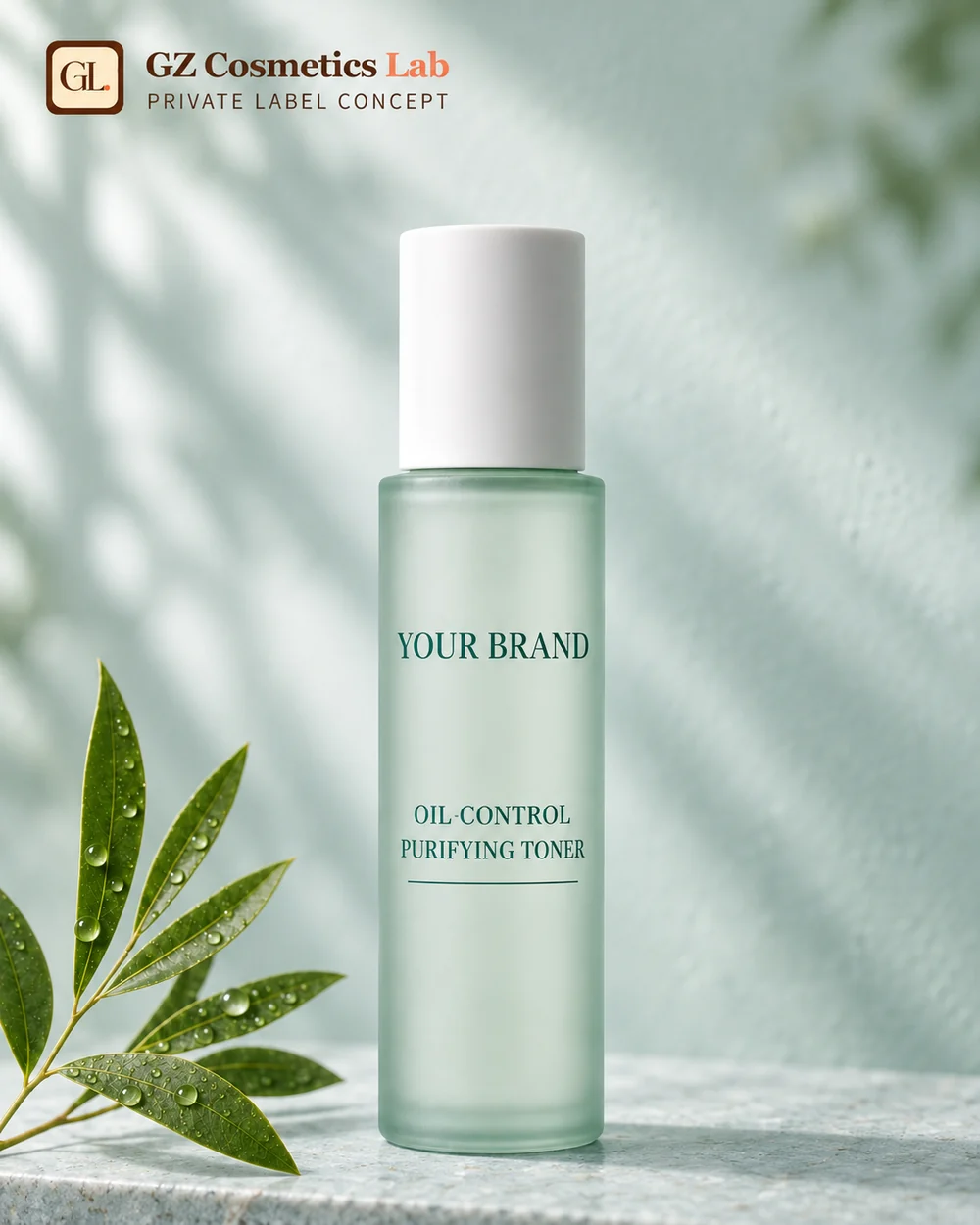
Oil Control Purifying Toner
An oil-control toner for oily and blemish-prone skin, positioned on shine control and a clean finish rather than on treating breakouts. That distinction is deliberate and it decides where the product can be sold. Salicylic acid combined with an acne claim is an OTC drug in the US, a functional-cosmetic filing in Korea, and the level itself is capped far lower in Japan than most brands expect. We publish regulatory ceilings by market instead of a single house baseline, because one number cannot describe a formula that has to clear four different legal definitions.
Product Overview
| MOQ | 3,000 bottles / SKU |
| Lead Time | 35–45 days |
| Sampling | Sample lead time 2–3 weeks. Sample fee is refundable against the first bulk order. |
| Sizes | 120ml / 150ml |
| Packaging | PET round bottle or small-diameter glass bottle, screw cap or press/pump small opening |
| Mini Pack | Yes - Travel size 30-50ml / Cotton pad/wipe format |
| Suitable For | Oily skin, acne-prone skin, enlarged pores |
| Pricing | Unit cost is quoted per project: acid level and type, alcohol or alcohol-free base and order volume are the main levers. |
Quote response within 24 hours · Sample terms confirmed by project
Key Active Ingredients
How the Active Ingredients Work
The system below is our standard ODM baseline, adjustable for your target market and price point.
Salicylic acid or LHA level set by destination market, within the caps below rather than a published house baseline
We do not publish one figure here, because the same number is legal in one market and prohibited in another. Japan caps salicylic acid at 0.20g per 100g across all cosmetics, which is the tightest constraint and often the one brands discover late. The EU allows 2.0% for face products under Annex III entry 98, but the limit is inclusive of any use, so preservative and functional additions are counted together rather than separately. Korea permits non-preservative use only in functional cosmetics, so a leave-on BHA toner sold as a general cosmetic there is limited to the 0.5% preservative basis. The US allows 0.5–2% but only inside the acne OTC monograph with Drug Facts labelling. We confirm your level against your destination list at the brief stage. Where extra surface renewal is wanted without spending limit, PHA is the usual route since it does not count against the salicylic acid cap.
Zinc PCA hero tier · baseline 1% · range 0.5–1%
The oil-control workhorse on this formula and the reason it performs without leaning on a high acid level. At the hero tier it does visible work on shine while PCA itself is a natural moisturising factor component, so it contributes hydration rather than only stripping. The EU controls water-soluble zinc salts at 1% expressed as zinc, which is what sets the top of the range; Australia’s ICIS assessment goes to 4.9%, but above 1% you are outside the supplier recommended window and into territory that needs irritation testing on your own samples.
Tea tree oil low level for oil-control and soothing positioning
Present for the oil-control and soothing story and for the recognition the ingredient carries, kept low because tea tree is a common sensitisation source at higher levels on a leave-on product. Approved directions for this ingredient are soothing and oil control, balancing sebum, improving the look of congestion and small bumps, a fresh clean finish, and pore cleansing. We do not write antibacterial or antimicrobial, which read as therapeutic and would undermine the cosmetic positioning this whole formula is built to protect.
Green tea extract antioxidant support in the water phase
Antioxidant support with genuine relevance on an oily-skin product, since sebum oxidation is part of what makes shine look dull rather than fresh. It sits alongside the actives rather than carrying a claim of its own. Worth knowing that green tea extracts can shift colour over shelf life, so we settle the grade and any chelation support during stability work rather than after your first production run.
Glycerin glycerin as supporting humectant
Modest and deliberate. The most common complaint about oil-control toners is tightness after use, which drives people back to heavier products and defeats the purpose. A small humectant load keeps the finish comfortable without adding the weight that oily-skin customers reject.
Formulation & Customization Options
| Acid level by market | Confirmed against your destination list: Japan 0.20g/100g, EU up to 2.0% for face products inclusive of any use, Korea 0.5% on the preservative basis for general cosmetics, US 0.5–2% only within the acne OTC route |
| Acid alternative | PHA can carry additional surface renewal without counting against the salicylic acid cap, which is the usual answer for a Japan-compliant build |
| Base | Alcohol version for a faster finish or alcohol-free for sensitive-skin channels; the alcohol-free build is the more common request in Southeast Asia |
| Adjustable elements | Zinc PCA within 0.5–1%; tea tree level; green tea grade; fragrance-free option available |
| Pack | Bottle, jar, tube, laminated tube, sachet and airless pump are all available. 120ml or 150ml PET round bottle or small-diameter glass with screw cap or press opening is the usual build here, and the small opening controls dispensing on a watery product |
Launch-fit guide
Who This Product Is Built For
Oil-control and blemish-prone ranges
The entry step in an oily-skin routine, priced to be bought repeatedly rather than as a hero purchase. Zinc PCA carries the performance so the acid level can stay wherever your markets allow.
Brands selling across Japan and the West
The acid ceiling differs by a factor of ten between Japan and the EU, so a single global formula usually means building to the tightest market or running two versions. The Oil Control Anti-Acne Cleanser is a rinse-off partner where the regulatory position is more forgiving.
Ranges that need a leave-on acid step
This is the toner slot in an oil-control routine. For a stronger renewal step sold separately, the Triple Acid Exfoliating Toner sits above it, which lets you keep this one gentle enough for daily use.
Planning Your Oil Control Purifying Toner Project
What to prepare before quotation and sampling, which checks are part of routine manufacturing, and which items are confirmed separately for this product type.
What to include in your brief
- Provide a routine map showing cleansing, exfoliation and leave-on steps; name the primary objective and a reference for after-feel.
- Supply intended markets, acid identity, tea-tree material specification and alcohol preference so sample versions can be distinguished on approval records.
Quality and testing plan
Agree the purpose, methods and acceptance criteria for acid solubility, pH drift, botanical colour and dispensing checks, including the testing party and report format.
Define any shine-control assessment around intended users and use conditions; confirm routine checks and requested studies in the quotation.
Market and claims checkpoints
- Submit exact shine, pore and blemish wording with its evidence plan.
- Ingredient presence alone does not substantiate finished-formula results or treatment claims; retain a claim-to-formula approval record.
Pricing and testing scope depend on the final formula, packaging, quantity and destination market.
Frequently Asked Questions
Why will you not give one salicylic acid percentage?
Because a single number would be wrong somewhere. Japan caps it at 0.20g per 100g, the EU allows 2.0% on face products, Korea restricts non-preservative use to functional cosmetics, and in the US any acne claim moves the product into the OTC drug route at 0.5–2% with Drug Facts labelling. Publishing 2% as a house baseline would imply we can ship that formula everywhere, which is not true. Give us your destination list and we will confirm the level, and the answer changes the formula rather than just the label.
Can we claim it treats acne?
Not without changing what the product legally is. In the US, salicylic acid plus an acne claim is an OTC drug under 21 CFR 333.310, requiring the monograph level and Drug Facts labelling. In Korea, functional claims need a functional-cosmetic filing, and since 2025 the authority has explicitly restricted exfoliation and oil-control advertising for salicylic acid in general cosmetics. We write oil control, a clean finish and the look of clearer skin, which ships as a cosmetic everywhere. If the acne claim is essential to your positioning, that is an OTC project with a different cost and timeline.
What does inclusive of any use mean in the EU limit?
It means the 2.0% ceiling covers salicylic acid used as a preservative and as a functional ingredient combined, not 2.0% for each purpose. Brands occasionally assume they can add a functional 2% on top of a preservative level, which puts the formula over the limit. We calculate the total when we build the formula, and it is one of the more common errors we see in briefs written against a competitor label.
Can this go to Japan?
Yes, at 0.20g per 100g, which is a genuinely different product from a 2% build rather than a small adjustment. If you need more surface renewal in the Japanese version, PHA is the practical route since it does not count against the salicylic acid limit. The alternative is registering as an over-the-counter quasi-drug in Japan, which most brands find disproportionate for a toner.
Why is the Zinc PCA capped at 1%?
Because the EU controls water-soluble zinc salts at 1% expressed as zinc, and that is also the top of the supplier recommended window. Australia’s assessment allows up to 4.9%, so there is regulatory headroom in some markets, but above 1% you are outside the recommended range and we would want irritation testing on your specific formula before shipping it. At 1% the oil-control performance is already the part customers notice.
Alcohol or alcohol-free?
Alcohol-free is the more common request in Southeast Asia, where the tight after-feel of an alcohol toner is a frequent complaint in humid conditions. Alcohol gives a faster, sharper finish that some markets prefer and it helps with a light texture. Both are standard for us, and it is worth deciding by market habit rather than by ingredient philosophy.
What is the MOQ and lead time?
MOQ is 3,000 bottles per SKU and lead time is 35–45 days after sample approval. Sampling runs 2–3 weeks. Manufacturing is ISO 22716 and GMPC compliant, with SGS testing on request. Halal, COSMOS and Vegan are arranged per your target market rather than held as standing certifications, so tell us early if a channel requires one.
Customization
OEM/ODM supported; available in alcohol or alcohol-free version
Target Markets
Certifications
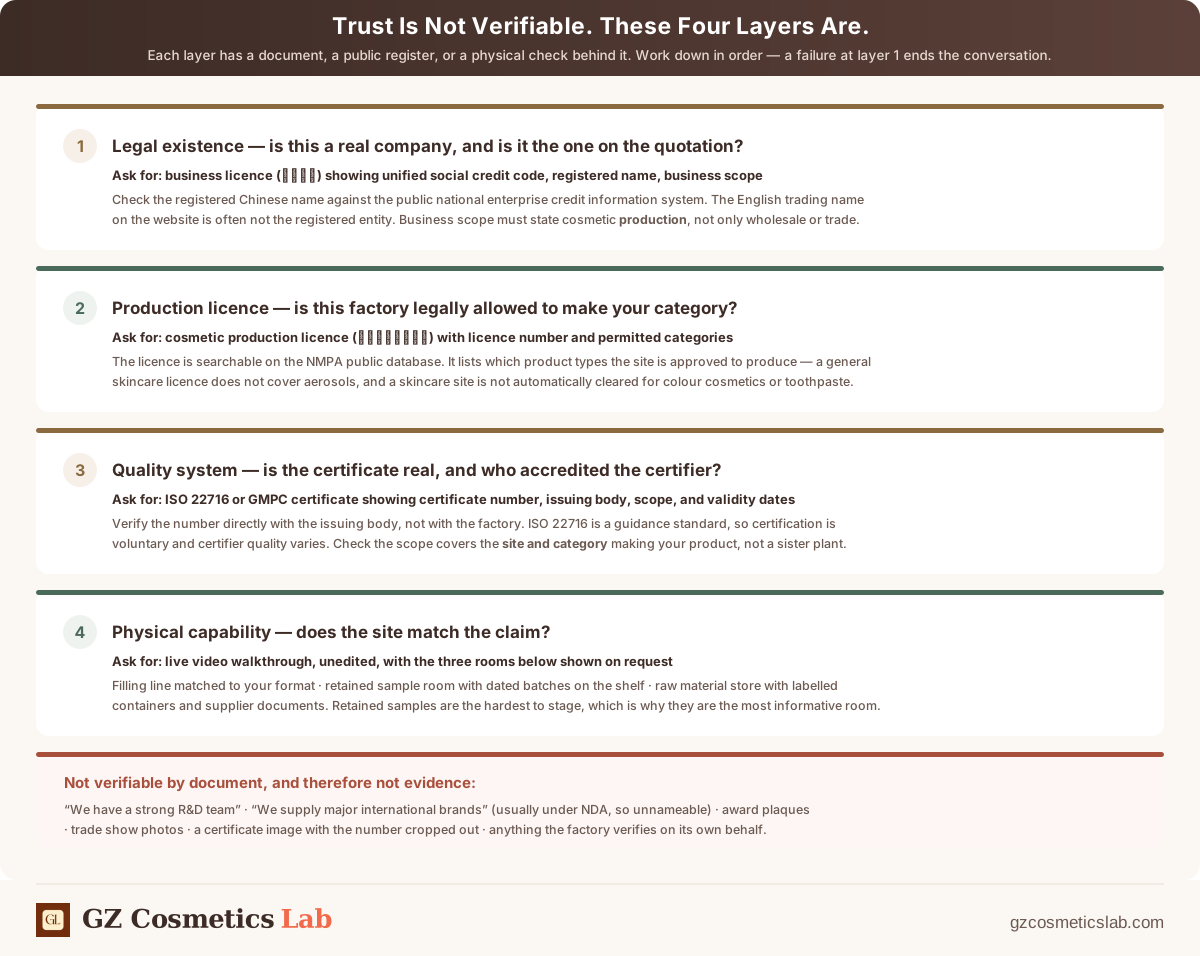
ISO 22716 & GMPC certified; SGS testing supported upon request
Need a Custom Oil Control Purifying Toner Formula?
Tell us your requirements — target actives, texture, packaging, quantity, and target market. Within 24 hours, we will reply with a quotation or the questions needed to prepare one.
Response within 24 hours · WhatsApp available · Factory visits welcome