
Value (Brightening Mask)
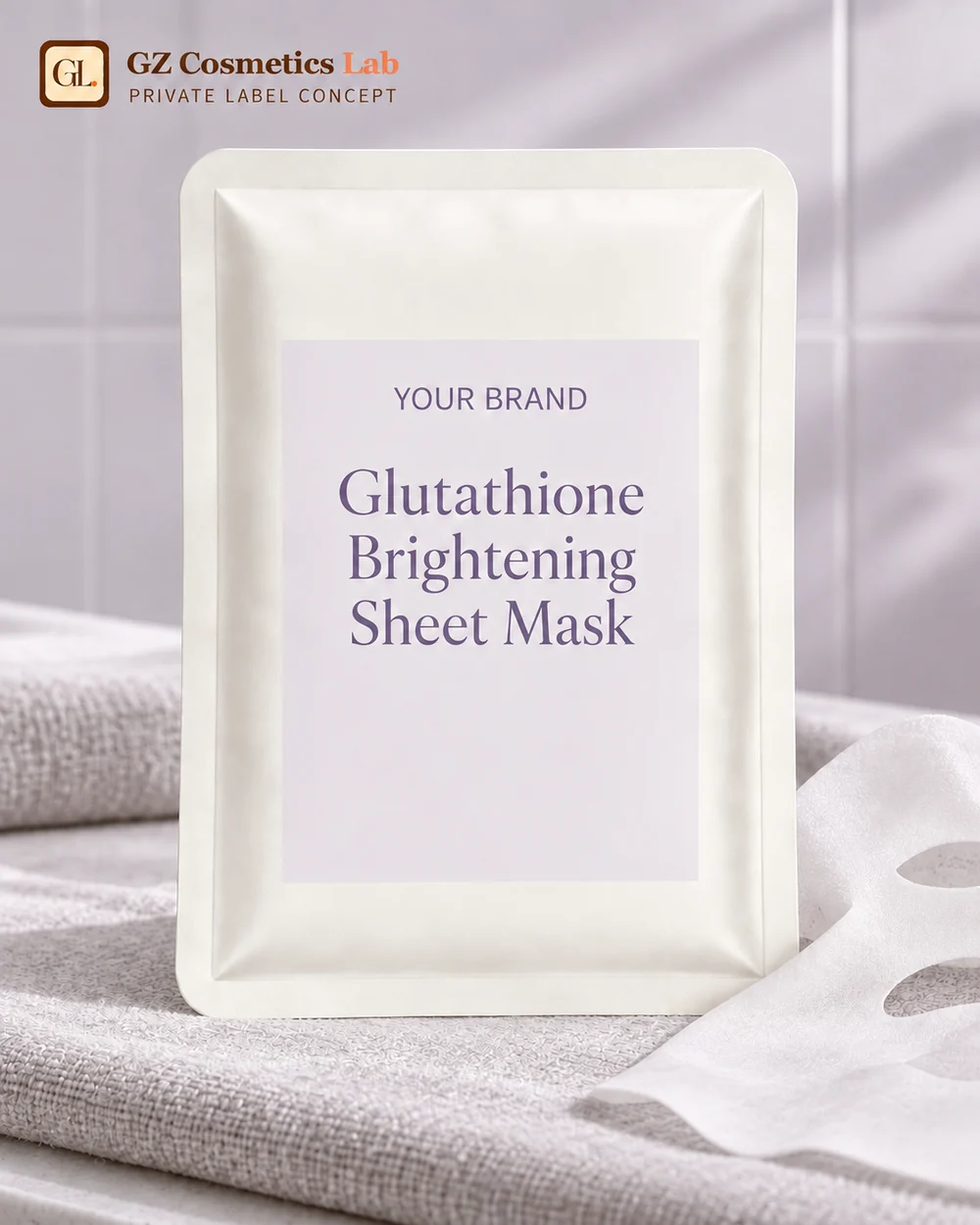
Glutathione Brightening Sheet Mask
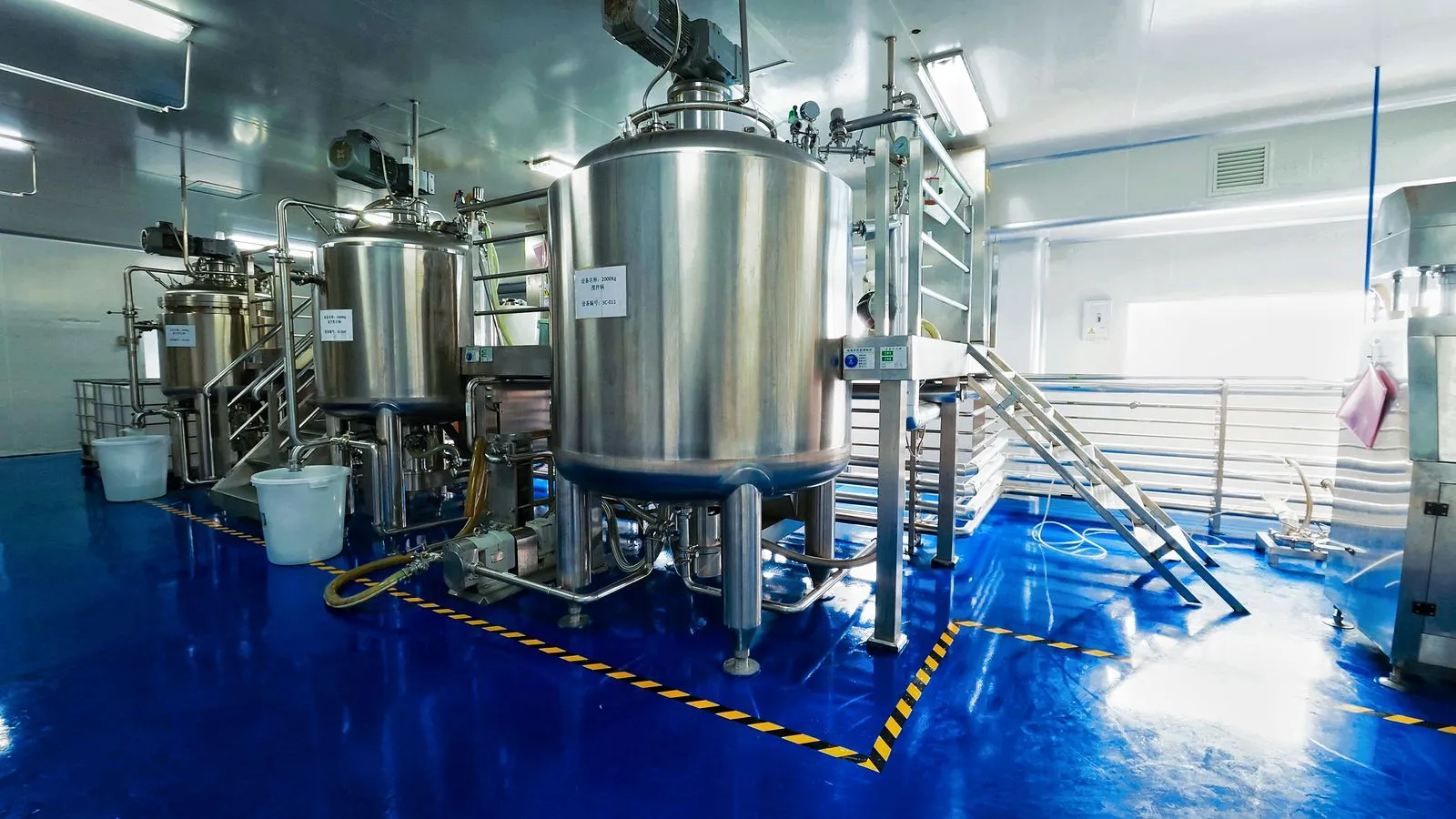
A brightening sheet mask built on three actives that work by different routes: glutathione, niacinamide and alpha-arbutin. This is the format Southeast Asian brightening buyers ask for by ingredient name, which changes the brief — the ingredient list is doing as much selling as the claim, so the actives have to be at levels worth naming on pack rather than at trace inclusion. Manufactured under ISO 22716 for brands selling into the Philippines, Thailand and Indonesia, where brightening is the largest single skincare demand and also the most tightly regulated claim area. Levels below are our standard ODM baseline, adjustable for your target market and price point.
Product Overview
| MOQ | 5,000–10,000 sheets / SKU |
| Lead Time | 45–55 days |
| Sampling | 2–3 weeks for a custom sample round |
| Sizes | Single sheet with 25ml serum / box of 5 or 10 sheets |
| Packaging | Aluminum foil pouch. Single pack; Box pack5/10 sheetsoption available |
| Mini Pack | No - Already in individual sheet packs |
| Suitable For | All skin types, especially dull, uneven skin tone |
| Pricing | Quote-based — depends on glutathione and alpha-arbutin levels, niacinamide load, sheet material, and serum fill. |
Quote response within 24 hours · Sample terms confirmed by project
Key Active Ingredients
How the Active Ingredients Work
Three brightening actives on three separate mechanisms, plus centella for tolerance and a hyaluronic acid blend for finish. Levels below are our standard ODM starting point, adjustable within what your destination market permits.
Glutathione baseline 1% · range 0.5–2%
A tripeptide antioxidant and the ingredient buyers in this region ask for by name. We run it in the main tier here rather than at token level, because the whole proposition is an ingredient list worth printing on pack. Two things we state plainly rather than gloss over. First, the topical clinical evidence is mixed and the published work on lotions used specific branded raw materials, so we write appearance-based outcomes and not a proven whitening result. Second, the upper end is limited by odour before anything else: glutathione carries a thiol group that releases hydrogen sulphide, and past roughly 2% the smell becomes noticeable enough to affect the product experience. For the Philippines we mark the formula clearly for external topical use only, to keep it separated from injectable glutathione in all copy.
Niacinamide baseline 3% · range 2–5%
Vitamin B3, carrying the mechanism that has the strongest regulatory standing in this trio — it is a listed functional whitening ingredient in both Korea and Japan, which is what gives the brightening claim a registered basis in those markets. It acts on the transfer of pigment into surrounding skin cells rather than on pigment formation, so it complements rather than duplicates the other two actives. Korea caps it at 5% in functional cosmetics and our ceiling matches that so one formula stays exportable. Serum is held above pH 5.0, since niacinamide hydrolyses toward nicotinic acid below that and the result is flushing.
Alpha-Arbutin baseline 1% · range 0.5–2%
The third route: alpha-arbutin acts on tyrosinase, the enzyme step in pigment formation. The 2% ceiling is a regulatory number, not a performance optimum — it is the safe upper limit the EU SCCS set for face products, and those are different things worth keeping separate in a technical discussion. Stability drives the handling: SCCS data shows alpha-arbutin holds for at least three months between pH 4.5 and 7.5 below 40°C, best near pH 5.0, so it goes into the water phase and away from heat. Hydroquinone is not used as an ingredient in this formula; under Regulation (EU) 2024/996 any residue carried over from the raw material must stay at unavoidable trace levels, and in a separate aqueous serum reviewed by the SCCS hydroquinone stayed below the 3 ppm limit of quantification over three months at both 0.5% and 2% alpha-arbutin.
Centella Asiatica with hyaluronic acid extract, plus 0.1–0.5% total sodium hyaluronate
Centella extract is here for a practical reason rather than as label decoration: three brightening actives under a ten-minute occlusive sheet is a heavier load than the same actives in a leave-on serum, because occlusion increases penetration. Centella is well documented for soothing and it lowers the chance of the tolerance complaints that sink a brightening mask in reviews. The multi-weight sodium hyaluronate blend handles the plumped finish; above roughly 0.5% total the serum turns stringy and the sheet becomes awkward to unfold.
Formulation & Customization Options
| Service model | ODM (adjust our existing base) or full OEM custom development |
| Adjustable elements | Glutathione within 0.5–2%; alpha-arbutin within what your market permits for face products; niacinamide within 2–5%; optional tranexamic acid or vitamin C derivative addition |
| Target pH | Formulated at pH 5.0–5.5 — the workable overlap between niacinamide needing above 5.0 and alpha-arbutin sitting best near 5.0. Final target pH confirmed per project. |
| Sheet material | Tencel (default) or biocellulose at a higher cost per sheet |
| Serum fill | 25ml per sheet as our baseline, adjustable to your specification |
| Fragrance | Fragrance-free is the default on this formula — a light fragrance is available and does useful work here, since glutathione carries a faint sulphurous note at the upper end of its range |
| Certification support | Halal, COSMOS or vegan-suitable formulation can be configured to your target market requirements — note that glutathione is normally fermentation-derived, so the vegan question turns on the supplier’s process documentation rather than on the formula |
| Packaging | Aluminium foil pouch, single or boxed; box count is yours to set, with 5 and 10 our common runs |
| Certifications | ISO 22716, GMPC; SGS testing supported upon request |
Launch-fit guide
Who This Product Is Built For
Ingredient-led brightening brands
In this region brightening consumers shop by ingredient name, so a pack that can print glutathione, niacinamide and alpha-arbutin at levels worth naming has an advantage over one leaning on an extract. That is the specific reason we run all three in the main tier rather than at trace inclusion.
Philippines, Thailand and Indonesia
These are the markets where this ingredient combination sells hardest, and also where the claim rules differ most from each other. We confirm the permitted levels and the claim wording per market before sampling rather than after artwork.
Brands wanting a lighter regulatory load
If the brightening story does not need glutathione by name, the Niacinamide Brightening Anti-Spot Mask delivers a similar visible outcome with a simpler claim review, and the Hyaluronic Acid Hydrating Sheet Mask is the easiest format of all to launch first.
Brands building a brightening range
The same three-active logic runs through our Glutathione Brightening Serum and Glutathione Brightening Cleanser, so a mask, serum and cleanser can launch on one ingredient narrative under one certified roof.
Planning Your Glutathione Brightening Sheet Mask Project
What to prepare before quotation and sampling, which checks are part of routine manufacturing, and which items are confirmed separately for this product type.
What to include in your brief
- Destination markets and the exact brightening or whitening wording planned for pack, ads and product listings.
- Requested glutathione, niacinamide and alpha-arbutin positioning, subject to formula and market review.
- Tencel or biocellulose sheet, serum fill, pouch structure and five- or ten-sheet box configuration.
- Fragrance-free or custom fragrance direction, desired after-feel and any ingredient exclusions.
- Quantity in sheets, target launch date and whether the mask will sit in a wider brightening range.
Quality and testing plan
Routine controls should cover serum appearance and odour, pH, viscosity, sheet weight, serum fill, seal integrity, leakage, fill weight and agreed microbiological criteria.
Formal stability, preservative challenge, oxidation and colour monitoring, pouch and ink compatibility, active or claim substantiation, safety work and third-party reports are scoped against the final serum, sheet, foil pouch and destination market.
Market and claims checkpoints
- Brightening, whitening, pigmentation and treatment wording do not travel unchanged between markets; approve the claim set before artwork.
- Do not promise instant whitening, permanent results or a proven dose-response relationship without finished-product evidence.
- Do not use a blanket hydroquinone-free claim in place of raw-material specifications and trace-control documentation.
- Keep the product clearly positioned for external topical cosmetic use and do not borrow evidence from injectable or unrelated glutathione products.
Pricing and testing scope depend on the final formula, packaging, quantity and destination market.
Frequently Asked Questions
What is the MOQ and lead time?
Minimum is 5,000–10,000 sheets per SKU, counted in sheets rather than boxes. At 10 sheets per box that is 500–1,000 retail units; at 5 per box it is double, on the same order. Production takes 45–55 days after sample approval and a custom sample round takes 2–3 weeks. On this SKU the regulatory confirmation for your market is worth starting alongside the sample rather than after it, since the permitted alpha-arbutin level can differ from our baseline.
What levels of glutathione and alpha-arbutin do you actually use?
Our baselines are 1% glutathione and 1% alpha-arbutin, each adjustable within 0.5–2% and within whatever cap applies in your destination market — alpha-arbutin has a regulated ceiling for face products, set at 2% by the EU SCCS as a safety limit rather than as a performance optimum. Two practical constraints on the upper end: glutathione develops a noticeable sulphurous note above roughly 2%, and three brightening actives under an occlusive sheet is already a heavier exposure than the same formula as a leave-on serum. We confirm final levels per project.
Is the brightening claim safe to use in our market?
It depends on the market, and this is the item to settle first. In the US, lightening and treating hyperpigmentation read as drug claims — the defensible wording is that it visibly brightens and helps even the look of skin tone. In Korea and Japan, whitening is a regulated functional claim and the qualification rests on a listed ingredient, which here is the niacinamide rather than the glutathione, since glutathione is not on those functional whitening lists. For the Philippines we mark the product for external topical use only so it is clearly separated from injectable glutathione in all copy. We agree the claim set with you before artwork.
How stable is glutathione in a sachet for two years in a hot market?
This is the right question to ask about this format, and it is harder to stabilise than a plain hydrating mask. Glutathione is oxidation-sensitive, so the formula runs an antioxidant system and the foil pouch is doing real work by blocking light and oxygen ingress in a way a clear film cannot. Accelerated stability testing on the finished formula is run before production. If your shipping and storage chain is unusually hot we will say so at the sampling stage rather than after a batch is made.
Why three brightening actives instead of one at a higher level?
Because they act at different points. Alpha-arbutin works on the enzyme step in pigment formation, niacinamide on the transfer of pigment into surrounding cells, and glutathione contributes antioxidant activity. Pushing a single active higher hits a tolerance ceiling, or in glutathione’s case an odour ceiling, well before it covers the other routes. We can simplify the active list if you want a shorter ingredient statement for filing or cost reasons.
Does the formula contain hydroquinone?
Hydroquinone is not used as an ingredient in this formula. Because alpha-arbutin can carry trace hydroquinone from the raw material, this is a fair question and the regulatory position is specific: under Regulation (EU) 2024/996 any carryover must stay at unavoidable trace levels. In a separate aqueous serum reviewed by the SCCS, hydroquinone stayed below the 3 ppm limit of quantification over three months at both 0.5% and 2% alpha-arbutin. We work to raw material specifications and documentation rather than making a blanket free-from claim, since trace analysis is never absolute.
Customization
OEM/ODM supported; mask material (Tencel/biocellulose) and serum formula customizable
Target Markets
Certifications
ISO 22716 & GMPC certified; SGS testing supported upon request
Need a Custom Glutathione Brightening Sheet Mask Formula?
Tell us your requirements — target actives, texture, packaging, quantity, and target market. Within 24 hours, we will reply with a quotation or the questions needed to prepare one.
Response within 24 hours · WhatsApp available · Factory visits welcome