

Premium (Leave-In)
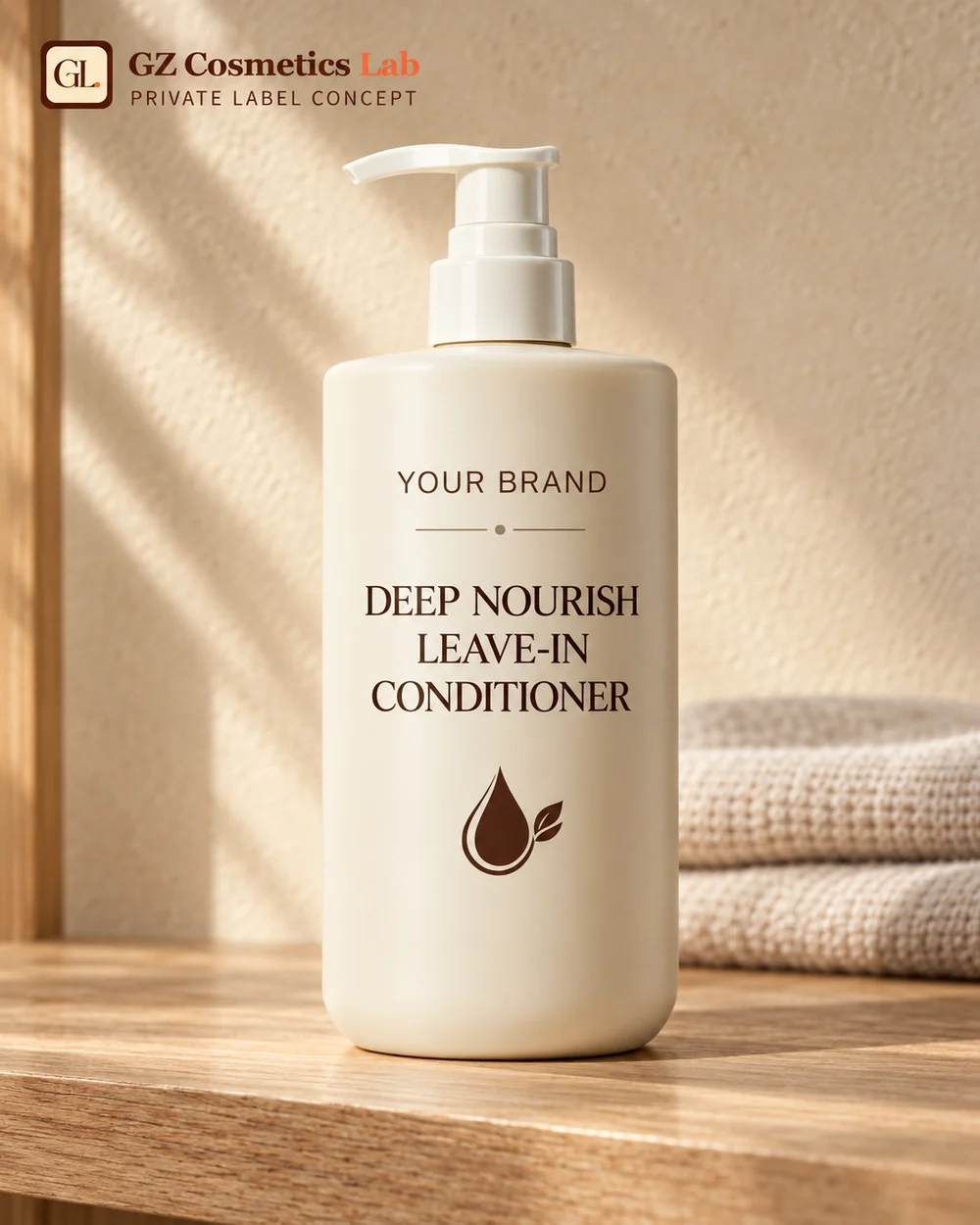
Deep Nourish Leave-In Conditioner
A leave-in treatment for dry, damaged and chemically processed hair, positioned as the premium end of a hair range. A leave-in is not a rinse-off conditioner in a smaller bottle, and the difference runs deeper than concentration: because nothing is washed away, everything applied stays on the fibre for hours. That changes the design in two directions at once. Deposit has to be built for a light after-feel rather than for rinse-out generosity, and the regulatory ceilings on cationic conditioning agents are roughly half those that apply to rinse-off products. The 100ml and 150ml sizes suit the low dose this format needs.
Product Overview
| MOQ | 3,000 bottles / SKU |
| Lead Time | 35–45 days |
| Sampling | 2–3 weeks for a custom sample round |
| Sizes | 100–150ml |
| Packaging | Pump bottle |
| Mini Pack | Yes - Sachet 5-10ml. Same as shampoo. Matching set |
| Suitable For | Color/perm-damaged, dry hair with split ends |
| Pricing | Quote-based — depends on argan and shea load, keratin choice, cationic level for the leave-on limits, and order volume. |
Quote response within 24 hours · Sample terms confirmed by project
Key Active Ingredients
How the Active Ingredients Work
A concentrated but deliberately light system: a high-ratio argan and shea pair, hydrolysed keratin, and vitamin E, carried on a cationic level set for leave-on limits. The baseline below is our standard ODM starting point, adjustable for your target market and price point.
Cationic conditioning agents baseline 3% · range 2–4% (BTMS-50 basis)
The same charge attraction that works in a rinse-off conditioner, but constrained differently. Hair keratin carries a net negative surface charge and the positively charged quat adsorbs onto it, concentrating where the cuticle is damaged. In a leave-in the deposit is never rinsed, so the level is set by after-feel rather than by how much survives the shower, and it also has to respect tighter legal limits: Annex III of Regulation (EC) No 1223/2009 permits behentrimonium chloride up to 3.0% in leave-on hair products under entry 287, against 5.0% for rinse-off, and caps cetrimonium and steartrimonium chloride at 1.0% under entry 286, against 2.5% for rinse-off. The sum of the three has to respect both entries at once. Our standard route uses behentrimonium methosulfate, which is not listed in Annex III, but we hold the level in the same region regardless, because a leave-in that feels coated fails commercially long before it approaches any cap.
Argan oil primary emollient, high ratio
Argania Spinosa Kernel Oil at the highest ratio in this range. It sits nearer the fibre surface than penetrating oils do, which is what delivers immediate slip and the light shine a leave-in is bought for. In a leave-on format the oil choice matters more than in a rinse-off, because whatever is applied stays: an oil that oxidises readily or feels tacky after a few hours will be judged on the second impression rather than the first. Argan performs well on both counts, which is why it carries the load here rather than a cheaper alternative.
Shea butter and hydrolysed keratin emollient and protein repair pair
Butyrospermum Parkii Butter for a soft occlusive layer that slows water loss through the day, paired with hydrolysed keratin cut small enough to deposit into gaps in a lifted cuticle. In a leave-in the protein gets hours of contact rather than two minutes, which is the one genuine functional advantage this format has over a rinse-off conditioner. We still write the effect as surface smoothing and stronger-feeling hair, not as structural repair: protein does not rebuild the cortex or reverse bleaching damage regardless of contact time. Both are heat-sensitive in the case of the keratin, so it is added during cool-down. Keratin is animal-derived, so a vegan claim requires substituting a plant protein.
Vitamin E antioxidant
Tocopherol, present for a specific technical reason rather than as a marketing active. This formula carries a high load of unsaturated plant oils and is packaged for months of use in a hot climate, so oxidation is a real shelf-life risk — an oxidised leave-in develops an off odour and loses the light feel that justifies its price. Vitamin E protects the oil phase. Where a project needs a longer stated shelf life in high-temperature markets we would discuss the antioxidant package and the packaging together, since an opaque or airless format contributes as much as the antioxidant does.
Formulation & Customization Options
| Service model | ODM (adjust our existing base) or full OEM custom development |
| Adjustable elements | Argan and shea ratio; keratin load and type; cationic level within leave-on limits; cream, milk or spray format |
| Target pH | Formulated in the mildly acidic range that is industry practice for hair conditioning products, which helps the cuticle lie flatter. Final target pH confirmed per project. |
| Silicone route | Available with or without silicone. Leave-on products face a different cyclic siloxane timeline from rinse-off ones and it is worth planning around: cyclopentasiloxane (D5) has been restricted below 0.1% in rinse-off cosmetics since 31 January 2020, and under Commission Regulation (EU) 2024/1328 the same 0.1% limit applies to D5 in leave-on cosmetics and to cyclohexasiloxane (D6) in all cosmetics from 6 June 2027. Cyclotetrasiloxane (D4) is already prohibited under Annex II of Regulation (EC) No 1223/2009. We build leave-in formulas on straight-chain grades such as dimethicone and amodimethicone, which are outside the scope of those restrictions, and where a raw material is declared as cyclomethicone we ask the supplier to confirm D4, D5 and D6 content because that name covers a mixture. |
| Texture and base | Light cream standard at 100ml and 150ml; milk and pump-spray formats available, with the spray suiting fine hair and even distribution at a lower dose |
| Fragrance | Warm, salon-style and floral profiles standard for premium positioning; fragrance-free available. Fragrance choice carries more weight in a leave-on, since the scent stays on hair for hours |
| Certification support | ISO 22716 and GMPC production, with SGS testing on request. Halal, COSMOS and vegan-positioned formulations can be scoped to your requirement — tell us the destination market and we will confirm what is achievable for your specification. Keratin is animal-derived, so a vegan route means substituting a plant protein such as hydrolysed wheat or soy, which is a different base rather than a tweak to this one. |
| Packaging | Industry-standard formats supported — 100ml and 150ml tube, pump bottle or pump spray. For a high plant-oil formula in hot markets an opaque or airless format is worth specifying, since light and air exposure drive oxidation as much as formulation does |
| Regulatory alignment | Leave-on cationic limits, silicone route and claim wording confirmed against your destination market rules per order |
Launch-fit guide
Who This Product Is Built For
Premium range toppers
A leave-in is usually the highest-margin item in a hair range and the one that anchors a premium positioning, because consumers accept a much higher price per millilitre for a product they use by the drop rather than by the handful.
Chemically processed and heat-styled hair
Colouring, perming and daily heat leave a lifted cuticle that a rinse-off step can only partly address in two minutes of contact. Hours of contact is the real functional argument for this format, and it is the argument worth making in your copy.
Humid-climate frizz through the day
In Southeast Asia frizz reappears hours after washing as humid air enters the cuticle unevenly. A leave-on layer is the only step in a routine that is still present when that happens, which is why leave-ins convert well in these markets despite the higher price.
Completing a repair routine
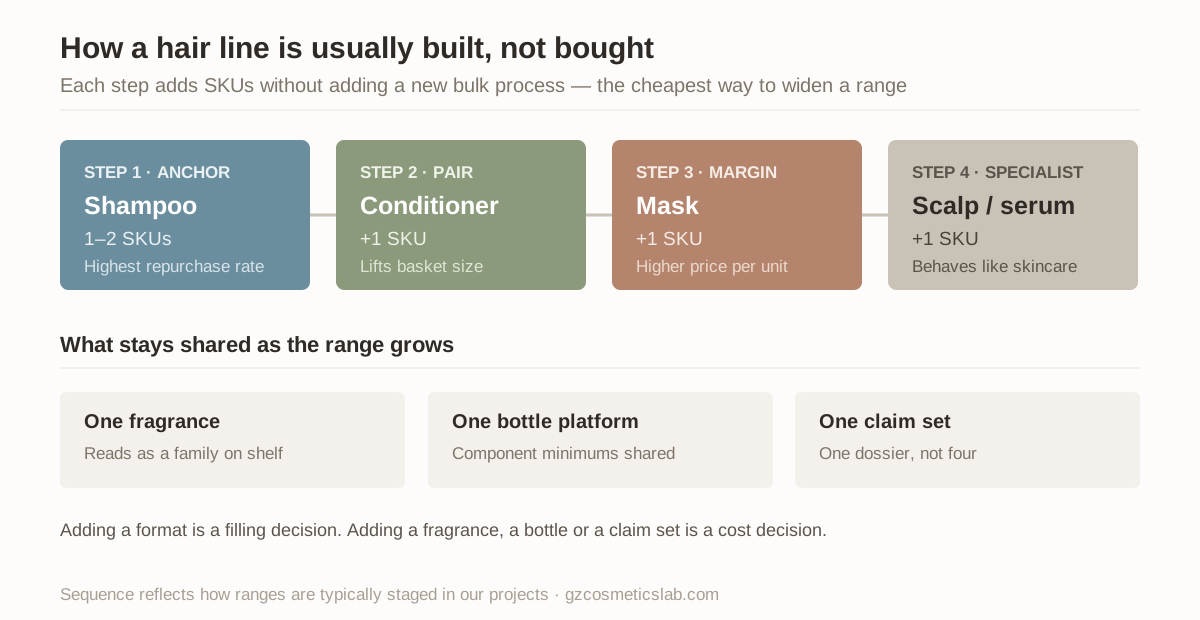
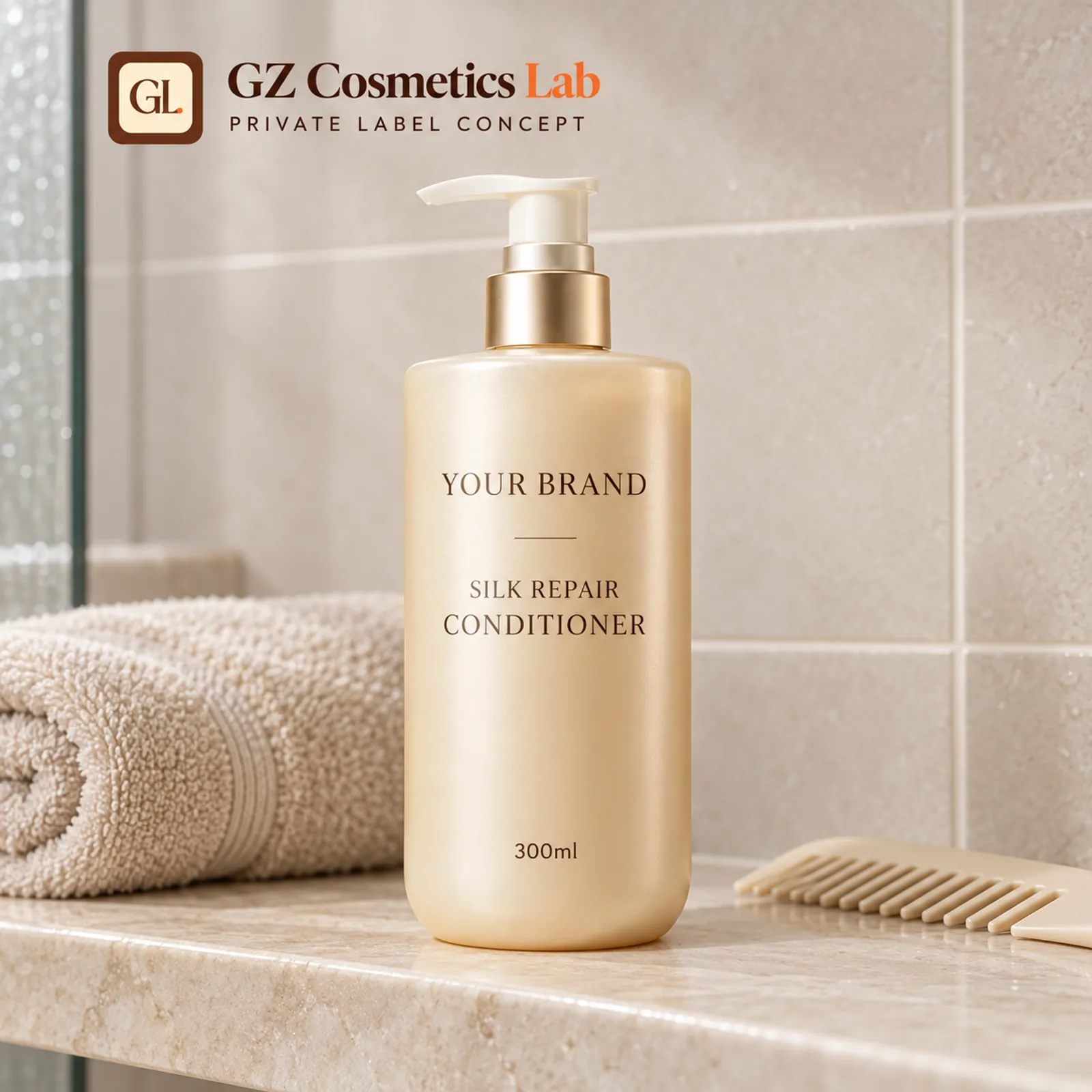
This is the third step after the Silky Repair Shampoo and the Silk Repair Conditioner, running the same keratin and argan logic at leave-on levels. Where a brand also wants a weekly intensive step, the Silk Repair Hair Mask sits alongside rather than instead of it.
Planning Your Deep Nourish Leave-In Conditioner Project
What to prepare before quotation and sampling, which checks are part of routine manufacturing, and which items are confirmed separately for this product type.
What to include in your brief
- Destination market, salon or home-use channel and the intended place in the hair-care range.
- Hair type, damage level, colour or heat-styling use case and desired weight or after-feel.
- Pump format, target dose, 100ml or 150ml pack, mini or sachet requirement and decoration reference.
- Argan, shea, keratin, fragrance and silicone preferences, plus any vegan or allergen restrictions.
- Planned repair, split-end appearance, shine, colour-care or heat-protection wording, quantity and launch date.
Quality and testing plan
Routine controls should cover appearance, odour, pH, viscosity, pump output, dose consistency, fill weight, agreed microbiological criteria and release against the approved leave-in specification.
Formal stability, preservative challenge, pump and pack compatibility, wet or dry combing, build-up and after-feel assessment, heat-protection or repair-claim substantiation, safety work and third-party reports are scoped on the final conditioning system and claim set.
Market and claims checkpoints
- Treat this as a leave-on product when reviewing conditioning-agent limits and safety; do not copy a rinse-off conditioner formula or claim package.
- Keep repair wording at improved feel, appearance and manageability unless instrumental finished-product evidence supports structural or bond-repair language.
- Heat-protection and colour-protection claims require claim-specific testing; ingredient presence alone is not sufficient.
- Confirm animal-derived or vegan status for the selected keratin source before artwork or certification language is approved.
Pricing and testing scope depend on the final formula, packaging, quantity and destination market.
Frequently Asked Questions
What is the minimum order quantity and lead time?
Minimum is 3,000 bottles per SKU, produced in 35–45 days once you approve the sample. Custom sample rounds take 2–3 weeks. The 100ml and 150ml sizes count as separate SKUs for MOQ purposes.
Can you just fill the rinse-off conditioner into a smaller bottle for a leave-in?
No, and it is worth knowing why, because it is a common request. A rinse-off conditioner is built on the assumption that most of it leaves the hair within two minutes, so its deposit level would feel coated and greasy if left on. The legal limits also differ: Annex III of Regulation (EC) No 1223/2009 sets leave-on caps for cationic conditioning agents at roughly half the rinse-off figures. A leave-in is a separate development with its own sample round, and we quote it that way.
How much should the consumer use?
Far less than for a rinse-off conditioner, and your usage copy should say so explicitly. Over-application is the main failure mode in this format, and a consumer who uses a rinse-off-sized dose will conclude the product is greasy. This is also why we recommend a pump or spray over a flip cap, and why the 100ml size often outsells the 150ml on repeat.
Does the longer contact time make the keratin more effective?
Genuinely yes, and this is the one place where the format claim is technically sound. Hours of contact deposits more protein into the cuticle than two minutes in the shower does. What it still does not do is rebuild the cortex or reverse bleaching damage, so the honest claim ceiling is the same: smoother, stronger-feeling hair with visibly less frizz, delivered more durably than a rinse-off step manages.
How long is the shelf life given the high oil content?
We build the antioxidant package and recommend packaging with that specifically in mind, since a high unsaturated plant oil load in a hot market is a real oxidation risk rather than a theoretical one. Accelerated stability testing on the finished formula runs alongside the standard production window. If your registration requires real-time oxidation data over an extended period, that is quoted and scheduled separately, since it cannot be compressed into the production lead time.
What should we plan for on the silicone side?
If you want silicone in a leave-on product, plan against the 2027 date rather than today's rules. D5 is limited below 0.1% in leave-on cosmetics from 6 June 2027 under Commission Regulation (EU) 2024/1328, and D6 becomes limited in all cosmetics on the same date, while D4 is already prohibited outright. Our leave-in formulas use straight-chain silicones such as dimethicone and amodimethicone, which sit outside those restrictions, so a formula built with us now does not need reformulating for that deadline. Where a supplier declares cyclomethicone we ask for the D4, D5 and D6 breakdown, since it is a mixture name rather than a single substance.
Customization
OEM/ODM supported
Target Markets
Certifications
ISO 22716 & GMPC certified; SGS testing supported upon request
Need a Custom Deep Nourish Leave-In Conditioner Formula?
Tell us your requirements — target actives, texture, packaging, quantity, and target market. Within 24 hours, we will reply with a quotation or the questions needed to prepare one.
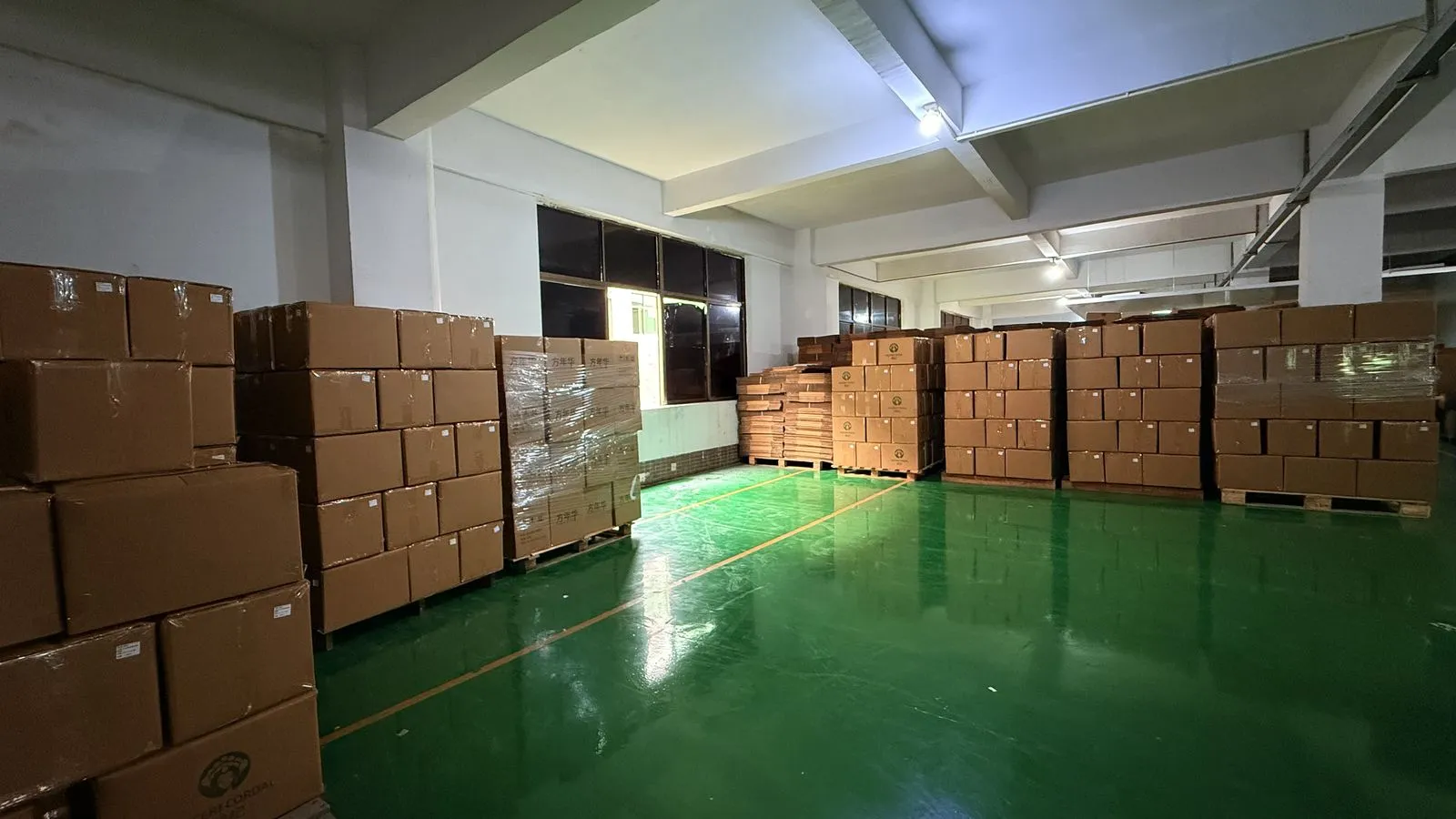
Response within 24 hours · WhatsApp available · Factory visits welcome