
Value (Damaged Hair)
Silky Repair Shampoo
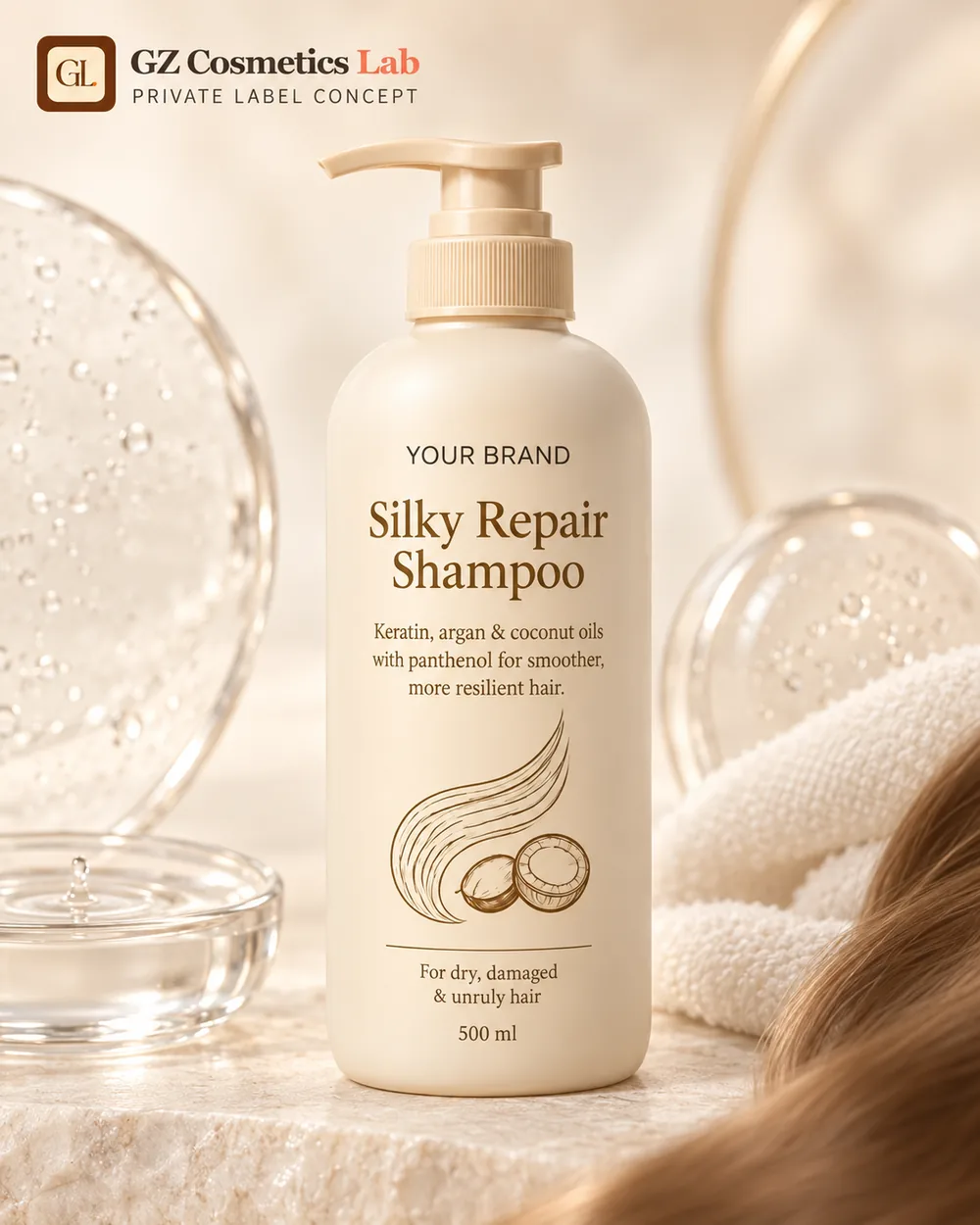
A repair-position daily shampoo for hair that has been coloured, permed or heat-styled and now reads dry and frizzy. The design problem on a repair shampoo is that most of what you add gets rinsed away, so the work goes into an amino acid surfactant base that does not strip further, plus hydrolysed keratin and oils at a load the strand can actually retain through the rinse. Manufactured under ISO 22716 for brands selling into Southeast Asia, where humidity makes frizz the visible symptom of damage. The baseline below is our standard ODM formula and can be adjusted to suit your positioning, destination market rules, and cost structure.
Product Overview
| MOQ | 3,000 bottles / SKU |
| Lead Time | 35–45 days |
| Sampling | 2–3 weeks for a custom sample round |
| Sizes | 500ml / Sachet 5-10ml |
| Packaging | Pump bottle; sachet (5-10ml) option available |
| Mini Pack | Yes - Sachet 5-10ml. Indonesia/Philippines standard format |
| Suitable For | Color/perm-damaged, dry and frizzy hair |
| Pricing | Quote-based — depends on surfactant system, protein and oil load, packaging, and order volume. |
Quote response within 24 hours · Sample terms confirmed by project
Key Active Ingredients
How the Active Ingredients Work
Four parts do the work here: a mild amino acid surfactant base, hydrolysed keratin for the damaged cuticle, a controlled argan and coconut oil pair, and panthenol for comb-through. The system below is our standard ODM starting point, adjustable for your target market and price point.
Amino acid surfactant system primary cleansing system
Sodium Cocoyl Glutamate with Cocamidopropyl Betaine, run at a mildly acidic pH. On damaged hair this matters more than on healthy hair: a lifted cuticle has more exposed surface, so an aggressive surfactant removes more of the remaining lipid and the hair reads drier after every wash. Glutamate-based systems clean without needing alkalinity, which also avoids the extra cuticle swelling that alkaline washing causes. Sulfate-free by construction, and the system can be shifted milder or more strongly cleansing depending on how much styling product your target consumer uses.
Hydrolysed keratin protein repair agent
Hydrolysed keratin, cut to a molecular weight small enough to deposit into the gaps in a damaged cuticle rather than sitting on top and washing straight off. Its function is to fill and smooth the fibre surface so hair feels stronger and combs with less snagging, and so light reflects more evenly, which is what reads as shine. This is a cosmetic surface effect and we write it that way: protein does not rebuild the cortex or reverse bleaching damage, and we do not phrase it as repair at a structural level. Added in the cool-down phase, since protein hydrolysates degrade with prolonged heat.
Argan and coconut oil controlled oil pair
Argania Spinosa Kernel Oil and Cocos Nucifera Oil at a deliberately controlled ratio. Coconut oil has a straight-chain structure that penetrates the fibre more readily than most plant oils, while argan sits more on the surface and delivers slip. Load is a balance rather than a maximum: enough to cut frizz and dry comb-out, not enough to leave hair limp or make the formula hard to rinse, which is the single most common complaint on over-oiled repair shampoos. The ratio is set against your target hair type and confirmed at sampling.
Panthenol conditioning agent
Provitamin B5, which converts to pantothenic acid on the fibre and holds water in the cortex, improving flexibility so dry hair is less prone to snapping during combing. It works alongside the oils rather than duplicating them: panthenol addresses water content, the oils address surface lipid and slip. Heat-sensitive, so it goes in during cool-down with the keratin. Not listed in Annexes II, III, IV or VI of Regulation (EC) No 1223/2009, so the level is a cost and feel decision rather than a regulatory one.
Formulation & Customization Options
| Service model | ODM (adjust our existing base) or full OEM custom development |
| Adjustable elements | Surfactant strength; keratin load; argan and coconut oil ratio; added silicone or silicone-free slip system on request |
| Target pH | Formulated at pH 4.5–5.5 — slightly acidic to help the lifted cuticle lie flatter on damaged hair. Final target pH confirmed per project. |
| Texture and base | Pearlised or opaque cream shampoo; higher viscosity build that reads as rich in the hand, which suits the repair position |
| Fragrance | Warm, floral or salon-style profiles standard for this position; fragrance-free available |
| Certification support | Halal, COSMOS or vegan-suitable formulation can be configured to your target market requirements — note that keratin is animal-derived, so a vegan claim requires substituting a plant protein such as hydrolysed wheat or soy, which we can quote as an alternative base |
| Packaging | 500ml pump bottle plus 5–10ml sachet for Indonesia and the Philippines; custom colour, print, and secondary packaging |
| Certifications | ISO 22716, GMPC; SGS testing supported upon request |
Launch-fit guide
Who This Product Is Built For
Damage and repair positioning
Brands whose consumer colours or heat-styles regularly and whose complaint is dryness, frizz and breakage rather than oiliness. This is the volume position in the repair segment, sitting below salon pricing.
Humid-climate frizz control
In Southeast Asia humidity is what makes damage visible, since a lifted cuticle takes up moisture unevenly and the hair swells and frizzes. The oil pair and the acidic pH target both work on that specific mechanism rather than on damage in the abstract.
TikTok Shop and short-form sellers
Frizz and comb-through before-and-after is filmable in one wash, which makes this position easier to demonstrate on camera than claims that need weeks to show.
Brands building a full hair range
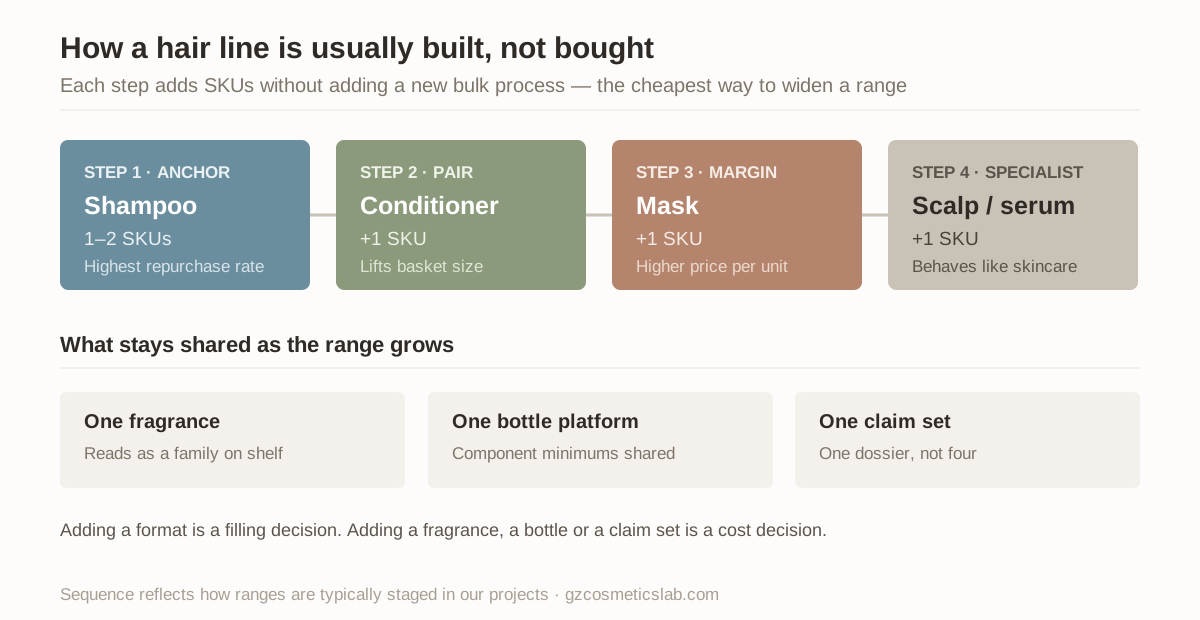
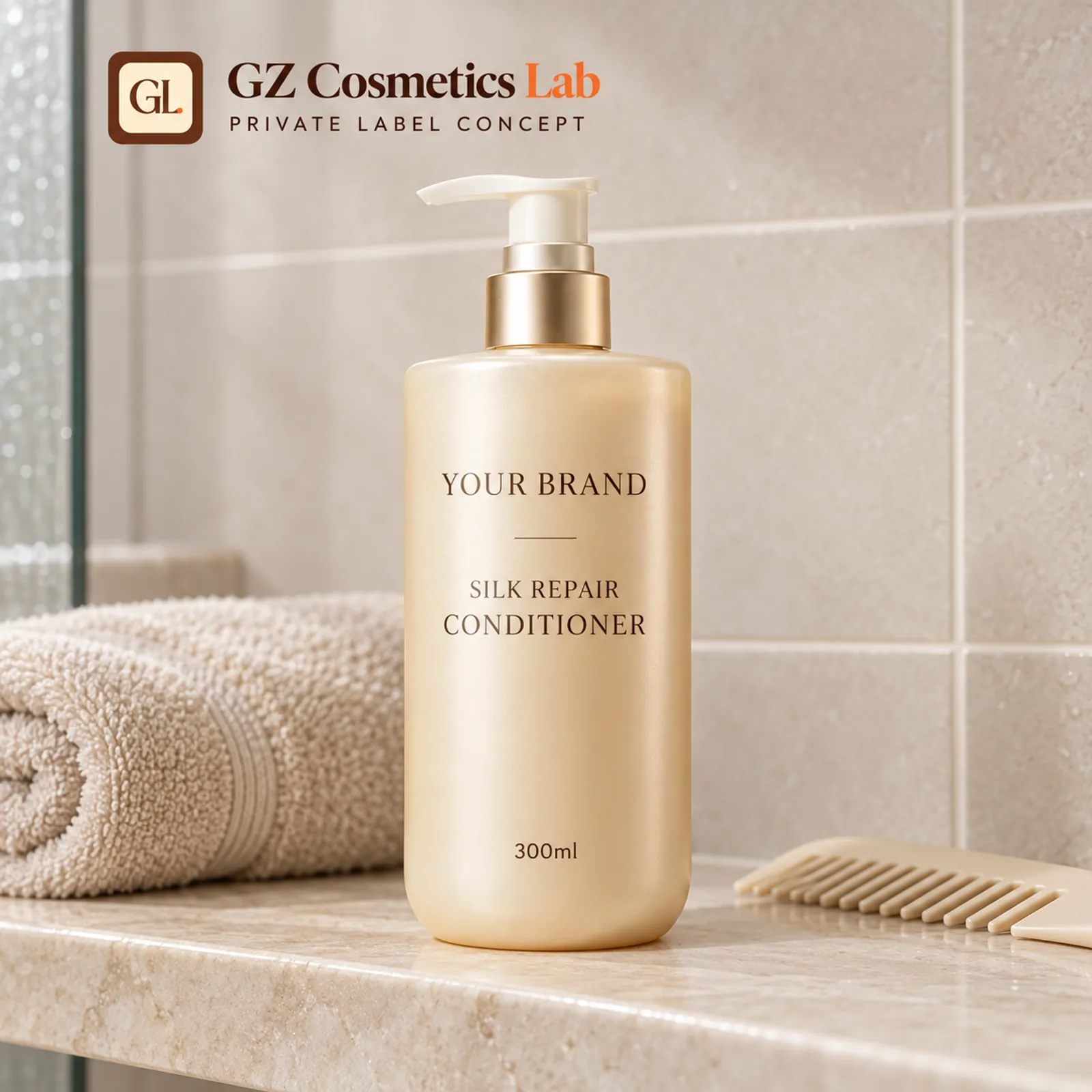
This shampoo is the repair anchor at a mass price point. For a salon or barbershop channel the Deep Repair Color-Treated Shampoo runs a higher argan ratio and premium packaging, the Silk Repair Conditioner is the matching second step, and the Silk Repair Hair Mask extends the same logic into a weekly treatment where a longer contact time allows a heavier deposit than a rinse-off shampoo can achieve.
Planning Your Silky Repair Shampoo Project
What to prepare before quotation and sampling, which checks are part of routine manufacturing, and which items are confirmed separately for this product type.
What to include in your brief
- Identify colouring, perming or heat-styling history and the shampoo used as your benchmark.
- Set the balance between detangling and clean rinse, including local water conditions.
- Specify pump or sachet, intended dose, and keratin or plant-protein preference.
Quality and testing plan
Agree a sample comparison using the same hair type, dose and rinse routine; score wet combing, dry frizz and coated feel.
Confirm pack dispensing checks and routine release specifications separately from any comparative claim study, including report ownership and quotation coverage.
Market and claims checkpoints
- Tie smoothing and stronger-feeling wording to finished-formula evidence; verify protein origin before vegan artwork.
Pricing and testing scope depend on the final formula, packaging, quantity and destination market.
Frequently Asked Questions
What is the minimum order quantity?
Minimum is 3,000 bottles per SKU, with the 5–10ml sachet filled separately at its own minimum. For a repair position the sachet works as an in-store trial, so if you plan to lead with it tell us and we will quote the bottle and sachet together as a single commitment.
Does keratin actually repair damaged hair?
It repairs the surface, not the structure, and the distinction matters for your claim set. Hydrolysed keratin deposits into gaps in a damaged cuticle so hair feels stronger, combs more easily and reflects light more evenly. It does not rebuild the cortex or reverse the bond breakage caused by bleaching, and no rinse-off cosmetic does. We write this as smoother, stronger-feeling hair with visibly less frizz, which is defensible in every market we ship to, rather than as structural repair.
Can I adjust the formula?
Yes. This is offered as ODM, so the surfactant strength, the keratin load and the argan-to-coconut ratio are all adjustable, and full custom OEM development is available. The trade-off on this base is oil load: more oil cuts frizz further but leaves hair flatter and harder to rinse, and rinse-out feel is what generates return complaints. We will tell you where that line sits for your target hair type.
Can this be made vegan?
Not with keratin in it, since keratin is animal-derived. If a vegan claim is part of your positioning we substitute a plant protein such as hydrolysed wheat or soy protein, which performs comparably on comb-through and feel. That is a different base rather than a tweak to this one, so tell us at enquiry stage and we will quote it as such.
How long does sampling and production take?
Sampling takes 2–3 weeks, then bulk production runs 35–45 days once you approve the sample. On a repair base the sample stage is worth not rushing, since the oil load and rinse feel are exactly what a reviewer needs to judge on their own hair before you commit to production.
Is it certified for export?
Production is ISO 22716 and GMPC certified, with SGS testing available on request and destination-market compliance checked before sampling. With no restricted active in the formula the documentation is usually light; the point to settle early is how far your artwork pushes the repair claim, since structural-repair wording is harder to defend than surface-smoothing wording.
Customization
OEM/ODM supported
Target Markets
Certifications
ISO 22716 & GMPC certified; SGS testing supported upon request
Need a Custom Silky Repair Shampoo Formula?
Tell us your requirements — target actives, texture, packaging, quantity, and target market. Within 24 hours, we will reply with a quotation or the questions needed to prepare one.
Response within 24 hours · WhatsApp available · Factory visits welcome