

Premium (hero product)
Silk Repair Conditioner
A premium rinse-off conditioner positioned as the second step to a repair shampoo, aimed at hair that reads dry, frizzy or rough after colouring, perming or daily heat styling. The design logic is the opposite of a shampoo: a shampoo carries anionic surfactants that strip, while a conditioner carries cationic agents that deposit. That charge difference is the whole mechanism, and it is why the two products cannot share a base. Manufactured under ISO 22716 for brands selling into Southeast Asia, where humidity turns cuticle damage into visible frizz. The baseline below is our standard ODM formula and can be adjusted to suit your positioning, destination market rules, and cost structure.
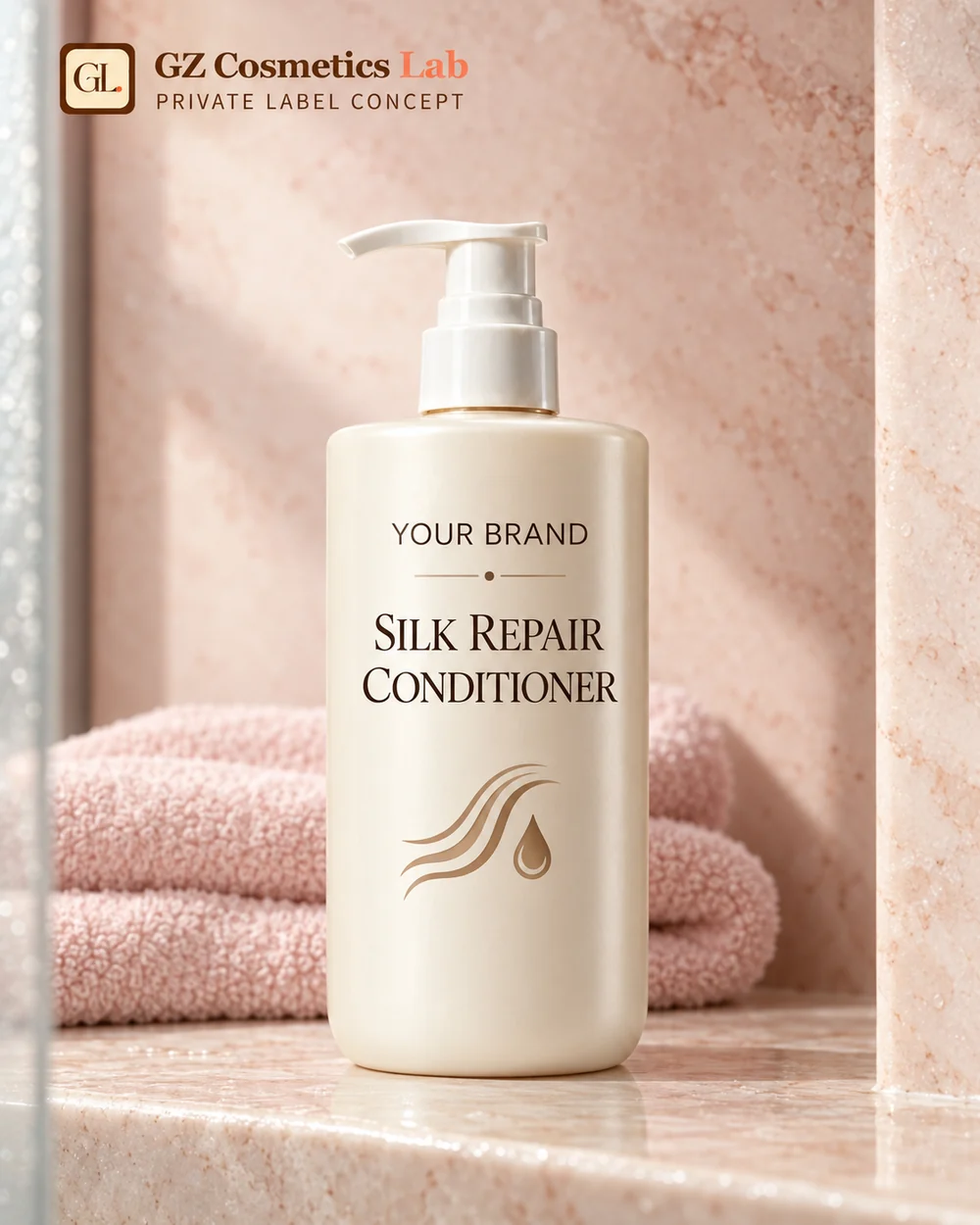
Product Overview
| MOQ | 3,000 bottles / SKU |
| Lead Time | 35–45 days |
| Sampling | 2–3 weeks for a custom sample round |
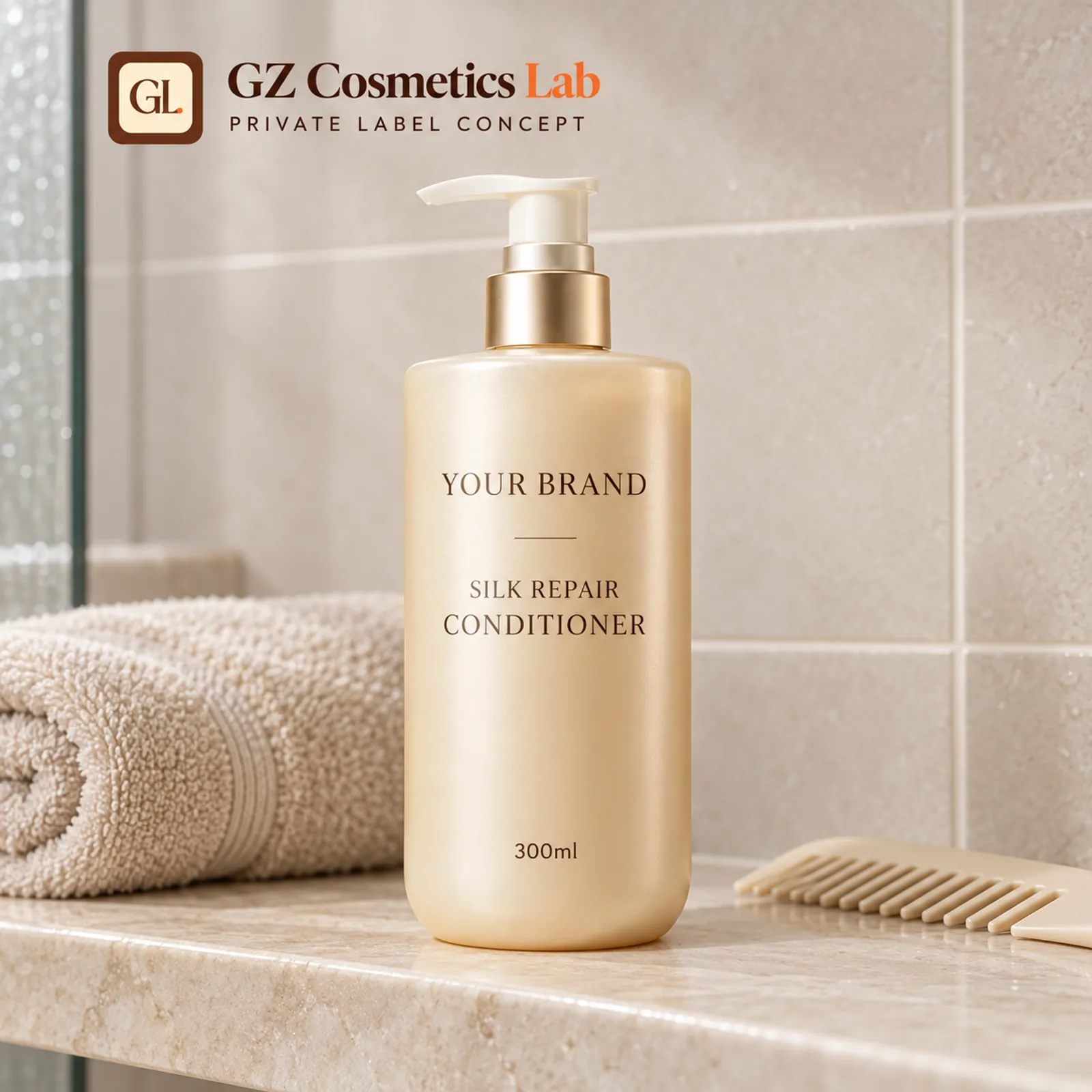
| Sizes | 300ml |
| Packaging | Pump bottle |
| Mini Pack | Yes - Sachet 5-10ml. Same as shampoo. Matching set |
| Suitable For | Dry, frizzy, curly hair, color/perm-treated hair |
| Pricing | Quote-based — depends on conditioning emulsifier grade, protein and oil load, silicone or silicone-free route, and order volume. |
Quote response within 24 hours · Sample terms confirmed by project
Key Active Ingredients
How the Active Ingredients Work
Four parts do the work: a cationic conditioning emulsifier that carries the deposit, fatty alcohols that build the cream body, hydrolysed keratin for the damaged cuticle, and an argan and coconut oil pair for slip. The baseline below is our standard ODM starting point, adjustable for your target market and price point.
Cationic conditioning emulsifier baseline 5% · range 4–6% (BTMS-50 basis)
Behentrimonium Methosulfate blended with cetyl alcohol, the standard conditioning emulsifier for this position. Hair keratin carries a net negative surface charge, more so where the cuticle is damaged, so a positively charged C22 quat adsorbs preferentially onto exactly the areas that need it and lays down a thin lubricating layer that cuts comb friction and static. Two practical notes for your specification: the percentage in a BTMS grade name refers to active content rather than total material, so 4% of a 50% grade is not interchangeable with 4% of a 25% grade and conversions have to be run on active basis. It is also self-emulsifying, which is why a conditioner does not need a separate primary emulsifier. Behentrimonium Methosulfate is not listed in Annex III of Regulation (EC) No 1223/2009, so the level is a performance and cost decision. Where a project calls for a chloride-based quat instead, Annex III entry 287 caps behentrimonium chloride at 5.0% in rinse-off hair products, and entry 286 caps cetrimonium and steartrimonium chloride at 2.5%, with the sum of the three respecting both limits at once — we formulate below whichever cap applies to your chosen route.
Fatty alcohols co-structurant, part of the emulsifier system
Cetyl and cetearyl alcohol. Despite the name these are waxy solids, not drying alcohols, and they serve two functions at once: they build the cream body and viscosity that a premium conditioner needs in the hand, and they work with the cationic quat to form the layered structure that carries conditioning onto the fibre. Grade choice is a texture decision — cetearyl alcohol structures more firmly than cetyl, so the ratio is what moves this formula between a rich cream and a lighter one without touching the active level.
Hydrolysed keratin protein repair agent
Hydrolysed keratin cut to a molecular weight small enough to deposit into gaps in a lifted cuticle rather than sitting on the surface and rinsing away. Its function is to fill and smooth the fibre so hair feels stronger, combs with less snagging, and reflects light more evenly, which is what reads as shine. We write this as a cosmetic surface effect and not as structural repair: protein does not rebuild the cortex or reverse bleaching damage, and no rinse-off product does. Added in the cool-down phase, since protein hydrolysates degrade with prolonged heat. Note for vegan positioning: keratin is animal-derived, so a vegan claim requires substituting a plant protein.
Argan and coconut oil controlled oil pair
Argania Spinosa Kernel Oil and Cocos Nucifera Oil at a controlled ratio. Coconut oil has a straight-chain structure that penetrates the fibre more readily than most plant oils, while argan stays nearer the surface and delivers slip and shine. Load is a balance rather than a maximum: enough to cut frizz and dry comb-out, not so much that hair reads limp or the product becomes hard to rinse, which is the most common complaint on over-oiled conditioners. The ratio is set against your target hair type and confirmed at sampling.
Formulation & Customization Options
| Service model | ODM (adjust our existing base) or full OEM custom development |
| Adjustable elements | Conditioning emulsifier grade and level; fatty alcohol ratio for texture; keratin load; argan-to-coconut ratio; silicone or silicone-free slip system |
| Target pH | Formulated in the mildly acidic range that is industry practice for conditioners, which helps the lifted cuticle lie flatter. Final target pH confirmed per project. |
| Silicone route | Available with or without silicone. Where silicone is specified we use straight-chain grades such as dimethicone or amodimethicone, which are outside the scope of the cyclic siloxane restrictions — cyclopentasiloxane (D5) has been restricted below 0.1% in rinse-off cosmetics since 31 January 2020 under entry 70 of Annex XVII to REACH, and cyclotetrasiloxane (D4) is prohibited outright under Annex II of Regulation (EC) No 1223/2009. Where a raw material is declared as cyclomethicone we ask the supplier to confirm D4, D5 and D6 content, since that name covers a mixture. |
| Texture and base | Rich opaque cream with a higher viscosity build that reads as premium in the hand; lighter milk texture available on the same active system |
| Fragrance | Warm, floral or salon-style profiles standard for this position; fragrance-free available |
| Certification support | ISO 22716 and GMPC production, with SGS testing on request. Halal, COSMOS and vegan-positioned formulations can be scoped to your requirement — tell us the destination market and we will confirm what is achievable for your specification. Note that keratin is animal-derived, so a vegan route means substituting a plant protein such as hydrolysed wheat or soy, which is a different base rather than a tweak to this one. |
| Packaging | Industry-standard formats supported — 300ml pump bottle standard, with tube, flip-cap and 5–10ml sachet options for trial and travel formats |
| Regulatory alignment | Cationic level, silicone route and claim wording confirmed against your destination market rules per order |
Launch-fit guide
Who This Product Is Built For
Premium repair positioning
Brands selling above mass price points whose consumer colours or heat-styles regularly and whose complaint is dryness and frizz rather than oiliness. The rich texture and higher oil load are what justify the price gap in the hand, before any claim is read.
Salon and home-use dual channel
The same base serves retail bottles and salon back-bar, which is useful when a brand sells through both. Salon channels tend to want the heavier texture and retail the lighter one, and that is a fatty alcohol ratio change rather than a reformulation.
Matching sets with a repair shampoo
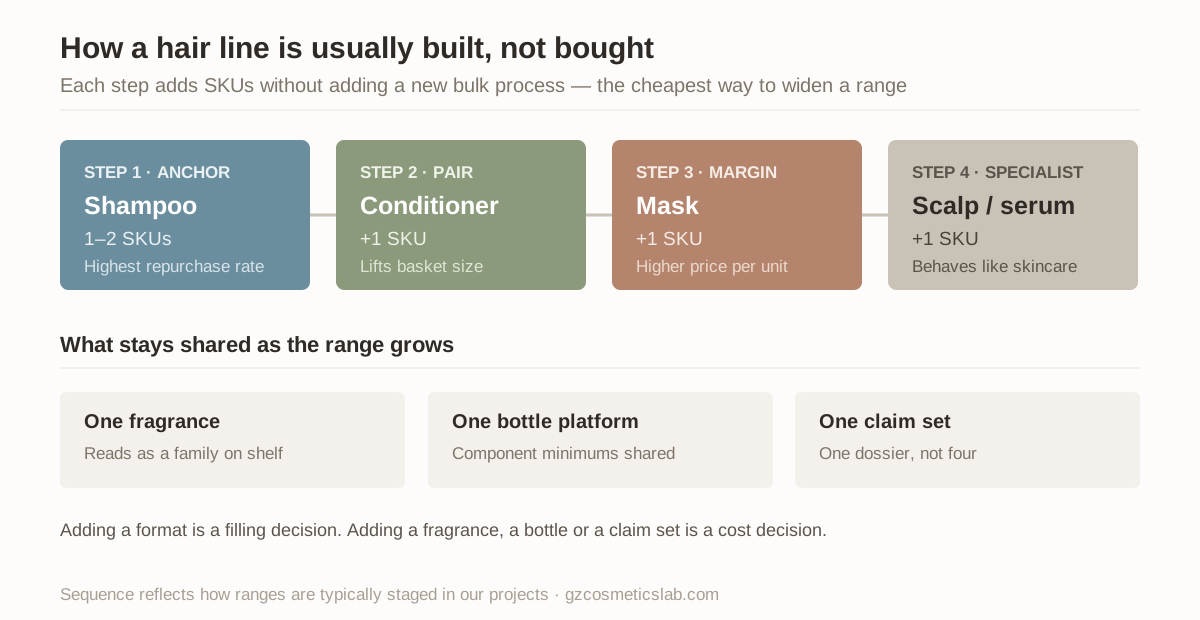
Conditioner rarely sells alone. This page is the second step to the Silky Repair Shampoo, which runs the same keratin and oil logic on an amino acid surfactant base, and the Silk Repair Hair Mask extends it into a weekly treatment where longer contact time allows a heavier deposit than any rinse-off step can achieve.
Humid-climate frizz control
In Southeast Asia humidity is what makes damage visible: a lifted cuticle takes up moisture unevenly, so the fibre swells and frizzes. The cationic deposit and the acidic pH target both work on that specific mechanism rather than on damage in the abstract.
Planning Your Silk Repair Conditioner Project
What to prepare before quotation and sampling, which checks are part of routine manufacturing, and which items are confirmed separately for this product type.
What to include in your brief
- Specify damage history, hair thickness and the matching shampoo used before conditioning.
- Set acceptable wet slip versus next-day coating, with local water conditions and rinse routine.
- Choose pump or tube, dose, silicone preference and animal-keratin or plant-protein route.
Quality and testing plan
Agree wet-comb and dry-feel scoring on representative lengths after the complete wash routine; test dispensing with the selected cream and pack.
Confirm routine release criteria and quote scope separately from any frizz comparison, with the study owner and report agreed.
Market and claims checkpoints
- Support repair wording with the intended surface-feel outcome; verify the final ingredient record before vegan or silicone-free artwork.
Pricing and testing scope depend on the final formula, packaging, quantity and destination market.
Frequently Asked Questions
What is the minimum order quantity and lead time?
Minimum is 3,000 bottles per SKU, produced in 35–45 days once you approve the sample. Custom sample rounds take 2–3 weeks. If you plan to lead with a sachet for trial, tell us early and we will quote the bottle and sachet together as a single commitment.
Why can a conditioner not just use the same base as the shampoo?
Because the two rely on opposite charges. A shampoo cleans with anionic surfactants; a conditioner deposits with cationic agents. Put a meaningful level of both in one system and they neutralise each other, so the cleansing weakens and the conditioning largely disappears. That is why two-in-one products are a genuine formulation compromise rather than a shortcut, and why we quote them as a separate development rather than a blend of two existing bases.
Does keratin actually repair damaged hair?
It repairs the surface, not the structure, and the distinction matters for your claim set. In a conditioner the keratin lands on a fibre that has just been stripped by shampooing, which is when the cuticle is most receptive to it, so it fills surface gaps and hair combs out with less snagging. It does not rebuild the cortex or reverse bond breakage from bleaching. We write this as smoother, stronger-feeling hair with visibly less frizz, which is defensible in every market we ship to, rather than as structural repair.
Can this be made silicone-free?
Yes, and it is a common request for natural-positioned lines. The honest trade-off is that silicone delivers immediate slip and shine very efficiently, so a silicone-free route usually needs a higher plant oil and cationic load to approach the same wet comb-through, which shifts both cost and texture. We sample both so your panel can judge on their own hair rather than on a spec sheet.
Can this be made vegan?
Not with keratin in it, since keratin is animal-derived. If a vegan claim is part of your positioning we substitute a plant protein such as hydrolysed wheat or soy, which performs comparably on comb-through and feel. That is a different base rather than a tweak to this one, so tell us at enquiry stage and we will quote it as such.
How is the conditioning level set, and is it capped by regulation?
The level is set by hair type and target feel, then checked against the rules for the specific ingredient chosen. Behentrimonium methosulfate, our standard route, is not restricted under Annex III of Regulation (EC) No 1223/2009, so the level is a performance and cost decision. If a project uses a chloride-based quat instead, Annex III caps behentrimonium chloride at 5.0% in rinse-off hair products under entry 287 and cetrimonium and steartrimonium chloride at 2.5% under entry 286, and the sum has to respect both. Both entries also require that the ingredient is present for conditioning rather than preservation, since preservative use falls under a separate and much lower limit. We formulate below whichever cap applies and confirm it against your destination market.
Customization
OEM/ODM supported; oil ratio adjustable
Target Markets
Certifications
ISO 22716 & GMPC certified; SGS testing supported upon request
Need a Custom Silk Repair Conditioner Formula?
Tell us your requirements — target actives, texture, packaging, quantity, and target market. Within 24 hours, we will reply with a quotation or the questions needed to prepare one.
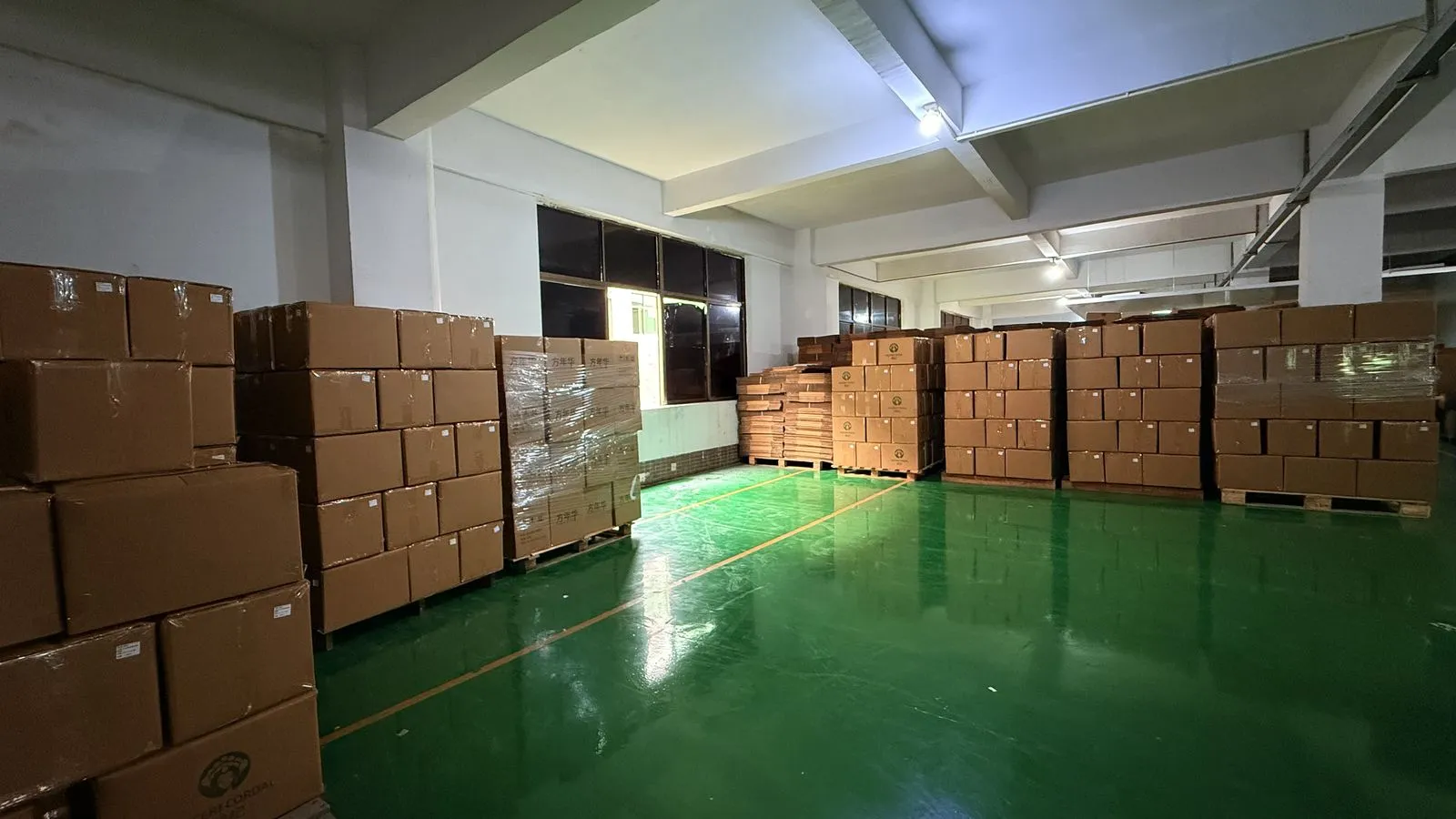
Response within 24 hours · WhatsApp available · Factory visits welcome