
Sunscreen Regulations by Market: 6 Markets Compared (2026)
Sunscreen is the one category in personal care where the same formula changes legal identity as it crosses a border. Sunscreen regulations by market differ not just in permitted ingredients but in what the product legally is. In the United States it is an over-the-counter drug. In the European Union it is a cosmetic. In China it is a special-use cosmetic that cannot be sold until a registration certificate is issued. In Australia most sunscreens are regulated as therapeutic goods, alongside medicines. In South Korea it is a functional cosmetic reviewed product by product. In Japan it sits in one of two tiers depending on the claim you print on the carton.
That single fact defeats the most common assumption in sunscreen sourcing: that an SPF number and a texture reference are enough to scope a project. They are not, because neither tells you whether your filter system is legal where you intend to sell.
What decides whether you can sell is not the SPF value. It is whether the UV filters you picked are approved in your destination market, and which evidence route your claims have to travel. Get those two answers first and the formula work is straightforward. Get them last and you pay for a development cycle twice.
Most comparisons of this kind stop at the EU and the US. This one covers six regulatory frameworks plus ASEAN, because brands rarely launch into only one of them. If your target is tropical Southeast Asia specifically, and your problem is humidity, pilling and white cast, read our tropical sunscreen OEM guide instead — that one covers formulation for the climate. This one covers what makes a formula legal.
Six Markets, Six Legal Identities
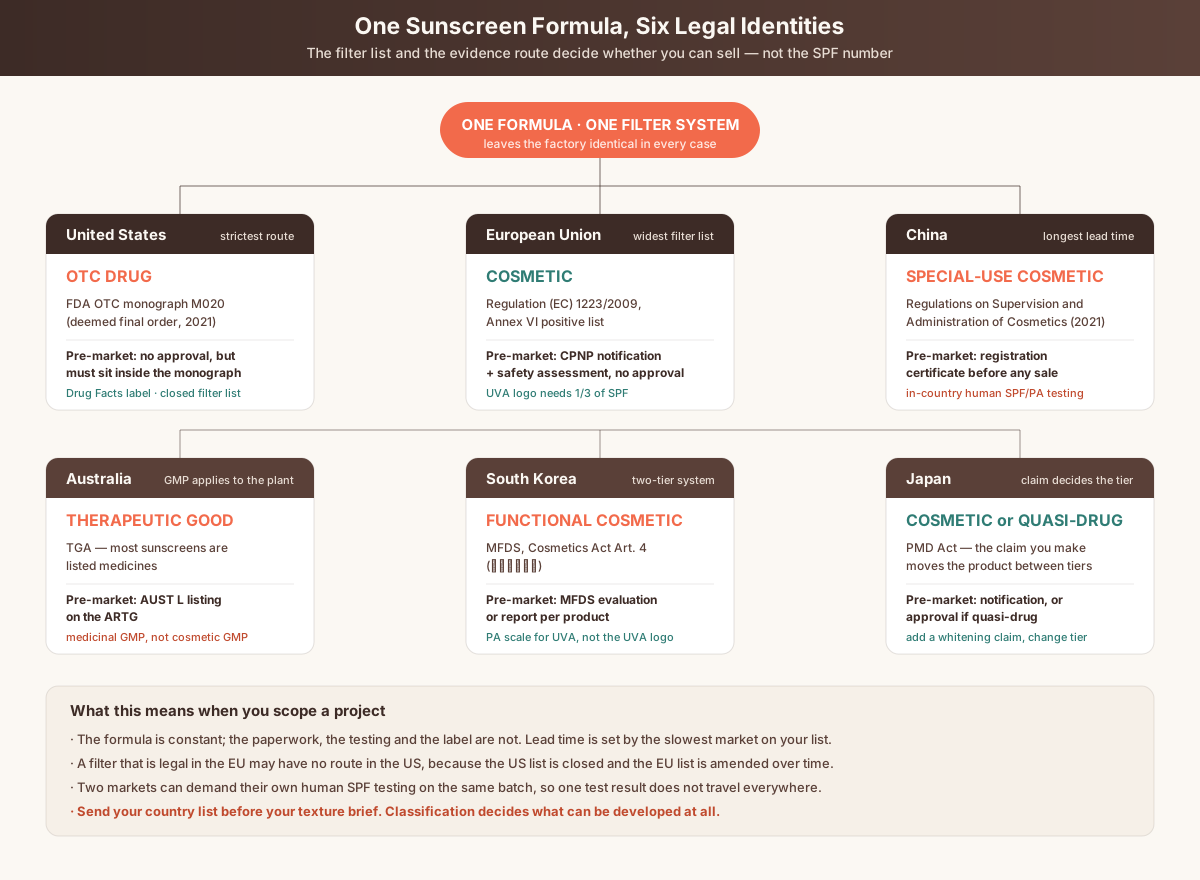
The table below is the single most useful thing to settle before a brief. Everything downstream — filter selection, testing budget, label layout, launch date — follows from which row you are in.
| Market | Legal Class | Filter List | Pre-Market Step | Label Consequence |
|---|---|---|---|---|
| United States | OTC drug | Closed list in the OTC monograph | No approval needed if you stay inside the monograph; MoCRA facility registration and product listing still apply | Drug Facts panel, active ingredients declared with percentages |
| European Union | Cosmetic | Annex VI positive list, roughly 34 authorised entries | CPNP notification, Safety Assessment by a qualified assessor | Cosmetic label; UVA logo where the UVA/UVB ratio requirement is met |
| China | Special-use cosmetic | National permitted list with declared limits | Registration certificate required before sale, including human SPF and PFA testing | Registration number on pack; China-specific artwork if tested values differ |
| Australia | Therapeutic good (most sunscreens) | TGA permitted ingredients | ARTG entry; typically listed with an AUST L number | AUST L number on label; only approved indications may be used |
| South Korea | Functional cosmetic | Permitted filter list, broader than the US | MFDS evaluation or report, per product | Functional cosmetic status; PA grades for UVA, not the EU UVA logo |
| Japan | Cosmetic or quasi-drug, by claim | Permitted list under the PMD Act | Notification, or approval if it falls in the quasi-drug tier | The tier decides what you may print; some claims move the whole product |
| ASEAN | Cosmetic | ASEAN Cosmetic Directive annexes | Notification per country | Cosmetic label, claims must be substantiated on file |
Read the "Pre-Market Step" column as a calendar, not a checklist. A US launch inside the monograph has no approval queue at all, so the formula can go to production as soon as testing supports the claim. A China launch cannot ship until a certificate exists, and that certificate depends on human testing that has to be booked. Those are not comparable timelines even when the formula is identical.
Why the US Route Is the Narrowest
American sunscreen sits under an OTC monograph — the current one is the deemed final order issued in September 2021, which carries forward the framework long known as 21 CFR Part 352. The logic is simple and unforgiving: if your product meets every condition in the monograph, it is generally recognised as safe and effective and needs no pre-market approval. Step outside the monograph on any point, and you no longer have a monograph product. You have a new drug, which is a different and far longer regulatory path.
Two practical consequences follow, and both surprise first-time brands.
First, the US filter list is closed and has not kept pace with newer filters authorised elsewhere. Several filters that are ordinary in EU and Asian formulas have no US monograph status. A formula developed for Europe therefore cannot simply be relabelled for the US — it has to be redeveloped around a different filter system, and redevelopment means new SPF testing, new stability testing, new sampling rounds. Sunscreen also sits outside the ordinary cosmetic route in the US, which we explain alongside MoCRA facility registration and the OTC drug pathway.
Second, the Drug Facts panel is a drug label, not a beauty label. Active ingredients appear with their percentages, in a prescribed format and order. Brands who designed their pack around a minimal aesthetic often discover the panel late, after artwork is signed off.
MoCRA sits on top of this rather than replacing it. Facility registration and product listing obligations apply, and our MoCRA compliance guide covers those in detail. What MoCRA does not do is change the monograph: sunscreen remains a drug in the US.
The EU Route, and What the UVA Logo Costs You
Annex VI to Regulation (EC) No 1223/2009 is a positive list, as amended most recently by Regulation (EU) 2024/996. Only listed UV filters may be used, each with its own maximum concentration and, in some cases, conditions of use. Nothing outside the annex is permissible, however well established it may be in another market.
The EU route is procedurally lighter than China or Australia — notification through the CPNP plus a Safety Assessment, no certificate to wait for. The cost sits in the evidence file rather than in a queue. Two items are worth planning for specifically:
- UVA protection proportional to SPF. The UVA-in-a-circle logo is only available where the UVA protection factor reaches the required proportion of the labelled SPF. That is a formulation constraint, not a graphics decision, and it usually determines your long-wave UVA filter choice.
- The Safety Assessment is a named person's professional judgement. It is not a form. If your filter combination is unusual, expect questions, and expect them to cost time.
China Is a Queue, Not a Checklist
Under the Cosmetic Supervision and Administration Regulation, in force since 1 January 2021, sunscreen is a special-use cosmetic. That single classification is the biggest schedule difference in this whole article: a special-use cosmetic requires a registration certificate before it can be sold, and the dossier includes human efficacy testing — SPF, UVA protection, and water resistance where claimed — conducted by a qualified institution using the methods in the national Safety and Technical Standards.
The trap is subtler than "China takes longer". Chinese guidance is explicit that where the SPF, PA or water-resistance claims on an imported product's original pack do not match results obtained under Chinese test methods, packaging has to be designed specifically for the China market. In other words, your global artwork may not survive the process even if your formula does. Brands who budget for one artwork set and one testing round get caught here.
Practically: if China is in your first-year plan, book the human testing slot early and treat the certificate as the gating item for your launch date. If China is a year-two market, say so at the brief stage so the filter system can be chosen with the national permitted list already in view.
Australia: Where Sunscreen Is a Medicine
Australia has the sharpest classification difference of the six. Most sunscreens there are therapeutic goods regulated by the TGA, not cosmetics. They are generally handled under the listed medicines framework and carry an AUST L number, which means entry in the Australian Register of Therapeutic Goods before supply. Only approved ingredients and approved indications may be used; a product with a non-permitted ingredient or an unapproved indication has to be registered rather than listed, which is a heavier path.
For a brand, the useful way to hold this is: in Australia your marketing claims are constrained by a list of permitted indications, not by your creative team. Our Australia and New Zealand manufacturing guide goes further into the split.
Korea and Japan: Where the Claim Moves the Product
Brands often treat Asia as one destination with one set of rules. Korea and Japan are the clearest illustration of why that fails. Both sit between the EU's notification model and China's registration model, and they get there by different routes.
South Korea runs a two-tier system. General cosmetics are one thing; functional cosmetics are another, and sun protection falls in the functional tier. Under Article 4 of the Cosmetics Act, a responsible seller intending to manufacture or import a functional cosmetic must undergo evaluation by the MFDS, or submit a report on the safety and effectiveness of each product. The phrase worth noticing is each product. A range of four SPF variants is four submissions, not one. Korea also grades UVA on the PA scale rather than with the EU UVA logo, so UVA substantiation commissioned for Europe does not automatically produce the claim you want in Seoul.
Japan splits products between cosmetics and quasi-drugs under the PMD Act, and sunscreen can land in either tier. What moves it is the claim. A sunscreen presented purely as sun protection is generally handled as a cosmetic through notification. Attach a further functional claim of the kind the quasi-drug category covers, and the same bulk now needs pre-market approval, with the dossier and timeline that implies. This is the trap worth naming plainly: in Japan the reformulation risk is often not chemical at all. It is a marketing decision, made in a different department, that reclassifies the product.
For a development schedule the consequence is that Korea and Japan are not one "Asia" line item. Korea adds a per-product review. Japan adds a classification question that has to be settled before copy is written, not after. When a brand tells us Asia is in scope, our first question is which countries, and what the carton will claim.
The Decision Order That Saves a Development Cycle
Most repeated development we see comes from making these decisions in the wrong sequence. The order below is the one that does not double back on itself.
- Name every market for the first 24 months — not just launch markets. Filter selection is the hardest thing to reverse.
- Read off the legal class for each from the table above. Note which markets require a pre-market certificate, since those set your launch date.
- Intersect the filter lists. If one filter system can serve all named markets, you have one formula — an organic-filter tone-up UV cream and a mineral filter system face very different intersection problems, because mineral and organic filters are listed separately in every framework above. If not, decide now whether you are running regional variants or dropping a market.
- Settle the tier question where the claim decides it. If Japan is on the list, decide whether the carton will carry a claim that pushes the product into the quasi-drug tier. If Korea is on the list, count submissions per variant rather than per range. Both change the schedule before a single sample is made.
- Lock claims to the strictest market in the set. Water resistance, broad-spectrum wording and SPF ceilings all differ; writing to the strictest avoids a second artwork set.
- Book testing against that claim set, not against the formula. Test bookings are usually the longest single lead item.
- Then start formulation. By this point the brief constrains itself, and sampling converges quickly.
Intersecting the filter lists is where the money is. A brand naming the US and the EU together will often find that the intersection of the two filter lists is narrow enough to change the texture goal — and it is far cheaper to learn that before sampling than after.
What This Looks Like on Our Side
Two patterns come up often enough in our own projects to be worth stating plainly.
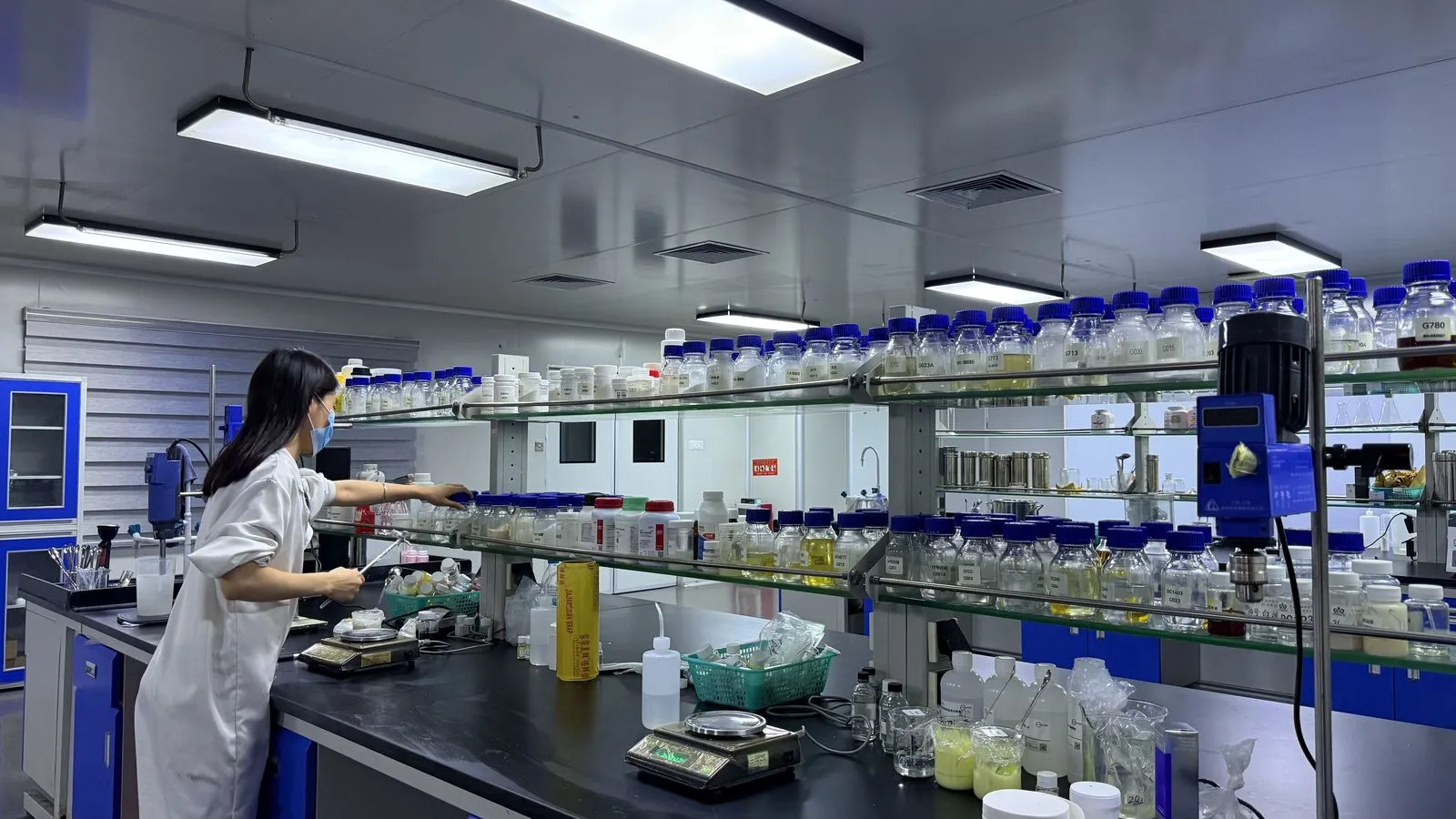
The first is the relabel request. A brand arrives with a formula already selling in one region and asks for the same thing for a new market. When the destination has a different filter list, this is not a labelling job. It is a new development with new testing, and the honest answer at enquiry stage is a redevelopment timeline rather than a relabel quote. Where a brand needs to be in market sooner, starting from an existing platform such as our water-resistant SPF50 base shortens sampling, though the testing and registration clocks still run in full.
The second is claim drift. A formula tests at one SPF, marketing rounds it up, and the label no longer matches the file. Every market in the table above requires claims to be substantiated, and sunscreen claims are the most frequently checked in personal care. We hold labelled values to tested values, and where a claim cannot be supported we say so before artwork is committed rather than after.
On concentrations, we work to the limits of your destination market and confirm the level for each project. We do not publish fixed filter percentages or a house SPF baseline, because the same number carries different legal weight depending on where you sell — a percentage that is an ordinary cosmetic input in one market is a declared drug active in another. Deciding that for you at the website stage would be pre-empting a decision that belongs to the brand owner and its regulatory route.
Frequently Asked Questions
Can one formula cover the US, EU and China?
Sometimes, but only if it is designed that way from the start, using filters that appear on all three permitted lists at compatible levels. Retrofitting a single-market formula to cover three rarely works.
Does a higher SPF cost more to develop?
Higher SPF usually means higher total filter load, which affects both raw material cost and texture difficulty. But the bigger cost driver is the number of distinct markets you are testing and registering for, not the number on the front of the pack.
Why can't you just tell me the filter percentages you use?
Because the answer is only correct once we know your destination market. The same percentage can be a normal cosmetic input in one jurisdiction and a declared drug active in another, and published numbers would also pre-empt confidential project work.
Which market should a first-time brand start with?
Usually the one with no pre-market certificate requirement, so revenue starts while longer registrations run in parallel. That commonly means the EU or an ASEAN market ahead of China or Australia — but it depends on where your demand actually is.
How long does SPF testing take?
The test itself is not the constraint; laboratory scheduling is. SPF and UVA testing queues can run weeks, and they lengthen ahead of seasonal launches. Book against your claim set as early as the claims are settled.
Talk to Us With Your Market List
If you are scoping a sunscreen line, the most useful thing you can tell a manufacturer is not a texture reference. It is the list of countries you intend to sell in, in order. From that we can tell you which filter systems are open to you, whether one formula covers the set, and which registration item will decide your launch date. If sunscreen is one line inside a wider brand launch, our private label cosmetics guide covers how the rest of the range fits around it.
Send the country list, in order
We will tell you which filters are open across the set, whether one formula covers it, and which registration item sets your launch date — including where a market makes sunscreen a drug rather than a cosmetic.
Sunscreen formulations ready to customise
Existing platforms you can adapt under your own brand, formulated to your destination market's filter list.
Ready to Start Your Project?
Tell us your product requirements. Within 24 hours, our technical team will reply with a quotation or the questions needed to prepare one.