
Value (Oily Skin Easy)
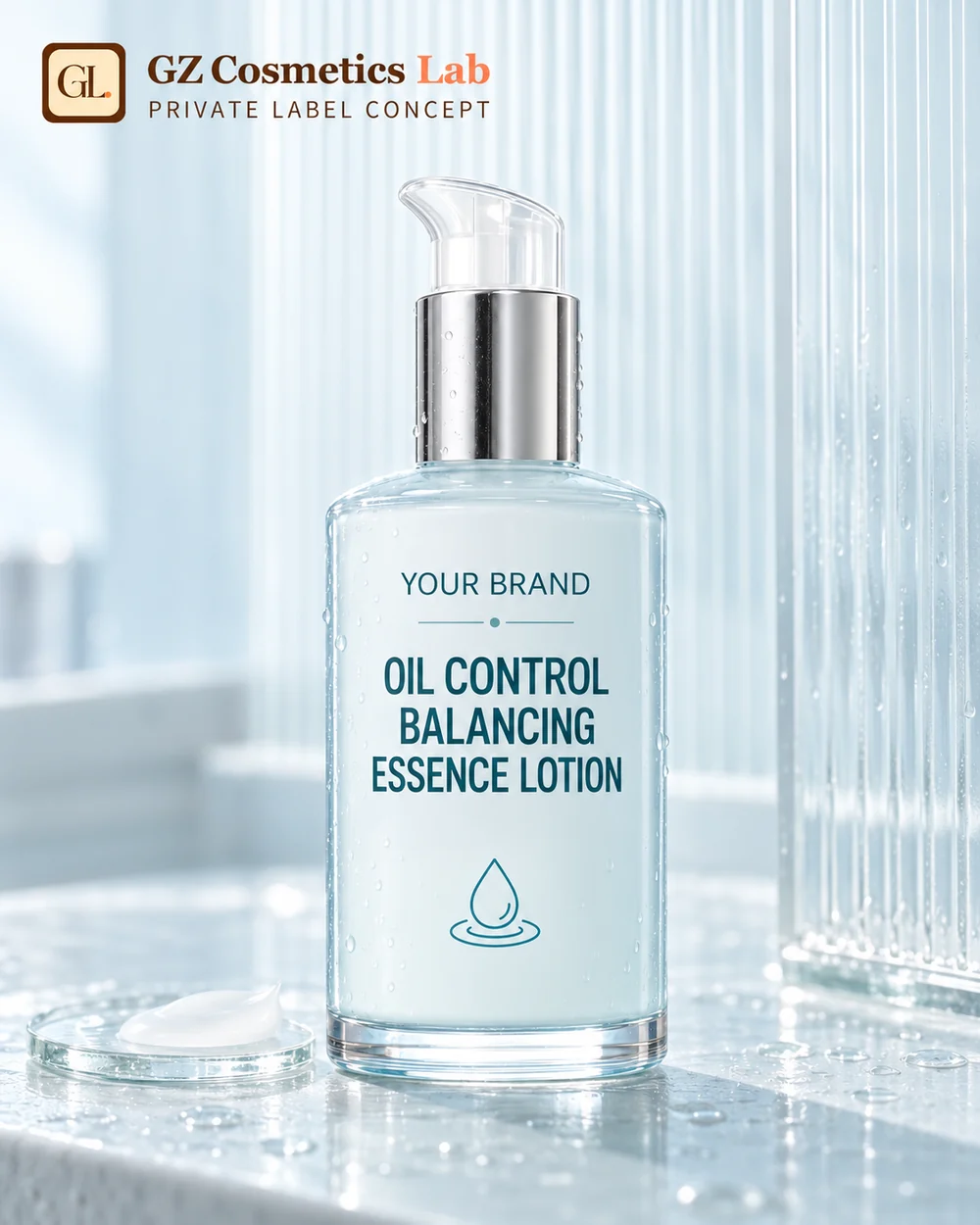
Oil Control Balancing Essence Lotion
An oil-free-feeling essence lotion for oily skin, where the hard part is hydration rather than mattifying. Oily skin is frequently dehydrated at the same time, and a product that only absorbs oil leaves skin tight and often triggers more oil in response. So this is built as a humectant-led formula with shine management on top, not as a drying lotion. The soft-focus powders give an immediate visual result while the niacinamide and zinc PCA do the slower work, and being clear about which does what is worth doing at the brief stage.
Product Overview
| MOQ | 3,000 bottles / SKU |
| Lead Time | 45–55 days |
| Sampling | Sample lead time 2–3 weeks. Sample fee is refundable against the first bulk order. |
| Sizes | 30ml / 50ml |
| Packaging | Serum/lotion pump bottle |
| Mini Pack | No - Not suitable for mini packs |
| Suitable For | Oily skin, combination-oily, sweat- and oil-prone skin |
| Pricing | Unit cost is quoted per project: niacinamide and zinc PCA levels, soft-focus powder grade and order volume are the main levers. |
Quote response within 24 hours · Sample terms confirmed by project
Key Active Ingredients
How the Active Ingredients Work
Levels below are our standard ODM starting point, expressed as a share of the total formula on an as-supplied basis, and adjustable for your target market and price point.
Niacinamide baseline 3% · range 2–5%
The main active, at the hero tier where it does measurable work on the look of shine and pore appearance rather than just occupying a line on the label. High-purity material, since flushing complaints attributed to niacinamide dose are more often traced to nicotinic acid impurity. Korea caps niacinamide at 5% in its functional-cosmetic framework, which sets the range top. Supportable wording is reducing the look of shine and refining the look of pores, and the pore claim has to stay at appearance because pore size itself is structural.
Zinc PCA baseline 1% · range 0.5–1%
The hero tier for zinc PCA, and it earns its place twice over on this product. PCA is a natural moisturising factor component so it holds water, while the zinc contributes to shine management — which means it supports both halves of the brief rather than only the mattifying half. Water-soluble zinc salts are controlled to 1% expressed as zinc in the EU, so the range top is regulatory rather than a supplier preference. Regulatory headroom exists up to around 4.9% based on the Australian assessment, but above 1% you leave the supplier recommended band and we would want irritation data first.
Glycerin and Butylene Glycol hydrating system humectant system, oil-free base
The part that makes this work rather than the part that gets marketed. Oily skin is often dehydrated, and a formula that strips without replacing water produces tightness followed by more oil. Butylene glycol alongside glycerin gives hydration with a lighter, faster-absorbing feel than glycerin alone, which matters because a heavy finish is the fastest way to lose an oily-skin customer. The base is oil-free, so the comfort has to come entirely from humectants and that is where the formulation effort goes.
Green Tea extract (Camellia Sinensis) green tea extract in the water phase
Included for antioxidant support and for the recognition it carries in oil-control ranges. We keep the claim at antioxidant support rather than suggesting it regulates sebum production, since the sebum-reduction evidence for topical green tea is thin and the shine work here is being done by the niacinamide, zinc PCA and powders. Tea polyphenols oxidise, so the extract standard affects colour stability over shelf life.
Soft-focus powders powder load set at sampling
The immediate result the customer sees, and worth being straight about: these work optically and by absorbing surface oil, so the effect is real but cosmetic and it lasts hours rather than days. That is not a weakness as long as the marketing does not imply a permanent change. The load is a texture decision settled by sampling, since too much reads chalky on deeper skin tones — a specific risk worth checking against your market before locking the formula.
Formulation & Customization Options
| Active levels | Niacinamide within 2–5% and zinc PCA within 0.5–1%; both are at the top of their practical bands by default because this is a functional rather than a concept product |
| Powder load | Set at sampling for the mattifying finish; checked on deeper skin tones since a high load can read chalky |
| Adjustable elements | Humectant ratio; green tea standard; optional low-level salicylic acid where your destination market permits it for a clarifying angle |
| Acid option | A BHA version is possible but changes the market picture, since retained salicylic acid faces market-specific caps — we would confirm against your destination list rather than adding it by default |
| Pack | 30ml or 50ml pump bottle; the pump is the right choice here because the powders need a shake-free dispensing route rather than a dropper |
Launch-fit guide
Who This Product Is Built For
Oily and combination-skin ranges
The hydration-first approach is what separates this from the drying lotions that dominate the category, and it is a genuine point of difference to sell rather than a formulation detail. Combination-skin customers in particular buy it because it does not make dry areas worse.
Brands with a facial oil-control routine
The active story is consistent with our facial oil-control range, which makes merchandising a full routine straightforward. The Oil Control Anti-Acne Cleanser and Lightweight Oil Control Moisturizing Gel Cream cover the cleanse and moisturise steps on the same logic.
Hot and humid market channels
Shine control is a year-round daily concern in tropical markets rather than a summer one, which makes this a steadier seller there than in temperate channels. The oil-free base and the light humectant system are both built for that climate rather than adapted to it.
Planning Your Oil Control Balancing Essence Lotion Project
What to prepare before quotation and sampling, which checks are part of routine manufacturing, and which items are confirmed separately for this product type.
What to include in your brief
- Provide the sunscreen and foundation used over the lotion, and define shine, comfort and visible powder-residue comparisons across representative skin tones.
- Describe application habits and dispensing preferences, including whether users expect consistent delivery without shaking and how much dry-down they tolerate.
Quality and testing plan
Agree methods for powder settling, pump consistency, layering and shine assessment, with lighting, wear conditions and acceptance criteria fixed before sample approval.
Confirm the responsible party, report and quotation coverage for preservation, stability and any wear study; record colour-drift and chalkiness observations separately.
Market and claims checkpoints
- Support matte-duration and oil-free wording with the relevant finished-formula records and evaluation conditions.
- Keep optical pore-appearance results distinct from claims about sebum output or treatment of breakouts.
Pricing and testing scope depend on the final formula, packaging, quantity and destination market.
Frequently Asked Questions
Why is there no oil at all, and will it still feel comfortable?
The base is oil-free because that is what the oily-skin customer checks first, and the comfort comes from the humectant system instead. This is genuinely harder to formulate than adding a light oil, since glycerin and butylene glycol have to deliver the after-feel on their own. It is also the reason we spend sampling effort on the humectant ratio rather than on the powder load, which is the easier variable.
Can we claim it shrinks or minimises pores?
No. Pore size is structural and no topical product changes it, so we write refining the look of pores and reducing the look of shine. The distinction matters commercially as well as legally, because pore-shrinking claims generate returns from customers who measured their pores and found no change. Appearance-level claims describe what the product actually delivers.
How long does the mattifying effect last?
Hours, not days, and it comes from the soft-focus powders working optically and by absorbing surface oil. The niacinamide and zinc PCA work on a slower timescale of weeks on the look of shine. Being clear about the two layers in your marketing is worth doing, because customers who expect all-day matte from a lotion will be disappointed regardless of the formula.
Can you add salicylic acid?
Yes, but it changes the regulatory picture rather than just the formula, so it is a decision to make with your destination list in front of us. A retained product faces market-specific caps and Korea restricts general cosmetics from making exfoliating or oil-control representations for salicylic acid at all. We would confirm the permitted level per market before sampling rather than add it by default.
Will the powders look chalky on deeper skin tones?
At a high load they can, and it is the failure mode worth testing before you commit. We set the powder load at sampling and would specifically ask you to check it on your target customer rather than approving from a swatch on paper. If your market skews deeper, we would reduce the load and lean harder on the niacinamide and zinc PCA for the shine work.
What is the MOQ and lead time?
MOQ is 3,000 bottles per SKU and lead time is 45–55 days after sample approval. Sampling runs 2–3 weeks. Manufacturing is ISO 22716 and GMPC compliant, with SGS testing on request.
Customization
OEM/ODM supported; oil-control actives (Zinc PCA, niacinamide) and hydration system adjustable
Target Markets
Certifications
ISO 22716 & GMPC certified; SGS testing supported upon request
Need a Custom Oil Control Balancing Essence Lotion Formula?
Tell us your requirements — target actives, texture, packaging, quantity, and target market. Within 24 hours, we will reply with a quotation or the questions needed to prepare one.
Response within 24 hours · WhatsApp available · Factory visits welcome