Sheet Mask Manufacturer: Private Label Sourcing Guide
Sheet masks are the entry point of Southeast Asian skincare - affordable, giftable, endlessly shareable on social media, and the single largest skincare category by unit volume on Shopee and Lazada. If you are looking for a sheet mask manufacturer with low MOQ, this is one of the smartest categories to launch a brand with: development is fast, unit economics are friendly, and consumers buy in multiples. This guide covers everything about face mask OEM for Southeast Asia - from mask materials and serum formulation to low-MOQ production, packaging, per-country demand, and what makes a mask go viral in the region.
The sheet mask category in Southeast Asia is enormous and still growing. Masks are bought by the box, gifted in bulk, and treated as an affordable self-care ritual across Indonesia, Vietnam, Thailand, the Philippines, and Malaysia. For a new brand, sheet masks offer a rare combination: low per-unit cost, high perceived value, quick formulation, and a format that performs exceptionally well in short-form video. Get the material, serum, and packaging right and you have a repeatable, high-margin hero product.
The category owes much of its dominance to K-beauty and J-beauty, which normalized masking as a frequent ritual rather than an occasional treat. Southeast Asian consumers adopted the habit enthusiastically, and local demand quickly developed its own character - heavy on brightening and hydration, tuned for humid climates, and driven almost entirely by social discovery. Today masks function as both a standalone product and a powerful customer-acquisition tool: a low-priced, high-satisfaction entry point that introduces shoppers to a brand and opens the door to serums, creams, and sunscreens later.
Why Sheet Masks Are a Smart First Product
Sheet masks lower almost every barrier that stops new brands from launching. Understanding why helps you build a launch strategy around their strengths.
Low MOQ and Fast Development
Sheet masks can typically be produced at lower minimum order quantities than jarred creams or complex emulsions, because the serum and the substrate are relatively straightforward to manufacture and fill. A new brand can launch with a modest first order - 5,000 sheets per variant to validate demand - and scale up as sales prove out. Development timelines are also shorter than for advanced creams or sunscreens.
High Perceived Value, Friendly Margins
A single sheet mask feels like a complete skincare experience to the consumer, yet the unit cost is low. Sold in boxes or multipacks, masks deliver healthy margins while remaining affordable - exactly the sweet spot for price-conscious ASEAN shoppers who still want to feel they are treating themselves.
Built for Social Media
Sheet masks are inherently visual and shareable. The "masking selfie," before/after glow shots, and ASMR unboxing content perform extremely well on TikTok and Instagram. This makes masks cheap to market through organic and micro-influencer content rather than expensive paid ads.
Multi-Buy and Gifting Behavior
Consumers rarely buy one mask. They buy boxes of 5, 10, or more, and masks are a popular gift and add-on purchase. This drives higher basket sizes and repeat orders than most single-unit skincare products.
A Natural Gateway to a Full Range
Because masks are cheap to try and satisfying to use, they are the ideal first purchase in a customer relationship. A shopper who loves your brightening mask is primed to buy your brightening serum, day cream, or sunscreen next. Smart brands treat the mask as the top of a product funnel - low-risk acquisition first, higher-value cross-sell later. This is why so many successful ASEAN skincare brands either launched with masks or keep them permanently as a customer-acquisition anchor even after expanding into premium categories.
Sheet Mask Materials: Choosing the Right Substrate
The "sheet" itself dramatically affects feel, fit, and perceived premium-ness. Material choice is one of your key differentiation levers.
| Material | Feel & Fit | Serum Hold | Positioning | Notes |
|---|---|---|---|---|
| Cotton / non-woven | Basic, familiar | Moderate | Mass, entry-level | Cheapest, widely used |
| Microfiber | Soft, good adhesion | High | Masstige | Better serum delivery |
| Bio-cellulose | Second-skin, cooling | Very high | Premium | Excellent fit, higher cost |
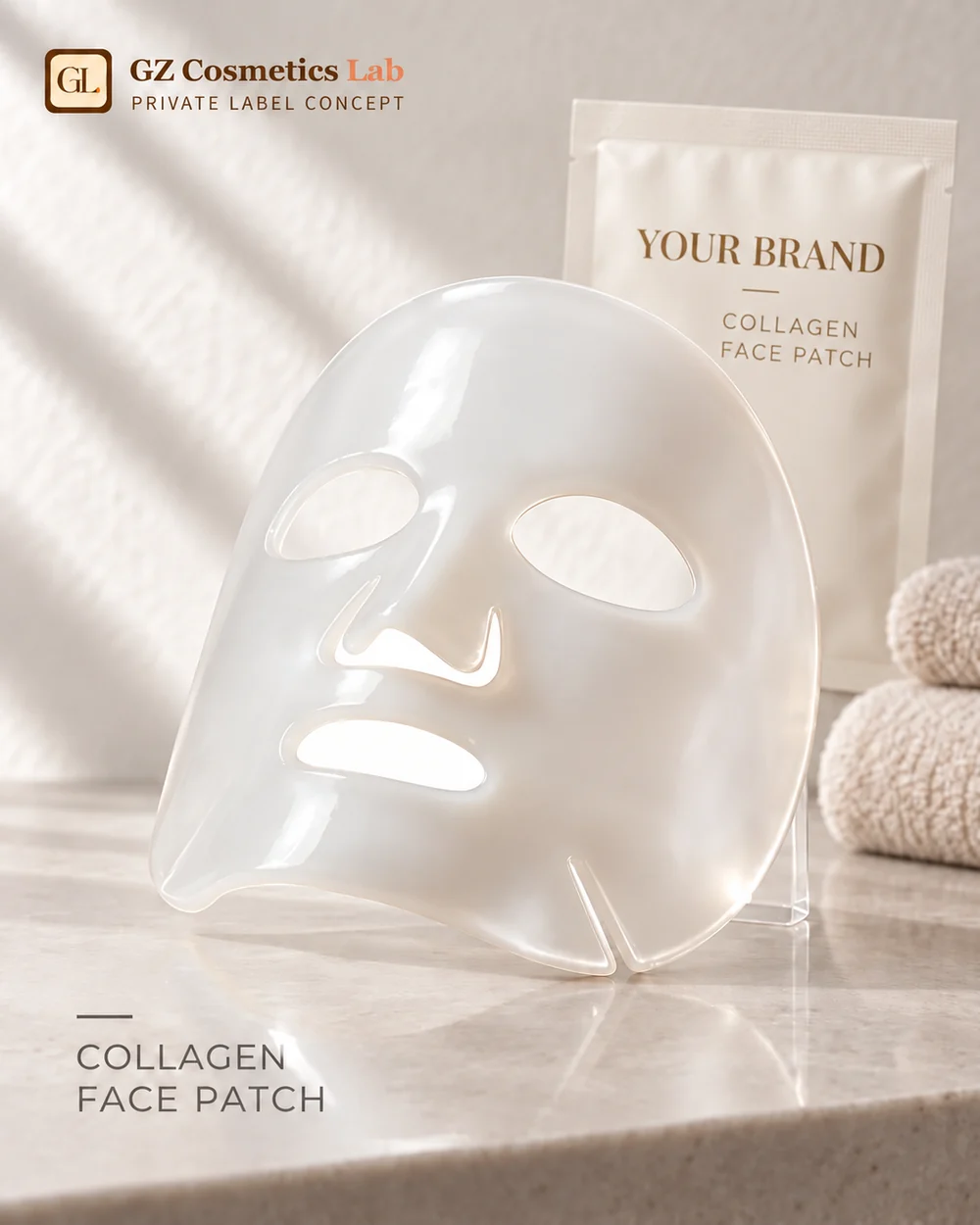
| Hydrogel | Gel-like, cooling, snug | Very high | Premium | Great for actives, splits into two pieces |
| Tencel / plant-based | Soft, eco-friendly | High | Clean/eco | Sustainability story |
Matching Material to Brand Positioning
A mass-market brightening mask sold in 10-packs works well on cotton or microfiber. A premium anti-aging or soothing mask justifies bio-cellulose or hydrogel, which fit like a second skin and deliver serum more effectively - commanding a higher price point. Eco-conscious brands can differentiate with Tencel or plant-based biodegradable substrates, which resonate with younger, sustainability-minded consumers.
The substrate is also one of the easiest ways to justify a premium price without changing the serum. Two masks can carry the same brightening formula, but a bio-cellulose or hydrogel version feels dramatically more luxurious on the face and photographs better for content. If your strategy is to enter at mass volume and later launch a premium tier, planning your substrate ladder from the start - cotton for the entry line, bio-cellulose or hydrogel for the hero line - gives you a clear product architecture and pricing story.
Serum Formulation: The Heart of the Mask
The substrate delivers the serum, but the serum is what actually works. This is where your formulation partner and ingredient story matter most.
Popular Actives for ASEAN Sheet Masks
Southeast Asian consumers gravitate toward specific benefits driven by climate and beauty culture:
- Brightening - niacinamide, vitamin C derivatives, alpha arbutin, tranexamic acid (the region's number-one demand)
- Hydration - hyaluronic acid, glycerin, panthenol, beta-glucan (essential for AC-dried skin)
- Soothing - centella asiatica (cica), aloe, green tea, allantoin (calms sun-stressed skin)
- Anti-aging - peptides, adenosine, collagen (growing premium segment)
- Oil control - niacinamide, tea tree, zinc (for humid-climate oily skin)
For deeper guidance on brightening formulation, see our guide on whitening and brightening products for OEM, and for climate-appropriate ingredients see skincare ingredients for tropical climate.
How advanced delivery Improves Sheet Mask Performance
A common weakness of sheet masks is that actives sit on the skin surface without penetrating effectively during the short wear time. Our proprietary supramolecular transdermal delivery technology, backed by multiple granted patents, improves how actives are carried into the skin - meaning a mask can deliver more visible results in the same 15-20 minutes of wear. This is a genuine differentiator versus generic private-label masks. Learn more on our technology page.
Sheet Mask MOQ: How the Floor Is Set
Sheet masks carry lower minimums than jarred creams or complex emulsions, but the floor is set by the serum batch size and the sachet supplier rather than by the mask itself.
MOQ and Cost Tiers
Our sheet mask minimum is 5,000–10,000 sheets per SKU. Where you land in that range depends on substrate, serum complexity, and packaging - request a quote for a precise offer.
| Tier | Typical MOQ | Formula | Packaging | Best For |
|---|---|---|---|---|
| Entry / stock | 5,000 sheets per variant | Proven stock serum | Stock sachet + custom label | First launch, market validation |
| Semi-custom | 5,000–10,000 sheets per variant | Adjusted stock serum | Stock sachet, custom print | Scaling brands with a proven concept |
| Full custom | 10,000 sheets and up per variant | Bespoke formula | Fully custom sachet | Established brands, hero products |
What Drives MOQ
- Serum batch size - the formula batch sets a floor on how many masks you can fill
- Substrate and sachet sourcing - stock materials keep MOQ low; custom materials raise it
- Packaging customization - stock sachets vs fully custom-printed packaging
- Formula type - stock formulas allow lower MOQ than fully custom development
Strategies to Keep MOQ Low
New brands can minimize their first-order risk by starting with a proven stock or semi-custom serum, using stock sachet formats with custom-printed labels rather than fully bespoke packaging, and launching one or two focused mask variants rather than a wide range. This approach lets you validate demand, gather reviews, and reinvest into larger, cheaper reorders - the same cash-flow discipline that protects any new brand. For more on the private label route generally, see our guide on private label cosmetics in Malaysia and Singapore.
Sheet Mask Demand by Country
Although brightening and hydration lead region-wide, each market has its own character. Tuning your first product to the target country's dominant concern accelerates reviews and repeat purchase.
| Market | Dominant Demand | Notes |
|---|---|---|
| Indonesia | Brightening, oil control | Huge volume, price-sensitive; Halal essential |
| Vietnam | Brightening, hydration | Fast-growing, strong K-beauty influence, TikTok Shop-driven |
| Thailand | Brightening, anti-aging | Mature market, open to premium substrates |
| Malaysia | Brightening, soothing | Halal important; masstige positioning works well |
| Philippines | Brightening, hydration | Value multipacks, heavy live-selling culture |
For a market-entry overview across the region, see how to start a skincare brand in Southeast Asia.
Packaging and Design: From Sachet to Shelf
Sheet mask packaging must protect the product, communicate benefits instantly, and look good in a thumbnail-sized marketplace listing.
Individual Sachet Options
- Standard foil sachet - protects serum from light and air; most common and cost-effective
- Matte or soft-touch sachets - premium feel at modest added cost
- Window or clear-panel sachets - show the mask material; used for premium positioning
- Fully printed custom sachets - maximum branding, higher MOQ
Outer Packaging
Masks are usually sold in boxes (5, 10, or more) or as multipack bundles. Strong outer packaging drives the gifting and multi-buy behavior that boosts basket size. Design must be legible at small sizes, since most discovery happens on mobile marketplace thumbnails and short video.
Labeling Compliance
Each ASEAN market has its own labeling requirements - language, ingredient declaration (INCI), and mandatory markings. Getting labeling right the first time avoids costly reprints and customs issues. A capable OEM partner builds compliant labels into the packaging design stage.
What Makes a Sheet Mask Go Viral in Southeast Asia
Sheet masks live or die on social media. Beyond a good product, virality comes from specific, repeatable elements.
- Instant visual payoff - glow, cooling, or a satisfying "second-skin" fit that films well
- A clear single benefit - "brightening in 15 minutes" beats a vague multi-claim
- Giftable, collectible packaging - encourages multi-buy and sharing
- Affordable multipacks - low price point removes purchase hesitation
- Micro-influencer seeding - masking routine videos generate authentic UGC cheaply
- Live-selling friendly - hosts can demo application and sell boxes in real time
The Shopee/Lazada Bestseller Pattern
The top-selling masks on regional marketplaces share a formula: a proven benefit (usually brightening or hydration), an attractive multipack price, strong review counts, and heavy short-video promotion. New brands should study the current bestsellers in their target country, identify a gap or angle (a better substrate, a cleaner ingredient story, an under-served concern), and launch a focused product designed to win reviews fast.
Reviews are the flywheel. Marketplace algorithms on Shopee and Lazada reward products with high sales velocity and strong ratings by ranking them higher in search and category pages, which drives more sales, which generates more reviews. Breaking into this loop is the hardest part of a launch. Winning brands seed generously at launch - samples to micro-influencers, launch-week discounts, and bundle offers - specifically to accumulate the first few hundred genuine reviews quickly. Once the flywheel is spinning, organic ranking does much of the selling for you.
Common Mistakes New Mask Brands Make
Most failed mask launches trip over the same avoidable errors. Knowing them in advance protects your first order.
- Chasing too many variants at once - spreading a small budget across five SKUs instead of winning with one hero mask first
- Ignoring serum delivery - a nice substrate with actives that never penetrate produces weak results and poor reviews
- Poor fit and serum load - a mask that slides off or dries out mid-wear kills the experience; always evaluate fit at the sampling stage
- Skipping registration - selling before per-country notification risks takedowns and customs seizures
- Over-designing packaging - fully custom sachets raise MOQ and cost before demand is proven; start with stock sachets and custom labels
- Underfunding launch reviews - without seeding for early reviews, even a great mask stalls in marketplace rankings
From Concept to Shelf: The Sheet Mask OEM Process
- Brief and positioning - target market, benefit, substrate, price point, MOQ
- Serum formulation - select or customize the active serum
- Substrate selection - cotton, microfiber, bio-cellulose, hydrogel, or eco material
- Sampling - evaluate fit, serum load, feel, and results (typically 2-3 weeks)
- Testing - stability, safety, and microbiological testing
- Packaging and labeling - compliant sachets and outer boxes
- Registration - per-country notification (BPOM, TFDA, NPRA, DAV, FDA PH)
- Production and QC - fill and pack under ISO 22716 / GMPC standards (bulk production typically 45-55 days after sample, packaging, and artwork approval)
With stock or semi-custom formulas, the development route is often simpler than for a fully custom emulsion, but the calendar still has separate sampling, testing, production, registration, and shipping stages. Bulk production normally takes 45-55 days after the sample, packaging, and artwork are approved; registration and freight are scheduled separately for the destination market.
Unit Economics and Pricing
Sheet masks earn their reputation as a smart first product largely on the strength of their unit economics. Because the serum and substrate are relatively inexpensive and the format is sold in multiples, masks can carry healthy margins while still hitting the low price points ASEAN shoppers expect. Understanding how the cost stack works helps you price for both profit and marketplace competitiveness.
A mask's landed cost is built from a few components: the serum formula, the substrate, the sachet, any outer packaging, filling and QC, testing and registration amortized across the run, and shipping. Stock serums and stock sachets keep the per-unit cost lowest, which is why entry-tier launches use them; bio-cellulose or hydrogel substrates and fully custom sachets add cost but justify a higher retail price. The lever that most affects margin is order volume - larger runs spread fixed costs (formulation, testing, plate/print setup) across more units and lower the per-mask price, which is why reorders are typically cheaper than a first order.
On the revenue side, masks are rarely sold as singles. Selling in boxes of 5 or 10, or as bundles, raises average order value and improves margin per transaction while still feeling affordable to the shopper. A common structure is an accessible per-mask price that looks competitive in a marketplace listing, combined with multipack pricing that nudges buyers toward a larger basket. Planning your pricing ladder - single, 5-pack, 10-pack, and a premium substrate tier - from the start gives you room to run promotions and bundles without eroding your core margin.
Reordering and Scaling Your Mask Line
The real payoff of launching with sheet masks comes after the first order, when a validated product turns into a repeatable, increasingly profitable line. Because masks generate fast repeat purchase and strong review volume, they build the sales data and customer base that make scaling lower-risk than starting from scratch each time.
The disciplined path looks like this: launch one or two focused variants at a modest MOQ, concentrate marketing on winning early reviews, and watch which benefit and format sell fastest. Once a variant proves out, reorder in larger volume - which lowers per-unit cost and widens margin - and reinvest the improved economics into content and inventory. Only after a hero mask is established should you expand into adjacent variants (a second benefit, a premium substrate tier) or cross-sell into higher-value categories like serums and creams that the mask audience is already primed to buy.
This is where the sheet mask's role as a customer-acquisition anchor pays off. The shopper who discovered your brand through an affordable brightening mask becomes the buyer of your brightening serum, day cream, or sunscreen. Managed well, the mask line funds and feeds the rest of the range, and the reorder cycle - cheaper units, more reviews, wider distribution - compounds over time into a durable brand rather than a one-off product.
Why Choose Us as Your Sheet Mask Manufacturer
For brands launching sheet masks in Southeast Asia, the right partner combines speed, low MOQ, and genuine formulation depth:
- Accessible MOQ - launch from 5,000 sheets per variant, well below the minimums that jarred creams and emulsions carry
- Full range of substrates - cotton, microfiber, bio-cellulose, hydrogel, and eco options
- Regional formulation expertise - brightening, hydration, and soothing serums tuned for tropical skin
- advanced delivery technology for masks that outperform generic private-label products
- Regulatory support across BPOM, TFDA, NPRA, DAV, and FDA PH
- Certifications - ISO 22716 / GMPC, plus Halal capability for Indonesia and Malaysia
As a GMPC-certified Guangzhou-based OEM/ODM manufacturer operating since 2010, we help brands develop private label sheet masks from serum to sachet, with the low MOQs and fast timelines new brands need.
Ready to launch your sheet mask line?
Send us your target market and volume. Within 24 hours, we'll reply with a quotation or the questions needed to prepare one.
Ready to Launch Your Sheet Mask Line?
Sheet masks are one of the fastest, lowest-risk ways to launch a skincare brand in Southeast Asia - and one of the most rewarding, thanks to high repeat purchase and strong social virality. The key is nailing the substrate, the serum, and the packaging while keeping your first order lean.
Request a quote or contact our team to discuss your sheet mask project. Explore related guides on whitening and brightening products for OEM and how to start a skincare brand in Southeast Asia.
Frequently Asked Questions
What is the minimum order quantity for private label sheet masks?
Sheet masks generally allow lower MOQs than jarred creams or complex emulsions. Using a stock or semi-custom serum and stock sachet formats, new brands can start at 5,000 sheets per variant, so you can launch and test without an oversized first order.
Which sheet mask material is best?
It depends on positioning. Cotton and microfiber suit affordable mass masks; bio-cellulose and hydrogel deliver a premium second-skin feel and better serum delivery at a higher price point; Tencel and plant-based substrates support an eco story.
Which serum benefits sell best in Southeast Asia?
Brightening leads the region by a wide margin, followed by hydration and soothing. Anti-aging is a growing premium segment. Matching the benefit to your target country's dominant concern is key.
How fast can I launch a sheet mask line?
With stock or semi-custom formulas, sheet masks can simplify the formulation stage. A custom sample round typically takes 2-3 weeks, while bulk production normally takes 45-55 days after the sample, packaging, and artwork are approved. Registration, freight, and customs are planned separately for the destination market.
Do sheet masks need registration in ASEAN markets?
Yes. Like all cosmetics, sheet masks require per-country notification or registration (BPOM, TFDA, NPRA, DAV, FDA PH) and compliant labeling. We support this as part of the development process.
Can you make Halal-certified sheet masks?
Yes. For Indonesia and Malaysia, we can formulate Halal-compliant masks and support certification, which is important for reaching the majority of consumers in those markets.
Related Products
Explore ready-to-customize formulations you can private label under your own brand.
Ready to Start Your Project?
Tell us your product requirements. Within 24 hours, our technical team will reply with a quotation or the questions needed to prepare one.