
SFDA Cosmetics Registration in Saudi Arabia: GHAD Route

GZ Cosmetics Lab, Guangzhou · ISO 22716 & GMPC certified.
Saudi Arabia is the Gulf's largest cosmetics market, and for a brand sourcing from a Chinese factory it is often the first Gulf country on the plan. But the question that stalls most launches is not "can my factory make it" — it is "how does the finished product actually get onto a Saudi shelf legally." That answer runs through the Saudi Food and Drug Authority (SFDA) and a single online system called GHAD. This guide walks through the SFDA notification route end to end, from the perspective of a manufacturer that ships into the Kingdom, so you know which documents you have to produce, who carries which responsibility, and where the process quietly trips people up.
One thing to settle up front, because it changes how you should read everything below: SFDA cosmetic notification is not product approval. The Authority's own guidance says so in plain terms. Getting that distinction right is the difference between a compliance file that survives a market check and one that collapses the first time an inspector asks a question.
Notification, Not Approval: What SFDA Listing Actually Means
Under the Cosmetic Products Law issued by Royal Decree No. M/49 (dated 18/06/1436 AH) and its executive regulations, a cosmetic product may not be imported or traded in the Kingdom unless it is listed in the Unified Electronic System, known as GHAD. That is the legal hook. Article 6 of the law makes listing a precondition for market entry, and the SFDA runs the notification system to build a comprehensive database of every cosmetic sold in the country, along with the importers, manufacturers and local producers behind them.
Here is the part brands miss. When you submit a notification, the SFDA processes it directly once the request is filed. There is no pre-market scientific review of your formula the way a drug dossier is assessed. The Authority is explicit that notification "does not serve as proof that the product is a cosmetic, has been evaluated, studied, analyzed, or approved by the Authority." The marketing notification you download at the end exists solely to facilitate commercial transactions in the Kingdom. It is not a safety certificate, and the SFDA prohibits using it for marketing, advertising or promotional purposes.
That design has a direct commercial consequence. Because the SFDA is not checking your formula on the way in, the entire compliance burden sits with the notifier after listing. The Authority verifies safety through post-market measures instead: checking product data after it is on the market, sampling, and lab testing. If a product is found in violation, the legal action lands on the notifier. So a fast, almost automatic front door comes paired with real back-end liability, and the smart move is to build the compliance file as if it will be audited, because that is exactly the scenario the system is designed around.
Who Can Notify: The Notifier and Why It Is Not Your Factory
The single biggest structural point for an overseas manufacturer: you cannot notify your own products into GHAD from China. The notifier has to be an establishment inside Saudi Arabia. To even open a GHAD account, the Authority requires a Saudi commercial registration that carries a cosmetics-related economic activity under the ISIC4 classification, the right domain and activity selected on the application, a Ministry of Investment license for foreign or mixed companies, and a notarized authorization from the Chamber of Commerce for the person who will submit and follow up on requests.
In practice this means your Saudi importer, distributor or a dedicated regulatory agent — often the same partner running your private label programme — becomes the notifier and the legal responsible party inside the Kingdom. They hold the account, they file the notification, and they carry the obligations the SFDA attaches to it. For a Chinese factory this reframes the commercial relationship: your buyer is not just placing an order, they are taking on a regulatory role, and the quality of your documentation directly determines whether they can do that role cleanly. A manufacturer that hands over a complete, well-structured document pack makes itself far easier to work with than one the importer has to chase for basics.
This is also where the manufacturer authorization letter comes in, and the SFDA is precise about it. The notifier needs a notarized authorization letter from the manufacturer, or a contract manufacturing agreement between the local manufacturer and the producing establishment. The Authority spells out what a valid marketing authorization letter must contain: the name, address and commercial registration number of the delegated Saudi establishment; the same three details for the authorizing manufacturer; the document printed on the manufacturer's official letterhead and stamped; the name and signature of the responsible person at the manufacturer; and notarization by the relevant authorities. A letter missing any of these gets bounced, and since it has to travel from China with notarization, a rejection can cost weeks. We prepare this letter to the SFDA's five-point structure so the notifier is not sending it back for corrections.
Not sure which route fits your product?
Send us your brief and our formulators will tell you what is realistic on formula, MOQ, and timeline before you commit to anything.
Getting Into GHAD: The Account Is a Separate Problem From the Product
Brands plan the notification and forget the login. Before any cosmetic record can be created, someone has to hold a commercial account inside GHAD, the SFDA unified e-services platform, and that account is tied to a Saudi commercial registration rather than to a product or a brand. The SFDA published account-creation guide, in Arabic, sets out three separate procedures, and knowing which one applies to you saves a fortnight of confusion.
The Three Procedures, and Which One You Need
| Procedure | What it does | When you use it |
|---|---|---|
| Create a new user | Register an individual login at the GHAD portal, activate it from the confirmation email, then complete the personal profile | Always first. This is a person, not a company |
| Create a new commercial account | Log in, choose the create-new-account service, and submit the request with the commercial registration details | When the Saudi entity has no GHAD account yet |
| Request access to an existing account | Query the account using the account number issued by the authority, attach a letter of authorisation, and submit | When the entity already has an account and you need to be added to it |
Two details in that third row matter commercially. You cannot find an existing account by company name, only by the account number the authority issued, so somebody on the Saudi side has to give it to you. And access requires an attached letter of authorisation, which is a document your notifier has to sign, not something a factory can generate. The guide also notes that once access is granted, the account exposes the licences, products and marketing authorisations already registered in the legacy systems, which is why an established importer will treat account access as sensitive rather than administrative.
Why Searches for an "Agency Registration Certificate or MOC" Confuse Two Authorities
A recurring question is whether the SFDA issues an agency registration certificate, sometimes written as MOC. The framing mixes up two separate authorities, and separating them is the useful part.
- The SFDA regulates the product. Notification, the product file, GSO conformity, labelling, listing validity. That is what GHAD handles.
- Commercial standing sits elsewhere. A GHAD commercial account is built on a Saudi commercial registration, and commercial registration and commercial agency arrangements are the Ministry of Commerce domain. The SFDA own portal lists the Ministry of Commerce and the Saudi Business Center among its partner entities, which is a fair map of the division of labour.
The practical consequence: a product notification does not establish your right to trade, and a commercial registration does not make your product notifiable. You need both, obtained from different bodies, usually in that order, since the account precedes the notification. Because the exact certificate names, issuing body and document set change with the arrangement you have with your Saudi partner, whether that is a distributor, a commercial agent or your own subsidiary, confirm the specific documents with the Ministry of Commerce or the Saudi Business Center rather than assuming the SFDA issues them. We are deliberately not naming a document we cannot verify from a primary source.
What This Means If You Are the Factory
We are a Guangzhou manufacturer, and the account structure above is one your Saudi side owns, not one we can hold for you. What we can do is supply everything that goes inside the notification once the account exists: the formula and ingredient documentation, GSO-referenced specifications, batch and stability records, and the manufacturing statements your notifier attaches. If you want that document set prepared before your notifier asks, tell us the target market when you request a quote and we will scope it alongside pricing. For the neighbouring ASEAN pattern, where a local responsible party is also mandatory, see our ASEAN Cosmetic Directive guide.
The GSO 1943 Backbone and Where a China Factory Must Comply
The technical rules a Saudi notification is checked against are not Saudi-only. They are the Gulf standard GSO 1943, "Safety Requirements of Cosmetics and Personal Care Products," referenced by the SFDA as SFDA.CO/GSO 1943 and sold through the Authority's online standards store. If you already understand this regulation from a broader Gulf sourcing view — we cover the market-facing side in our guide to working with a cosmetics manufacturer for the Middle East — the Saudi notification is where its requirements get enforced product by product.
Two lists inside that framework do the heavy lifting at the formulation bench. The SFDA publishes a list of substances prohibited and restricted in cosmetics, plus lists of permitted preservatives and colorants, under Article 4 of the executive regulations. Before a formula is even worth notifying, it has to clear those lists. This is a real gate for factories used to formulating for East Asian or looser markets: an ingredient that is fine in one region may be restricted or capped in the Gulf annexes, and skincare, body care and hair care formulas each carry their own exposure to those lists. We screen every formula intended for Saudi Arabia against the current GSO 1943 restricted and prohibited lists at the development stage, not after a notification bounces, because reformulating a product that has already been sampled and labelled is the most expensive way to discover a problem.
There is a second regulation that catches brands off guard: GSO 2528, the Gulf technical regulation on cosmetic and personal care product claims (SFDA.CO/GSO 2528). Claims are treated as a classification criterion. If a product carries a claim the regulation does not accept — anything that pushes it toward a medical or therapeutic promise — the SFDA can rule it out of scope as a cosmetic entirely, which means it cannot be notified as one. So "whitening that treats melasma" or "repairs damaged skin barrier like a drug" is not just marketing risk, it can disqualify the product from the cosmetic route. We formulate and word claims to stay inside GSO 2528, keeping efficacy language to the visible, cosmetic level and tying it to test conditions rather than medical outcomes.

Formula screening against the Gulf restricted and prohibited lists happens at development stage, not after a notification bounces.
What Goes Into the Notification File
Once the account exists and the formula is compliant, the notification itself is a document and data exercise. The SFDA requires, for each product notification: a notarized authorization letter or contract manufacturing agreement (covered above); a clear picture of the full product label, called the artwork, showing all its information; a separate product picture suitable for publication on the SFDA website; and a complete list of ingredients with their concentrations and roles.
| Required item | Produced by | Detail that gets it rejected |
|---|---|---|
| Notarized manufacturer authorization letter or contract manufacturing agreement | Factory, notarized | Missing commercial registration number, no stamp, or not on official letterhead |
| Product label artwork (internal, external, plus any leaflet) | Brand and factory | States that the product is notified with the Authority; no per-variant barcode |
| Product picture suitable for publication | Brand or factory | Does not clearly show product identity; wrong file type (JPEG, JPG, PDF, PNG only) |
| Full ingredient list with concentrations and roles | Factory | Ingredient absent from the GHAD database with no INCI name and CAS number supplied |
| Product information file (SFDA.CO 6000:2020) | Factory, held for request | Not maintained, so it cannot be produced when the Authority asks |
| GHAD account: Saudi commercial registration (ISIC4 cosmetics activity), Ministry of Investment license, notarized Chamber of Commerce authorization | Saudi notifier | Commercial registration does not carry a cosmetics activity |
The ingredient step deserves attention because it is where a manufacturer's documentation quality shows. You enter every active and inactive ingredient with its correct concentration and the role each one plays. The notifier is fully responsible for the accuracy of that data — another reason it depends on the factory getting it right. Ingredients are searched by name in GHAD or uploaded through the system's "Cosmetic Product Ingredients Template." If an ingredient is not yet in the GHAD database, the notifier has to contact the SFDA call center (19999) and supply the ingredient's approved INCI name, its role, and its CAS number. A factory that already keeps INCI names and CAS numbers clean on its specifications saves the notifier a support ticket and a delay for every novel ingredient.
Labelling: Arabic, Barcodes, and What the Label Must Not Say
The label has to comply with the Cosmetic Products Law, its executive regulations, and the GSO 1943 safety requirements. Several concrete rules trip up first-time exporters. Each product needs a unique barcode, and a separate barcode has to be provided for every size, color or variation — so a three-shade range is three barcodes, not one. The label must not state that the product is notified with the Authority; brands sometimes want to print "SFDA registered" as a trust signal, and that is expressly not allowed. And the internal and external labels, plus any leaflet, are all submitted as artwork in JPEG, JPG, PDF or PNG.
Arabic labelling is the practical cost item. Getting compliant Arabic label content produced and printed is a decision that should be made at the artwork stage, not bolted on after the formula is finished, because it affects the print run and the packaging lead time. Building the Arabic-ready artwork into the sampling phase avoids a second print cycle later.
The Notification Steps Inside GHAD
The mechanics inside the system follow a set sequence, and knowing it helps you assemble documents in the right order rather than discovering a missing piece midway. To notify a new product, the notifier logs in to GHAD, selects the cosmetics account, and from product services chooses "Add New Product," then requests a cosmetic product notification, which the system labels a marketing notification. They enter the core details — brand name, product type, physical form, HS code, and whether the product has variations. If the product is already listed by someone, the system retrieves the existing information and only the missing details need adding.
Next comes the manufacturer. The notifier selects the manufacturer location — their own facilities, a contractual site, or overseas — and either adds a new manufacturer or picks an existing one. This is where your factory gets attached to the record, and where the authorization letter or contract manufacturing agreement is uploaded through "Edit Details." For a Chinese OEM, "overseas" is the relevant path, and the supporting documents you supplied are what make this step go through.
Then the product variant information: the product name in both languages (Arabic and English), manufacturing details, the label artwork, and the publication picture, plus answers to any product-specific questions. Ingredients are entered here through "Manage Ingredients" with concentrations and roles, and volumes and barcode numbers through "Manage Volume." The notifier acknowledges and confirms, and the notification is recorded. Product kits — gift sets and multi-item packs — follow a parallel "Cosmetic Kit notification" flow that asks for a kit name, kit barcode, kit artwork, kit picture and packaging country, then links the component products.
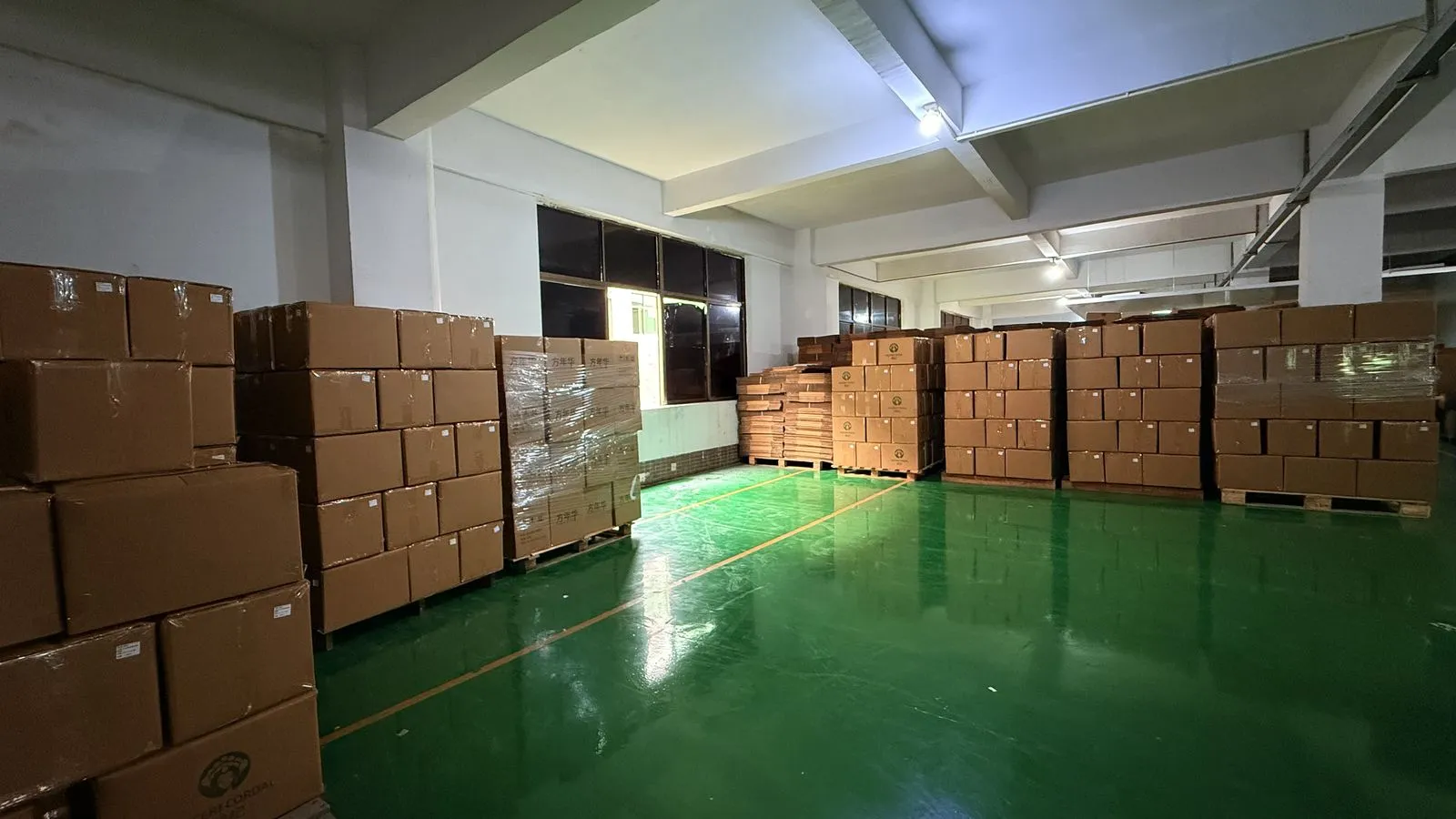
Every size, colour and variation needs its own barcode, so artwork is verified before the print run.
After Listing: Renewal, Changes and the Traps That Void a Notification
Getting listed is the start of an obligation, not the end of a task, and this is where an overseas manufacturer's change-control discipline directly protects the brand. Two rules matter most.
First, renewal. Under Article 6 of the executive regulation, the notifier must apply to renew a listed product at least 90 days before its listing expires. Miss that window and the notification becomes void, which means the product can no longer be legally imported or traded until it is re-listed. For a brand with a full Saudi range, tracking renewal dates is a standing task, and a factory that flags upcoming expiries to its distributor is doing real relationship work.
Second, and more subtle: not every change is a simple update. GHAD lets the notifier update a listed product only if the change does not alter the product's characteristics, basic form or composition. If the product's identity changes, the notifier has to re-notify it as a new product and deactivate the old listing. The SFDA's own table draws the line. Changes that require a full re-notification as a new product include the brand name, the product name, the manufacturer, and — critically for a formulating factory — the ingredients, meaning adding a new ingredient, changing an ingredient's concentration, or removing one. Changes that count as a simple update include the product picture, product volume, barcode number, storage conditions, precaution instructions, and purpose of use.
| Change to a listed product | Simple update | Must re-notify as new product |
|---|---|---|
| Product picture (new design or added logo) | Yes | — |
| Product volume | Yes | — |
| Barcode number | Yes | — |
| Storage conditions | Yes | — |
| Precaution instructions | Yes | — |
| Purpose of use | Yes | — |
| Brand name | — | Yes |
| Product name | — | Yes |
| Manufacturer | — | Yes |
| Ingredients (adding, removing, or changing a concentration) | — | Yes |
Source: SFDA, Guidance of Regulations and Requirements for Cosmetic Products Notification, Version 4. Changes outside this table are assessed at the Authority's discretion.
The ingredient rule is the one that catches OEM relationships. A factory that quietly tweaks a preservative level or swaps a supplier's grade "to improve the formula" can, without anyone intending it, invalidate the Saudi listing — because a concentration change forces a re-notification. This is exactly why we treat any formula change on a notified product as a controlled event: it does not ship to Saudi Arabia until the notifier has been told and the re-notification path is clear. It is also why the marketing notification carries a warning in the system itself: any modification or update to the product invalidates the marketing notification.
The Product Information File and the Notifier's Ongoing Duties
Behind the notification sits a document the SFDA can ask for at any time: the product information file (PIF), specified under SFDA.CO 6000:2020. The notifier has to maintain it and produce it on request. In practice the substance of that file — formula breakdown, safety data, manufacturing information, stability and quality records — comes from the manufacturer. A factory that keeps a market-ready PIF for each product is handing its Saudi partner the thing an inspector is most likely to demand, which is why we hold this documentation rather than assembling it reactively when the SFDA comes asking. It applies the same way on an ODM project as on a private-label one.
The notifier's other standing duties, spelled out by the Authority, all trace back to the factory too: ensuring the product is safe and does not harm users under normal use; informing the SFDA immediately of any harm, manufacturing error, or recall in any country; reporting modifications; documenting wholesale sales; providing test results proving compliance on request; and monitoring recalls or withdrawals across sales points. "A recall in any country" is worth underlining — a problem discovered in another market creates a Saudi reporting obligation, so a manufacturer's global quality signal feeds directly into its Saudi compliance. This is the practical reason to source from a factory with real quality systems rather than the lowest bidder, whether you are running a private-label or a full custom development project: the notifier is trusting your batch traceability and your recall discipline, not just your price.
How We Support a Saudi Launch From the Factory Side
None of the above requires the factory to be the notifier — it cannot be — but almost every step depends on what the factory supplies. Our facility operates as Jiumei (Guangzhou) Biomedical Co., Ltd., manufacturing since 2010 across a 16,000 m² site with 13 production lines in 100,000-class cleanrooms and capacity over 200,000 units a day. We hold ISO 22716 (Cosmetics GMP) and GMPC certification issued by Intertek, both verifiable at certs.intertek.com.cn, alongside ISO 9001, ISO 14001 and ISO 45001. For the documentation a Saudi notifier relies on, that certification base is what backs the product information file and the compliance claims behind it.
Concretely, for a Saudi-bound project we screen the formula against the current GSO 1943 prohibited and restricted lists before sampling; word claims to stay inside GSO 2528; supply clean INCI names, concentrations, roles and CAS numbers ready for GHAD entry; prepare the manufacturer authorization letter to the SFDA's five-point structure, notarized; build Arabic-ready artwork with correct per-variant barcodes into the sampling stage; and maintain a PIF per product so the notifier can respond if the SFDA asks. On timelines, our own production and sampling runs on a 20-35 day cycle; the notification and any Arabic print run sit on top of that and are driven by the Saudi notifier's side, so plan the regulatory steps in parallel with production rather than after it.
If you are scoping a Saudi entry, the fastest way to de-risk it is to get the formula and documentation right before anything ships. You can request a quote with your target market noted as Saudi Arabia, or read our broader market compliance guide to see how the Gulf fits into a multi-market plan. For the manufacturing standards behind all of this, our OEM service and technology pages set out what we actually run on the floor. If you want to talk through the documentation for a specific range, contact us with the products you are planning to list.
Frequently Asked Questions
Does SFDA notification mean my product is approved by the Saudi government?
No. The SFDA states clearly that the marketing notification "does not serve as proof that the product is a cosmetic, has been evaluated, studied, analyzed, or approved by the Authority." It exists to allow commercial transactions in the Kingdom and to record the product in the SFDA database. There is no pre-market scientific review of your formula; the Authority verifies safety through post-market checks, sampling and testing instead, and the notifier carries the legal responsibility if a product is found in violation.
Can my Chinese factory notify products directly to the SFDA?
No. The notifier has to be an establishment inside Saudi Arabia with a commercial registration carrying a cosmetics activity under ISIC4, and — for foreign or mixed companies — a Ministry of Investment license. In practice your Saudi importer, distributor or a regulatory agent is the notifier and legal responsible party. The factory's role is to supply a complete, compliant document pack, including a notarized manufacturer authorization letter, that lets the notifier file cleanly.
How long is an SFDA cosmetic listing valid, and what happens at renewal?
The notifier must apply to renew a listed product at least 90 days before the current listing expires, under Article 6 of the executive regulation. If a listing expires without renewal, the notification becomes void and the product can no longer be legally imported or traded until it is re-listed. Tracking renewal dates across a full range is a standing task, so agree early who owns it between the brand, the notifier and the factory.
If I change the formula after listing, do I have to notify again?
Often yes. The SFDA treats adding an ingredient, changing an ingredient's concentration, or removing an ingredient as a change to the product's composition that requires re-notifying it as a new product and deactivating the old listing. Changes like product volume, barcode number, storage conditions or purpose of use count as a simple update. This is why any formula change on a notified product should be a controlled event coordinated with the notifier before it ships.
What documents does the SFDA require for a cosmetic notification?
Per product: a notarized authorization letter from the manufacturer or a contract manufacturing agreement; a picture of the full product label (artwork); a product picture suitable for publication; and a list of ingredients with their concentrations and roles. The authorization letter must carry the delegated and authorizing establishments' names, addresses and commercial registration numbers, be on the manufacturer's stamped letterhead, be signed by the responsible person, and be notarized.
The Short Version
SFDA notification through GHAD is a fast front door with heavy back-end responsibility. Listing is mandatory before import under Royal Decree M/49, but it is not approval — your formula is never pre-reviewed, so the compliance file has to hold up to a post-market check. Your Saudi importer or agent is the notifier, not your factory, and their filing is only as clean as the documents you provide: a GSO 1943-compliant formula, GSO 2528-safe claims, precise ingredient data with CAS numbers, a correctly structured notarized authorization letter, and Arabic-ready artwork with per-variant barcodes. After listing, renew 90 days out and treat any composition change as a re-notification event. Get those right at the factory stage and a Saudi launch stops being a regulatory gamble.
Ready to Start Your Project?
Tell us your product requirements. Our technical team responds within 24 hours with a detailed quotation.