
Private Label Eye Care: Cream, Serum and Applicator Decisions Before Sampling
An eye-care project can reach sampling before the brand has agreed what the product should do in a routine. A request for "an eye cream" may leave open whether the buyer wants a lighter layer under concealer, a fresh-feeling tube for a travel kit, or a small, controlled dose from a pump. Resolving those choices makes sample feedback more specific.
This guide is for brand owners, product developers and buyers preparing a private label or white label eye-care project. It covers three decisions you can make before the first sample request: which format fits the product's role, which applicator fits that texture, and how to compare samples so feedback turns into a clear revision or approval. It ends with a project brief you can adapt and send to a supplier.
It is not a guide to active-ingredient dosing, general serum formulation or packaging test methods. Those topics are covered elsewhere and linked where they matter.
Start With the Product's Job, Not the Format Name
"Eye cream," "eye serum" and "eye gel" describe textures and expectations more than performance. A serum is not automatically more concentrated or more effective than a cream. A gel that feels cool is not evidence of reduced puffiness. A cream is not reserved for one age group.
Before choosing, write one sentence for each of these:
- Routine role. Is this the only eye product in the routine, a layer before a moisturizer, a step under makeup, or a separate night step?
- Finish the user should feel. Cushioned, light and quick-drying, slippery and fresh, or somewhere in between.
- Where and how it is sold. Climate of the main market, retail or online, travel or gift sets, professional or at-home use.
- What you plan to say on the pack. Planned claims shape the formula direction and the evidence you will need later, so they belong in the brief from day one.
Once those are clear, the format choice usually narrows itself.
Decision Table: Eye Cream, Eye Serum or Eye Gel
Use this table to shortlist one or two formats, not to settle the formula. Every cell is a starting assumption to confirm with real samples.
On a phone, swipe the table sideways to view all columns.
| Decision factor | Eye cream | Eye serum | Eye gel |
|---|---|---|---|
| Typical routine role | A standalone step, or the final eye step at night | A layer under a moisturizer, eye cream or makeup | A fresh daytime or quick morning step, or a lighter alternative to cream |
| Finish to aim for | Richer, more cushioned feel | Lightweight with slip; absorbs without heavy residue | Clear or translucent look, cushion and a cooling feel |
| Climate and channel fit to consider | Drier climates, night routines, users who expect a visible "treatment" texture | Layered routines, humid markets, makeup wearers | Warm or humid markets, travel minis, morning routines |
| Main sample risks to watch | Heaviness, migration toward the eye, residue under concealer | Pilling with the next layer, tack, too much flow from the applicator | Stickiness on dry-down, pilling, appearance changing in the final pack |
| Packaging options often reviewed | Airless pump, precision tube, jar | Airless or pump, precision tube, roller | Tube, airless, roller |
| What to compare in samples | Cushion versus dry-down time; how it sits under makeup | Absorption, slip, layering with the brand's own moisturizer | Spread, dry-down, behavior with the chosen applicator |
| Claim wording to plan carefully | "Firming look" and "brightening look" are appearance claims that still need support | "Hydrating" and "firming look" directions need support suitable for the market | "Cooling feel" describes a sensation, not de-puffing |
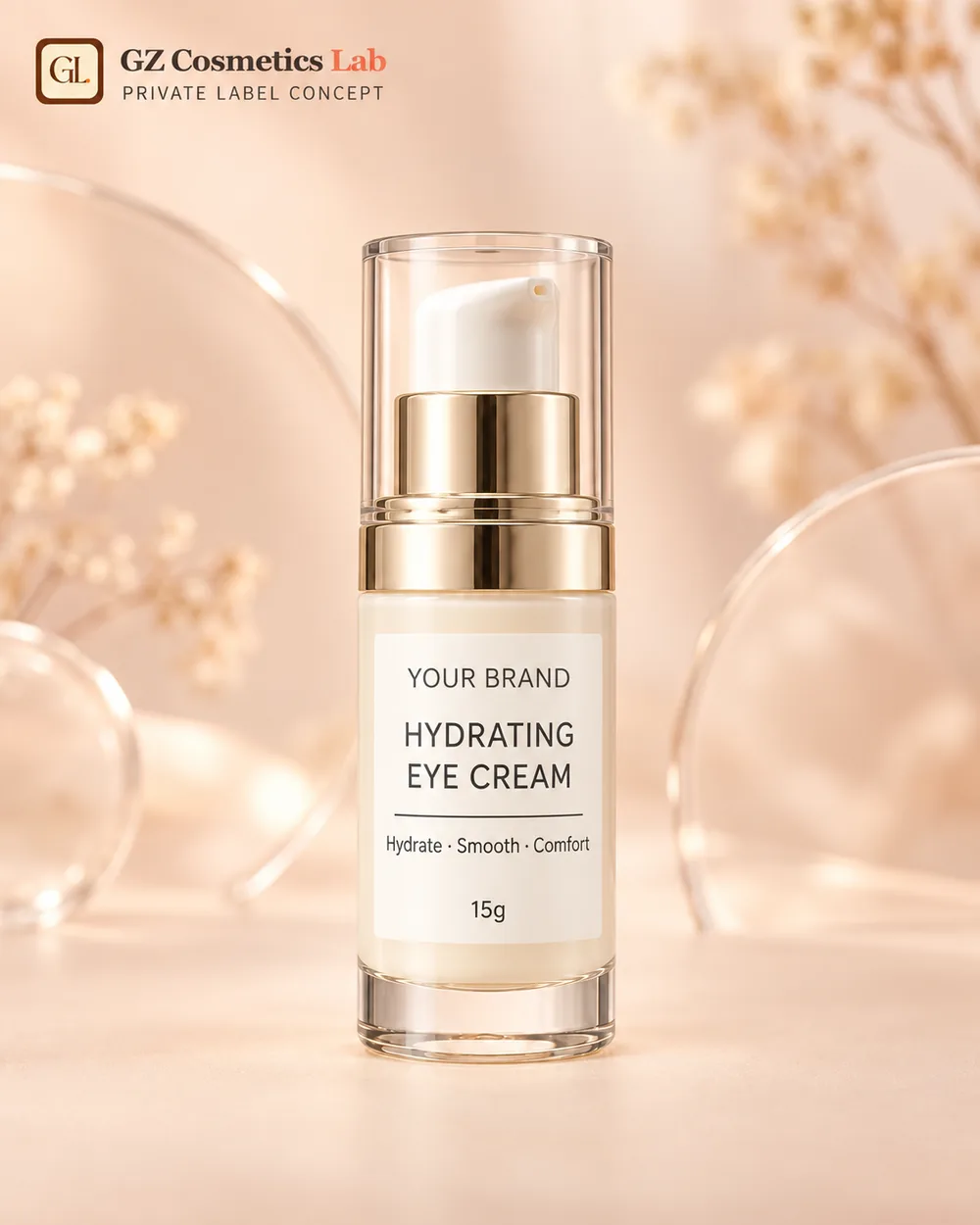
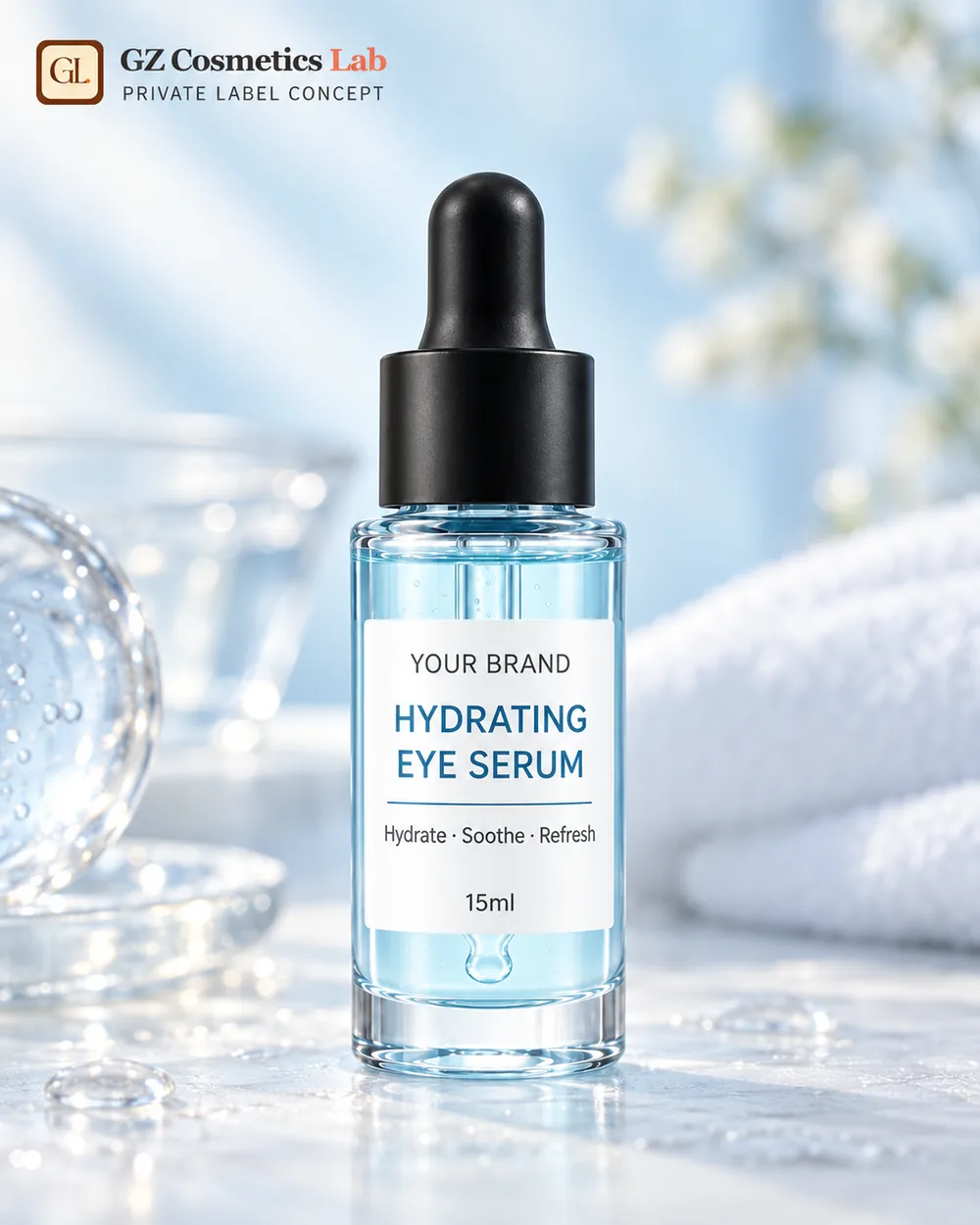
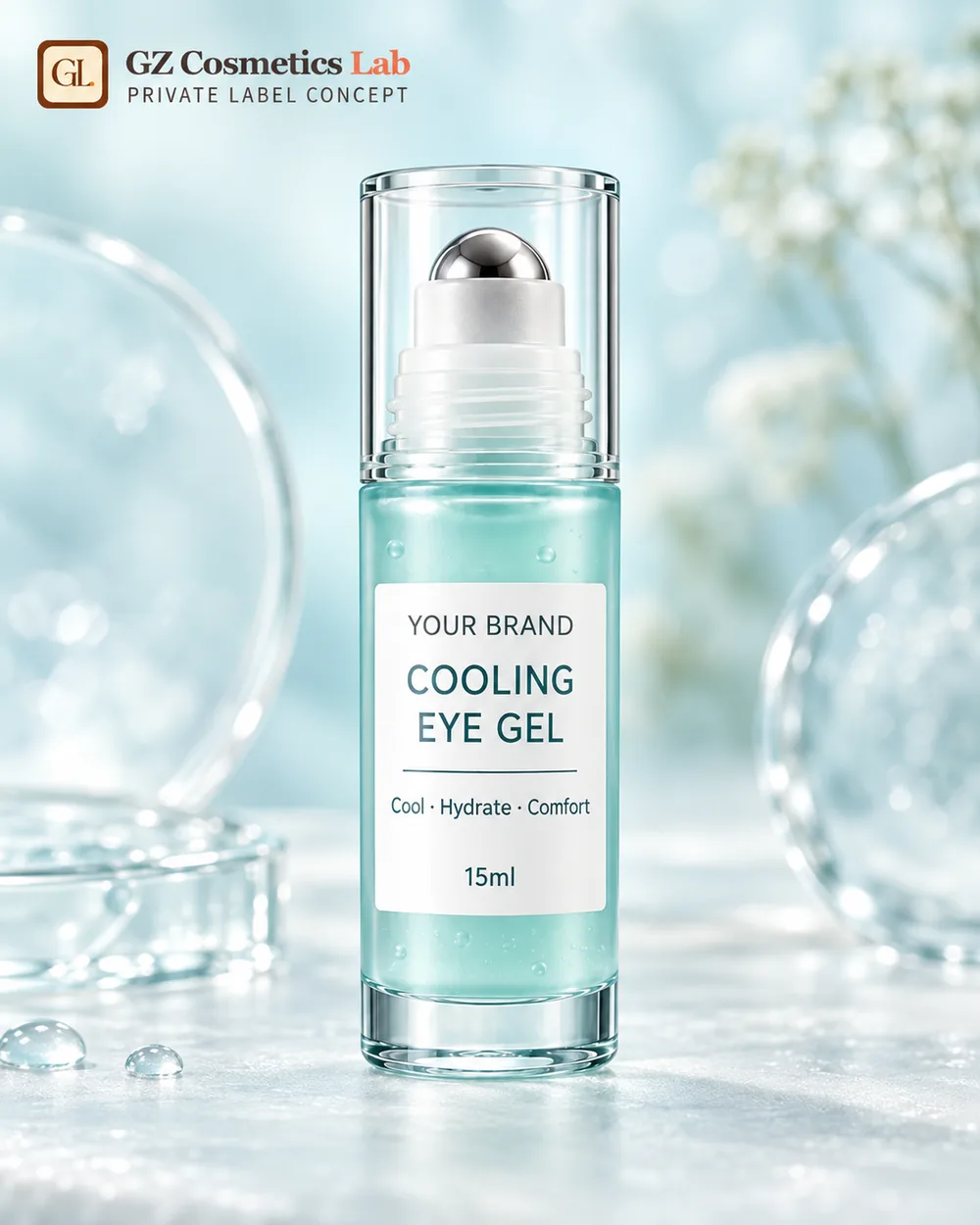
If two formats stay on the shortlist, ask the supplier whether both can be sampled in the same round under an agreed comparison plan. Keep the instructions, reference products and feedback criteria consistent so that differences are easier to interpret.
Our current development routes are listed on the Custom Eye Cream, Custom Eye Serum and Custom Eye Gel pages. They are starting directions for a brief, not pre-approved finished formulas. The final formula and INCI are confirmed per project.
Match the Texture to the Applicator
Around the eye, the applicator is part of the product. It affects dispensing and contact with the product, how the product is applied to its intended area, and whether the texture you liked on a spatula behaves the same way out of the pack. Follow the supplier-approved use directions; do not apply to the lash line or eye itself unless the specific product is intended and assessed for that use.
The options below are common choices to evaluate for each format. They are not a list of components already validated with every formula. Compatibility, flow and leakage are confirmed with the final formula in the final component, project by project.
Applicator Matching and Questions to Ask
On a phone, swipe the table sideways to view all columns.
| Applicator | Often considered for | What it does well | Questions to confirm with the supplier |
|---|---|---|---|
| Airless pump | Cream, serum, gel | Can limit air and finger contact; dose to verify | How much does one stroke deliver with this viscosity, and is that sensible for both eyes? How much product is left at end of use? Does it prime reliably with this texture? |
| Precision tube (fine nozzle) | Cream, serum, gel | Controlled squeeze; good for travel and minis | Does the orifice suit this viscosity without spurting or stringing? Does product dry or back-flow at the tip? Is a mini size subject to component minimums? |
| Jar | Cream | Easy to see and scoop rich textures | Will users apply with fingers or a spatula, and is a spatula included? Is the formula direction suitable for an open-mouth pack? How does that affect the planned period after opening? |
| Roller / roll-on ball | Serum, gel | Direct application with a smooth, cool contact feel | What are the ball and housing materials? How does flow change with this viscosity? Does it leak when stored on its side or upside down? How should users clean the ball? |
A few patterns help when shortlisting:
- Thicker creams often suit jars or airless pumps. Very rich textures in a fine-nozzle tube can need more squeeze force than users expect.
- Thin serums can over-dispense from a standard pump and may leak from a roller if viscosity and ball fit are not matched. Check flow with the real formula, not a stand-in.
- Gels that look clear in a beaker can look different through a tinted or frosted tube. Decide whether clarity is even visible to the user before making it a requirement.
For the methods behind pump, dropper and airless checks, see our guide to packaging compatibility testing. For eye care, include questions about the intended dose, intended application area and the cleanliness of any surface that touches skin.
Why Hygiene Belongs in the Applicator Decision
The U.S. Food and Drug Administration's eye cosmetic safety guidance explains that products used around the eye can become contaminated through misuse and lead to infection, and that applicators can cause injury. It advises keeping anything placed in the eye area clean, not sharing products, using single-use applicators when sampling shared testers, and only using products near the eyes that are intended for that use.
For a buyer, that becomes a set of practical choices. Consider closed or metered packs where the formula direction allows; a closed pack does not establish microbiological safety or suitability for the eye area. Think through how a jar or roller will be used and cleaned. Plan retail testers with disposable applicators. And develop and label the product as an eye-area product from the start, rather than adapting a face cream at the last minute.
Bring the format and applicator into one brief.
Share your target market, routine role, finish and packaging references. Formula, sample scope and commercial terms are reviewed per project.
Run a Controlled Sample Comparison
Sample feedback often fails because each reviewer tested something slightly different: another version, another amount, on different days, with different products on top. The checklist below keeps comparisons like-for-like, so differences reflect the samples rather than the conditions.
This is a sensory and usability comparison within your team. It helps you choose and refine a direction. It does not replace the product safety assessment, stability and compatibility testing, or claim-support work for your target market, and it should not be used to test irritation or allergy on people. Reviewers should only use samples supplied as intended for the eye area, follow the supplier's use instructions, keep product out of the eye itself, and stop using any sample that causes discomfort.
1. Lock the Sample Identity
Record for every sample in the round:
- Sample code and formula version, exactly as written on the supplier's label
- Date received and date opened
- Component used: pack type, size, and pump, nozzle or ball version
- Whether it was filled in the intended final component or a stand-in jar
- Any storage or transport notes from the supplier
If two samples arrive in different components, note it. A serum in a lab jar and the same serum in a roller are effectively two different user experiences.
2. Fix the Use Conditions
Agree on these before anyone opens a sample:
- The use instructions to follow, taken from the supplier
- The amount per use, exactly as instructed by the supplier for that sample and applicator. A pump stroke or roller pass is not a universal eye-care dose
- Time of day, and whether it goes on freshly cleansed skin
- What goes on afterward: the brand's own moisturizer, sunscreen, concealer, or nothing
- How long reviewers wait before the next layer
- The review schedule and any blinded sample codes, agreed with the supplier and the person responsible for product safety. Do not improvise split-face tests or vary the instructed amount to test tolerance
Use clean hands or the sample's own applicator. Never pass one sample or applicator between reviewers.
3. Record What You Observe
Use the same attributes and definitions for every reviewer. An agreed qualitative comparison, such as "lighter / similar / richer than the reference sample," can help organise internal sensory feedback. This is not a validated performance scale or a safety acceptance threshold. Leave room for comments that explain each observation.
On a phone, swipe the table sideways to view all columns.
| Observation | What to note |
|---|---|
| Dispensing | Did the applicator deliver the agreed dose consistently? Any spurting, stringing, leaking or dried tip? |
| Spread | How did the supplier-instructed amount spread over the intended area? Do not increase it beyond the instructions for comparison. |
| Dry-down | Roughly how long until it felt set enough for the next step? |
| Tack and residue | Any sticky, greasy or filmy feel after dry-down? |
| Pilling | Did it roll or ball when the next layer went on, or when touched? |
| Migration | Did it seem to move toward the lash line or settle into lines during wear? |
| Under makeup | Did concealer sit well, crease or separate? |
| Fit to target finish | How close was it to the finish written in the brief? |
| Stop-and-report | Any discomfort, stinging or redness: stop using that sample, record it and report it to the supplier |
The last row is a rule, not a score. Discomfort is something to escalate to the supplier and to whoever is responsible for product safety, not something to keep testing or to provoke.
4. Turn Feedback Into a Decision
Close each round with one written outcome per sample and share it with the supplier:
- Approve this version for the next stage, naming the exact sample code and component.
- Revise, with a short list of specific changes in priority order. "Lighter dry-down, less tack under concealer" is useful; "make it better" is not.
- Drop this direction, with the main reason.
Avoid forwarding ten unranked comments from ten reviewers. Consolidate them into one revision request. When the next round arrives, compare it against the previous version and against the brief, not against anyone's memory of the last sample.
Our article on private label sample evaluation covers version control across sample rounds in more general terms. A structured consumer study is a separate project; see our overview of cosmetic consumer testing.
Keep Three Approvals Separate
When someone says a sample is "approved," be clear about what was approved. In eye-care projects it helps to track three approvals separately:
- Sensory and format approval. Your team prefers this texture, finish and applicator experience. This is what the comparison above produces.
- Packaging and engineering acceptance. The final formula and the final component work together for dose, flow, leakage and compatibility over time. This comes from the supplier's packaging checks, not from a few days of team use.
- Safety and claim support. The product's safety assessment, its suitability for the eye area, and the evidence behind each claim you plan to use, all to the requirements of your target market. A well-liked sample does not imply any of these.
Writing them as three separate lines on your approval record prevents a common mistake: treating a favorite sample as ready for production artwork while the pack is unconfirmed and the claims are unsupported.

The Supplier-Ready Project Brief
A written brief keeps sample requests, quotations and revision decisions tied to the same scope. Copy the template, fill in what you know and mark what is still open. "Not decided" is a useful answer; a guess is not.
EYE-CARE PROJECT BRIEF

1. Brand and project
   Brand name:
   Project working title:
   Contact for sample feedback:

2. Market and channel
   Target market(s) and regulatory region(s):
   Sales channel(s): online / retail / professional or spa / gift set / other
   Main climate of use:

3. Product role
   Format(s) to sample (up to two): eye cream / eye serum / eye gel
   Role in routine: standalone / layer under moisturizer / under makeup / night step
   Target user and usage occasion:

4. Skin feel and appearance
   Target finish: cushioned / light and quick-drying / fresh and slippery
   Appearance target: opaque / translucent / clear; color if relevant
   Fragrance preference: none added / light / to discuss
   Reference products for feel only (optional):

5. Formula direction and sample version
   Development route: hydrating / firming look / brightening look / cooling feel
   Ingredients requested or to avoid:
   Sample code and version under review (revision rounds):

6. Packaging
   Applicator(s) to evaluate: airless pump / precision tube / jar / roller
   Target fill size(s):
   Component sourcing: supplier to propose / brand supplies own
   Fill samples in final component? yes / no / where possible

7. Use and layering conditions
   Intended use instructions:
   Products usually applied afterward:

8. Planned claims
   Claims intended for pack and online:
   Market(s) where each claim will be used:

9. Commercial references
   Budget or target retail price range:
   Indicative first-run quantity per SKU:
   Packaging and decoration references (box, label, print finish):
   Target launch window:

10. Open questions for the supplier
A few notes on filling it in:
- Budget and quantity are references that help the supplier propose a realistic route. Actual MOQ, pricing, schedule and final formula are confirmed by the supplier after reviewing the brief and packaging.
- Planned claims should be honest drafts. If you hope to say more than the evidence you can fund, it is better to discuss that now than after artwork.
- Reference products describe a feel. Ask for a texture direction, not a copy of another brand's formula.
Where GZ Cosmetics Lab Fits
GZ Cosmetics Lab develops eye-care products through its ODM service, starting from the routes in our eye-care range. For each project, the formula direction, applicator compatibility, MOQ, timing and pricing are confirmed with our team after we review your brief and packaging choice.
If you have a draft brief, even an incomplete one, you can request a quote for your eye-care project. The project review can identify open questions and whether a suitable sample and commercial proposal can be prepared for your specification; availability and terms are confirmed individually.
Frequently Asked Questions
Should my first eye-care product be a cream, serum or gel?
Choose by routine role and finish, not by which name sounds more advanced. A cream suits brands that want a richer, cushioned standalone step. A serum suits layered routines and users who want something light under makeup. A gel suits fresh, quick-drying textures and warm or humid markets. If you are unsure, discuss a comparison of two formats in the same round, following an agreed plan and the supplier's use directions.
Is an eye serum stronger than an eye cream?
Not by default. "Serum" describes a lighter texture and a layering role. Active content and performance depend on the specific formula, not the format name. If performance matters to your positioning, define the claims you plan to make and discuss the support they need, instead of relying on the format to suggest strength.
Which applicator is best for an eye product?
There is no single best option. Airless pumps and precision tubes limit finger contact and help control dose. Jars suit rich creams but involve fingers or a spatula, so plan how they will be used. Rollers give direct, smooth application but need careful matching of viscosity, ball material and leak resistance. Whichever you choose, confirm dose, flow and compatibility with the final formula in the final component.
Can our team's sample review show that the product is safe for the eye area?
No. An internal comparison tells you which texture, finish and applicator your team prefers. Eye-area safety, stability, packaging compatibility and claim support are separate evidence, produced to the requirements of your target market. Do not use team reviews to test for irritation or allergy, and stop using any sample that causes discomfort.
What should we send a supplier before asking for eye-care samples?
At minimum: target market and channel, the product's role in the routine, the finish you want, one or two formats to sample, applicator options, planned claims, and rough budget and quantity references. The brief template above covers each of these. A written brief gives the supplier a shared scope to review; it does not guarantee a set number of sample rounds or a delivery time.
Ready to Start Your Project?
Tell us your product requirements. Within 24 hours, our technical team will reply with a quotation or the questions needed to prepare one.