
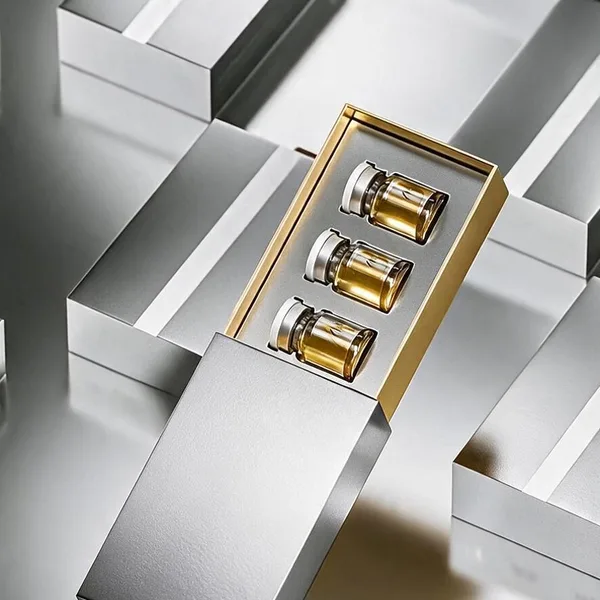
Freeze-Dried Delivery for Skincare
A project planning guide for brands weighing a dry-unit and solvent format against a conventional serum: when the format earns its cost, what has to be specified, and how evidence is scoped.
Project planning guide
Freeze-drying should solve a real problem
Freeze-drying should solve a real stability or format problem. It should not be selected only because the pack looks clinical or premium.
The deliverable is a system, not a powder. The dry vial or unit, the solvent, the closure, the assembled set, the user instructions and the release specifications all have to work together. A lyophilised cake that reconstitutes well in the lab can still fail commercially if the solvent pack leaks in transit, the closure is hard to open, or the mixing step confuses the end user.
That is why a freeze-dried brief is scoped differently from a serum brief. Each component carries its own supplier, tooling, specification and test plan, and the project timeline is set by the slowest of them. The sections below set out the decisions in the order they usually need to be made, so the commercial case can be checked before sampling begins.
When the format is worth it, and when a simpler route wins
The strongest freeze-dried projects start from a technical reason. If the reason is mostly visual, a conventional ampoule or serum usually delivers the same shelf presence with less cost and risk.
Use it when
- An active cannot remain acceptably stable in water for the intended shelf life.
- Single-dose presentation and reconstitution are commercially justified.
- The brand accepts a multi-component pack, a longer development route and project-specific testing.
- The target channel can explain storage, mixing and use clearly.
Reconsider it when
- A conventional serum can meet stability and claim requirements.
- The project is driven mainly by the visual format rather than a technical need.
- Target cost, pack complexity or user instructions cannot support two-part packaging.
- The launch schedule cannot accommodate packaging, reconstitution and stability work.
Format directions to evaluate
These are the formats a freeze-dried project is usually compared across. Each changes the tooling, the dose control and the user instructions.
Lyophilised cake in vial plus solvent
The most familiar route. The questions are vial and stopper selection, fill volume before drying, solvent container and how the two are presented together in the set.
Bead or pellet format
Possible where tooling, dose per unit and handling are confirmed. Dose uniformity, friability and how the user transfers or dissolves the unit need to be agreed before artwork.
Multi-vial use programme
A course assembled from separately controlled units. Each unit keeps its own specification, and the set adds assembly, labelling and sequence instructions to control.
Conventional ampoule or serum
The lower-complexity comparison route. Running it alongside the freeze-dried option shows whether the dry format is actually needed for stability or claims.
Availability of each format is confirmed per project against components, tooling and the formula. None of these is offered as a standing option without that confirmation.
Define the active system before quoting
A freeze-dried quote only means something once the active, its basis and the reason it must stay dry are written down.
- The active or actives, supplier material and grade.
- Why the active needs to remain dry: the stability problem in water that the format is meant to solve.
- Concentration stated on the reconstituted finished-product basis, not as a dry-powder percentage.
- Bulking or supporting materials needed to form an acceptable dry unit.
- Solvent composition, volume and preservation approach.
- Destination market rules for each ingredient, reviewed before sampling.
A dry-powder percentage can look impressive while the level the skin actually meets after mixing is modest. Quoting on the reconstituted basis keeps the figure comparable with an ordinary serum and makes the claim easier to support.
Development decisions, made one at a time
Each of these is a separate controlled decision with its own owner and sign-off. Merging them tends to hide problems until assembly.
Step 1: Define the active and why it must stay dry
Name the material and the stability concern in water. If there is no clear concern, reconsider the format before spending on tooling.
Step 2: Fix concentration on a reconstituted basis
State the level in the finished product after mixing, not an impressive dry-powder figure. This is the number artwork and claims will rely on.
Step 3: Select the packaging as one system
Vial, closure, solvent container and secondary set are chosen together, because compatibility, fill and transit behaviour depend on the combination.
Step 4: Agree reconstitution and use directions
Volume, mixing time, expected appearance after mixing and use directions are written down and checked with representative users where possible.
Step 5: Write three specifications, not one
The dry unit, the solvent and the assembled set each need their own agreed specification. A single generic serum specification does not cover them.
Step 6: Confirm representative production evidence
Representative production and release evidence is confirmed before routine manufacture, so the scaled process matches what was approved at sample stage.
Testing and evidence matrix
Scope is agreed per formula, pack and market. The rows below are the areas to discuss; methods and acceptance criteria are set at project stage rather than assumed.
| Area | Scope to agree |
|---|---|
| Dry-unit appearance and physical integrity | Agree the expected cake or unit appearance and what counts as an acceptable variation. |
| Reconstitution time and completeness | Agree the solvent volume, the mixing instruction and the result that defines complete reconstitution. |
| Residual moisture | Method and acceptance criterion confirmed per formula, not taken from a generic figure. |
| Dry-unit and solvent stability | Each component is assessed on its own, because they age differently and may come from different suppliers. |
| Stability after reconstitution | Where the product is used over more than one application, agree the in-use period and how it is supported. |
| Container-closure and packaging compatibility | Check the final vial, closure and solvent pack together rather than as separate parts. |
| Microbiological strategy | Agree the approach for the solvent and for the reconstituted product, including whether challenge testing applies. |
| Transport and assembly checks | Confirm the finished set survives handling and that every set is assembled with the correct components. |
| Claim evidence | Only where a performance claim is planned; scoped to the exact wording and the destination market. |
Which tests are carried out internally, by a supplier or by an external laboratory is agreed in the quotation. No test result is implied by listing an area here.
Where format claims end and product claims begin
The format itself supports some descriptive language. Anything about results depends on the finished product, and some wording changes how a product is regulated.
Possible format direction
- Freshly mixed at the moment of use
- Two-part or single-dose presentation
- Dry format chosen to protect the active in the pack
Needs finished-product evidence
- Stability advantages over a liquid version
- Visible appearance or performance claims
- Consumer-perception or instrument-based results
Regulatory red flags
- Medical, post-procedure treatment or wound-care positioning
- Pharmaceutical or injectable equivalence
- Claims about changing skin structure or function
A vial format does not make a product a medicine, and it does not make a cosmetic claim safer. The destination market decides which wording is acceptable.
Published commercial starting point
- Indicative MOQ
- 3,000–5,000 sets per SKU
- Indicative lead time
- 50–70 days after sample approval
These are the figures currently published for the freeze-dried sets on this site. Final quantity and timing depend on the vial, solvent pack, tooling, cycle work, test scope, assembly and destination market, and are confirmed in the quotation.
Current format references
These existing sets show the dry-unit and solvent format as it is listed today. They are format references, not clinical proof or a statement of results.
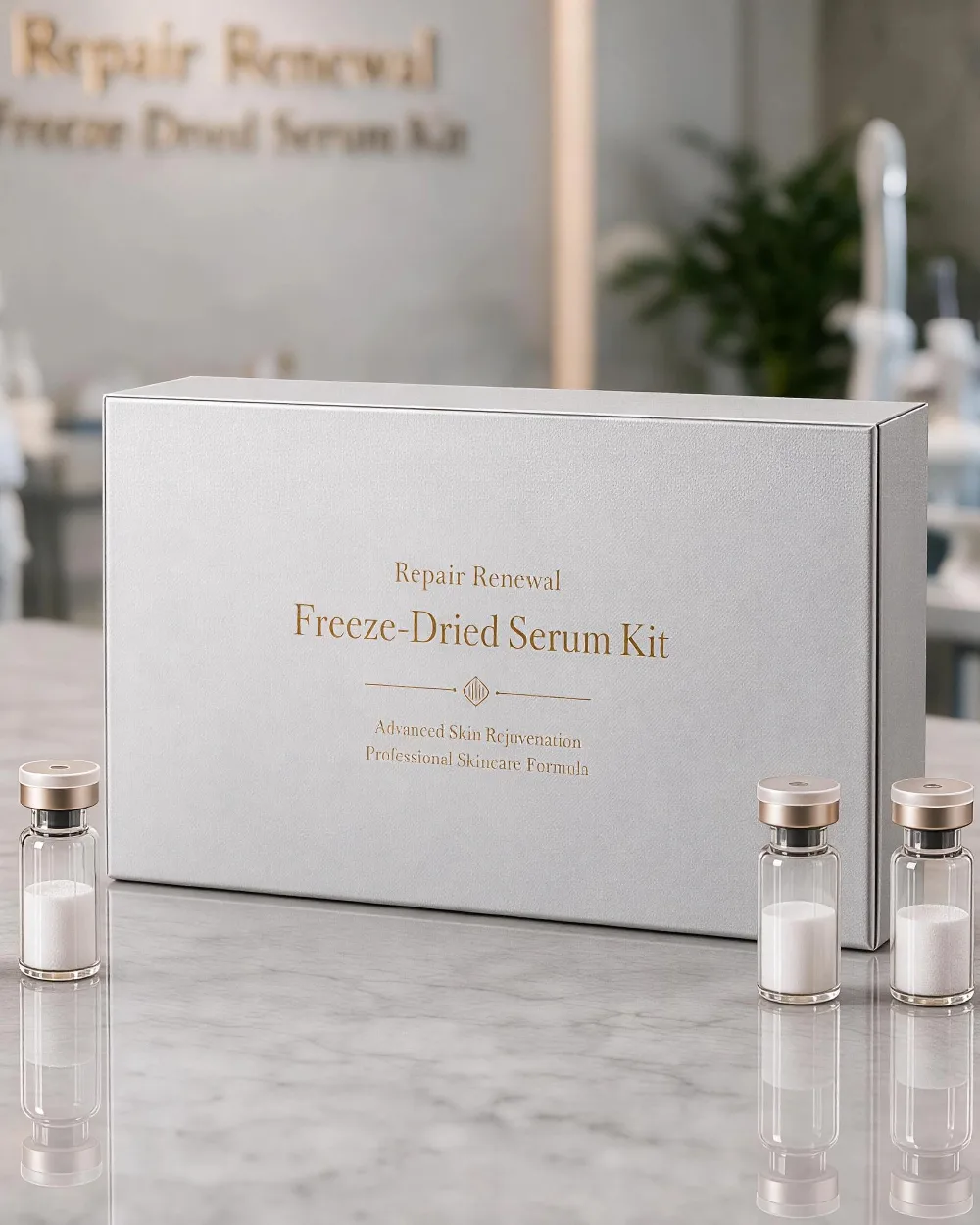
Skin Repair Freeze-Dried Serum Set
Glass lyophilized vial + ampoule solvent; gift box packaging
View format →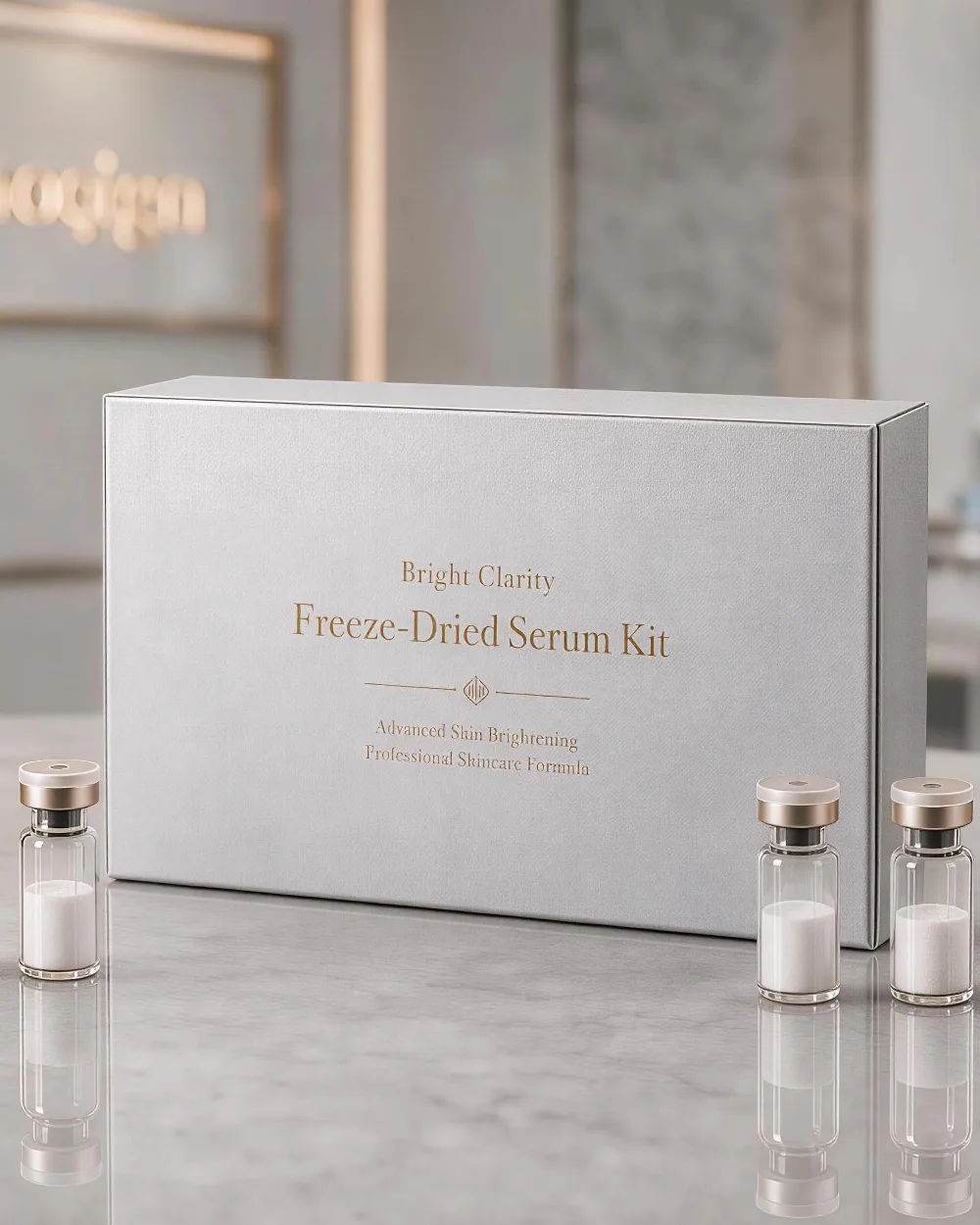
Brightening Anti-Spot Freeze-Dried Serum Set
Gift box packaging
View format →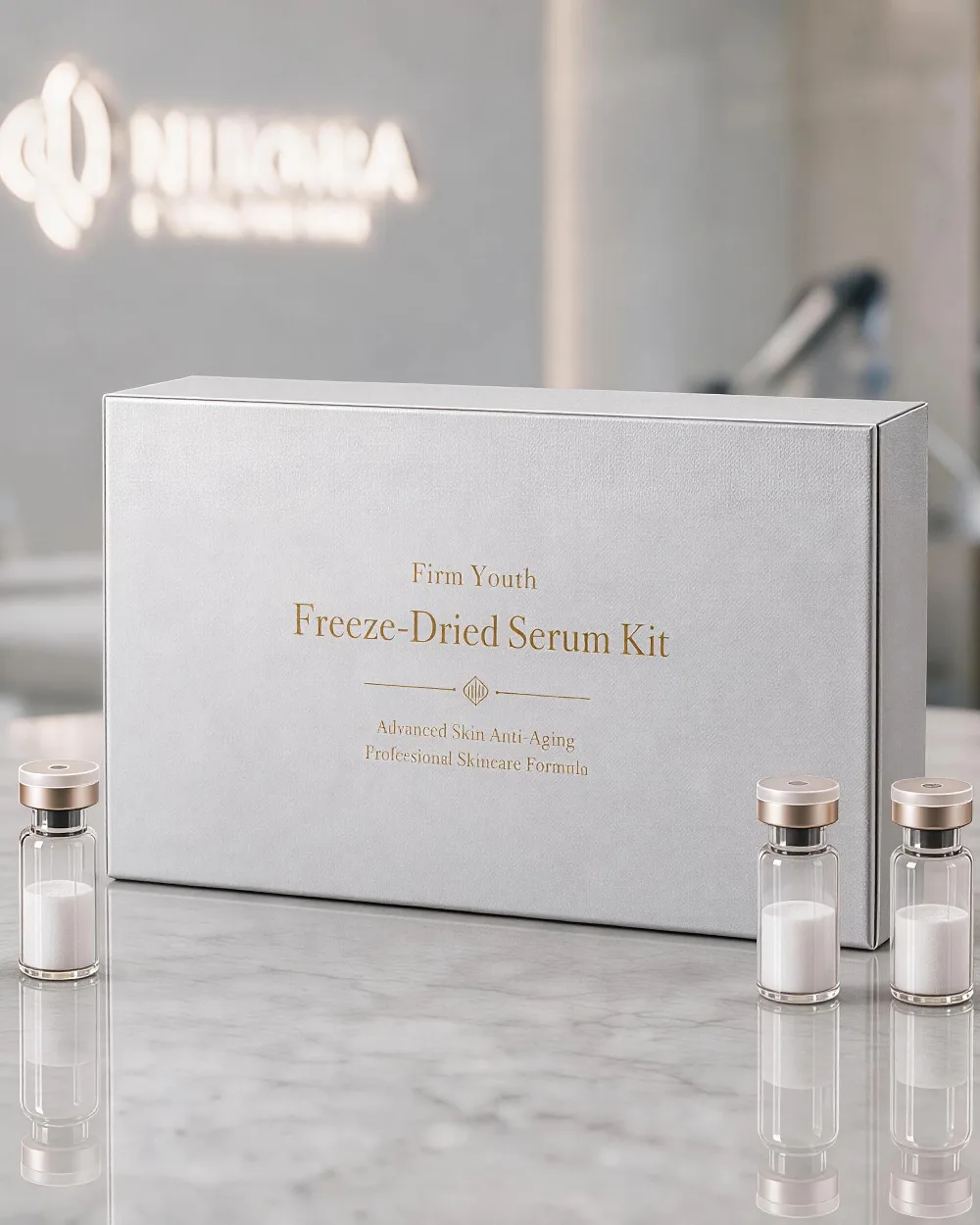
Firming Anti-Aging Freeze-Dried Serum Set
Gift box packaging
View format →What to include in the brief
A brief with these fields lets the first quotation reflect the real pack and test scope instead of a placeholder.
- Destination market and sales channel.
- Active identity, supplier material and concentration basis.
- Target use and the claims you intend to make.
- Desired dry-unit format and solvent format.
- Reconstitution instructions and planned-use sequence.
- Quantity, target launch date and pack references.
- Tests, reports and customer or retailer documents you expect.
Related planning pages
How formula, packaging and documentation work is combined in one project.
Which checks sit in routine manufacturing and which are scoped separately.
The wider technology page and the other planning guides.
Official references
Use these as starting points for your own regulatory review. They do not approve or certify any product.
US explanation of how intended use, not format or ingredient, decides the regulatory category.
US example of how claim wording can move a product from cosmetic toward drug status. Other destination markets need their own review.
Questions buyers ask
Is a freeze-dried format always more stable than a serum?
Not automatically. Removing water can help actives that degrade in solution, but the dry unit, the solvent and the reconstituted product each have their own stability questions. Whether the format improves stability for a given active is something to confirm on the actual formula, not assume from the format.
Why state concentration after reconstitution?
Because that is the product the user applies. A dry-powder percentage can be far higher than the level in the mixed product, which makes comparison with a liquid serum misleading and weakens any claim that depends on the figure.
What usually drives the freeze-dried timeline?
Packaging components and their tooling, the drying cycle work for the specific formula, the agreed test scope and final assembly. The published lead time is counted after sample approval and is confirmed per project in the quotation.
Can an existing freeze-dried set be adapted instead of starting from zero?
Often, yes. The current sets are useful format references for pack structure and use directions. Any change to actives, levels, solvent or components still needs its own review, specification and testing before production.
Scope a freeze-dried skincare project
Send the active, the reason it needs a dry format, the destination market and the pack direction. We will come back with the development route, the component list and the open decisions.
Pricing and timing depend on the formula, packaging, quantity, testing and destination market.