
Cosmetic CDMO: What It Is, When You Need One, and Who Owns the IP
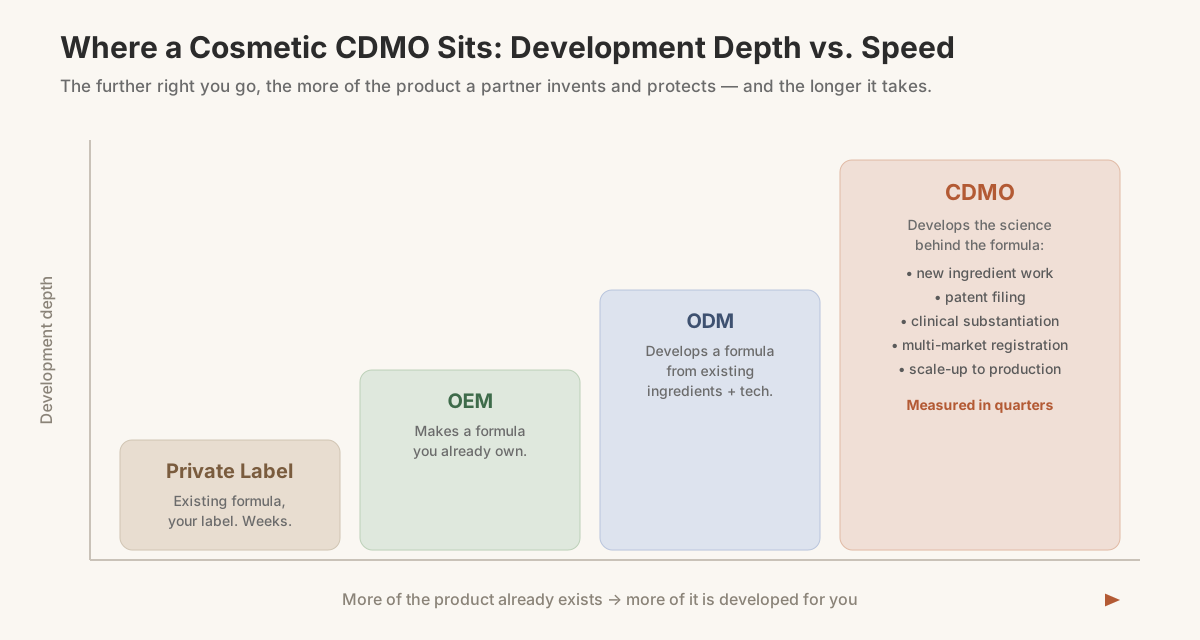
Chart by GZ Cosmetics Lab · Free to reuse with a link back to this page.
Most brands that ask for a "cosmetic CDMO" do not actually need one, and a few that never use the word need one badly. The term gets used loosely, so it is worth being precise: a cosmetic CDMO (Contract Development and Manufacturing Organization) is a partner that develops the science behind a product, not just the product. It can invent and register a new ingredient, file patents, run substantiation studies, handle multi-market registration, and then scale the result to commercial production. That is a different job from making a formula you already own, and it comes with a different timeline, a different cost base, and a set of intellectual-property questions you should settle before any work starts.
This guide is written from the manufacturing side, for brand owners and ingredient companies trying to decide whether a CDMO is the right level of partnership or an expensive answer to a question they do not have. If you are still comparing the basic models, the decision-and-cost logic in OEM vs ODM is the better starting point, and the terminology in contract manufacturing vs private label vs white label covers where CDMO sits among the simpler options.
The "D" Is the Whole Point
Strip out the shared letters and the difference between the models is one word: Development. An OEM manufactures a formula whose recipe already exists, whether you brought it or chose it from a menu. An ODM develops a formula for you, but from ingredients and delivery systems that already exist and are already approved. A CDMO adds the layer underneath both of those: developing the ingredient or the delivery mechanism itself, generating the safety and efficacy data that lets it be sold legally, and protecting it so a competitor cannot simply copy the label.
The practical test is this: if everything your product needs already exists somewhere and just has to be assembled, you do not need a CDMO. ODM or OEM will get you there faster and cheaper. You need a CDMO only when part of what you are selling does not exist yet, or exists but is not yet legal to sell in your markets, or exists but is not protected and you want it to be. Everything expensive about a CDMO engagement flows from that one distinction, so it is the first thing to be honest about.
The Question That Decides Whether You Need One
Before comparing quotes, answer a single question: does your product depend on something proprietary, or does it depend on execution?
If your edge is a better routine, sharper branding, a specific market, or a smart price, then your edge is execution, and execution is served by a strong OEM or ODM partner. Developing a novel active for a product like that spends money on a moat no customer will ever notice. If instead your edge is a genuinely new ingredient, a delivery system that changes what a known active can do, or a claim no one else can legally make because they do not have the data, then that edge only exists if someone develops and protects it. That is the CDMO case.
A useful way to sanity-check the answer is to ask what happens if a competitor reverse-engineers your product next quarter. If the honest answer is "not much, because our advantage is elsewhere," a CDMO is the wrong spend. If the answer is "they would have our entire product," then the development and IP work a CDMO does is exactly what stops that from happening.
What a CDMO Engagement Actually Covers
The scope varies by project, but a full-lifecycle cosmetic CDMO engagement generally spans some combination of the following. You rarely need all of it; you should know which pieces you are paying for.
- Ingredient discovery and characterization. Identifying or isolating a new active, then characterizing what it is and what it does at a level that will survive regulatory scrutiny.
- Safety substantiation. The toxicological and safety dossier a novel ingredient needs before it can go into a product sold to consumers. This is non-negotiable and it is not fast.
- Delivery-system development. Building or adapting the mechanism that gets an active where it needs to go and keeps it stable until then. This is where a lot of real cosmetic innovation actually lives, because a known active in a better delivery system can outperform a novel active in a poor one.
- Formulation R&D. Turning the ingredient and delivery work into a finished, manufacturable, stable formula, and then holding it stable through scale-up.
- Clinical and efficacy validation. The studies that let you make a claim honestly, run through certified testing institutions rather than in-house.
- Multi-market regulatory registration. Filing and maintaining the registrations that let the product and its novel components be sold in each target market. The rules differ sharply by market, which is why registration is a workstream and not a checkbox.
- Patent filing. Drafting and filing to protect the formulation, delivery system, or process so the advantage is defensible.
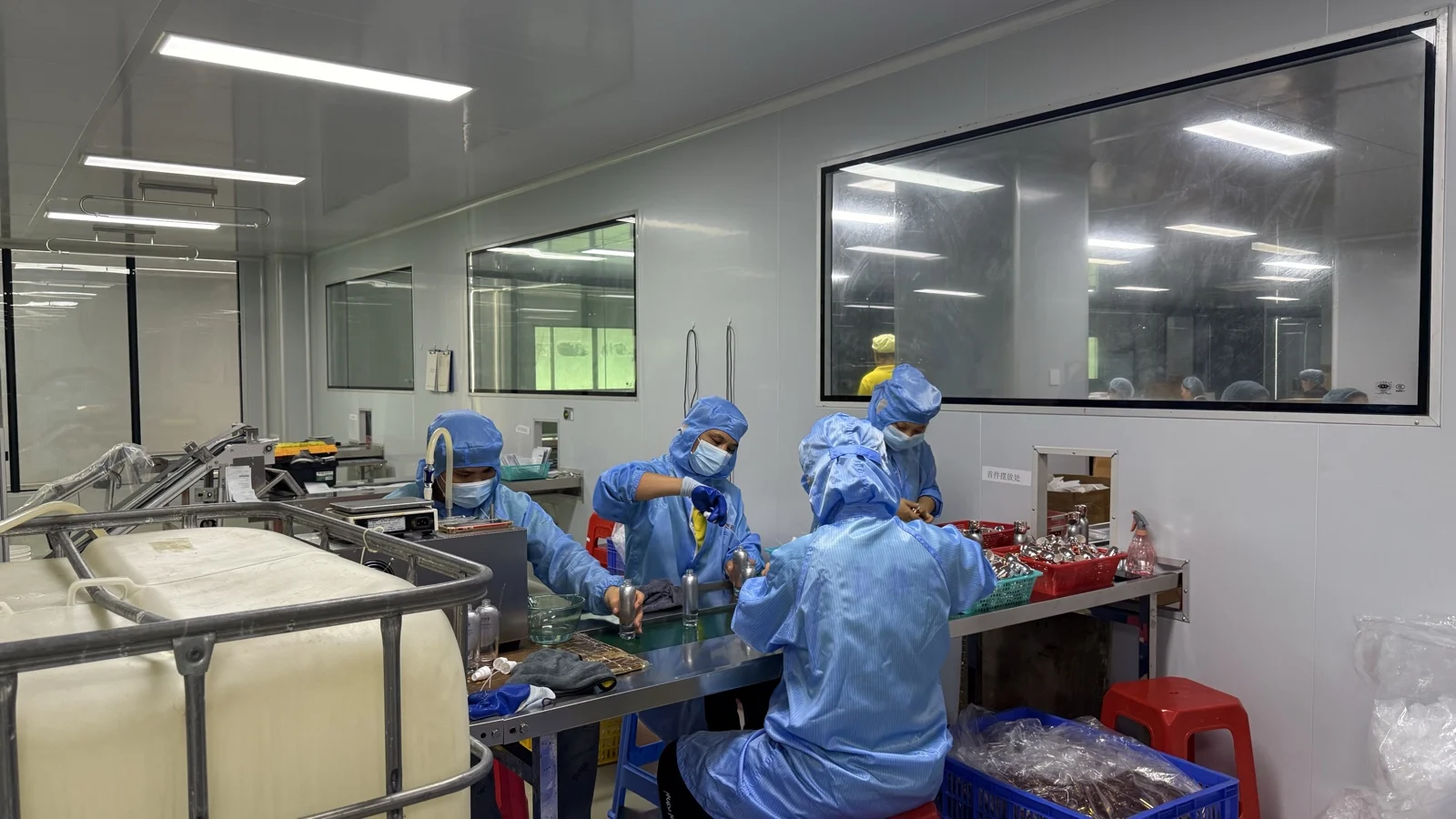
- Commercial scale-up. Moving from a lab bench batch to reproducible commercial volume without the formula drifting. At our facility that means scale-up onto 13 production lines with a combined capacity above 200,000 units per day, so a successful development does not then stall for lack of capacity.
A capable CDMO will quote these as distinct pieces of work rather than one opaque number. If you cannot see which stages you are buying, you cannot manage the spend, and you cannot tell development cost from manufacturing cost.
Who Owns the IP: Settle This in the Contract, Not Later
This is the part that causes the most expensive surprises, and it is almost never in the initial brief. When a CDMO develops a new ingredient, a delivery system, or a patentable process for your project, the ownership of that IP is a matter of contract, not a matter of who paid the invoice. Three arrangements are common, and they are genuinely different:
- You own it outright. The developed IP is assigned to your brand. This gives you the strongest position and usually carries the highest development fee, because the partner gives up any future reuse.
- You get exclusivity, the partner retains ownership. The partner owns the IP but grants you exclusive use, often within a category, market, or time window. Cheaper than outright ownership, and often the right balance for a single brand.
- Shared or licensed platform. The partner owns a platform technology and licenses it to you alongside other clients. This is how most "patented delivery technology" is actually used in the market — you get access to a proven platform without funding its invention. It is the least exclusive and by far the least expensive route to genuinely advanced technology.
None of these is wrong. What is wrong is not knowing which one you have. Before development work starts, get in writing: who owns any new ingredient or formulation IP, whether you have exclusivity and how it is bounded, what happens to the IP if the relationship ends, and whether the partner can reuse platform elements for other clients. A partner that answers these clearly is one you can plan around.
Not sure whether your product needs development or just execution?
Send us the brief and what you believe your edge is. We will tell you honestly whether a CDMO scope is justified or whether OEM/ODM gets you there faster and cheaper — before you commit to a development fee.
Timeline: Why CDMO Projects Are Measured in Quarters, Not Weeks
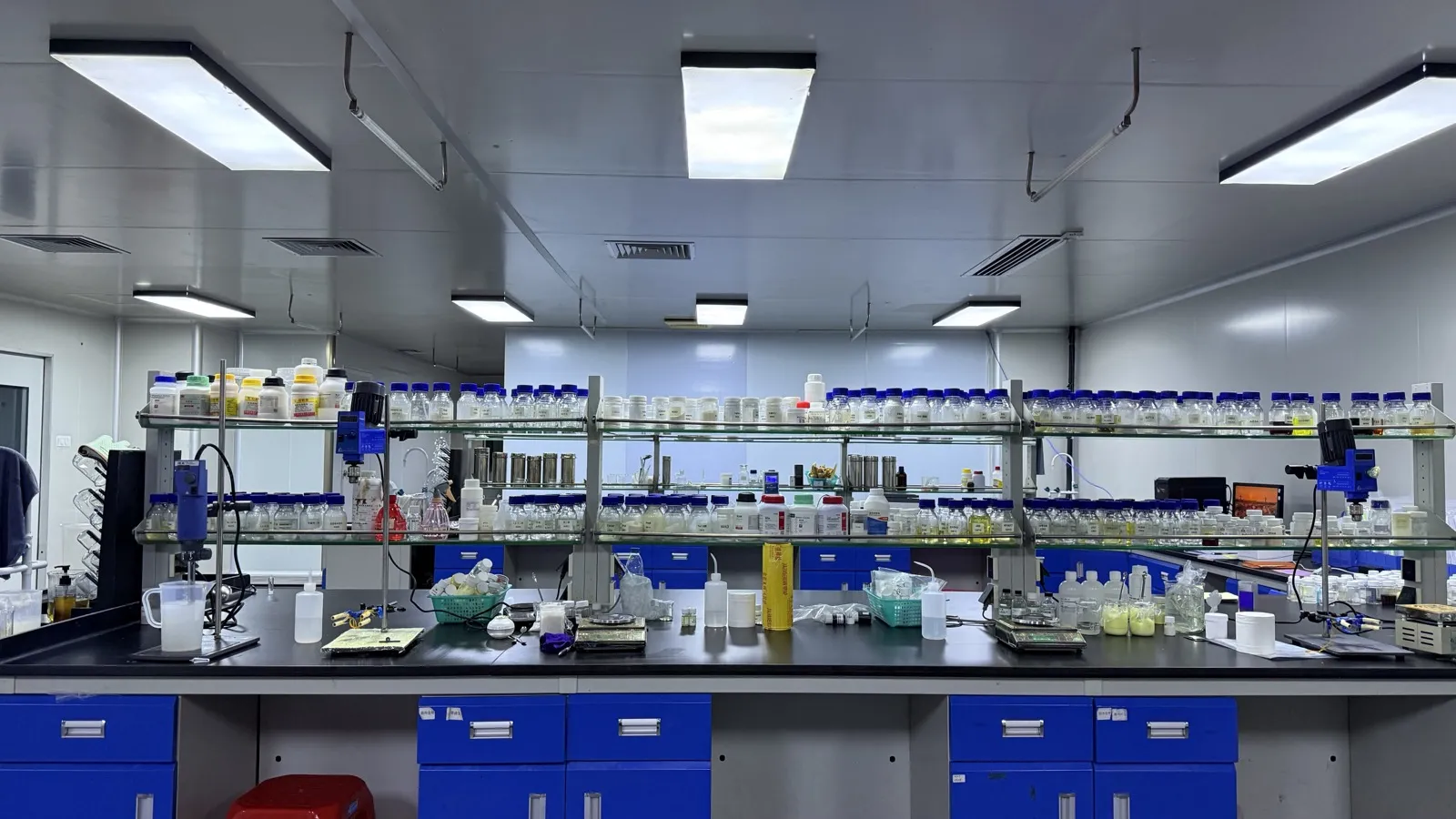
A private label product can launch in weeks and an ODM formula in a few months. A CDMO engagement is a different order of magnitude, because development and registration cannot be compressed the way manufacturing can. A realistic full-lifecycle project — from new ingredient or delivery-system development through substantiation and registration to commercial production — generally spans several months to more than a year depending on scope. The stage-by-stage scope we take on, and where we tell a brand a CDMO engagement is not justified, is set out on our cosmetics CDMO service page.
The reason is not slow work; it is that some steps have fixed minimum durations no amount of budget removes. Safety substantiation takes as long as the studies take. Regulatory registration runs on each authority's timeline, not yours. A stability programme has to run in real conditions to be trustworthy. When a partner promises to collapse all of this into weeks, that is the signal to walk, not the signal to sign. The honest version of speed in a CDMO project is running workstreams in parallel — starting registration groundwork while formulation is still finishing, for example — not skipping steps.
By contrast, once development is done, the manufacturing side moves at normal speed: 5–7 working days for a sample from an existing base, 10–15 days for a custom ODM sample with stability data, and 35–45 days of production after sign-off on stock packaging for basic formats, 45–55 days for serums and creams. The long pole in a CDMO project is always the development and registration, never the production line.
Cost: You Are Buying Development, Then Manufacturing
The cost structure of a CDMO engagement looks nothing like an OEM quote, and confusing the two is how brands get shocked by the first proposal. There are two distinct cost bases:
| Development cost | Manufacturing cost | |
|---|---|---|
| Behaviour | Largely fixed, largely upfront | Per-unit, scales with volume |
| What you pay for | Ingredient work, safety dossiers, clinical studies, patent filing | Bulk production, components, filling, QC |
| Volume sensitivity | None — costs the same at 5,000 units or 500,000 | Direct — from 2,000–3,000 bottles or jars per SKU depending on dosage form |
| Payment structure | Milestone payments across development stages, so you are not funding it all before seeing results | Standard order terms |
| What it buys | The moat | The units |
The per-unit logic is the same one covered in our MOQ and cost guide; the development fee sits on top of it and is what makes a CDMO project an investment decision rather than a purchasing decision. For what published development fees and testing prices actually look like across labs, see our breakdown of skincare formulation cost.
The implication for planning: a CDMO only makes financial sense when the volume and lifespan of the resulting product justify amortizing a fixed development cost. A proprietary active developed for a product that sells 3,000 units and disappears is a bad trade. The same active behind a range that sells for years is how the model is supposed to work.
Topical Cosmetic vs. Topical Pharmaceutical: Know Which Side You Are On
A common and costly mix-up: searching for a "topical pharmaceutical CDMO" when you actually have a cosmetic, or the reverse. The line matters because it determines which registrations, which facility credentials, and which claims are legal.
A cosmetic is a product intended to cleanse, beautify, or alter appearance. The moment a product is intended to treat, prevent, or affect the structure or function of the body, most markets reclassify it as a drug, with a heavier registration burden and a facility that holds the corresponding license. In the United States specifically, several everyday "cosmetic-looking" categories are actually regulated as over-the-counter drugs — sunscreen, anti-acne, anti-dandruff, and antiperspirant among them — and those require a drug-registered facility and monograph compliance, not cosmetic registration.
This is where scoping honesty protects you. Our facility holds a US FDA cosmetic establishment registration under MoCRA (FEI 3038966060), which is renewed biennially, and is certified to GMPC and ISO 22716 by Intertek (certificates HBPCER20260352 and HBPCER20260353, valid to 15 July 2029, verifiable at certs.intertek.com.cn). Note that FDA establishment registration is a filing requirement, not an inspection, approval, or endorsement — the certifications are the part that reflects an audited quality system for cosmetic development and manufacturing across the US, EU, ASEAN, and Middle East. If your product is a true topical drug in your target market, you need a drug-registered partner, and the right thing for any honest CDMO to do is tell you that rather than take the project. When you brief a CDMO, state your intended claims plainly, because the claims — not the ingredient list — are what decide which side of the cosmetic/drug line you land on.
When a Novel Dosage Format Pushes You Toward a CDMO
Sometimes the innovation is not the active at all — it is the format. Single-dose lyophilized (freeze-dried) formats are a clear example: a peptide or hyaluronic complex is freeze-dried into a bead or cake and reconstituted at the moment of use, which preserves potency that would degrade in a standard water-based bottle over shelf life. Getting that right is development work, not assembly. It needs freeze-drying capability, a preservation approach that survives reconstitution, and a stability programme that validates the two-part system, which is why single-dose lyophilized projects sit closer to the CDMO end of the scale than a standard serum does.
Where a proven platform already exists, though, you get the benefit without funding the invention — which is the licensed-platform route described earlier. Our freeze-dried serum sets, for instance, run on established lyophilization and active-preservation methods rather than a fresh development project, so a brand can access the format at standard project terms. You can see how the format is specified on the freeze-dried serum set, and how the cycle itself is engineered in our freeze-dried serum OEM guide. The general point holds across advanced formats: decide whether you are inventing the technology or licensing a proven one, because the first is a CDMO development project and the second is closer to an ODM order.
Single-Dose Formats: Beads, Pellets, Ampoules and Sticks
The section above treats a novel dosage format as one thing. In practice "single-dose" covers at least four different products, and the choice between them changes your tooling, your packaging and the unit economics of the whole project. It is worth separating them before you brief anyone, because a supplier quoting "single-dose" without asking which one is quoting from a template.
The Four Formats and What Actually Separates Them
| Format | What the consumer gets | The constraint that decides feasibility |
|---|---|---|
| Lyophilised bead or pellet | A dry solid dose, reconstituted with a companion solvent at point of use | The dose has to hold its shape after drying and dissolve cleanly. Fill volume per cavity, and whether the pellet survives handling and shipping without crumbling |
| Lyophilised cake in a vial | A dry cake dried in its final container, solvent added into the same vial | Vial neck and closure have to suit both the freeze dryer and the filling line. Simpler than a free-standing pellet because the container carries the dose |
| Liquid ampoule | A sealed single-use liquid dose, ready to use | No drying step, so it is the cheapest of the four, but the formula has to be stable in solution for the whole shelf life. That is exactly the problem freeze-drying exists to avoid |
| Sachet or stick pack | A powder or liquid dose in a flexible laminate | Barrier properties of the laminate and seal integrity. Cheapest packaging, weakest protection against moisture ingress |
The pattern worth noticing: the formats differ mainly in who carries the burden of keeping the active intact. An ampoule puts it on the formula and the preservative system. A lyophilised bead puts it on the process and the packaging. A sachet puts it on the laminate. Whichever you pick, that is where the technical work and the cost concentrate.
Why a Two-Part System Doubles the Questions
Any dry single dose that needs reconstituting is not one product, it is two, plus the mechanism that keeps them apart until use. Three consequences that brands consistently underestimate:
- The solvent is a formula too. It needs its own specification, its own stability data and, in a regulated market, its own place in the product file. A quote that prices only the dry dose is incomplete.
- The two parts have to be validated together. What matters is not that the bead is stable and the solvent is stable, but that the reconstituted mixture performs as claimed after both have sat on a shelf for the stated shelf life. Ask whether the stability programme tests the combined system or the two halves separately.
- Reconstitution has to work in a bathroom, not a lab. Dissolution time, whether it needs shaking, whether residue is left in the cap. These are consumer-experience failures that no specification sheet catches, which is why a physical sample matters more here than in a conventional serum.
Minimum Order Moves From Kilograms to Cavities
This is the part that surprises people most. A conventional serum MOQ is driven by batch size, because the constraint is how little product a mixing vessel can process sensibly. A single-dose MOQ is driven by unit count, because the constraints are the freeze dryer shelf area, the number of cavities in the tooling, and the changeover time on the filling and sealing line.
Two practical effects follow. First, cutting your order in half may not cut the price much, because a partly loaded dryer runs the same cycle hours as a full one. Second, a small quantity of a single-dose product can cost more per unit than a much larger quantity of a conventional serum, which is a legitimate quote rather than a padded one. If you want the underlying mechanics of why cycle design drives that number, our freeze-dried serum guide covers collapse temperature and cycle hours in detail.
The questions that get you a real number rather than a placeholder:
- What is the minimum in units, and what does the price do at two and five times that quantity?
- Is the tooling existing or new, and if new, who owns it and who pays for it?
- Does the quote include the solvent, its filling, and the secondary packaging that keeps the two parts together?
- How is residual moisture specified and by which method, since that specification is what protects the dose in transit?
Choose the Format From Your Constraint, Not From the Trend
An honest read, and we quote all four so we are not neutral: if your active is stable in water, a liquid ampoule gives you the single-dose presentation and the ritual without paying for a drying step. Freeze-drying earns its cost when the active genuinely cannot survive in solution, or when the dry format itself is the point of the product. Paying for lyophilisation to make a stable ingredient look premium is a marketing decision being charged as a technical one.
If you are weighing formats, the useful first conversation is about your active and your target shelf life rather than about the packaging you have seen elsewhere. Our multi-effect freeze-dried set and skin repair set both run on established two-part systems, which is the faster route when your formula does not need original development. When it does, tell us the active and the shelf life you need and we will scope the format against those two constraints before quoting.
A Word on Beauty Supplements and Ingestibles
"Beauty supplement CDMO" is a frequent search, and it hides a licensing trap. Ingestible beauty — collagen drinks, capsules, gummies — is not a cosmetic. It is a food or dietary supplement in most markets, manufactured under food or supplement authorization on entirely different production lines, with its own registration regime. A cosmetics CDMO, however capable on topicals, is not automatically authorized to make an ingestible, and vice versa. If your concept spans both a topical and an ingestible, treat them as two separate sourcing tracks and ask each partner directly which authorization they actually hold for the ingestible side. Assuming one certified facility covers both is how supplement projects end up stalled at registration.
How to Brief a CDMO So the First Conversation Is Useful
Because a CDMO project is an investment decision, the first conversation should surface the expensive unknowns quickly. Bring four things:
- Your actual edge, stated plainly. Is it a proprietary active, a delivery advantage, a defensible claim — or is it execution? This determines whether you need development at all.
- Your intended claims. These decide the cosmetic-versus-drug classification and therefore the whole regulatory path.
- Your target markets. Registration is market-specific; a project that is straightforward for one market can be a year longer for another.
- Your volume and lifespan expectation. This is what tells both sides whether a fixed development cost can be amortized sensibly.
A partner worth working with will use that first conversation to tell you where a CDMO scope is not justified, not just to sell you one. If every answer is "yes, we can do that" with no mention of what it costs in time or money, you are talking to a sales script, not a development partner. The practical next step is often to verify the R&D capability itself — the questions, documents, and red flags for that are covered in our guide on how to choose a cosmetics manufacturer in China, which walks through R&D verification step by step.
Frequently Asked Questions
What is a cosmetic CDMO in simple terms?
A cosmetic CDMO develops the science behind a product and then manufactures it. Beyond making a formula (OEM) or developing one from existing ingredients (ODM), a CDMO can invent and register a new ingredient, build a new delivery system, generate safety and efficacy data, file patents, and scale the result to production. You need one only when part of your product does not yet exist, is not yet legal to sell, or is not yet protected.
Do I need a CDMO or is an OEM/ODM enough?
If your competitive edge is execution — branding, market, price, a better routine — an OEM or ODM is enough and much faster and cheaper. You need a CDMO only when your edge depends on something proprietary that has to be developed and protected. A useful test: if a competitor copied your product next quarter, would it matter? If not, skip the CDMO.
Who owns the intellectual property a CDMO develops?
Whoever the contract says — not whoever paid the invoice. Common arrangements are outright ownership by the brand (highest cost), exclusive use with the partner retaining ownership, or a licensed platform shared across clients (lowest cost). Settle ownership, exclusivity boundaries, and what happens if the relationship ends in writing before development starts.
How long does a cosmetic CDMO project take?
Generally several months to more than a year, depending on scope. Development, safety substantiation, and registration have fixed minimum durations that budget cannot compress. Once development is complete, manufacturing runs at normal speed — samples in 5–15 days and production in 35–45 days for basic formats, 45–55 days for serums and creams. Any partner promising to compress the whole lifecycle into weeks is a warning sign.
Is a cosmetics CDMO the same as a pharmaceutical CDMO?
No. If your product is intended to treat or prevent a condition, or falls under a category regulated as an over-the-counter drug in your market (sunscreen, anti-acne, anti-dandruff and antiperspirant in the US, for example), you need a drug-registered facility, not a cosmetic one. State your intended claims early, because the claims decide the classification, not the ingredients.
Can a cosmetics CDMO make beauty supplements?
Not automatically. Ingestible beauty products are foods or dietary supplements, made under different authorization on different lines with a separate registration regime. A topical cosmetics CDMO is not necessarily licensed for ingestibles. If your concept spans both, treat them as separate sourcing tracks and confirm which authorization each partner actually holds.
If you are weighing whether your product justifies a development scope, share your brief, your intended claims, and your target markets, and we will tell you honestly whether a CDMO path is warranted or whether OEM/ODM is the smarter route. You can also read how our delivery technology platform is applied, or request a quote with your specific project in mind.
Ready to Start Your Project?
Tell us your product requirements. Our technical team responds within 24 hours with a detailed quotation.