
White Label Skincare: Categories, Real MOQs and Lead Times
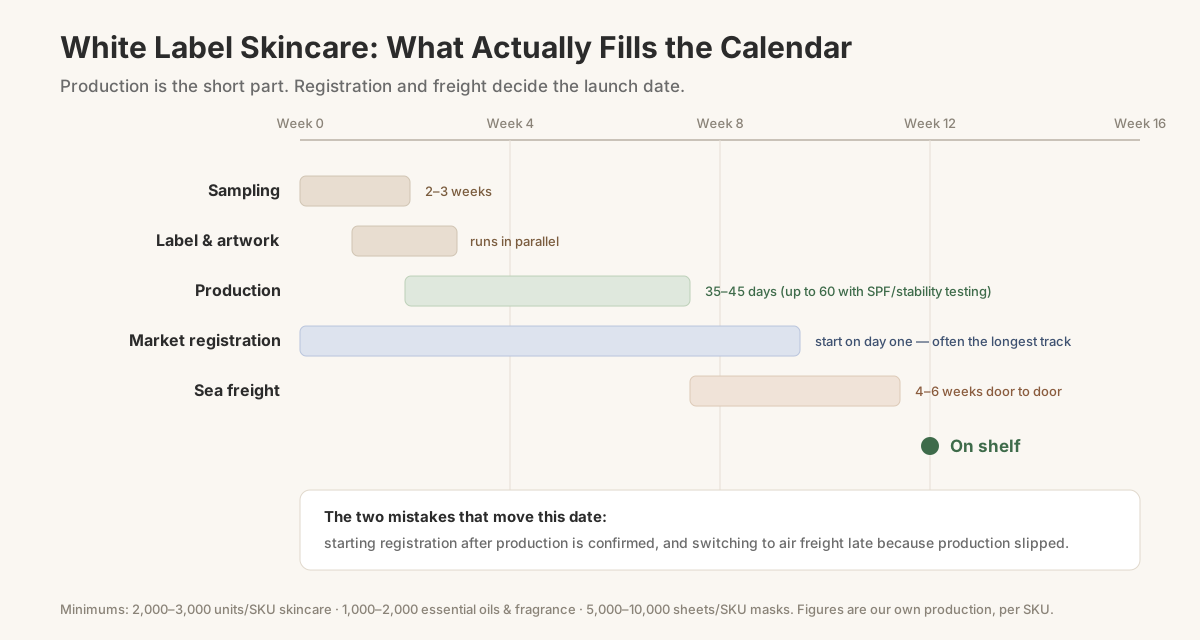
Chart by GZ Cosmetics Lab · Free to reuse with a link back to this page.
White label skincare is the fastest way to put a skincare line on the market under your own brand: you choose from finished formulas a manufacturer already produces, apply your label, and ship. There is no formula development, no stability programme to wait through, and no development fee. What you trade away is exclusivity, because the same base product can be sold by other brands. This guide covers which product categories actually work as white label, what minimum order quantities and lead times to expect from a Chinese manufacturer, and how to check whether a supplier is genuinely equipped to serve you.
The terminology is worth settling first, because suppliers use these words loosely. If you are still deciding between models, our guide to contract manufacturing vs private label vs white label explains where formula ownership and exclusivity sit in each. This page assumes you have already decided that speed matters more than a proprietary formula, and focuses on execution.
What You Actually Buy in a White Label Deal
You are buying a finished, tested, compliant product. The formula exists, it has been through stability testing, the packaging is already tooled, and the manufacturer knows its cost to the cent. Your contribution is brand identity, label artwork, and market access.
Three things come with the product whether you asked for them or not:
- A fixed formula. Fragrance and colour can sometimes be adjusted. Active levels, texture, and preservative system usually cannot, because changing them invalidates the stability data the product already carries.
- Fixed primary packaging. The bottle, jar, or tube is whatever the manufacturer already runs on that line. Secondary packaging such as cartons and labels is yours to design.
- Existing test documentation. Stability results, compatibility data, and safety assessment already exist. This is the real reason white label is fast, and it is worth more than the cost saving.
What you do not get is exclusivity. Unless you negotiate and pay for it, the manufacturer can sell the same base to other brands, including in your market. Treat any supplier who promises exclusivity on a standard catalogue item at standard pricing with scepticism.
Which Skincare Categories Work as White Label
Not every category suits this model. The deciding factor is whether buyers choose the product on formula or on brand and price.
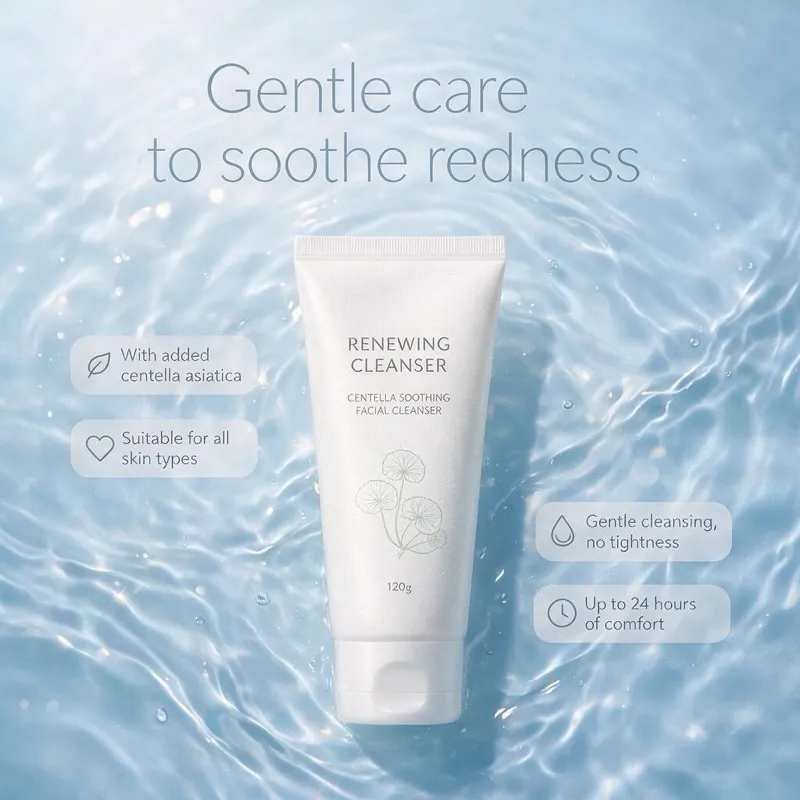
Works well: cleansers, toners, sheet masks, basic hydrating serums, body care. These are high-repurchase, familiar formats where the buyer does not interrogate the ingredient list. A well-made amino acid cleanser performs the job regardless of whose name is on it.
Works poorly: anything where the formula is the marketing claim. Brightening serums, anti-ageing treatments, and actives-led products are bought on specific ingredients at specific concentrations. If your differentiation story is the formula, a shared formula undermines it before you launch.
Requires care: sunscreen and anti-acne products. These are regulated differently across markets, and in several jurisdictions the claim itself changes the product's legal classification. In the United States, for example, an anti-acne claim paired with a salicylic acid level brings the product under the FDA's OTC monograph framework rather than ordinary cosmetics rules. Getting a white label product into these categories means confirming the existing documentation matches your destination market, not just your claim.
In practice most brands starting out build a routine from the first group and add a hero product later, once volume justifies developing something proprietary. Our skincare and body care ranges are organised the same way.
Not sure which route fits your product?
Send us your brief and our formulators will tell you what is realistic on formula, MOQ, and timeline before you commit to anything.
Real Minimums and Lead Times
These are the figures from our own production, by category, not industry averages:
- Skincare (cleansers, serums, toners, creams): 2,000 to 3,000 units per SKU.
- Essential oils and fragrance: 1,000 to 2,000 units per SKU.
- Sheet masks: 5,000 to 10,000 sheets per SKU, roughly 1,000 to 2,000 retail boxes depending on sheet count.
- Production lead time: 35 to 45 days for most SKUs from confirmed order to goods ready. Multi-SKU orders and some formats run 40 to 50 days; products needing stability or SPF testing run 45 to 60.
- Sampling: 2 to 3 weeks for a custom sample round.
The MOQ is per SKU, not per order. A four-product routine at 2,000 units each is 8,000 units total, and this is where new brands get their budgeting wrong. Start with two SKUs, prove they sell, then extend the line.
| Category | Minimum per SKU | Note |
|---|---|---|
| Skincare: cleansers, serums, toners, creams | 2,000 to 3,000 units | The standard baseline for most launches |
| Essential oils and fragrance | 1,000 to 2,000 units | The lowest entry point of the formats we run |
| Sheet masks | 5,000 to 10,000 sheets | Roughly 1,000 to 2,000 retail boxes, depending on sheet count per box |
| Stage | Time | What extends it |
|---|---|---|
| Custom sample round | 2 to 3 weeks | Signature textures and shade matching may need a second round |
| Production, most SKUs | 35 to 45 days from confirmed order to goods ready | — |
| Production, multi-SKU orders and some formats | 40 to 50 days | Line changeovers across several SKUs |
| Production, products needing stability or SPF testing | 45 to 60 days | Test duration is elapsed time and cannot be bought down |
| Market registration | Runs in parallel, often longer than production | Your destination market's own process; a separate track |
Two columns to read together: production time and registration time overlap rather than stack, but registration is frequently the longer of the two. Planning a launch date around the production figure alone is the single most common scheduling mistake we see.
The lead time is production only. It does not include your market's registration process, which runs in parallel and often takes longer. Notification in ASEAN markets, for instance, is a separate track with its own timeline covered in our ASEAN Cosmetic Directive guide. Brands that plan a launch date around production time alone routinely miss it by months.
About Suppliers Advertising "No MOQ"
You will find white label suppliers promising no minimum order, sometimes a single unit. The offer is real, and it is worth understanding what you are actually buying, because it is a different transaction from factory production.
No-minimum programmes are generally stock redistribution: the supplier holds finished inventory produced in bulk by someone else and sells it on in small quantities with your label applied. That has genuine advantages. You can test a concept with almost no capital, and you can start next week.
The trade-offs are structural rather than a question of supplier quality:
- Unit cost stays flat. You pay a distribution price, so 5,000 units costs roughly what 50 did per unit. Ordering directly from a factory at 2,000 units is usually cheaper per unit than a no-minimum programme at the same volume.
- The catalogue is whatever is in stock. Packaging, fill size, and formula variants were fixed by whoever commissioned the original run.
- Documentation may sit with a party you cannot reach. If your market's regulator asks for the manufacturer's file, the reseller has to obtain it from the original producer. This is a practical problem, not a theoretical one.
- Scaling means changing supplier. When volume grows you move to a factory anyway, and reformulating and re-registering at that point costs more than starting there would have.
The honest split: if you are validating whether anyone will buy your brand at all, a no-minimum reseller is the cheaper experiment. If you already have demand signal and intend to build a range, ordering at 2,000 units directly from a factory gives you better unit economics, direct access to documentation, and a supplier you can stay with as you grow. That is the route our private label programme is built around.
The Costs You Have Not Budgeted For
Unit price is the number most brands compare, and it is rarely what decides whether the launch works. The gap between quoted price and landed cost usually comes from:
- Packaging tooling. Stock bottles add nothing. A custom cap, pump, or bottle shape means a mould, a one-off charge amortised across your first run. Establish who owns the mould afterwards.
- Sample charges. Usually billed, sometimes credited against a production order. Confirm which before you request several rounds.
- Freight and mode. Sea freight is economical but adds four to six weeks door to door depending on lane. Air is fast and can exceed product cost on heavier items such as body care. Switching to air late because production slipped is a common way to lose the launch margin.
- Duty and import handling. Rates depend on destination and HS classification. This is your cost, not the factory's, and it belongs in the model before you set retail price. For US-bound orders the entry paperwork itself carries cost even where the duty rate does not, which our US landed cost guide breaks down line by line.
- Registration and testing. Market registration carries its own fees and often requires market-specific testing beyond what the factory file already contains.
The largest controllable variable is usually fill volume and packaging rather than the formula. A serum at 30ml and the same serum at 50ml differ by more than the extra 20ml, because bottle, carton, and shipping weight all move together. If you are optimising unit cost, size and packaging give you more room than formula changes do, and our MOQ and cost guide breaks down where the money actually goes. Formulation and stability work carries its own line in that budget.
How to Verify a White Label Supplier
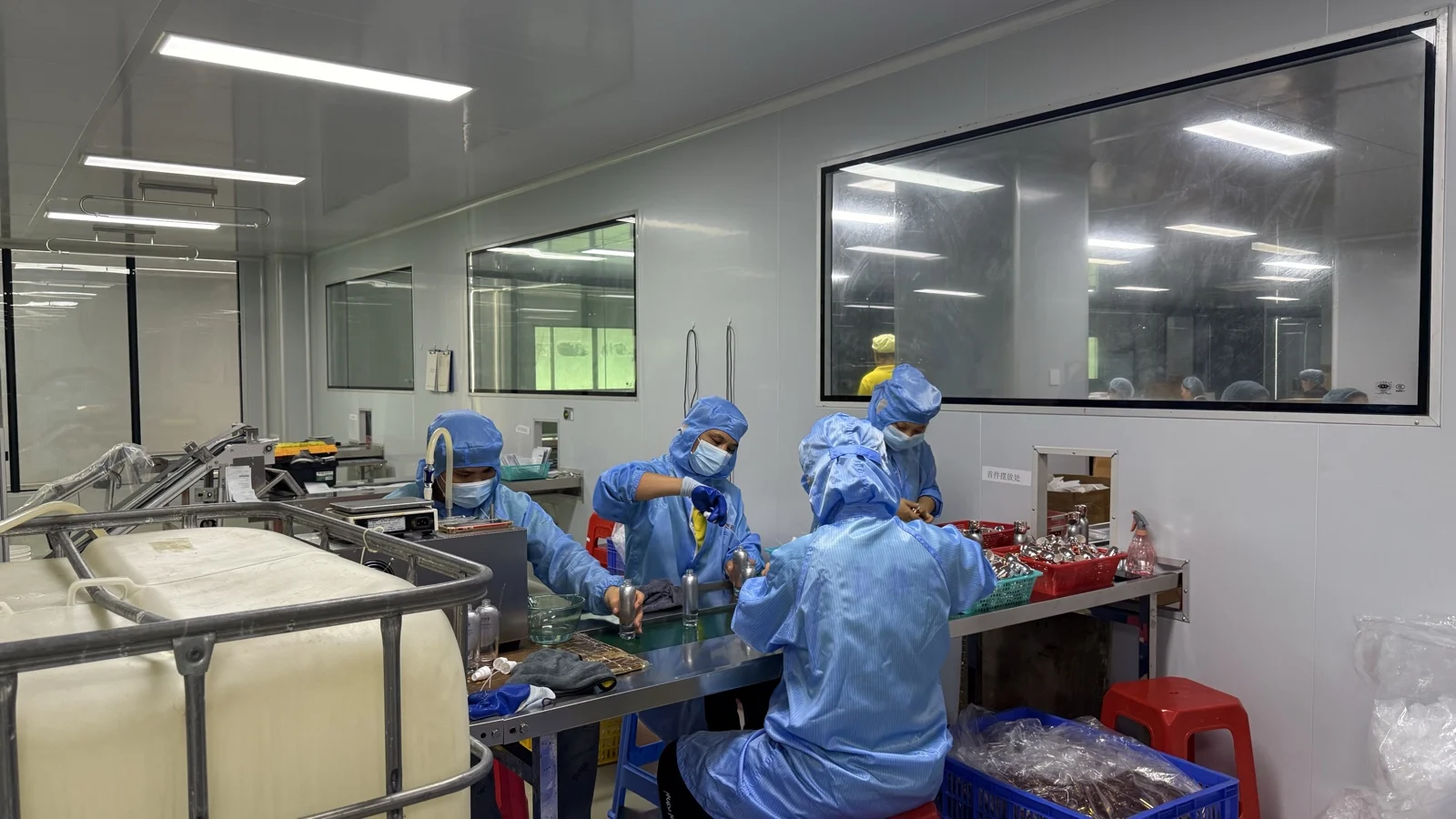
Because you are buying an existing product, your due diligence shifts from formulation capability to documentation and consistency. Five checks matter:
- Ask for the stability report on the specific SKU, not a generic capability statement. It should specify test conditions and duration. A supplier who cannot produce this for a catalogue product is reselling rather than manufacturing.
- Confirm the manufacturing certification covers the actual production site. ISO 22716 and GMPC are site-specific, and a trading company can legitimately reference a certificate belonging to a factory it does not control. Our explanation of what ISO 22716 and GMPC certification mean covers what the scope statement should say.
- Check the documentation against your destination market, not in general. Ingredient restrictions differ. A formula that is compliant in one market can require reformulation in another, and finding this out after your order is placed is expensive.
- Ask what happens between batches. White label products are made repeatedly. What you want to know is how colour, viscosity, and fragrance are held consistent from batch to batch, because your customers will notice drift before you do.
- Establish whether the base is genuinely available to others in your market. Ask directly. A straight answer, even an unwelcome one, tells you more about the supplier than a promise of exclusivity.
If you want a fuller framework, the checklist in how to choose a skincare manufacturer applies here too, though several formulation questions in it are less relevant when the formula is already fixed.
When to Move Beyond White Label
White label is a starting position, not a destination. Three signals suggest it is time to move:
- A competitor appears with a visibly identical product. This is the model working as designed, and it means your only remaining lever is price.
- You have repeat volume on one SKU. Once a product reorders reliably, developing a proprietary version becomes worth the development time, and you have the sales data to specify it properly.
- Your marketing needs a claim the formula cannot support. A shared base cannot carry a proprietary-ingredient story.
The practical route is to keep supporting products on white label and develop your hero product properly. Our guide to starting a private label skincare brand covers that transition, including how to sequence it so you are not carrying development costs across an entire range at once.
Frequently Asked Questions
What is the minimum order for white label skincare?
In our production, 2,000 to 3,000 units per SKU for skincare formats, 1,000 to 2,000 for essential oils and fragrance, and 5,000 to 10,000 sheets per SKU for sheet masks. Minimums apply per SKU, so a four-product line multiplies accordingly.
How long does a white label skincare order take?
Production runs 35 to 45 days for most SKUs, with some formats and larger multi-SKU orders at 40 to 50 days, and 45 to 60 where stability or SPF testing is required. A custom sample round takes 2 to 3 weeks. Market registration runs separately and is frequently the longer path.
Can I change the formula in a white label product?
Fragrance and colour can often be adjusted. Active levels and preservative systems generally cannot, because changes invalidate the existing stability data and require retesting. Once you need real formula changes, you have moved into private label or OEM territory.
Is white label skincare exclusive to my brand?
Not by default. The same base can be supplied to other brands unless exclusivity is specifically negotiated, which normally involves higher volume commitments or a development fee.
Is white label cheaper than private label?
Per unit at the same volume, usually marginally. The real saving is that there is no development cost and no development timeline. As volumes grow that advantage narrows, which is why established brands typically move to formulas they control.
Getting Started
If you know which categories you want, the fastest path is to send us the product types, your target market, and your intended launch date. We will come back with available formats, applicable minimums, realistic timing including registration, and indicative pricing. Our manufacturing site holds ISO 22716, GMPC, ISO 9001, ISO 14001, ISO 45001, and HALAL certification, with certificates issued by Intertek, and we produce across 13 lines.
Request a quote with your category list and destination market, and we will tell you what is feasible on your timeline rather than what sounds good in a proposal.
Ready to Start Your Project?
Tell us your product requirements. Our technical team responds within 24 hours with a detailed quotation.