
Korean Cosmetics OEM Alternative: When to Switch and How
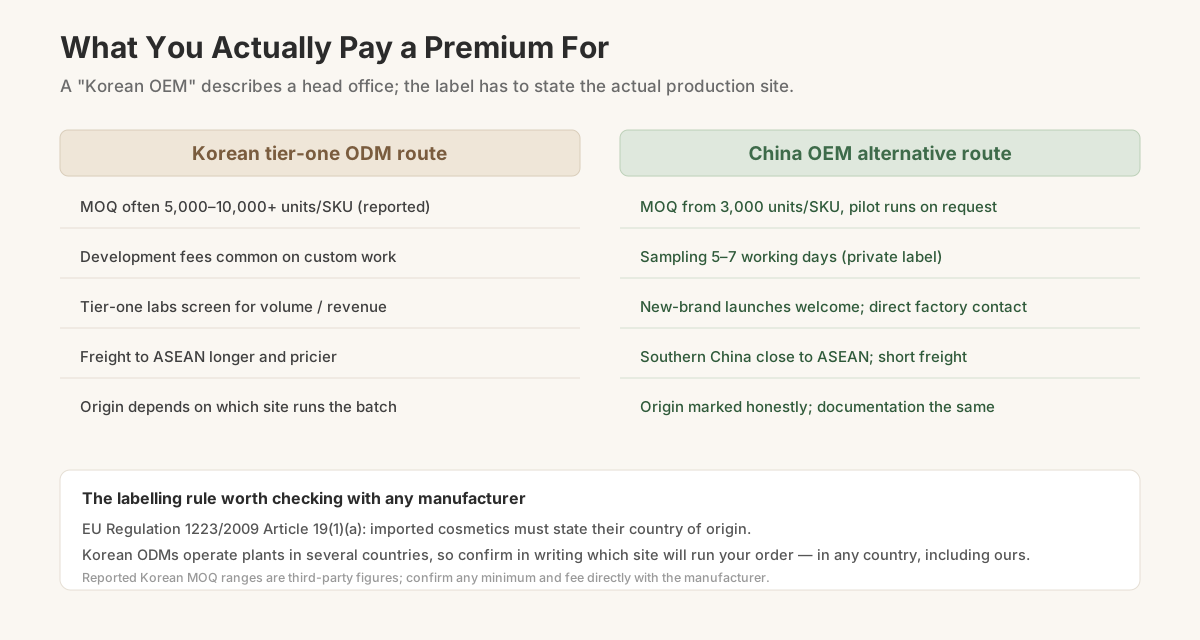
Chart by GZ Cosmetics Lab · Free to reuse with a link back to this page.
If you are searching for a Korean cosmetics OEM alternative, you have usually already talked to a Korean manufacturer and hit a wall: a minimum order quantity your launch budget cannot absorb, a development fee on top of it, or a project scope that did not line up with the volumes a tier-one lab is set up to run. This guide is written for that exact moment. It covers when switching away from a Korean OEM genuinely makes sense, what you keep and what you give up, the country-of-origin rule most brands only discover at the labelling stage, and how to brief a replacement factory so your product still performs the way the Korean sample did.
The short version: for many indie and growing brands, the practical alternative to a Korean OEM is a certified Chinese OEM/ODM that can reproduce a K-beauty-style formula at a lower MOQ, with a shorter route to Southeast Asian markets. Whether that trade is right for you depends on one question — how much of your brand's value actually comes from the words "Made in Korea" versus from the product itself. We answer that below, then show you the mechanics of making the move without losing formula quality or compliance.
Blocked by a Korean OEM's minimums?
Send us your Korean reference product and target market. We will tell you honestly whether a China OEM can match it, at what MOQ, and what the landed cost looks like.
Why Brands Start Looking for a Korean OEM Alternative
Korean manufacturing earned its reputation honestly. Korean labs lead on texture innovation, novel delivery formats, and trend-defining actives, and the "Made in Korea" claim carries genuine weight with consumers who buy into K-beauty. None of that is in dispute. The problem is rarely the product — it is access. Three barriers push brands to look elsewhere.
Minimum order quantities that assume you are already at scale. The well-known Korean labs behind trend-setting products are built to serve large, established clients efficiently. Widely reported minimums for tier-one Korean ODMs start in the thousands of units per SKU and rise sharply for colour cosmetics and complex formulas. Those figures circulate second-hand across sourcing forums, so treat any specific number as something to confirm directly rather than a fixed fact — but the direction is consistent: a first order of 2,000 to 3,000 bottles to test an unproven concept is often below the floor a top Korean lab will take on directly.
Development fees and volume screening. Custom formulation work typically carries a development charge, and the labs with the strongest reputations can afford to be selective about which brands they onboard. A bootstrapped brand with no track record may find the door does not open at all, or only opens through a broker who aggregates several small brands into one production slot — which adds a margin layer and some distance between you and the production floor.
Freight and proximity, especially for ASEAN brands. For a brand selling into Southeast Asia, shipping finished goods from Korea is longer and more expensive than shipping from southern China, and factory visits are harder to arrange. Landed cost, not ex-works price, is what hits your margin, and distance quietly inflates it.
If your reason for choosing Korea was the product's performance rather than the origin story, all three of these barriers are solvable by moving the manufacturing — not the formula concept — somewhere more accessible.
First, Separate "Korean OEM" from "Made in Korea"
Before you spend any energy on alternatives, be honest about what you are actually paying the Korean premium for. There are only two possibilities, and they lead to very different decisions.
If you are paying for the formula and performance — a specific texture, a hero active, a finish your customers love — then that value can travel. A capable factory in another country can reproduce the formula category and, in many cases, improve on the cost. Switching is a straightforward engineering and sourcing exercise.
If you are paying for the country-of-origin claim itself — because your positioning is built on "Made in Korea" and your customer is paying specifically for that provenance — then no alternative reproduces it, by definition. Moving production means giving up the claim, and you have to decide whether your brand survives without it.
There is one distinction worth understanding before you compare quotes, because it applies to both routes equally: "Korean OEM" describes where a company is headquartered, not necessarily where your batch is filled. The major Korean ODMs are global manufacturers with multi-country footprints. Cosmax, the world's largest cosmetics ODM, states on its own website that it operates "technically advanced facilities in Korea, China, USA, Indonesia and Thailand." Allocating production across sites is normal, sensible supply-chain practice, because it puts capacity closer to end markets. It simply means the production site is a separate question from the company name, and one worth raising early.
The reason to raise it early is that origin marking is a legal requirement rather than a marketing choice. Under EU Regulation 1223/2009, Article 19(1)(a), the country of origin must be stated on the label for imported cosmetic products, and the United States likewise requires origin marking on imports. So if your positioning depends on a "Made in Korea" claim, that claim needs to match the site that actually produced the batch. This is not a criticism of any manufacturer, and it is not unique to Korea. It is simply a detail that belongs in your due diligence rather than in your assumptions. Ask any manufacturer, in any country, to confirm in writing which site will run your order. Any professional partner will answer without hesitation, and you should hold us to the same standard: our answer is a single facility in Guangzhou.
What You Keep, and What You Give Up, by Switching
An honest alternative guide has to name the trade-offs, not just the upside. Here is what moving from a Korean OEM to a certified Chinese OEM/ODM actually changes.
What you keep
- Formula performance. The active ingredients, delivery systems, and sensory targets that made your Korean sample work are reproducible. Actives are global commodities; a good formulator matches the brief.
- Certification and documentation. A properly certified Chinese factory carries the same quality-system credentials international buyers expect. Ours hold ISO 22716 and GMPC, both certified by Intertek (certificates HBPCER20260352 and HBPCER20260353, verifiable at certs.intertek.com.cn), plus US FDA cosmetic facility registration under MoCRA (FEI 3038966060). For what those actually mean, see our explainer on ISO 22716 and GMPC.
- Market access. The documentation work for EU, US, ASEAN, and Middle East registration is the same discipline regardless of manufacturing country. A China OEM experienced in export builds that evidence as part of the project.
What you give up
- The "Made in Korea" label. This is the real, unavoidable cost of switching — if the claim was central to your positioning. Be clear-eyed about how much of your sales it drives.
- Korea's newest-trend timing. Genuinely trend-defining formats often debut in Korea first. If being first-to-market with a brand-new K-beauty innovation is your entire proposition, the source country has an edge. For most brands, a well-executed version of a proven format matters more than being three months earlier.
- An exact one-to-one clone. Reformulation reproduces the category and performance target, not a byte-for-byte copy of a proprietary formula you do not own. That is a legal and technical reality, not a limitation of the factory. We cover how to brief this properly below.
If you are still weighing the two countries at a higher level rather than executing a switch, our detailed China vs Korea cosmetics manufacturer comparison breaks down cost, MOQ, formulation depth, and prestige factor by factor. This page assumes you have already decided to explore the alternative and want the mechanics.
How to Brief a China OEM Using Your Korean Reference Product
The single biggest mistake brands make when switching is asking a new factory to "copy this exactly." You almost never own the Korean formula, so an exact copy is neither legal nor possible. What works is a structured reference brief that describes the target so the formulator can build to it. Give your new manufacturer these five things. If you do own the formula and hold its batch record, the job is a different one — see our guide to cosmetics technology transfer for how a documented move works.
- The reference product itself, plus its ingredient list. The INCI list is printed on the pack and is public information. It tells the formulator the ingredient families and rough architecture to aim for, without anyone needing the proprietary percentages.
- Your performance targets in plain language. Texture (gel, essence, cream), absorption speed, finish (dewy, matte), fragrance direction, and the one or two properties customers comment on most. This is what the formulator actually matches.
- Your hero actives and the level of claim you want to make. If the product's story is built on a specific active, state it and the claim you intend, because the claim decides which regulatory category you land in.
- Your target markets. This drives everything downstream — permitted ingredients, concentration caps, labelling, and registration route all depend on where you sell.
- Your realistic first-order volume. Say the real number. A good partner will tell you honestly whether it clears their MOQ and price it accordingly rather than quoting a fantasy volume.
From that brief, a capable factory develops a sample that hits your performance target using its own compliant formula. To judge whether the factory can genuinely do this rather than just promise it, our guide on how to verify a manufacturer's formulation capability gives you the questions and evidence to ask for.
MOQ, Sampling, and Lead Times: What the Alternative Actually Looks Like
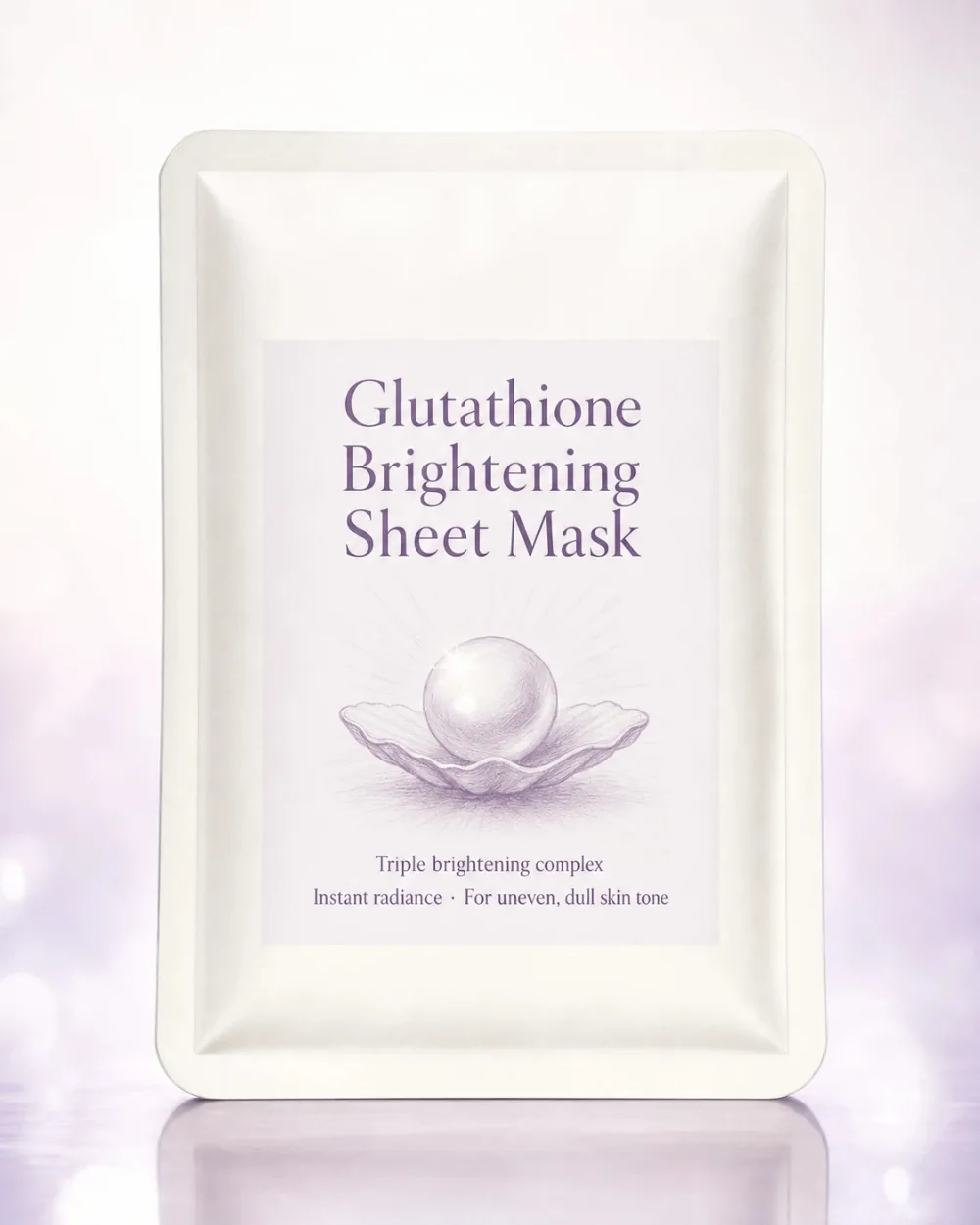
The reason the alternative route exists is that a China OEM built for export can start you at a lower minimum and move faster. Here is our own structure, so you have concrete numbers to compare against whatever a Korean lab quoted you.
- MOQ from 2,000–3,000 bottles or jars per SKU for most skincare (creams, serums, lotions), 5,000–10,000 sheets for sheet masks, and 2,000–3,000 bottles or jars for hair and body care. Fragrance and essential oils start lower, at 1,000–2,000 bottles per SKU. We take pilot runs and new-brand launches below standard minimums on request — the point of the alternative is that a first order to test the market is welcome, not screened out.
- Sampling in 5–7 working days for existing private-label formulas, or 10–15 working days for a custom ODM development built to your reference brief.
- Production in 35–45 days for basic formats on stock packaging, or 45–55 days for serums, creams and masks, which sit in our stability-tested tier. That extends to roughly 10–13 weeks when your packaging is custom and needs tooling — the longer window sits mostly with the packaging supplier, not the fill line.
We run 13 production lines at 200,000 units of daily capacity in a class 100,000 cleanroom in Guangzhou, with in-house R&D — enough headroom that a growing brand's reorder does not get rescheduled behind a larger client's run. For a full walk-through of how minimums, sampling, and unit economics fit together, see our private label MOQ and cost guide.
Getting the Compliance Right in the New Market
Switching manufacturing country does not change your compliance obligations, but it does mean the paperwork trail restarts with the new factory. The responsibility for market conformity sits with the brand and its designated responsible person or importer, not with the factory's home country. Two things to plan for.
Country-of-origin marking, done honestly. As covered above, imported cosmetics must state their true country of manufacture in the EU under Article 19(1)(a) of Regulation 1223/2009, and the US requires origin marking on imports. Build your label and your brand story around the real origin from the start, rather than discovering the requirement after artwork is finalised.
Registration documentation from a certified partner. Whether you are notifying through the EU's CPNP, registering a facility under US MoCRA, or filing an ASEAN notification, you will need GMP-standard manufacturing evidence, ingredient documentation, and safety data. A factory that exports constantly assembles this as routine. If Europe is your target, our guide to private label cosmetics for the European market covers the responsible-person and CPNP requirements in detail.
Which K-Beauty Categories Transfer Most Cleanly
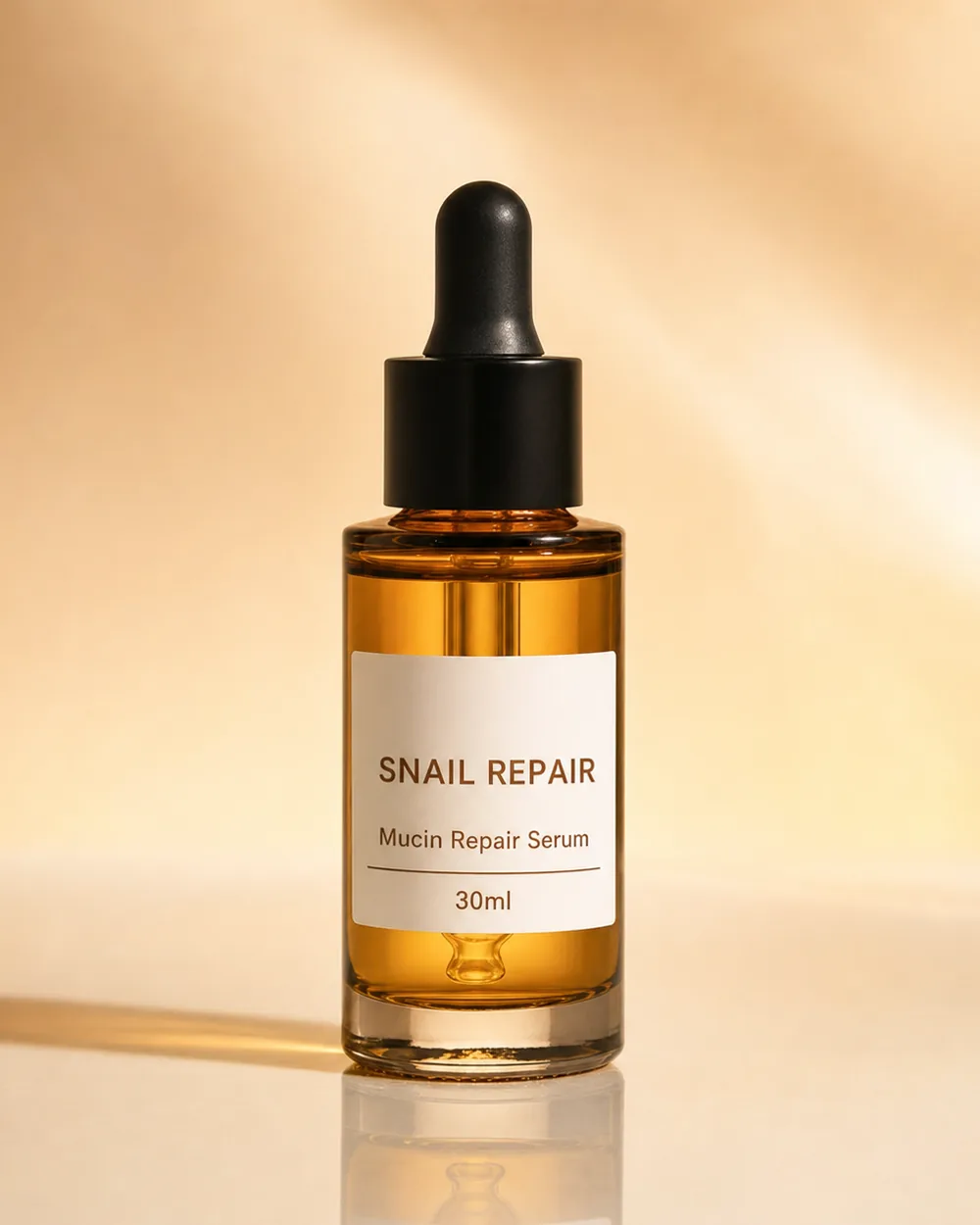
Not every product moves with the same effort. Some K-beauty categories are essentially formula-and-documentation exercises that reproduce well; others lean on Korea's specific edge in novel textures. Knowing which is which lets you set realistic expectations for the sample round.
| Category | How cleanly it transfers | Why | Sample rounds to budget |
|---|---|---|---|
| Cleansers, toners, lotions | Easiest | Mature categories with well-understood formulation, produced at low cost and low MOQ | One |
| Active-led serums and essences | Cleanly | Built on actives that are global commodities; defined by active system and pH rather than a proprietary texture | One |
| Repair and soothing formats on a known active | Well | Snail mucin, centella and panthenol systems are defined by ingredient quality and stability | One to two |
| Signature-texture products | Reproducible, with effort | "Glass skin" gel-essences and unusual delivery formats need the sensory feel dialled in | Budget an extra round |
| Colour cosmetics with a specific finish | Hardest | Shade matching and wear performance take time in any market | Most; this is where a low first-order MOQ matters most |
- Active-led serums and essences transfer cleanly. Brightening, hydrating, and barrier-support serums are built around actives that are global commodities, so the performance target is straightforward to match. A glutathione or vitamin-C brightening essence, for instance, is defined by its active system and pH rather than a proprietary Korean texture — see how we build this category in our glutathione brightening serum. Hyaluronic-acid hydrators sit in the same easy-transfer bracket.
- Cleansers, toners, and lotions transfer easily. These are mature categories with well-understood formulation, and a China OEM produces them at low cost and low MOQ without difficulty.
- Repair and soothing formats built on a known active transfer well. Snail mucin, centella, and panthenol systems are defined by ingredient quality and stability rather than a proprietary texture, which makes them straightforward to match — our snail mucin repair serum is an example of a category most brands assume can only come from Korea.
- Signature-texture products need the most sample work. The "glass skin" gel-essences and unusual delivery formats that Korea pioneered can be reproduced, but expect more iterations to dial in the exact sensory feel. Budget an extra sample round rather than assuming a first-pass match.
- Colour cosmetics with a specific finish are the hardest. Shade matching and wear performance take time in any market. This is the category where a first-order MOQ from an accessible factory matters most, because you will want to test before committing to volume.
The pattern is simple: the more your product depends on a chemistry target you can describe, the cleaner the transfer; the more it depends on a proprietary sensory signature, the more sample rounds you should plan for.
Where Staying with a Korean OEM Is Still the Right Call
An alternative guide that pretends switching is always right is not honest, and would not serve you. Stay with a Korean OEM when any of these is true:
- "Made in Korea" is load-bearing in your positioning and your customer is demonstrably paying for the provenance, not just the product.
- Your entire proposition is being first with a brand-new K-beauty format that has not yet spread beyond Korea, and speed-to-trend is your moat.
- You are already at the volume where a tier-one Korean lab's minimums are comfortable and the cost premium is a rounding error against your margin.
For everyone else — brands whose value comes from the product working and the price being right — the alternative route is not a downgrade. It is a way to launch at a sensible MOQ, keep the formula performance, ship efficiently to your market, and put the money you saved into the parts of the business that actually drive sales: product quality, packaging, and marketing.
Conclusion: Move the Manufacturing, Keep the Product
A Korean cosmetics OEM alternative is not about settling for less. It is about separating what you truly value — a formula that performs — from a barrier you do not need to accept, whether that is a prohibitive MOQ, a development fee, or a factory that will not take a first-time brand. Start by answering the origin question honestly: are you paying for the product, or for the words on the label? If it is the product, the value travels. Confirm which site would actually run your order, whichever country you choose, brief your new partner with a proper reference package rather than asking for an impossible clone, and build your compliance and labelling around the real country of manufacture from day one. Do that, and the alternative gives you the same product your customers loved, at a volume and cost that lets the brand grow.
Have a Korean reference product to match?
Send us the product and your target market. We will assess honestly whether we can reproduce its performance, at what MOQ, and what your landed cost would be.
Frequently Asked Questions
Is a Chinese OEM really a viable alternative to a Korean cosmetics manufacturer?
For most brands, yes — provided the factory is properly certified. A GMPC and ISO 22716-certified Chinese factory with in-house R&D can reproduce the performance of a K-beauty formula and, for brands selling into Southeast Asia, ship it faster and cheaper. The one thing it cannot give you is a genuine "Made in Korea" claim. If that claim is central to your positioning, no alternative reproduces it; if your value is the product itself, the alternative is fully viable.
Does "Korean OEM" mean my product is made in Korea?
Not necessarily. Major Korean ODMs operate factories outside Korea — Cosmax, for example, states it has facilities in Korea, China, the USA, Indonesia, and Thailand. Your order could be produced in an overseas plant while still going through a Korean-headquartered company. Because EU Regulation 1223/2009 requires imported cosmetics to state their country of origin on the label, it is worth confirming in writing which site will run your batch if a Korean-origin claim matters to your positioning. This is a routine sourcing question rather than a red flag, and it applies to manufacturers in every country, including us.
Can a factory copy my Korean product exactly?
No, and you should be wary of any factory that promises it can. You almost certainly do not own the proprietary formula, so an exact copy is neither legal nor technically possible. What a good factory does instead is match your performance target — texture, actives, finish, claim — using its own compliant formula, working from the public INCI list and a structured reference brief. The result performs like your reference without being an illegal clone.
What is the lowest MOQ I can realistically launch at?
With us, most skincare starts at 2,000–3,000 bottles or jars per SKU, with pilot runs available below that on request for new-brand launches. Sheet masks start at 5,000–10,000 sheets, hair and body care at 2,000–3,000 bottles or jars, and fragrance and essential oils at 1,000–2,000 bottles. Tier-one Korean labs generally require higher minimums and may screen for projected volume, which is one of the most common reasons brands look for an alternative in the first place.
Will switching manufacturing country create compliance problems?
It does not change your obligations, but the documentation trail restarts with the new factory, so plan for it. You will need GMP-standard manufacturing evidence, ingredient documentation, and safety data for your registration route, whether that is the EU's CPNP, US MoCRA, or an ASEAN notification. A factory that exports regularly assembles this as routine. The main practical change is that your label must state the real country of manufacture, so build your branding around the true origin from the start.
Ready to Start Your Project?
Tell us your product requirements. Our technical team responds within 24 hours with a detailed quotation.