
How to Choose a Skincare Manufacturer: A Buyer's Checklist
Published by GZ Cosmetics Lab · 2026-07-27
Skincare Is Not the Same Sourcing Problem as Makeup
Buyers often start their search with a generic query like "cosmetics manufacturer" and treat every factory that comes back as interchangeable. For skincare, that is a costly assumption. A lipstick or a pressed-powder line lives or dies on color, texture, and packaging. A serum, a moisturizer, or an active-led treatment lives or dies on chemistry: whether the active stays potent through eighteen months on a shelf, whether the emulsion holds together in a hot climate, whether the preservative system passes challenge testing.
That difference changes what "good" looks like in a supplier. The right skincare manufacturer is not simply the one with the lowest quote or the biggest catalog. It is the one whose formulation depth, stability testing, and category experience match the specific product you are trying to build. This checklist walks through how to judge that fit before you place an order, with the skincare-specific questions a general manufacturer guide tends to skip.
If you want the broader operational audit - factory certifications, production scale, and on-site inspection for a China-based partner specifically - pair this with our detailed guide to vetting a cosmetics manufacturer in China. This article stays focused on what makes skincare its own discipline.
Start From Your Product, Not From the Factory
The most common mistake is shopping for a factory before you can describe your product in technical terms. Two brands both say "I want a moisturizer," but one means a lightweight gel-cream with a peptide complex and the other means a rich barrier balm with 10% shea. Those are different manufacturing problems, and they favor different suppliers.
Before you contact anyone, write down four things: the product category, the hero claim, the target texture, and the price the market will bear. That brief is what separates a serious inquiry from a tire-kicker, and it lets you test whether a manufacturer actually has depth in your niche rather than a generic willingness to "make anything."
Map Your Category to a Manufacturer's Real Strength
- Water-based actives (serums, essences, toners): look for a partner with genuine active-ingredient handling - stabilizing vitamin C, encapsulating retinol, protecting peptides. Ask what they do to keep the active potent through shelf life, not just what actives they can add.
- Emulsions (creams, lotions, moisturizers): emulsion stability is the whole game. A factory with strong emulsification equipment and formulators who understand phase behavior will save you from separation, graininess, and texture drift.
- Cleansers and surfactant systems: foam quality, mildness, and pH control matter more than headline actives. Different expertise entirely.
- Treatment products (exfoliants, spot treatments): these need tight control over acid concentration and pH, plus safety substantiation. Not every generalist factory is equipped for it.
A manufacturer that lights up when you describe your category, and asks sharper questions back, is showing you real capability. One that answers every category with the same "yes, no problem" is a signal to dig deeper. For the underlying question of who develops the formula in the first place, our breakdown of OEM versus ODM manufacturing is worth reading alongside this, and if you are still deciding between building a custom formula and branding an existing one, our comparison of contract manufacturing, private label, and white label maps the trade-offs.
Need help with your cosmetics project?
Our team provides free consultations on formulation, compliance, and manufacturing for brands entering Southeast Asian markets.
Formulation Depth: The Question General Guides Skip
Any factory can fill a bottle. Far fewer can develop a skincare formula that is stable, effective, and manufacturable at scale. This is the single biggest differentiator in skincare, and it is where you should spend the most scrutiny.
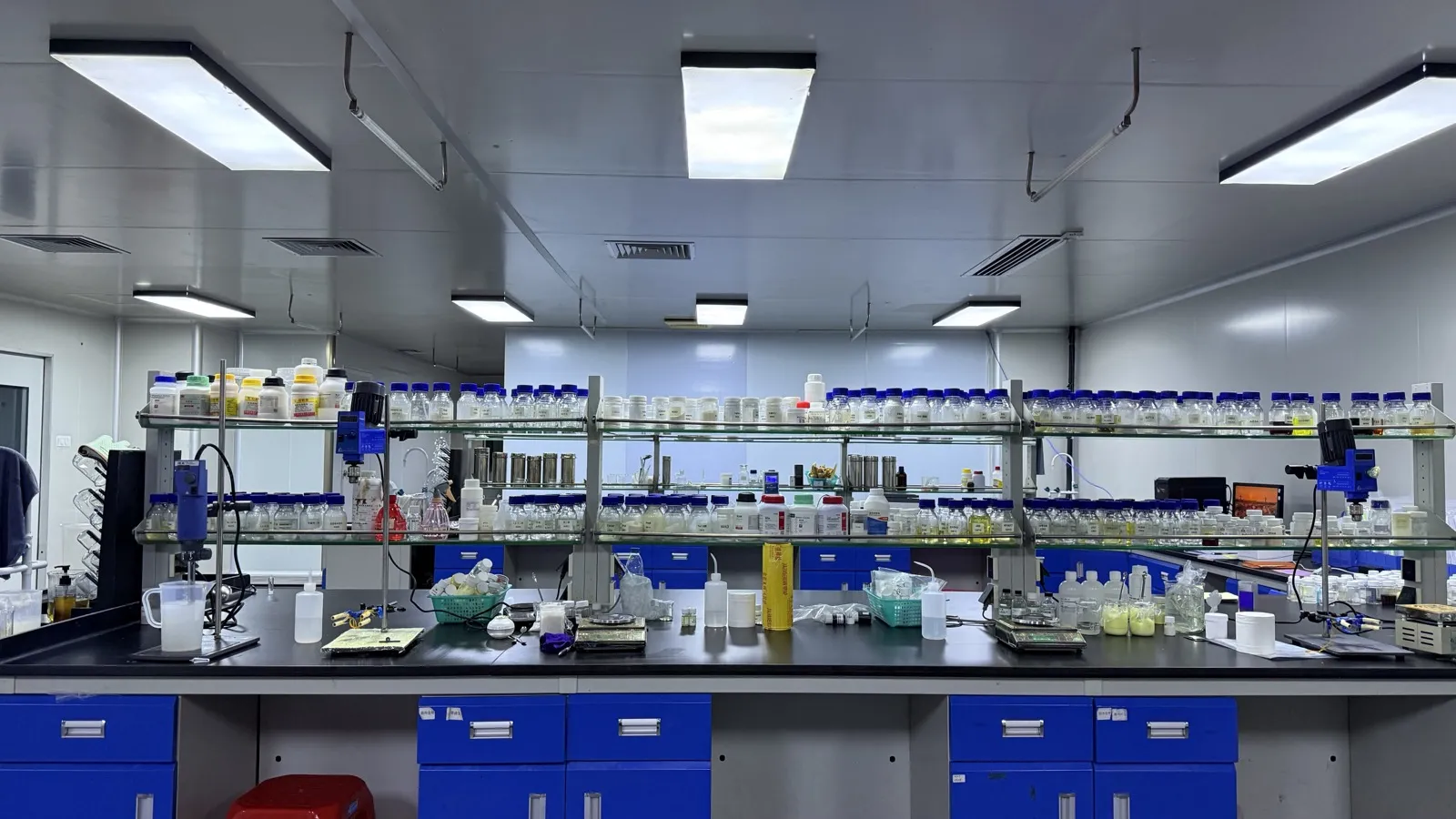
What Genuine Skincare R&D Looks Like
- In-house formulators, not just a filling line: ask how many chemists are on staff and whether formulation happens on site or is outsourced. Outsourced formulation adds cost, time, and communication gaps.
- Active-ingredient know-how: a capable partner can explain how they stabilize a difficult active, at what concentration it stays effective, and what texture trade-offs come with it.
- Stability and compatibility testing: real skincare development includes accelerated stability studies and packaging-compatibility checks, so the formula that impresses you at sample stage still performs after months in its actual container.
- An existing formula library: a deep catalog of tested bases lets you launch faster and cheaper by customizing a proven formula rather than developing from zero - useful for supporting SKUs even if your hero product is fully custom.
Ask to see a formulator's reasoning on a product close to yours. The specificity of the answer tells you whether you are dealing with a development partner or a bottling service.
Judge the Sample the Way a Chemist Would
Sampling is where most buyers relax and where they should stay most rigorous. A sample that feels lovely on day one tells you little about how the product behaves over its life. Evaluate deliberately.
A Skincare Sample Evaluation Routine
- First impression and texture: spreadability, absorption, finish, and any tackiness or residue. Does it match the brief you wrote?
- The heat test: leave a sample somewhere warm for a few days. Emulsions that separate, discolor, or thin out are telling you they will fail in a warehouse or a shipping container, especially for tropical markets.
- Scent and color over time: natural actives and fragrances can drift. Check the sample again after a couple of weeks.
- Packaging in context: evaluate the formula in the packaging you intend to sell, not a generic jar. Airless pumps, droppers, and tubes each interact differently with a formula.
- Consistency across samples: ask for more than one batch if you can. A partner who can reproduce the same result twice is showing you process control.
Expect a realistic sampling window of roughly 2-4 weeks for a customized existing base, longer when a formula is developed from scratch. A supplier promising perfect custom samples in a few days is either using an off-the-shelf formula or overpromising.
Disclaimer: Timelines, MOQ, and pricing ranges are estimates based on 2026 market conditions and vary with formula complexity, packaging, actives, and order volume. Contact us for a custom quote tailored to your product.
Certifications and Compliance, in Brief
Certifications are the pass/fail gate before you evaluate anything else, but they work the same across cosmetics categories, so this is the short version. Confirm the manufacturer holds recognized quality-management credentials such as ISO 22716 (Good Manufacturing Practice for cosmetics) and GMPC, and that they can supply the documentation your target market requires.
- Quality-management proof: ISO 22716 and GMPC certificates, ideally with recent third-party audit reports.
- Market-access documentation: the safety assessments, ingredient disclosures, and registration support your destination country needs. Skincare with actives often draws more regulatory scrutiny than color cosmetics, so confirm they have done it for products like yours.
- Testing records: stability, challenge (preservative efficacy), and where relevant, safety and claim-support testing.
For the full audit framework - what each certificate means, how to verify it is genuine, and the on-site checks that back it up - see our manufacturer vetting guide. If your market is in Southeast Asia, our registration guides for Thailand (TFDA) and Indonesia (BPOM) cover the documentation your manufacturer should help you assemble.
MOQ, Pricing, and Lead Time for Skincare
Once fit and capability check out, the commercial terms decide whether the partnership is workable for your stage. Skincare numbers differ by category, so use these as planning ranges and get a quote against your actual spec.
What to Expect
- Minimum order quantity: flexible MOQ from 1,000 units per SKU is achievable with some partners for entry-level private label, with 3,000 units per SKU the more common baseline as you customize. Fully custom formulas and specialized packaging push minimums higher.
- Per-unit pricing: private label skincare commonly lands around $1.50-$3.50 per unit for straightforward products, with active-rich serums and treatments running higher as formula and packaging complexity increase.
- Sampling lead time: roughly 2-4 weeks to customize an existing base; from-scratch development takes longer.
- Full production timeline: plan for approximately 10-13 weeks from confirmed order to shipment once the formula and packaging are locked, covering material procurement, bulk production, QC, and finished-goods handling.
Treat a quote that is dramatically below these ranges with caution - it usually signals a thinner formula, weaker QC, or hidden costs that surface later. For a category-by-category breakdown of order minimums and unit economics, our private label MOQ and cost guide goes deeper.
Green Flags: What a Strong Skincare Partner Does
Rather than a list of warnings, watch for the positive signals that separate a real development partner from a broker. These are the behaviors that tend to predict a smooth production run.
- They interrogate your brief. A good partner asks about target market, claims, price point, and packaging before quoting, because those change the formula.
- They talk trade-offs, not just yes. "We can hit that active level, but it will affect texture and cost" is the language of a formulator who has actually done it.
- They document. Certificates of analysis, stability data, and clear specifications come readily, not after repeated chasing.
- They are transparent about MOQ and cost drivers. A partner who explains what pushes your price up is easier to plan with than one who only quotes a single number.
- They welcome a factory visit or a video walkthrough. Openness about the production floor is a strong trust signal.
When you find a partner who checks these boxes for your specific category, you have found more than a vendor - you have found the technical backbone of your brand. If you are still at the concept stage, our guide to starting a private label skincare line maps the full path from idea to first order.
Questions to Ask Before You Commit
Bring these to your shortlist. The quality and specificity of the answers will rank your candidates faster than any brochure.
- Do you formulate in house, and how many chemists are on your R&D team?
- How do you keep [my hero active] stable through shelf life, and at what concentration does it stay effective?
- What stability and preservative-efficacy testing do you run, and can I see a sample report?
- What is your realistic MOQ and per-unit price for my exact spec and packaging?
- What is the honest timeline from approved formula to delivered goods?
- Can you produce documentation for my target market's registration?
- Will you provide multiple sample batches so I can check consistency?
Frequently Asked Questions
What does a skincare manufacturer actually do?
A full-service skincare manufacturer develops or adapts a formula, sources and tests raw materials, produces the product under quality-controlled conditions, and provides documentation for compliance and market access. The strongest partners add formulation R&D and stability testing rather than only filling bottles with a generic base.
How is choosing a skincare manufacturer different from choosing a makeup manufacturer?
Skincare hinges on chemistry - active stability, emulsion behavior, preservation, and shelf-life performance - so formulation depth and testing capability matter most. Color cosmetics lean more on pigment, texture, and packaging expertise. A factory strong in one is not automatically strong in the other, which is why matching your category to a manufacturer's real strength is step one.
What is a typical MOQ for a skincare manufacturer?
Entry-level private label can start from around 1,000 units per SKU with some partners, while 3,000 units per SKU is a common baseline as customization increases. Fully custom formulas and specialized packaging raise the minimum. Always confirm against your specific product and packaging.
How long does it take to develop and produce a skincare product?
Customizing an existing base can yield samples in roughly 2-4 weeks, with full production landing around 10-13 weeks from a confirmed order. Developing a formula entirely from scratch, including stability testing, takes considerably longer. Build these windows into your launch plan.
Should I choose a skincare manufacturer based on price?
No. Price alone is the most common reason skincare launches go wrong. A quote far below market usually reflects a thinner formula, weaker quality control, or costs that appear later. Weigh formulation capability, testing, documentation, and consistency alongside price to judge real value.
Choosing With Confidence
The right skincare manufacturer is the one whose formulation strength, testing discipline, and category experience match the product you are building - not simply the cheapest or the largest. Start from a clear product brief, test capability with skincare-specific questions, evaluate samples like a chemist, and read the commercial terms against realistic ranges. Do that, and you turn a risky search into a confident decision.
If you would like a straight assessment of fit, MOQ, and timeline for your specific skincare product, request a quote and we will walk through it with you.
Ready to Start Your Project?
Tell us your product requirements. Our technical team responds within 24 hours with a detailed quotation.